
What Is Duhuo? Medicinal Parts, Identification, and Common Formulas
Duhuo is a commonly used Chinese medicinal herb. Many people who hear the name “Duhuo” wonder what it actually is, what it looks like, and which part is used; it is also frequently compared with Qianghuo and Danggui. This article explains its root characteristics, harvesting and processing, traditional understanding, common formulas, and precautions for use.
What Does Duhuo Look Like? How Is It Identified?
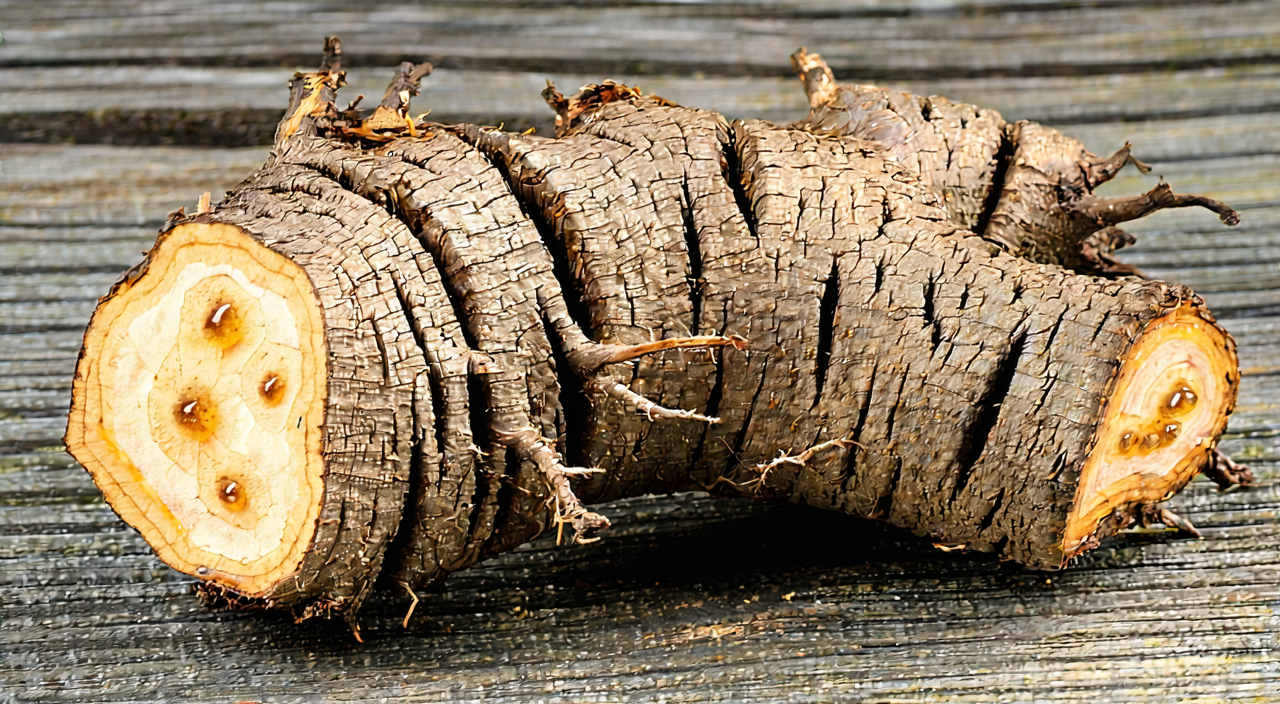
The crude Duhuo drug is mostly cylindrical, with a large root head and many branching roots in the lower part. The outer bark is grayish-brown to brown, and transverse lenticels are visible on the surface. The cut surface is yellowish-white or grayish-white, often with brown oil spots. The odor is strong and distinctive, with a characteristic aroma. Traditionally, dry, thick, oily, and strongly aromatic roots are considered best. Some fake or adulterant products have thinner roots and a weaker aroma, which can serve as preliminary distinguishing clues. Do not judge solely by appearance; professional identification is recommended.
What Is the Medicinal Part of Duhuo?
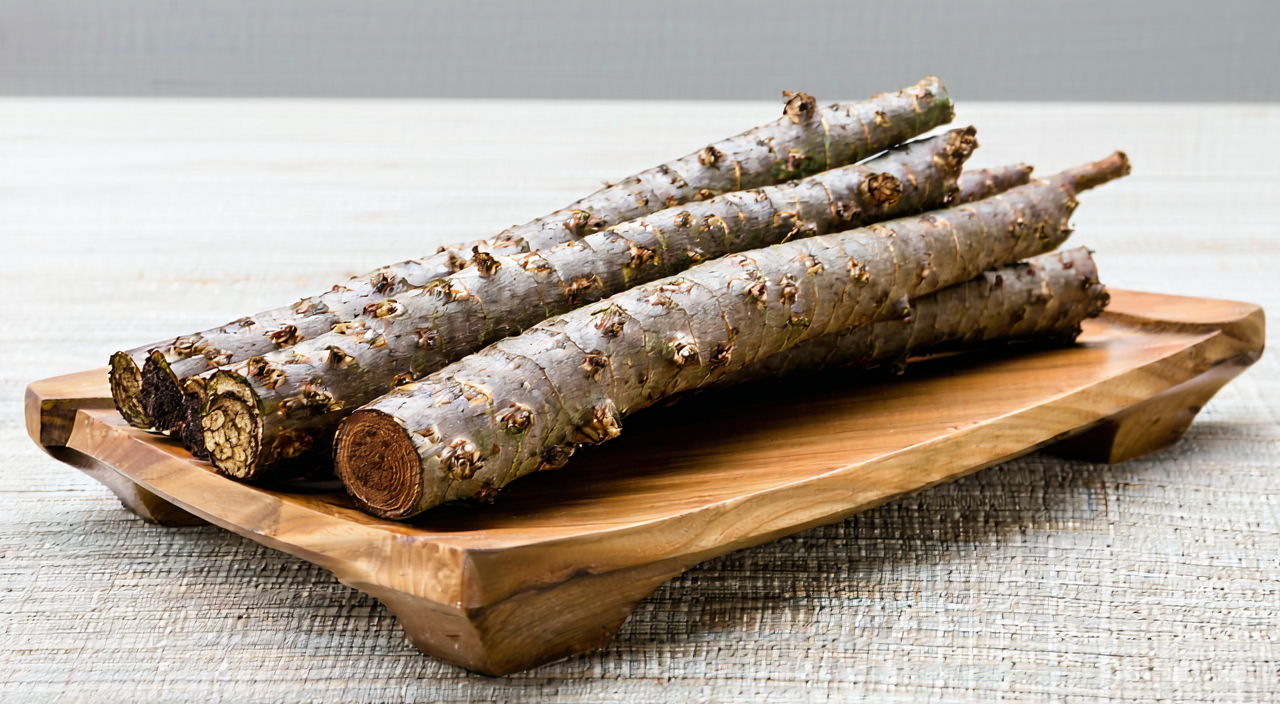
The medicinal part of Duhuo is the root. The source listed in the modern pharmacopoeia is the dried root of Angelica pubescens. It is usually harvested in early spring when sprouting begins or in late autumn when the stems and leaves wither. The fibrous roots and sediment are removed, and it undergoes processing steps such as stacking to induce “sweating” and drying. After drying, the root has a large root head, many branching roots, a grayish-brown surface, and transverse lenticels. Traditionally, oily texture and aroma are also valued. Ancient sources were more mixed; Duhuo was sometimes confused with Qianghuo and Danggui, but modern standards now distinguish them.
How Does Traditional Chinese Medicine Understand Duhuo?
Traditional Chinese medicine usually views Duhuo in terms of dispelling wind and removing dampness, resolving painful obstruction and relieving pain, and releasing the exterior. It is commonly used for bi pain caused by wind, cold, and dampness blocking the channels, especially in the lower jiao, waist, knees, and lower limb joints, with symptoms such as soreness, heaviness, cold pain, and limited flexion and extension. It may also be used for external wind-cold with dampness causing heaviness of the head and body. Note that whether it is suitable depends on the specific constitution and pattern; “dispelling wind and removing dampness” should not simply be taken to mean it is suitable for all joint discomfort.
What Can Modern Research Tell Us?
Modern research has paid attention to constituents in Duhuo such as coumarins and volatile oils. Some studies suggest it may have exploratory value in areas such as anti-inflammatory and analgesic effects. However, these are mostly basic or experimental studies and cannot be directly equated with clinical effects. For educational purposes, this information can be used as a direction for understanding, not as a guarantee of efficacy.
What Are the Differences Between Duhuo, Qianghuo, and Danggui?
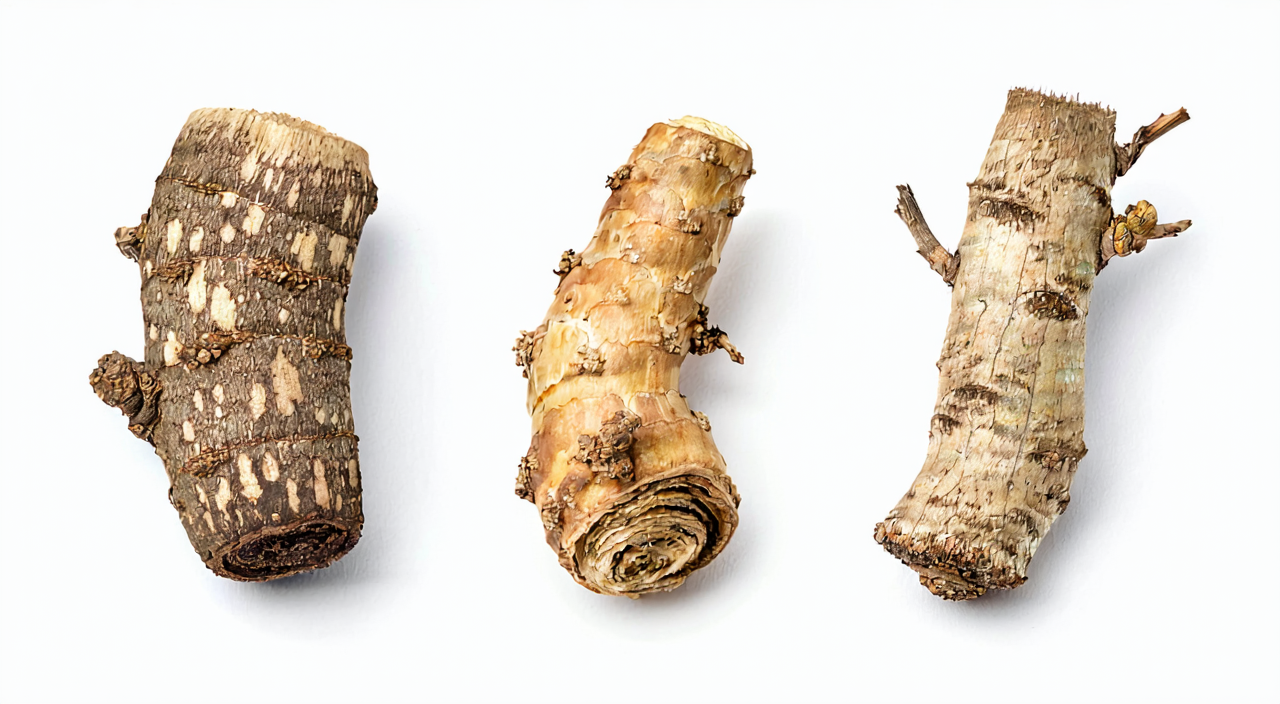
Duhuo and Qianghuo were historically used interchangeably, but they should now be distinguished. Duhuo has a large root head, many branching roots, a grayish-brown surface, obvious transverse lenticels, and a strong aroma. Qianghuo rhizomes are often ringed, have more branches, and have a stronger, more pungent smell. Their traditional applications also differ: Qianghuo tends to act on the upper body and the Taiyang channel, and is often used for head, neck, shoulder, and back pain; Duhuo tends to act on the lower body and the Shaoyin channel, and is more often used for painful obstruction in the waist, knees, and lower limbs. Although both Duhuo and Danggui use the root, their appearance and uses differ greatly. Danggui has a yellowish-brown outer bark, soft and moist texture, and a sweet, pungent aroma; Duhuo has a grayish-brown surface, many branching roots, and a bitter, pungent aroma. Traditionally Danggui is more often used to nourish and invigorate blood and regulate menstruation, while Duhuo is more used to dispel wind-dampness and relieve painful obstruction. When purchasing or using these herbs, do not judge only by name or color; consider appearance features and species information.
Which Formulas Use Duhuo?
Duhuo is one of the core medicinal ingredients in several traditional formulas. Duhuo Jisheng Decoction is often used in the approach of addressing liver and kidney insufficiency with wind-cold-damp bi and cold pain in the waist and knees. There are many formulas with the name Duhuo Decoction, often varying around wind bi and limb pain. Sanbi Decoction is often used for wind-cold-damp bi accompanied by qi and blood deficiency. Juanbi Decoction also has different combinations and is commonly used for regulating bi disorders. It should be noted that formula use must be judged comprehensively based on constitution, symptoms, dosage, and combination, and should not be self-applied. Even traditional classic formulas should be understood under professional guidance.
What Precautions Should Be Taken When Using Duhuo?
Traditionally, Duhuo is considered warm and drying, so people with yin deficiency or blood dryness should use it with caution. Those allergic to plants in the Apiaceae family should be particularly careful before use. Duhuo contains coumarin constituents, and some individuals may have photosensitivity risk; prolonged ultraviolet exposure should be avoided during use. Pregnant or breastfeeding women, children, older adults, and people with chronic diseases or those taking other long-term medications should consult a doctor or pharmacist before use. If joint pain keeps worsening, or is accompanied by fever, redness, swelling, palpitations, chest tightness, weight loss, or other symptoms, seek medical attention promptly rather than relying solely on a single herb.
Summary
What is Duhuo? In modern use, its medicinal part is mainly the dried root of Angelica pubescens. The root is thick and large, with many branching roots, a grayish-brown color, oil spots, and a strong aroma. Understanding its morphological and traditional application differences from Qianghuo and Danggui helps correctly recognize this medicinal. Although formulas containing Duhuo are commonly used in traditional management of bi disorders, whether they are specifically suitable must still be judged based on individual constitution, symptoms, and professional advice, and should not be self-applied. This article is for educational reference only and is not a substitute for professional diagnosis or treatment advice.