
What Is Ezhu? Medicinal Parts, Identification, and Common Formulas
In a traditional Chinese medicine pharmacy, Ezhu is a medicinal herb with a strong aroma and firm texture. Many overseas readers interested in Chinese medicine may confuse it with Jianghuang and Yujin, but Ezhu has its own unique source and clinical direction. Ezhu comes from the dried rhizomes of Curcuma phaeocaulis, Curcuma kwangsiensis, or Curcuma wenyujin, all plants in the ginger family. It is especially important to note that the root tuber of Curcuma wenyujin is often used as another medicinal herb—Yujin—so understanding the medicinal part of Ezhu is key to correctly distinguishing these two substances. This article explores what Ezhu is, what it looks like, how Chinese medicine uses it, and its place in herbal formulas.
What Does Ezhu Look Like? How to Identify It?
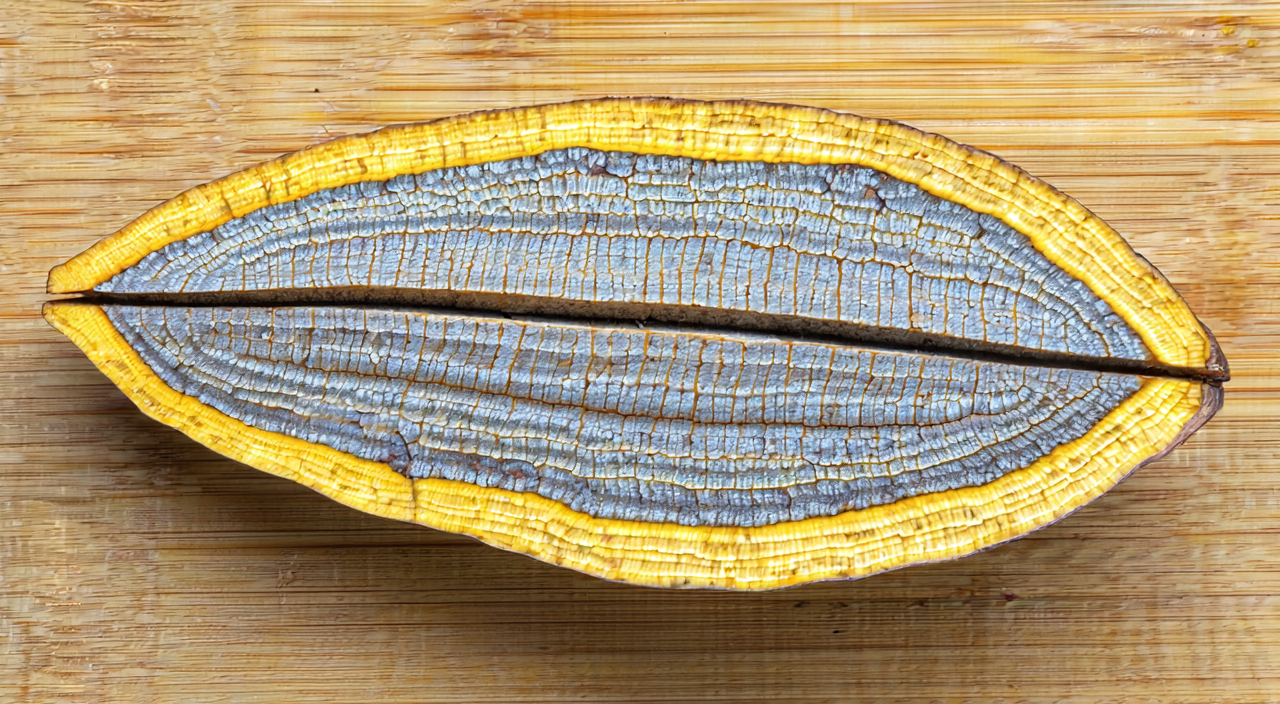
The dried rhizome of Ezhu is usually ovoid, oblong, or slightly flattened and irregular in shape, and varies in size, generally 2–6 cm long and 1.5–3 cm in diameter. The surface is grayish-yellow to yellowish-brown and rough; on close observation, dense ring-like nodes and rootlet scars can be seen. These nodes are an important identifying feature of the rhizome. The texture is firm and heavy, and it is not easily broken. The cut surface is yellowish-green or brownish, horny in appearance, and sometimes pale vascular bundle dots can be seen. It has a distinctive pungent and aromatic odor, similar to that of ginger family plants but stronger, and it tastes pungent with a slight bitterness. Overall, the greenish or brownish cut surface, dense texture, and strong aroma are direct visual and sensory clues that distinguish Ezhu from Jianghuang, Yujin, and other rhizome-type medicinal herbs. If you have a whole piece of Ezhu, the surface nodes and the semi-translucent horny cut surface become very obvious when examined under light.
What Is the Medicinal Part of Ezhu?
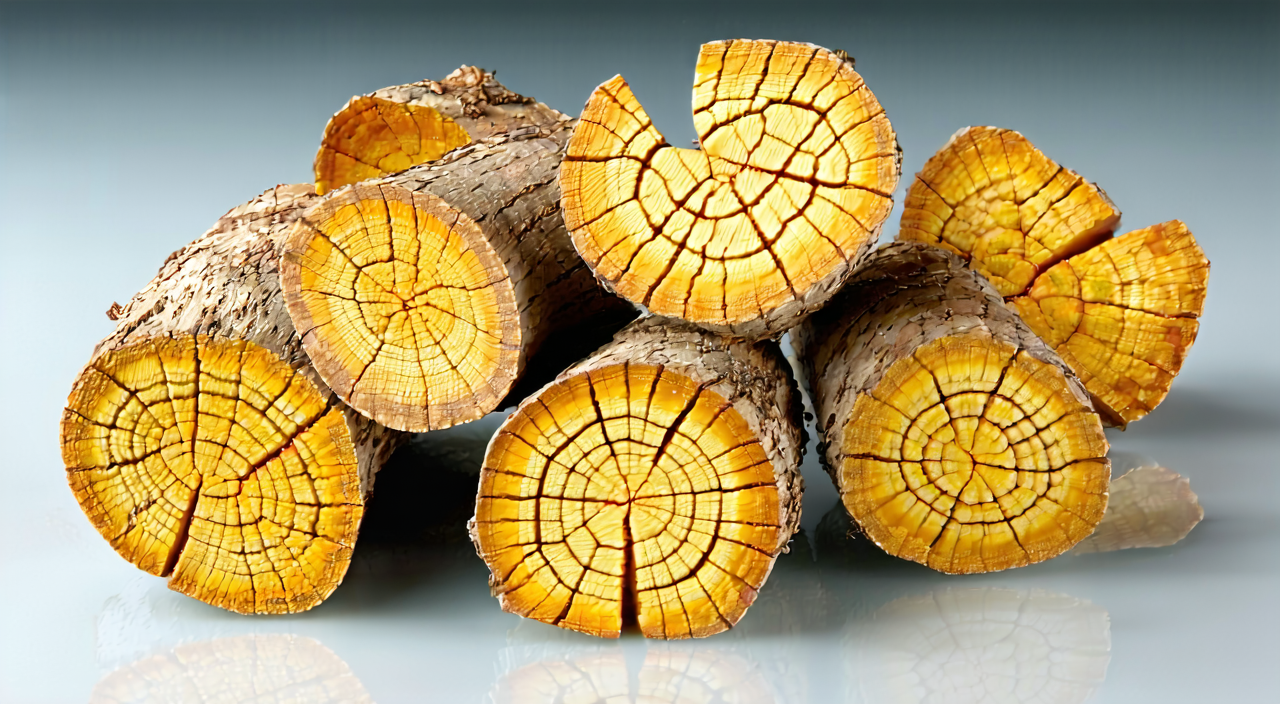
The medicinal part of Ezhu comes entirely from the underground portion of the plant, specifically the dried rhizome of Curcuma phaeocaulis, Curcuma kwangsiensis, or Curcuma wenyujin, rather than the root tuber or fibrous roots. Harvesting usually takes place in autumn and winter after the stems and leaves wither. The rhizomes are dug up, cleaned of soil and fibrous roots, steamed or boiled thoroughly, and then dried. This steaming process stabilizes the color of the cut surface and makes the herb easier to store. During processing, some Ezhu is sliced while fresh for further preparation. Vinegar-fried Ezhu is a commonly used processed form. Clean Ezhu slices are mixed with vinegar, moistened, and stir-fried until dry to guide the herb to the liver and enhance its ability to disperse stasis and relieve pain. The specific medicinal part determines the herb’s physical characteristics and therapeutic direction. This is also why Ezhu and Yujin, although they may come from the same plant, differ markedly in effect because different plant parts are used.
How Does Chinese Medicine Understand Ezhu?
Traditional Chinese medicine understands Ezhu mainly through its actions of moving qi, breaking blood stasis, reducing food accumulation, and relieving pain. It is pungent and bitter in flavor, warm in nature, and enters the liver and spleen meridians. It is considered a relatively strong blood-activating and stasis-resolving medicinal. In classical medical texts, Ezhu is often used in cases of pronounced qi and blood stasis, especially abdominal masses and accumulations caused by qi stagnation and blood stasis, amenorrhea with abdominal pain, food stagnation, and epigastric and abdominal distension and pain. In terms of treatment strategy, Ezhu is not like Danggui, which focuses more on nourishing and activating blood; instead, it leans toward moving and dispersing, making it more suitable for prolonged qi constraint and blood stasis. Therefore, it is often included in formulas for concurrent qi stagnation and blood stasis. However, this strong moving and dispersing action also means it is not suitable for everyone. People who are physically weak or deficient in qi and blood should not use it casually, and professional judgment based on the whole condition is necessary.
A Brief Introduction to Modern Research
Modern research on Ezhu focuses mainly on its volatile oils and curcuminoid constituents. Experimental studies have found that components in Ezhu volatile oil, such as curcumol and beta-elemene, show certain inhibitory activity against abnormal cell proliferation and have anti-inflammatory effects. Some extracts have demonstrated inhibitory effects on certain tumor cell lines in vitro. In addition, Ezhu extracts have been observed to have tendencies toward improving microcirculation and inhibiting platelet aggregation. However, most of these studies are at the laboratory or small-scale preclinical stage and cannot be directly equated with effects in the human body. These scientific explorations provide a new perspective for the traditional use of Ezhu, while also reminding people that Ezhu, as a blood-breaking medicinal, has relatively strong pharmacological activity and must be used with extra care. It is by no means an ordinary food that can be taken casually.
What Are the Differences Between Ezhu, Yujin, and Sanleng?
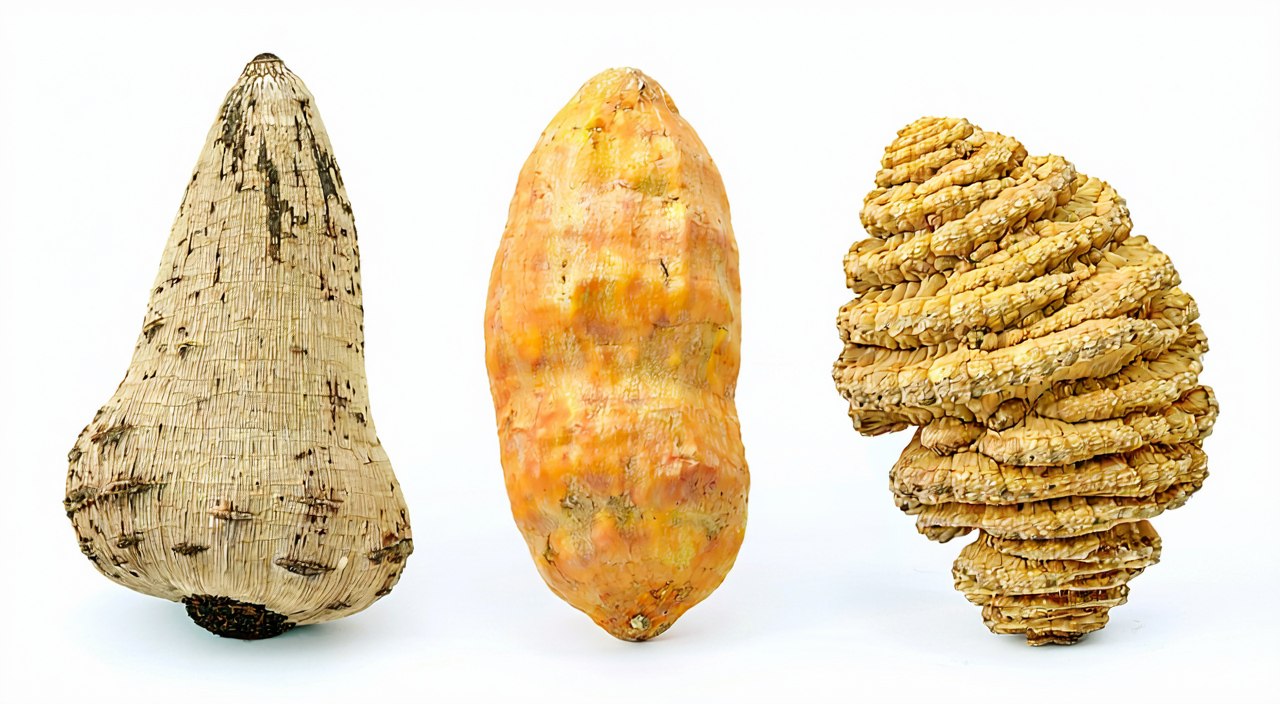
Many people easily confuse these three herbs. Although Ezhu, Yujin, and Sanleng are all commonly used for patterns involving qi and blood stasis, they differ clearly in source and texture. First, Ezhu and Yujin may come from the same plant, Curcuma wenyujin, but Ezhu is the rhizome, while Yujin is the root tuber. In terms of morphology, Ezhu is relatively large and mostly ovoid, whereas Yujin is often spindle-shaped or oblong, relatively smaller, and has a more orange-yellow cut surface. Second, Sanleng is the tuber of Sparganium stoloniferum, a plant in the bur-reed family. It is as hard as stone, with a grayish-white or yellowish-white cut surface, a weak odor, and none of the strong aroma characteristic of the ginger family. In terms of flavor, nature, and meridian tropism, Ezhu has a strong blood-breaking and qi-moving effect and can also reduce food accumulation; Sanleng has an even fiercer blood-breaking action but is slightly less effective at moving qi; Yujin is more inclined to activate blood and relieve pain, move qi and resolve constraint, and clear the heart and cool the blood. Among the three, Yujin is relatively gentler. In practical use, the choice is usually based on the degree of stasis and accompanying symptoms. In daily life, this information should be used only for general understanding; these herbs should not be substituted for one another on one’s own.
Which Formulas Use Ezhu?
In traditional Chinese herbal formulas, Ezhu often appears as an ingredient for moving qi, breaking blood stasis, and resolving accumulation. For example, Xiangleng Wan is a type of formula composed mainly of Muxiang, Dingxiang, Sanleng, Ezhu, and other herbs, and it is often used for abdominal masses and accumulations or severe qi and blood stasis. Biejia Jian Wan combines Ezhu with Biejia, Shegan, Dahuang, and others, and is often used for masses below the ribcage, chronic malaria, and hepatosplenomegaly. It is a larger classical compound formula. Ezhu Wan also uses Ezhu as the main herb and is mainly indicated for food stagnation and epigastric and abdominal pain. In addition, many formulas that reduce accumulation and resolve stasis include Ezhu to strengthen their moving and dispersing effects. It should be emphasized that in tradition, each of these formulas has its own strict corresponding pattern, and whether a formula suits a particular person must be determined by constitution, symptoms, and professional judgment. Proprietary Chinese medicines produced by different manufacturers may also differ in dosage and ingredient proportions, so when learning about these formulas, read the product instructions carefully and never choose a product based solely on its name.
What Precautions Should Be Taken When Using Ezhu?
Although Ezhu is a traditional medicinal herb, its contraindications are very clear. First, it is absolutely contraindicated during pregnancy, because its strong blood-breaking and qi-moving action may cause unnecessary risks. Second, people with heavy menstrual bleeding, prolonged spotting, or a bleeding tendency should generally not use it, to avoid aggravating blood loss. For those who are weak and deficient in qi and blood, Ezhu’s strong dispersing action may consume healthy qi, so it should be used with caution under professional guidance. In addition, anyone taking anticoagulant or antiplatelet drugs should consult a physician before considering any product containing Ezhu. If you have active bleeding, peptic ulcer, coagulation disorders, or other relevant underlying conditions, self-use of Ezhu is not recommended. Before using any Ezhu-related product, it is safer to first understand your own health condition and communicate with a professional knowledgeable in Chinese medicine.
Summary
As a traditional medicinal herb with relatively strong actions, Ezhu is characterized by its origin from the rhizome of specific plants, its obvious ring-like nodes and horny cut surface, and its strong pungent aroma. These features help distinguish it from similar herbs such as Yujin and Sanleng. Chinese medicine understands Ezhu mainly through its ability to move qi, break blood stasis, reduce accumulation, and relieve pain, and it is often used in traditional formulas for relatively severe qi and blood stasis. However, this also means its range of use is limited, and it must be strictly avoided during pregnancy, heavy menstrual bleeding, bleeding tendency, and in people with deficiency. Interested readers can use this article as a starting point for understanding Ezhu. For any specific use, seek professional advice and do not make judgments on your own.