
What Is Honey? Medicinal Parts, Identification, and Common Formulas
Honey is a natural sweet substance produced by bees from the nectar or honeydew of plants, mixed with their own secretions, and fully matured in the honeycomb through brewing. It is both a common food in daily life and a medicinal ingredient in traditional Chinese medicine. Many people are both familiar and unfamiliar with honey—”Is there a difference between medicinal honey and ordinary edible honey?” “How to make an initial identification based on appearance?” “What exactly are the differences between honey, royal jelly, and beeswax?” This article will systematically address these questions, helping you gain a comprehensive understanding of honey and appreciate its role in TCM in combination with traditional formulas.
What does honey look like? How to identify it?
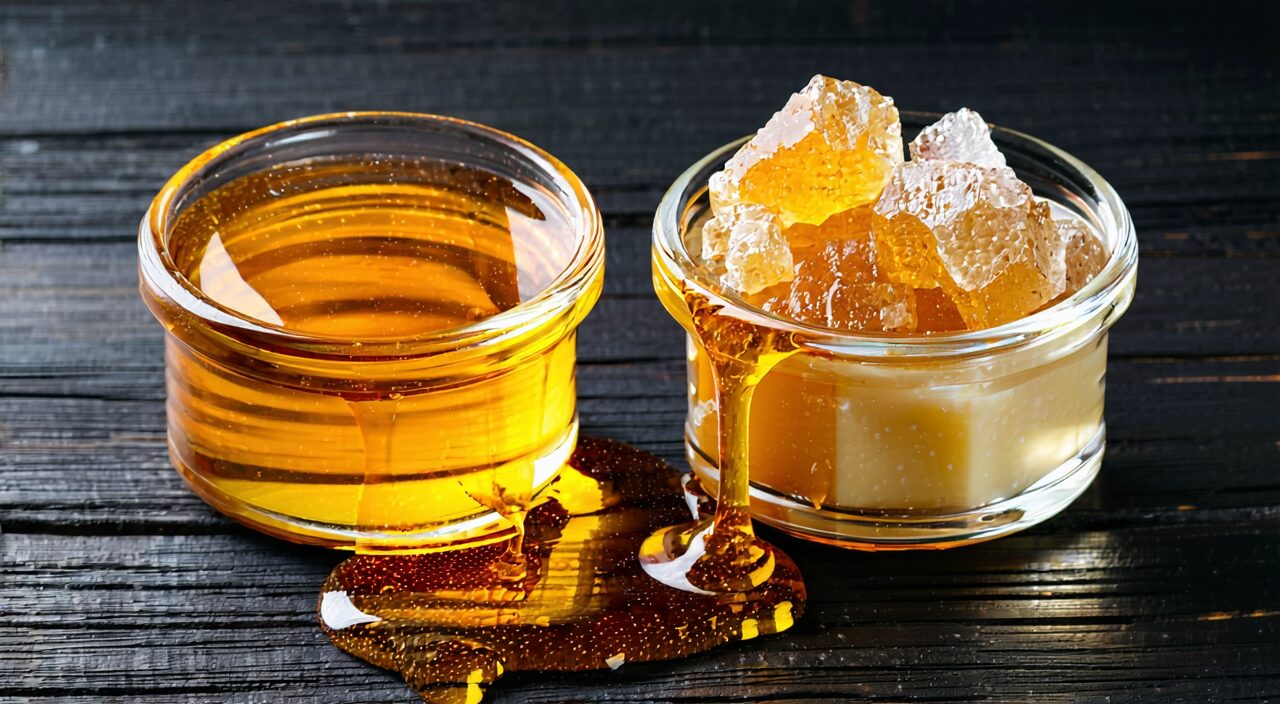
Honey is usually a translucent, viscous liquid. At lower temperatures or after storage, it may crystallize into a fine paste or granules, which is a normal physical change and does not affect its edibility. Its color ranges from water-white and light amber to dark amber or even dark brown, mainly depending on the nectar source plants collected by the bees. For example, acacia honey is light in color, while buckwheat honey is dark. The aroma also varies; most honeys carry a delicate floral fragrance, while a few may have a slight herbal or caramel note.
Traditionally, people often check “threads” when buying honey: lifting honey with a chopstick or spoon, good honey often forms a long, thin thread, and when the thread breaks, the tip snaps back into a bead. You can also smell for purity and taste for any fermented sourness. However, these are empirical references, not absolute standards. Currently, the quality of commercial honey is also affected by nectar purity, processing methods, and storage conditions, making it hard to completely judge adulteration or excessive processing by appearance alone.
What is the medicinal part of honey?
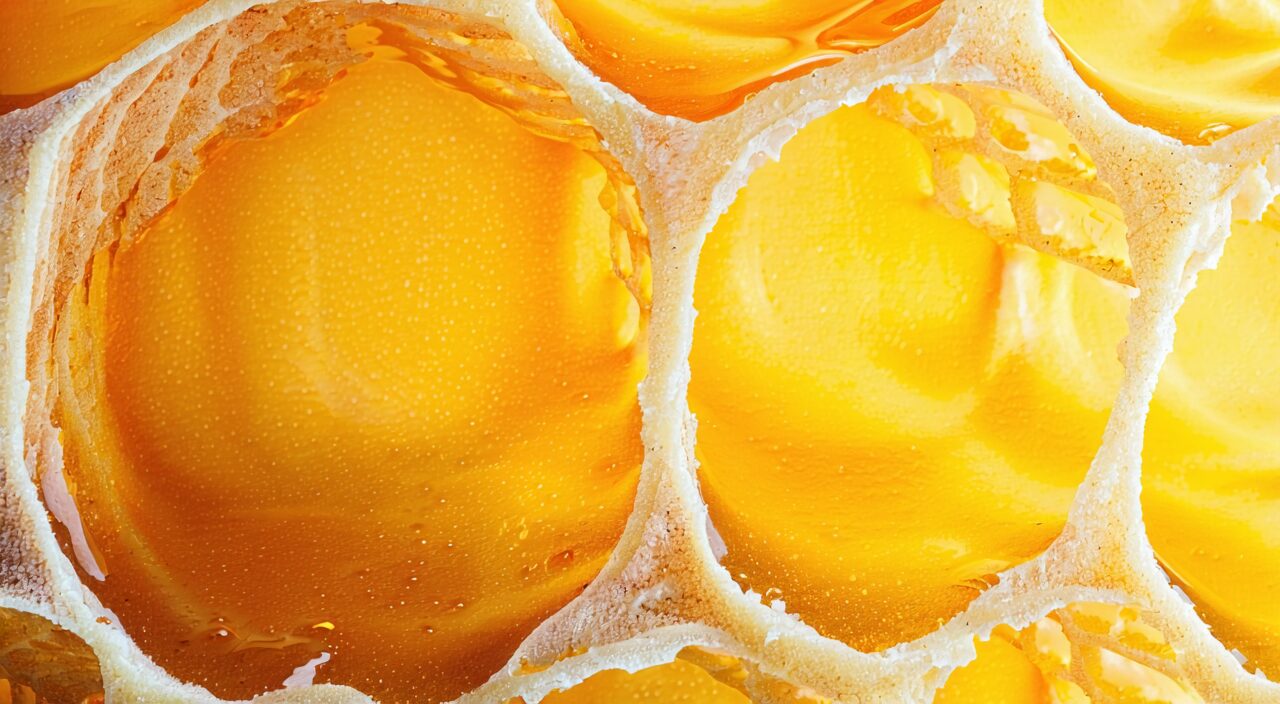
The medicinal part of honey is the mature honey produced and stored in the honeycomb by bees. During harvesting, beekeepers take out the capped honeycombs during the nectar flow period, remove the wax caps with an uncapping knife, and then use a honey extractor to spin the honey out. After simple filtration to remove impurities and a small amount of foam, raw honey suitable for direct consumption is obtained. If used as a medicinal ingredient, it generally undergoes additional processes such as heating and refining to become refined honey, or further processing into extracts, pills, etc.
In Chinese herbal medicine slices or formulas, honey often appears as a thick liquid or semi-crystalline state, with a fragrant odor and an extremely sweet taste. Traditionally, native honey produced by the Chinese honey bee (Apis cerana) is favored, as it is believed to come from diverse nectar sources, have a longer ripening period, and contain richer active substances. Modern medicinal honey generally must meet relevant pharmacopoeia standards, with clear requirements for sugar content, moisture, and certain contamination indicators.
How does TCM view honey?
Traditional Chinese medicine considers honey to be neutral in nature and sweet in taste, mainly entering the lung, spleen, and large intestine meridians. Its core functions are summarized as “tonifying the middle, moistening dryness, relieving pain, and detoxifying.” Classic herbal texts such as Shennong Bencao Jing record that honey “harmonizes the five viscera, boosts qi and tonifies the center, relieves pain and detoxifies, eliminates many diseases, and harmonizes with many herbs.” It is commonly used for epigastric pain due to spleen-stomach deficiency, dry cough caused by lung dryness, and constipation from intestinal dryness. For external use, honey can also be applied to minor burns or ulcers to help keep them moist and promote healing.
It should be noted that these applications are based on traditional empirical summaries. Because honey tends to be tonifying and moistening, it is generally more suitable for deficiency and dryness syndromes. In cases of damp-heat obstruction or phlegm-turbidity congestion, using it for tonification alone is not advisable. Whether it suits a specific constitution depends on individual circumstances and professional judgment.
Modern research focuses on which components and actions of honey?
Modern component analysis has found that honey consists of more than 70% glucose and fructose, about 18% water, and small amounts of enzymes (such as glucose oxidase and invertase), organic acids, B vitamins, minerals, as well as trace components like phenolic acids and flavonoids. Among them, glucose oxidase produces trace amounts of hydrogen peroxide when diluted, which is considered one reason for honey’s bacteriostatic effect.
Some laboratory studies and animal experiments have observed the potential of honey to exert antioxidant effects, inhibit the growth of certain bacteria, and promote wound healing. However, in human studies, the strength of evidence for these effects remains limited, and most antibacterial effects are closely related to honey concentration, nectar source type, and processing methods. Therefore, these findings can be regarded as areas of interest, but should not be directly interpreted as meaning that honey can replace medication or treat a disease.
How does honey differ from similar medicinal materials?
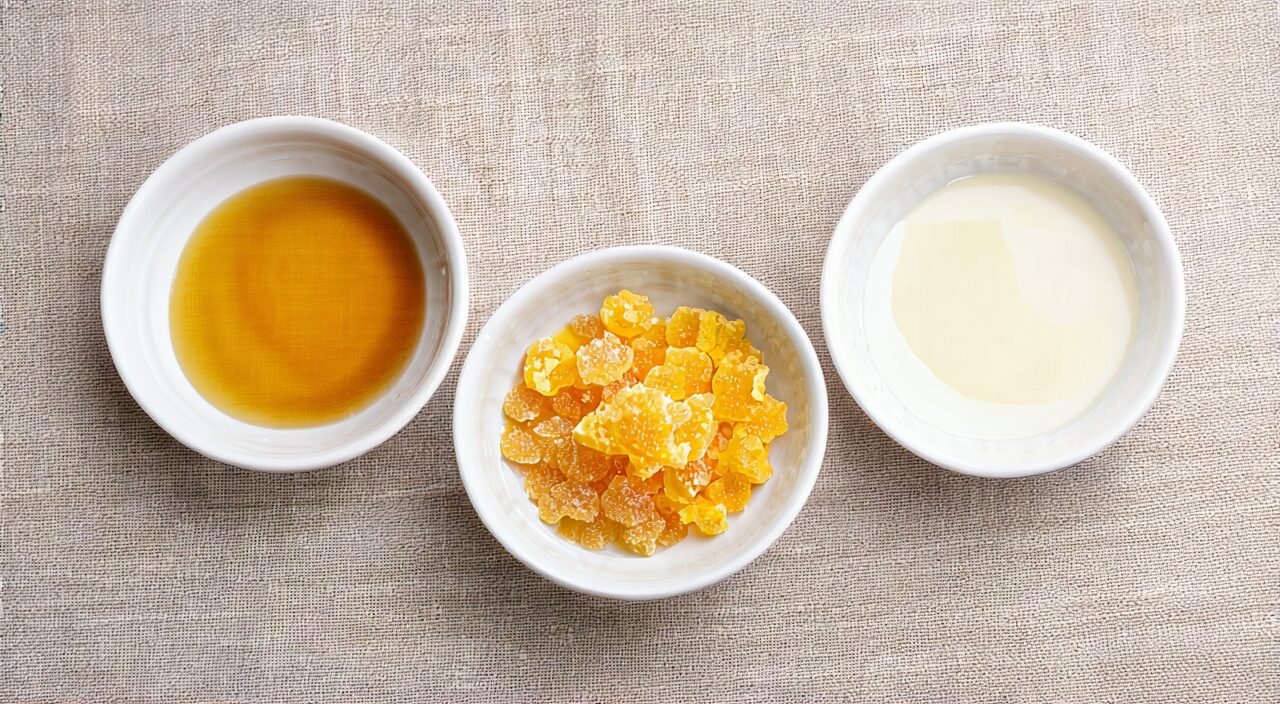
Beeswax: Beeswax is a waxy substance secreted by the wax glands of worker bees and used as building material for the honeycomb. After processing, it appears as irregular lumps or cakes, yellowish-white to yellowish-brown, with a smooth or slightly wrinkled surface. It is light in weight, hard in texture, and has a distinct waxy sensation and toughness when chewed. Its traditional functions are mainly astringent, wound-healing, tissue-regenerating, and pain-relieving, primarily for external use, such as a base for ointments or for protecting wound surfaces.
Royal jelly: Royal jelly is a milky white or pale yellow creamy substance secreted by the hypopharyngeal and mandibular glands of worker bees, mainly used to feed the queen bee and larvae. It is a viscous semi-fluid with a special sour, astringent, and slightly spicy taste, completely different from the sweet and fragrant character of honey. Traditionally, royal jelly is often used for nourishing and strengthening, benefiting the liver and fortifying the spleen, and is mostly regarded as a food or health supplement for tonifying essence and qi rather than simply a moistening product. Some people may be allergic to proteins in royal jelly, so caution should be exercised when coming into contact with or ingesting it.
Although honey, beeswax, and royal jelly all come from bees, they clearly differ in origin, appearance, composition, and traditional application focus and cannot be used interchangeably or as substitutes for one another.
Which formulas use honey?
Honey appears quite frequently in formulas. It can not only be directly used as a component to moisten dryness and harmonize medicinal properties, but is also commonly used to prepare pills, suppositories, or process medicinal herbs. Here are some representative examples:
- Maziren Wan (Hemp Seed Pill): Composed of ingredients such as hemp seed, immature bitter orange, and rhubarb, honey in this formula not only helps form the pill, but also exerts a bowel-moistening and laxative effect, ensuring the whole formula moistens the intestines and drains heat without damaging healthy qi.
- Mijian Dao Fang (Honey Suppository Formula): This is an external suppository formula recorded in the Treatise on Cold Damage. Honey alone is heated gently in a copper vessel, shaped into small cones while still warm, and inserted into the anus after cooling. It uses honey’s lubricating and dryness-moistening properties to facilitate bowel movements—a classic method of physical lubrication and moistening in bee medicine.
- Qiongyu Gao (Beautiful Jade Paste): Mainly composed of fresh rehmannia root, ginseng, and poria, with honey added to collect the paste. Here, honey not only provides sweetness but also enhances the formula’s power to nourish yin, moisten the lung, boost qi, and tonify the spleen, while making the paste easier to preserve and take.
- Honey-fried Licorice (Zhigancao): Raw licorice slices are stir-fried with an appropriate amount of refined honey until the honey is absorbed. The resulting honey-fried licorice is more inclined to tonify the spleen and qi, and moisten the lung to stop cough, and is often used in tonifying formulas, such as modified Four Gentlemen Decoction.
These are all traditional applications. In modern usage, dosage forms may change, and whether they are suitable for an individual still requires differentiation based on constitution and specific circumstances by a professional.
What precautions should be taken when using honey?
Although honey is generally considered mild, there are still important contraindications and points to note.
First, honey should absolutely not be consumed by infants under one year of age. Honey may be contaminated with Clostridium botulinum spores during nectar collection and processing. Since an infant’s intestinal flora is not yet fully developed, it cannot inhibit the germination and toxin production of the spores, posing a risk of infant botulism.
Second, honey contains large amounts of glucose and fructose, which are absorbed quickly and can easily cause blood sugar spikes. Therefore, people with poor blood sugar control or glucose metabolism disorders should consume it with caution, under the guidance of a doctor or dietitian.
Additionally, a small number of people may be allergic to pollen or bee proteins in honey; a small amount can be tried initially for observation. For storage, honey should be kept sealed in a cool, dry place away from direct sunlight, and it is best not to heat it at excessively high temperatures to avoid destroying its active components. To ensure medicinal efficacy and safety, it is recommended to choose products with clear sources that meet edible or medicinal standards, and to be vigilant about uncertainties caused by adulteration or excessive processing.
Summary
As a traditional substance used both as food and medicine, the basic characteristics of honey are that it is viscous, sweet, variable in color, and prone to crystallization. Traditional Chinese medicine mainly uses it to tonify the middle, moisten dryness, relieve pain, and detoxify, mostly for deficiency and dryness syndromes. Although modern research suggests some antioxidant and antibacterial activities, more evidence is still needed. In terms of usage, special attention should be paid to the prohibition in infants, blood sugar issues, and authenticity. Honey, beeswax, and royal jelly differ significantly in origin and function and should not be confused. This article is for knowledge introduction and popular science reference only; it cannot replace professional diagnosis or individualized advice. For specific health concerns, please consult a doctor.