
What Is Turtle Shell? Medicinal Parts, Identification, and Common Formulas
Turtle shell typically comes from the carapace and plastron of animals in the turtle family, but in practice many people still wonder, “What is turtle shell?” How do the carapace and plastron differ in appearance? How should it be distinguished from softshell turtle shell and turtle shell glue? This article helps overseas Chinese readers build a clearer understanding from the perspectives of source, identification, traditional understanding, common formulas, and precautions for use. It should be noted first that turtle shell is an animal-derived medicinal material; special attention should be paid to farming, conservation, and legal sourcing requirements.
What Does Turtle Shell Look Like? How Is It Identified?
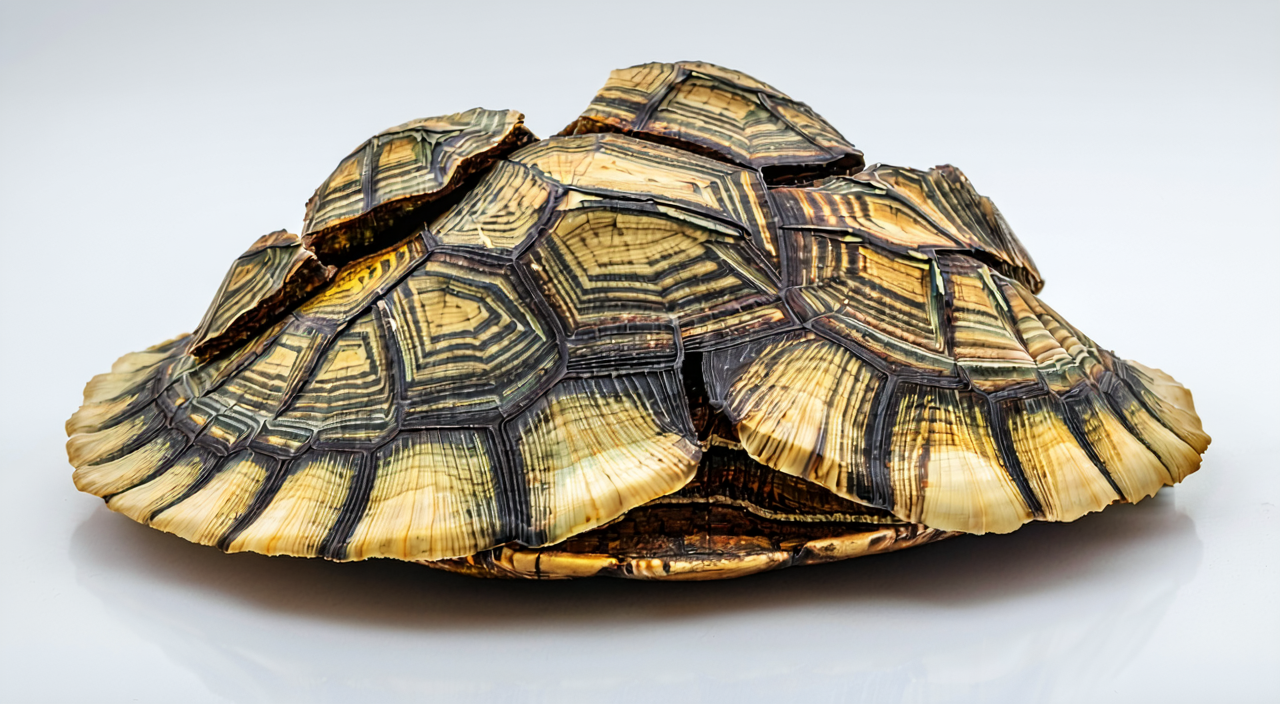
Turtle shell is mainly divided into the plastron and carapace. The plastron is often plate-like and formed by several connected horny plates, with a relatively flat surface; its color is commonly yellowish-brown to dark brown, sometimes with scute markings. The carapace is thicker, appearing as irregular shell pieces or blocks; its outer surface is mostly brownish-black or grayish-brown, with raised scute patterns and ridge-like structures. The fracture surface is bony and dense, grayish-yellow to brownish-yellow in color, and hard in texture. After cleaning or vinegar-processing, the color may deepen and the edges become more brittle. A single piece is easily confused, so identification should combine thickness, texture, and fracture surface, especially to avoid confusion with other shells such as softshell turtle shell.
What Is the Medicinal Part of Turtle Shell?
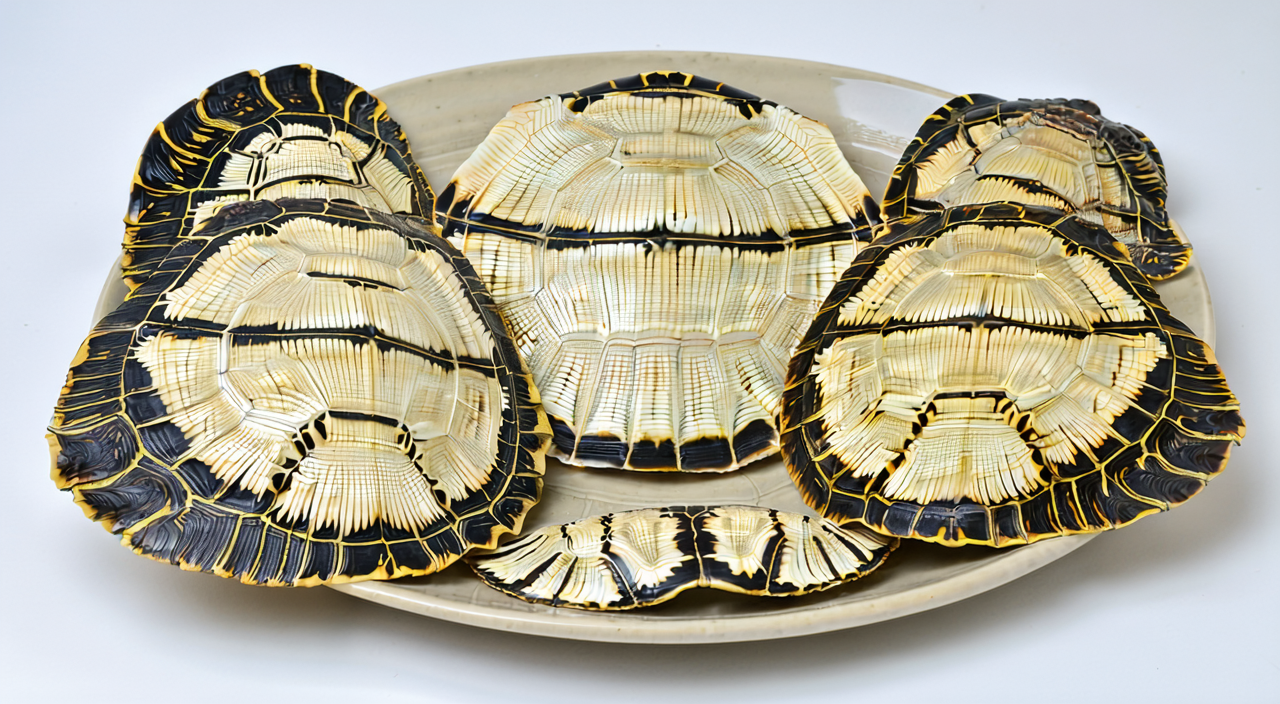
The medicinal part of turtle shell is usually the carapace and plastron of animals in the turtle family. Traditionally, some experience emphasized the plastron, but modern standards more often use the carapace and plastron together. During processing, residual flesh and fascia are first removed, and the shell is cleaned and dried. Vinegar-processed turtle shell is prepared with vinegar, giving a darker color and more brittle texture for further processing. It should be clear that the medicinal part is not equivalent to any animal shell obtained at will. Different species and processing methods can affect identification and safety. Overseas Chinese users should pay more attention to product origin and quality information. Self-collection or processing is not recommended, as it may violate wildlife protection regulations or lead to misuse of shells of unknown origin.
How Does Traditional Chinese Medicine Understand Turtle Shell?
Traditional Chinese medicine often understands turtle shell from perspectives such as nourishing yin and subduing yang, boosting the kidneys and strengthening bones, nourishing blood and calming the heart, and securing the meridians to stop flooding. It is not aimed at any single modern disease name, but is considered within overall pattern differentiation. For example, turtle shell may be suitable for traditional patterns such as yin deficiency with internal heat, floating deficient yang, soreness and weakness of the lower back and knees, forgetfulness, palpitations, restless sleep, tidal fever, and heat in the palms and soles. It is also commonly used in regulating heavy menstrual bleeding or prolonged menstruation attributed to yin deficiency with blood heat or insecurity of the thoroughfare and conception vessels. These are traditional classifications and should not be regarded as promises to treat disease; suitability should still be assessed according to constitution and professional advice.
What Does Modern Research Mainly Focus On?
Modern research on turtle shell focuses more on biological origin identification, processing technology, and quality control. There are many turtle species, and common substitutes and adulterants vary greatly, so origin identification is a prerequisite for ensuring the quality of the medicinal material. Indicators such as heavy metals, pesticide residues, ash, and extractives are often used to evaluate safety. Whether processing is thorough and whether vinegar-processing is properly done also affect later use. The core of modern quality control is not to promote any “efficacy” but to ensure as far as possible clear sourcing, standardized processing, and stable quality. Consumers can begin by checking whether a product is labeled with biological origin, place of origin, and quality information.
What Are the Differences Between Turtle Shell, Softshell Turtle Shell, and Turtle Shell Glue?
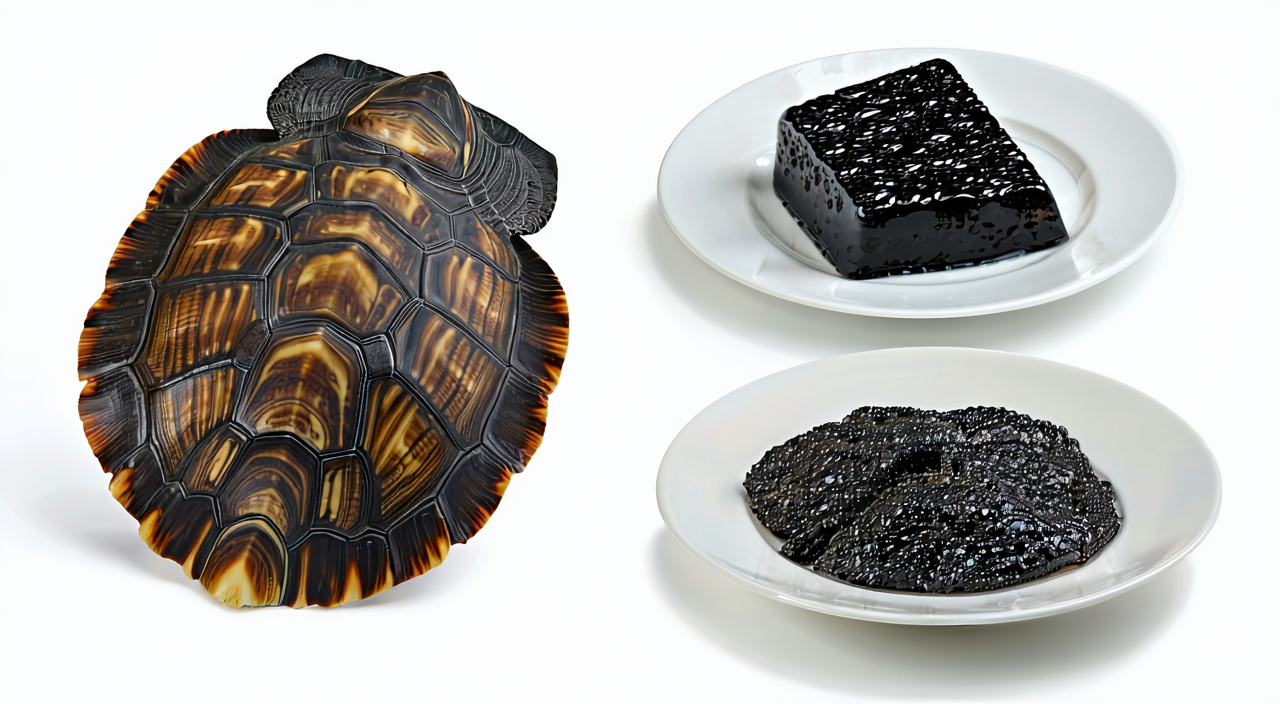
Turtle shell comes from animals in the turtle family. Its shell is relatively thick, and both the carapace and plastron are hard, with obvious horny surface texture and a bony fracture surface. Softshell turtle shell comes from animals in the softshell turtle family; traditionally the carapace is mostly used. It is overall thinner, with a soft marginal skirt, a tougher or more brittle texture, and a color mostly ranging from greenish-brown to blackish-brown. In traditional understanding, turtle shell leans more toward nourishing yin and subduing yang and boosting the kidneys and strengthening bones, while softshell turtle shell leans more toward clearing deficiency heat and softening hardness and resolving masses. Turtle shell glue is a gelatinous product made by decocting and concentrating turtle shell, appearing as dark brown blocks or flakes, and is different from the raw medicinal material pieces. The three differ in source, physical characteristics, and traditional use, and cannot simply replace one another.
Which Traditional Formulas Use Turtle Shell?
In traditional formulas, turtle shell is often combined with prepared rehmannia root, phellodendron bark, anemarrhena rhizome, Chinese angelica root, deer antler glue, and others. Dabuyin Wan is mostly classified as a formula for nourishing yin and descending fire, traditionally used for yin deficiency with exuberant fire. Huqian Wan leans toward the traditional understanding of liver-kidney insufficiency and weakness of sinews and bones. Zuogui Wan is commonly used to replenish true yin and improve the regulating approach for essence-marrow deficiency. Guilu Erxian Jiao combines turtle shell with deer antler glue and other ingredients, traditionally used to supplement both yin and yang and boost essence and replenish marrow. These formulas belong to traditional knowledge; they should not be self-prescribed, nor are they equivalent to modern treatment plans. Whether they are suitable should be determined by considering individual constitution, product instructions, and professional advice.
What Precautions Should Be Taken When Using Turtle Shell?
Traditional experience holds that people with spleen-stomach deficiency cold, poor appetite, loose stools, or pronounced cold-dampness should use turtle shell cautiously, often requiring combination with herbs that warm the middle, regulate qi, or strengthen the spleen. During pregnancy, breastfeeding, in children, older adults, and people with chronic diseases, a doctor or professional should be consulted first. More importantly, turtle shell involves an animal source; wild turtles must not be collected, killed, or processed without authorization, and cross-border purchases may also involve conservation regulations. Overseas users should choose products with legal sources, clear biological origin, and clear quality control, and comply with the regulations of their country or region.
Summary
What turtle shell is can be understood from three angles: source, appearance, and traditional use. It usually refers to the carapace and plastron of animals in the turtle family. Its appearance is characterized by a plate-like plastron and a relatively thick carapace. Traditional Chinese medicine often understands it in terms of nourishing yin and subduing yang and boosting the kidneys and strengthening bones, and it appears in traditional formulas such as Dabuyin Wan and Zuogui Wan. When learning about it, one should distinguish turtle shell, softshell turtle shell, and turtle shell glue, and pay attention to legal sources and individual differences. This article is for informational reference only and cannot replace professional diagnosis or treatment advice.