
What Is Sea Pumice? Medicinal Parts, Identification, and Common Formulas
When encountering Traditional Chinese Medicine overseas, many people hear the name “Sea Pumice.” It is neither as visually intuitive as root, stem, or leaf herbs, nor as heavy as mineral medicines. Instead, its light, porous, and buoyant characteristics spark curiosity. However, confusion has always surrounded its origin; some mistake it for any stone picked up by the seaside, while others equate it with ordinary pumice used in construction. This article will sort out the relevant knowledge of Sea Pumice from aspects including its appearance, origin, traditional understanding, common formulas, and precautions, offering interested readers a guide for further understanding.
What Does Sea Pumice Look Like? How to Identify It?
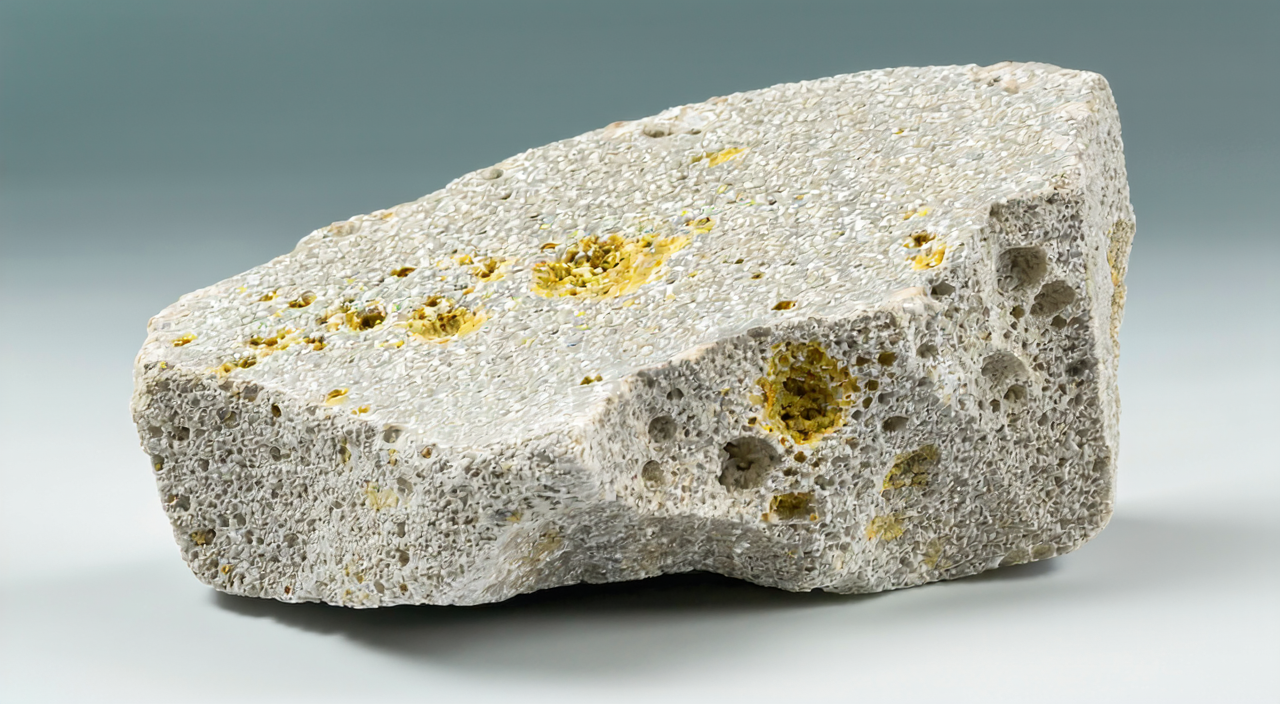
Visually, the first impression Sea Pumice leaves is often “light” and “porous.” It mostly appears as irregular blocks of varying sizes with rough surfaces, covered densely with holes, somewhat resembling coral reef fragments eroded by seawater over a long time. The color is commonly grayish-white, yellowish-white, or light grayish-brown, and fine pores can also be seen on the cross-section.
One of its most typical features is its light weight and insolubility—it does not sink in water. If a piece of Sea Pumice is placed in water, it usually floats on the surface, which is the origin of the name “Pumice.” However, buoyancy alone is not enough to determine authenticity, as some artificially processed porous materials can also float. Therefore, identification requires combining an assessment of its source with its overall properties.
Traditional experience suggests that high-quality Sea Pumice should be light in weight, grayish-white in color, with fine and evenly distributed pores, and without obvious sediment or impurities filling the pores. If it feels heavy in the hand, has a dull and dark color, or the pores are blocked by dirt, it often indicates unsatisfactory quality or that it is not a standard source of Sea Pumice.
What Is the Medicinal Part of Sea Pumice?
The medicinal part of Sea Pumice is not ordinary rock but the porous structure formed by the skeletons or shell-like substances of specific marine organisms through long-term geological or oceanic processes. Descriptions of Sea Pumice sources vary in different regional Chinese herbal medicine standards. Commonly, it mainly refers to the dried skeletons of marine animals like Costazia costazii or Costazia aculeata (bryozoans). Some areas also classify the porous vitreous rock formed by volcanic eruptions (pumice) as another category, but in traditional applications, the two are often treated distinctly.
Standard medicinal Sea Pumice must undergo cleaning and processing after collection. Generally, it is first washed to remove attached sediment, salt, and impurities. After drying, it is crushed or ground into a fine powder for use. Since the raw product is difficult to decoct effectively and has a hard texture, grinding it into fine powder facilitates subsequent formulation. It is important to emphasize that Sea Pumice is not an ordinary coastal stone, and one should not collect unidentified similar substances for direct use. Randomly collected samples may contain harmful minerals or microorganisms, making safety difficult to guarantee.
How Does Traditional Chinese Medicine View Sea Pumice?
In the framework of Traditional Chinese Medicine, Sea Pumice is often regarded as a medicinal substance with a cold nature and a tendency to descend. Its functional direction mainly revolves around clearing lung heat and transforming phlegm, softening hardness and dissipating masses, and promoting urination and relieving strangury.
Clearing the lungs and transforming phlegm is one of the most frequently mentioned uses of Sea Pumice. Traditionally, it is believed that its light texture allows it to float upward into the lungs, and combined with its cold nature, it helps address cough, viscous sputum, and other issues related to lung heat and phlegm heat. Particularly in strategies for managing chronic bronchitis and heat-type coughs, Sea Pumice might be combined with ingredients like Snakegourd Fruit, Fritillaria, and Baical Skullcap to help clear lung heat and dilute sputum.
Softening hardness and dissipating masses is often applied to nodular conditions like scrofula and goiter. Chinese medicine believes that salty flavors can soften hardness; Sea Pumice has a salty taste. When combined with herbs like Kelp and Seaweed, it may help soften masses and disperse accumulations. However, this direction is more of a traditional experience, and whether it is suitable requires a comprehensive judgment based on an individual’s constitution and modern examination results.
Furthermore, Sea Pumice is also believed to promote urination and relieve strangury. In cases of damp-heat strangury and dysuria, it can be used as an auxiliary ingredient in relevant formulas. Overall, though, clearing lung heat, transforming phlegm, softening hardness, and dissipating masses remain its core traditional application pathways.
What Have Modern Studies Discovered?
Modern research on the components of Sea Pumice is relatively limited, but some analyses have revealed that it mainly contains calcium carbonate, magnesium, silicates, and small amounts of elements like aluminum, iron, and potassium. Originating from marine organism skeletons, its composition is primarily inorganic salts, with an abundant pore structure and a relatively large specific surface area.
Some experiments have observed a certain antitussive tendency of Sea Pumice fine powder in ammonia-induced cough models, and its water extract has shown certain expectorant activity in vitro, which somewhat echoes its traditional role of clearing the lungs and transforming phlegm. Additionally, its porous structure has been considered in research for potential adsorption of certain heavy metal ions, but this direction mainly remains at the material level and hasn’t led to mature medicinal conclusions yet.
It should be noted that modern research is not directly equivalent to effects in human use. These data points serve more as background information and should not be used as a basis for self-administration or promotion.
How to Differentiate Sea Pumice, Ordinary Pumice, and Clam Shell?
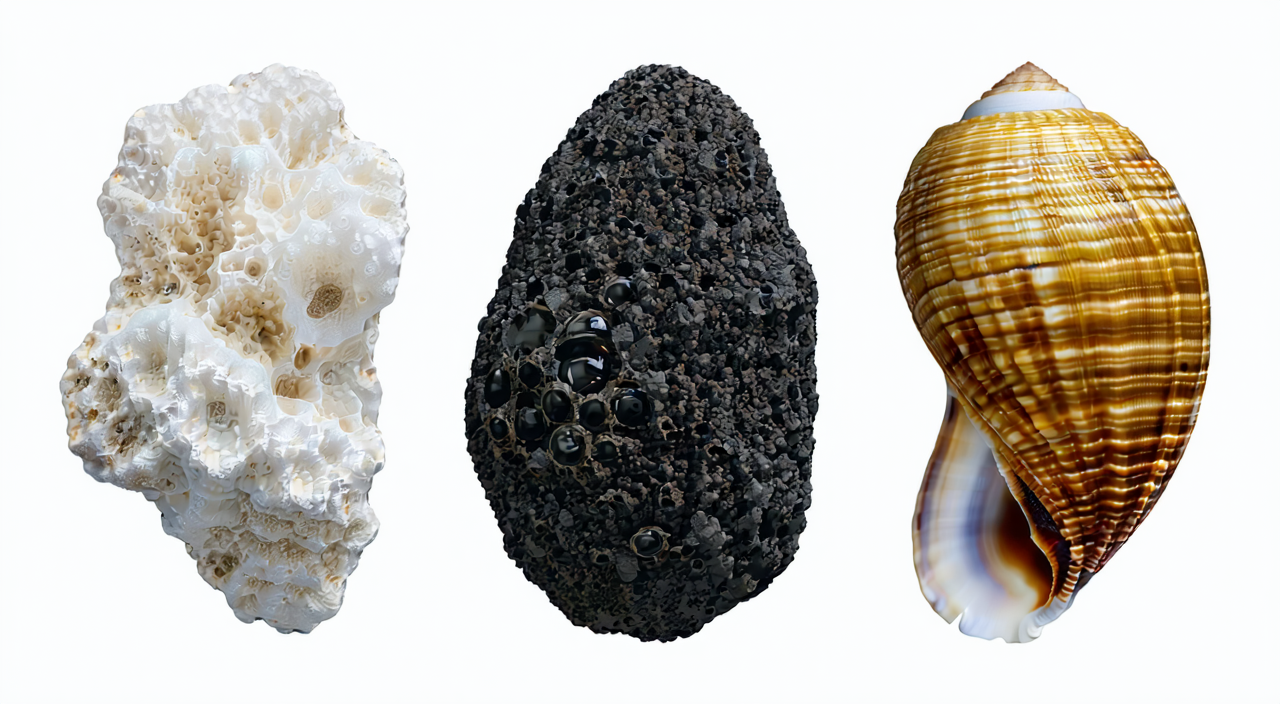
Items easily confused on the market mainly include ordinary pumice (volcanic rock) and clam shell. These three can be roughly distinguished by their source, pore characteristics, and composition.
Ordinary pumice is a porous vitreous rock formed by volcanic eruptions, primarily composed of silicon dioxide. Although it also floats on water, its holes are often more irregular, appearing elongated or bubble-like, with a vitreous luster on the surface and a brittle, hard texture. This is completely different from the marine biological skeletal origin of Sea Pumice. In some regional traditional Chinese medicine classifications, “Pumice” might be listed as a medicinal material, but it is not entirely equivalent to the Sea Pumice discussed in this article, so attention must be paid to specific specifications before use.
Clam shell refers to the shell of clams such as Meretrix meretrix or Cyclina sinensis. Its main component is also calcium carbonate, but its appearance is flaky or slightly triangular, with growth lines on the surface, a solid and hard texture, and no fine spongy pores. It sinks immediately in water, completely unlike the light, floating Sea Pumice.
In short, authentic Sea Pumice is light and porous, grayish-white and opaque, and floats on water; ordinary pumice often has a vitreous quality and directionally oriented holes; clam shell is heavy, solid, and has no buoyancy. If you encounter a sample of unknown origin or suspicious appearance when purchasing or learning, it is advisable to refer to standard information from reliable channels and not rely solely on the “ability to float” for judgment.
Which Formulas Use Sea Pumice?
In traditional formulas, Sea Pumice does not appear as frequently as ingredients like Licorice or Poria, but it often serves as a distinctive complementary herb in classic combinations addressing phlegm-heat cough, scrofula, and goiter.
Sea Pumice Powder (Hai Fu Shi San) is one of the more well-known representative formulas, traditionally used for lung-heat cough with difficult-to-expectorate sticky phlegm. In this formula, Sea Pumice is often used together with Snakegourd Seed, Fritillaria Cirrhosa, and Platycodon, aiming to clear heat and transform phlegm while benefiting the lungs to stop coughing. Sea Pumice Pill (Hai Fu Shi Wan) is another type of internal pill formula with Sea Pumice as the main ingredient. Its approach tends more toward softening hardness and dissipating masses, possibly combined with Kelp, Seaweed, and Prunella, used for conditions like scrofula and thyroid enlargement.
Additionally, Sea Pumice is sometimes added to broader lung-clearing and phlegm-transforming formulas based on the specific syndrome. For example, when addressing the pattern of phlegm-heat obstructing the lung with symptoms like cough and chest tightness, Sea Pumice might be combined with Baical Skullcap, White Mulberry Root-bark, and Hogfennel Root. Different formulas and varying proportions target significantly different constitutions and syndromes. When choosing related products, it is advisable first to clarify one’s own symptom tendencies and make an informed decision based on product instructions and professional judgment, rather than self-prescribing simply upon seeing “clears lung and transforms phlegm.”
What Are the Precautions for Using Sea Pumice?
First, authenticity and source control are critical. Due to its unique appearance, there may be instances on the market where ordinary pumice, artificial porous materials, or even cement blocks are passed off as Sea Pumice. Unprocessed counterfeits may contain unknown ingredients, industrial additives, or microorganisms, posing a high safety risk. Therefore, it is important to choose products from standard sources and avoid loose, unknown-origin goods.
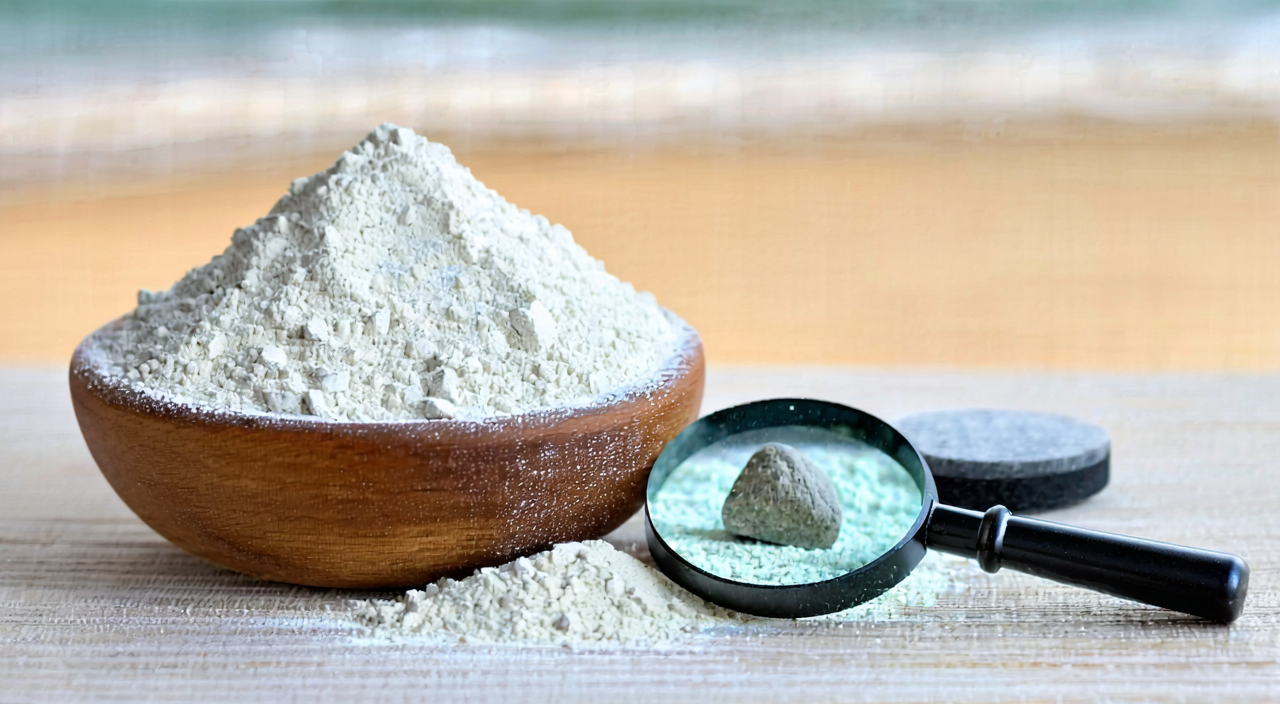
Secondly, the issue of dust inhalation requires attention when using powdered Sea Pumice. The fine powder is light and easily airborne; excessive inhalation may irritate the respiratory tract, so appropriate protection during handling is advised. Also, as a marine-derived medicinal substance, Sea Pumice carries certain risks of heavy metal and mineral impurities, such as lead, arsenic, and mercury, which may accumulate in biological skeletons. Standard products typically undergo processing and testing, but self-collected, self-made, or unclear-origin samples make these risks uncontrollable.
It is especially important to remind that nobody should collect pumice-like objects from the seaside to use as medicine. Factors like marine pollution, microbial attachment, and complex mineral compositions can make wild-collected specimens completely unsuitable for ingestion. For individuals who are pregnant, breastfeeding, have known allergies, or are taking other medications, it is even more crucial to consult a doctor or pharmacist before using any Sea Pumice-related preparation. Even for external use or ornamental purposes, prolonged contact with broken skin should be avoided.
Summary
Sea Pumice is a distinct-looking medicinal material with relatively clear traditional applications. Key identification points include its grayish-white color and light, porous, buoyant characteristics. Its standard source is primarily the skeletal structures of specific marine organisms, not to be confused with ordinary volcanic pumice or clam shells. From the perspective of Chinese medicine, it is mostly used for clearing the lungs, transforming phlegm, softening hardness, and dissipating masses, appearing in formulas like Sea Pumice Powder and Sea Pumice Pill. However, due to factors involving source, processing, and individual constitution, Sea Pumice is not a material for casual use, and attention must be paid to authenticity identification and safety issues before use. This article is for popular science reference only and cannot replace professional diagnosis or treatment advice.