
What Is Black Sesame? Medicinal Parts, Identification, and Common Formulas
Black sesame is a common small seed in daily eating, but in the context of Chinese medicinal materials, what black sesame is often goes beyond a food question. It comes from the mature seeds of sesame and can be used as a medicinal herb or a medicine-food homologous material after harvesting, cleaning, drying, and other processing. Medicinal black sesame, food-grade sesame, and sesame oil are not exactly the same: the former places more emphasis on the overall characteristics and processing method of the mature seed, while the latter are more oriented toward daily nutrition or oil extraction. This article organizes basic information about black sesame from the perspectives of appearance identification, medicinal part, traditional understanding, differences from other seeds, common formulas, and precautions for use.
What Does Black Sesame Look Like? How Is It Identified?
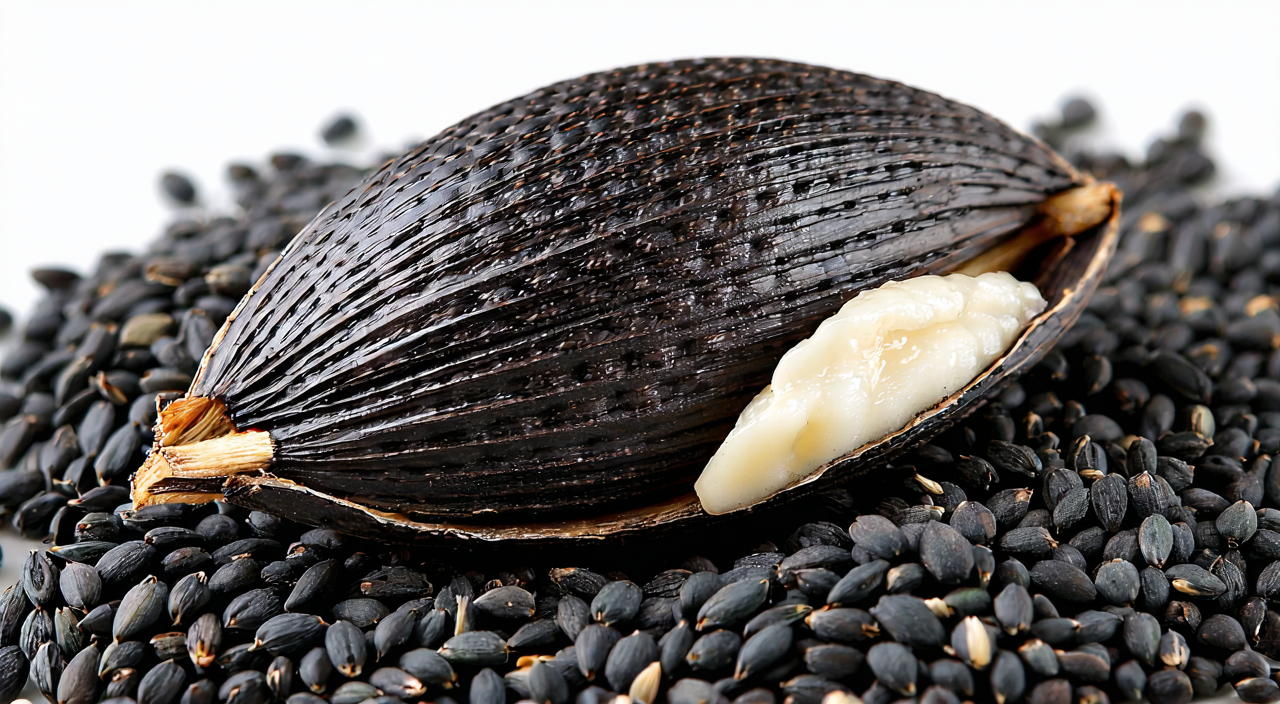
The appearance of black sesame is not complicated, but if you judge only by color, it can easily be confused with other black seeds. Generally, black sesame is flattened and ovoid, slightly pointed at one end and rounder at the other, with a small overall size of about 2–3 millimeters. The seed coat is black or black-brown, with fine net-like surface markings, and it feels slightly rough to the touch. Under magnification, the surface is not entirely pure black and sometimes shows black-brown shading variations. The hilum is located in the depression at the pointed end and may be slightly lighter in color.
If you gently crush black sesame open, the interior is usually a white or milky-white, oily cotyledon. This is a key identification point for black sesame. Although the seed coat is black, the cotyledons are whitish and noticeably oily. When crushed with the fingertips, it leaves an oil-like mark and gives off a nutty aroma. If the interior is yellowed, darkened, or has a musty smell, the seed may have aged or deteriorated and is no longer suitable for use.
Points to Note in Daily Identification
Black sesame seeds are small and can easily be mixed with fine sand, impurities, or seeds of similar color but different shape. When observing, you can judge from three aspects: shape, surface texture, and oiliness after crushing. Seeds with too uniform or shiny color and lacking natural texture require extra caution. Some dyed or improperly processed sesame seeds may look abnormal, but whether they release color after soaking and whether the smell is natural can only serve as auxiliary references and cannot replace verification of proper source and quality.
What Is the Medicinal Part of Black Sesame?
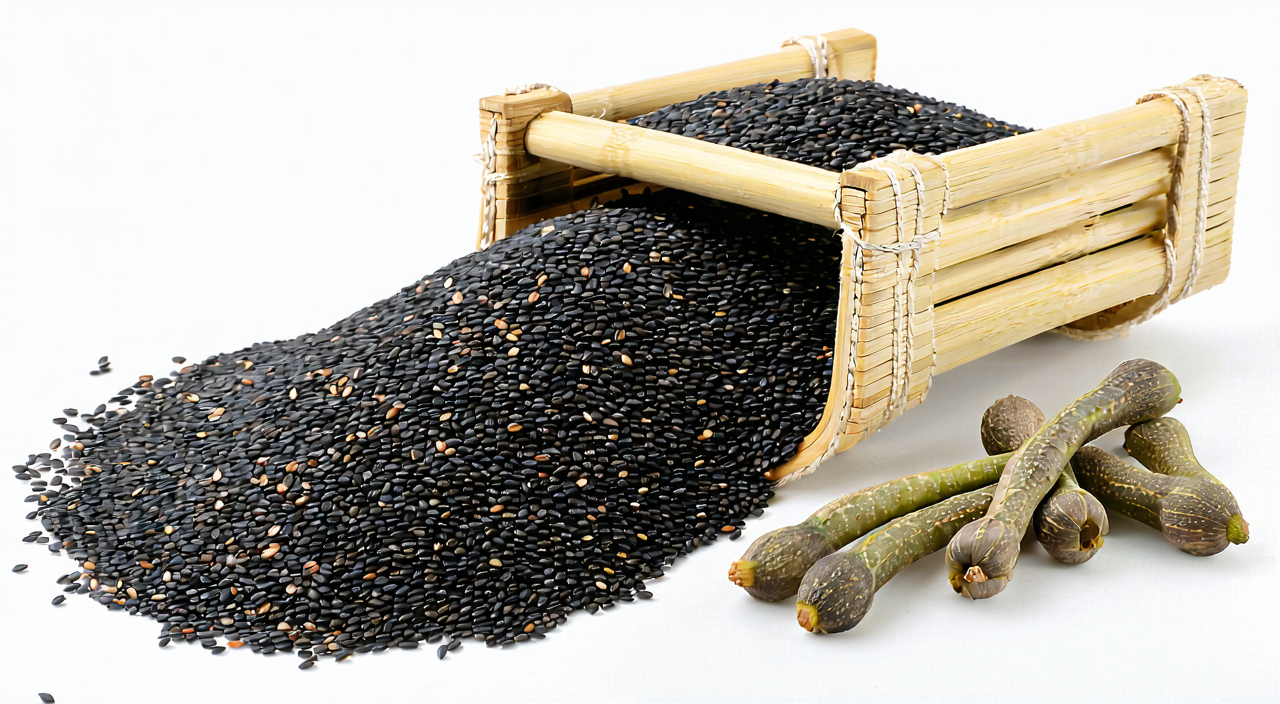
The medicinal part of black sesame is the mature seed. Here, maturity is very important. Traditionally, harvest takes place after the sesame capsule matures and the seeds become full, rather than using immature tender seeds. After harvesting, the seeds usually need to have impurities removed and be sun-dried or dried at low temperature so they remain intact, dry, and easy to store.
Raw Use and Stir-Frying
In Chinese herbal medicine, black sesame can be used raw or after stir-frying, with different considerations. Stir-fried black sesame is usually heated slowly over gentle or medium-low heat until the aroma emerges and the surface becomes slightly oily. After stir-frying, the smell is more fragrant and the oil is easier to perceive. Some traditional uses prefer grinding it after stir-frying or adding it to pills and powders. Raw sesame has a high oil content and requires even more attention to moisture and insect prevention during storage. Whether different processing methods change the strength of effects still needs to be judged in the context of specific formulas and individual conditions.
How Does Traditional Chinese Medicine Understand Black Sesame?
Traditional Chinese medicine often understands black sesame from the perspective of nourishing essence and blood, moistening dryness, and lubricating the intestines. It is often classified as a supplementing or dryness-moistening material, suitable for some conditions arising from insufficiency of essence and blood and dryness of body fluids, such as premature graying of hair and beard, dizziness and blurred vision, and constipation with dry stools. Here, suitability does not mean direct treatment; rather, it is viewed as a medicine-food homologous material in a broader regulating approach.
Why Is It So Often Associated with Moistening?
Black sesame is rich in oil and has a moistening texture. Traditionally, its moistening nature is thought to act on the intestines and may also help nourish liver blood and kidney essence. Therefore, many traditional formulas for moistening the intestines, nourishing blood, and benefiting essence include black sesame. This logic comes more from traditional experience and holistic pattern differentiation than from a simple correspondence to a modern disease. Whether it is suitable also depends on individual constitution and whether there is damp stagnation, abdominal bloating, or a tendency toward diarrhea.
What Does Modern Research Say About Black Sesame?
Modern research pays more attention to black sesame’s fats, protein, vitamin E, phytosterols, lignans, minerals, and other components. It is rich in unsaturated fatty acids and dietary fiber and has attracted attention in daily nutrition. Some experimental studies have also explored possible antioxidant and lipid metabolism-regulating effects, but these remain at the research stage and cannot be directly interpreted as therapeutic benefits. For most people, black sesame can be part of an ordinary diet, but it should not be seen as a replacement for medication or as having definite effects simply because it contains certain components.
How Does Black Sesame Differ from Black Soybean and Hemp Seed?
These three substances overlap in color or use, but they differ in appearance, texture, and direction of action.
Black Sesame vs. Black Soybean
Black soybean is the seed of a leguminous plant. Its seeds are usually much larger than black sesame, mostly kidney-shaped or oval, with a black seed coat but a yellowish or greenish kernel inside. Black sesame is the seed of sesame in the Pedaliaceae family, with small grains, a whitish interior when crushed, and a stronger oily feel. In short, black soybean leans toward legume protein and fiber, while black sesame leans toward an oily seed. Although their traditional uses may overlap, they should not be substituted for each other.
Black Sesame vs. Hemp Seed
Hemp seed is also an oily seed, from the mature seed kernel of the Cannabis sativa plant in the Moraceae family. Its seeds are slightly larger than black sesame, relatively rounded and blunt, with a grayish-green or yellowish-brown surface, sometimes with darker markings. Black sesame is darker in color, with a black or black-brown surface and smaller size. In traditional intestine-moistening formulas, black sesame and hemp seed sometimes appear together, but hemp seed leans more toward moistening the intestines and promoting bowel movements, while black sesame is often considered together with nourishing essence and blood. The two also differ in oil content and specific methods of use.
Which Formulas Use Black Sesame?
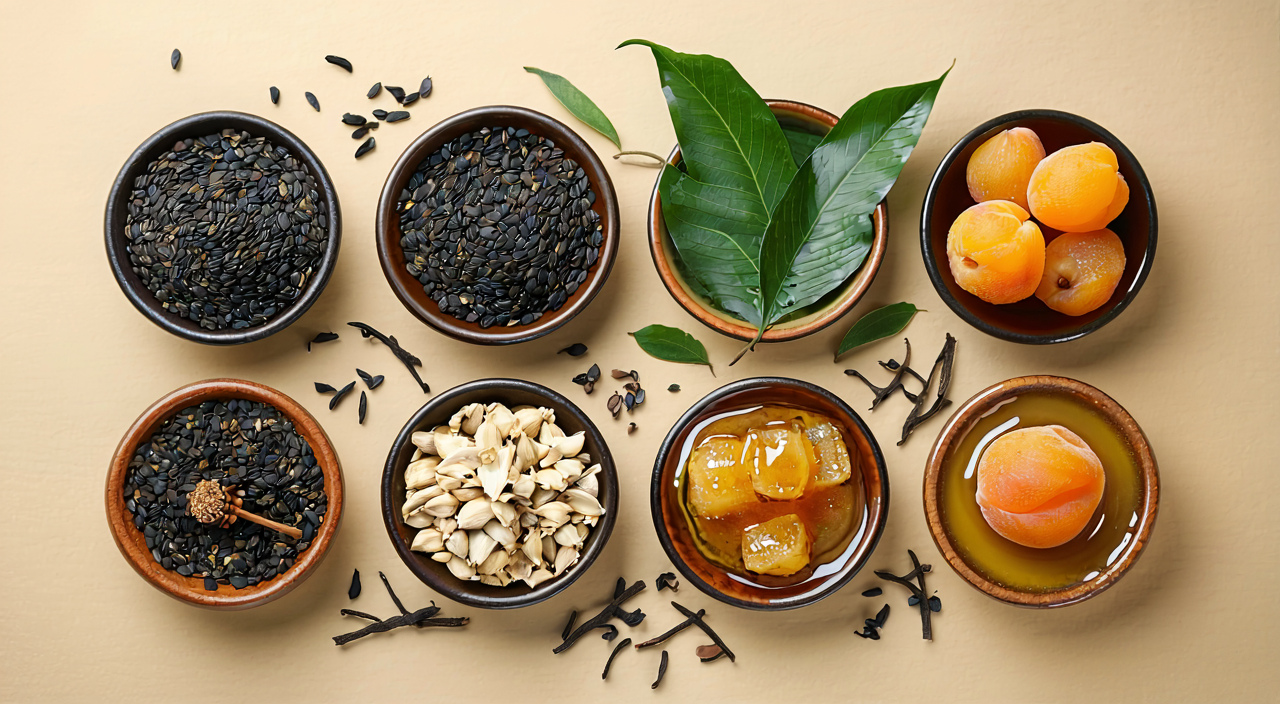
Traditional formulas or preparations containing black sesame mostly revolve around two directions: supplementing and moistening dryness. The following are common directional examples for understanding traditional usage only; they do not mean individuals should choose them on their own.
Sangma Wan
Sangma Wan is a traditional formula composed of mulberry leaf, black sesame, and other ingredients. Its common approach is to clear, moisten, and nourish. Traditionally, it has been used for conditions such as unclear head and eyes, dry and uncomfortable eyes, and lackluster hair and beard. Whether it is suitable should be judged by signs such as dry mouth, dry eyes, and dizziness, as well as a constitution that tends toward dryness or deficiency. The actual proportions and dosage form of the formula should follow official product information and professional advice.
Wuren Wan
Wuren Wan usually contains apricot kernel, peach kernel, biota seed, pine nut, bush cherry kernel, and others. Black sesame is sometimes added as a modification or included as a similar oily seed. This direction is mainly used to moisten the intestines and promote bowel movements, suitable for regulating constipation due to insufficient fluids and dry intestines. Because this formula contains many seed-based ingredients, it is usually not suitable for people with diarrhea or loose stools. Check the product information for specific ingredients and usage, and do not use it by name alone.
Black Sesame Pill
Black Sesame Pill is usually a pill preparation. Traditionally, black sesame is the main ingredient, sometimes combined with black soybean, black jujube, honey, and so on. It is commonly used for daily regulation in directions such as nourishing essence and blood, moistening dryness, and supporting hair. It is more of a slow, gradual regulation and does not mean that taking it a few times will produce noticeable changes. If it is a food-type product, it cannot claim therapeutic effects; if it is a Chinese patent medicine, it should be used according to its drug status, package insert, and relevant professional guidance.
Intestine-Moistening and Blood-Nourishing Type Formulas
There are also intestine-moistening and blood-nourishing formulas that include black sesame. The common approach is to address constipation that is deficient and dry, such as blood deficiency with intestinal dryness. When using them, special attention is needed: not all constipation is suitable. If constipation is accompanied by marked abdominal bloating, dry mouth and bitter taste, sticky stools, or abdominal pain, it may belong to excess, damp-heat, or qi stagnation patterns, and it is not necessarily suitable to use a relatively moistening medicinal material such as black sesame.
What Should Be Noted When Using Black Sesame?
Although black sesame is common, it is not suitable for everyone. First is the allergy issue. People allergic to sesame may experience skin discomfort, mouth itching, gastrointestinal discomfort, or even more serious reactions, and should strictly avoid it. Overseas Chinese who are consuming a large amount for the first time should also be aware of possible allergy.
Second, black sesame has a high oil content, so people with diarrhea, loose stools, indigestion, or a tendency to bloating should not consume large amounts. Daily intake should also be considered within overall calorie control. Black sesame is relatively high in calories, and excessive intake can easily lead to excessive energy intake.
In addition, mold and storage are critical. Oil-rich seeds are prone to oxidation and mold, producing unpleasant odors. If there is a rancid smell, musty smell, caking, or abnormal color, stop consuming them. Store in a sealed, light-protected, moisture-proof container, and refrigerate if necessary.
Also note that food intake is not equivalent to medicinal use. Eating black sesame paste, black sesame glutinous rice balls, or sprinkling a small amount of sesame on rice in daily life is mainly at the food level. If you wish to use it for traditional regulating purposes such as moistening the intestines or supplementing, you should use medicinal materials or products that meet quality requirements and make a comprehensive judgment based on your constitution, symptoms, and professional advice. If long-term constipation, recurrent diarrhea, obvious abdominal pain, blood in stool, black stool, unexplained weight loss, or severe anxiety, chest tightness, or other symptoms occur, consult a doctor or professional promptly and avoid delaying treatment by relying only on dietary therapy.
Summary
As a medicine-food homologous material, the key features of black sesame lie in its mature seed, obvious oiliness, and net-like seed coat, and it should not be treated as the same as other black seeds. Traditionally, it is understood from the perspective of nourishing essence and blood, moistening dryness, and lubricating the intestines, and it appears in formula directions such as Sangma Wan, Wuren Wan, and Black Sesame Pill. Daily food use and medicinal use are not the same thing, and special attention should be paid to allergy, diarrhea, calories, and mold issues. This article is for general informational reference only and cannot replace professional diagnosis or treatment advice.