
What Is Houpo (Magnolia Bark)? Medicinal Parts, Identification & Common Formulas
When learning about traditional Chinese medicine approaches, Houpo is a medicinal herb that is frequently mentioned. It often appears in formulas aimed at regulating qi stagnation in the spleen and stomach or resolving dampness obstructing the middle burner. For friends living abroad, the appearance of prepared Houpo slices, its medicinal parts, and how to distinguish it from similar bark herbs are often the starting points for getting to know this herb. From an educational perspective, this article outlines the appearance characteristics, medicinal parts, common formula applications, and relevant precautions of Houpo, for interested readers’ reference and understanding.
What Does Houpo Look Like? How to Identify It?
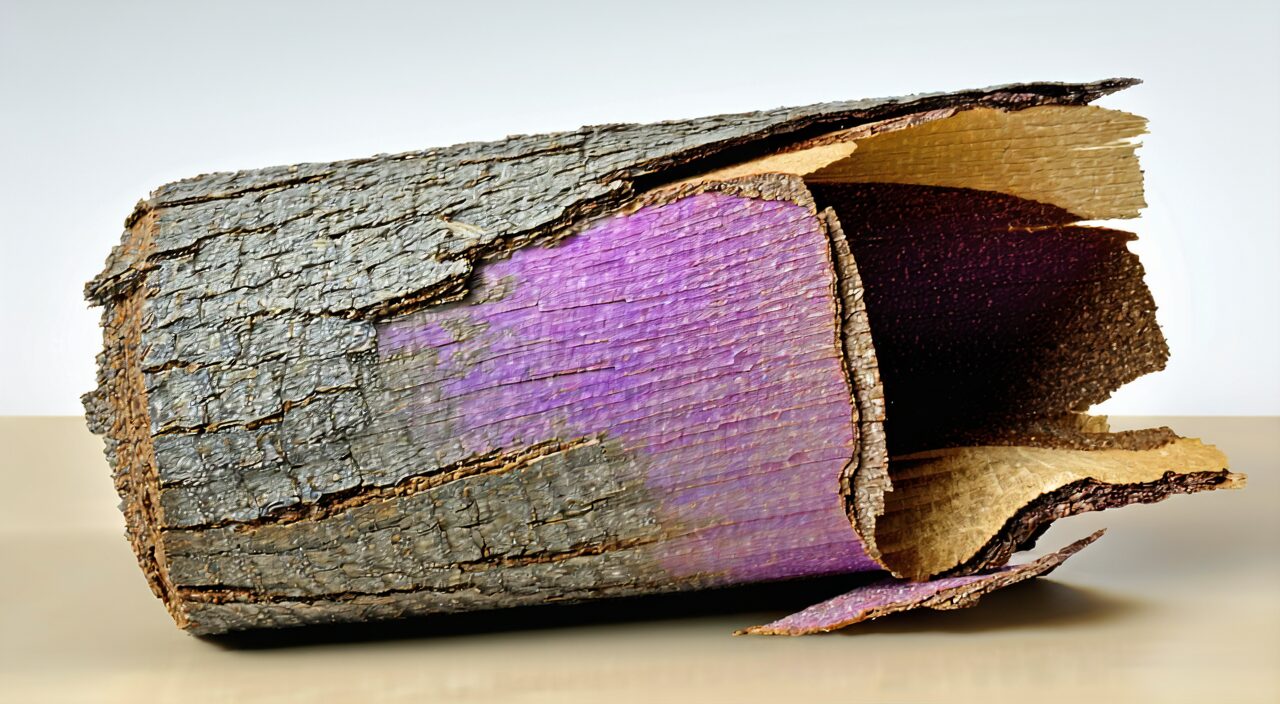
Medicinal Houpo is not the whole trunk but processed bark. Common prepared slices are mainly tubular or rolled shapes, sometimes described as “single rolled tube” or “double rolled tube.” The outer surface is generally grayish-brown or grayish-brown; sometimes a rough cork layer can be seen, slightly scaly. Areas where the coarse bark has been scraped off appear smoother.
The inner surface is a more distinctive identification feature of Houpo. It usually appears purple-brown or deep purple-brown, with a relatively oily and moist texture; a faint oil trace can sometimes be seen when scratched with a fingernail. The cut surface is relatively granular, not rough and fibrous like some other barks. Near the inner side, small crystalline particles may sometimes be visible, which is the “bright silver star” characteristic often mentioned in traditional experiential identification.
In terms of odor, Houpo has a special pungent aroma that is relatively strong but not harsh; it tastes pungent with a slight bitterness. Overall, high-quality Houpo is thick, oily, has a purple-brown cut surface, and a strong aroma. If a sample is at hand, one can combine the rolled shape, purple-brown inner surface, and granular fracture to form a general impression.
What Are the Medicinal Parts of Houpo?
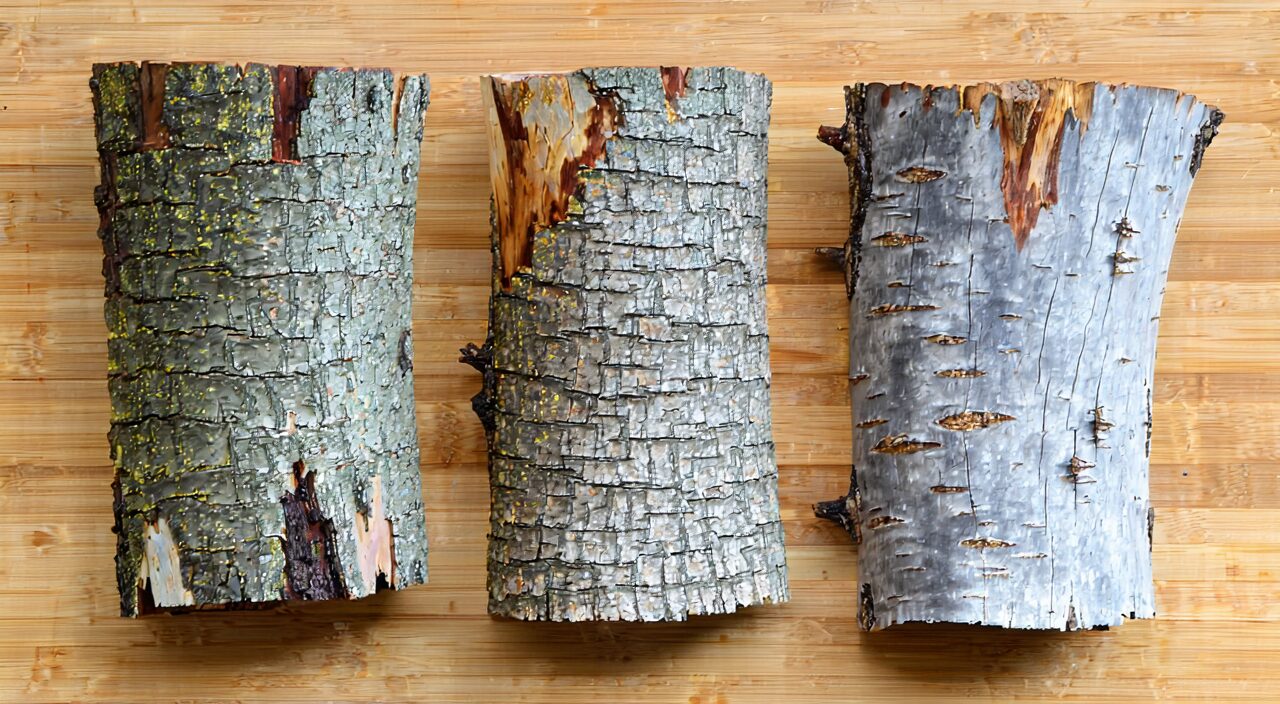
Houpo is derived from the Magnoliaceae plants Magnolia officinalis or Magnolia officinalis var. biloba. The medicinal parts are primarily the dried trunk bark, root bark, and branch bark. Different collection parts are distinguished in traditional use: trunk bark is generally from the main stem, root bark comes from the roots, and branch bark is taken from thicker branches. Among them, trunk bark is often more valued because of its sufficient thickness and oiliness.
Harvesting and processing usually take place from April to June each year. After the bark is peeled, it undergoes a “sweating” treatment, piled to encourage sweating, then steamed to soften, rolled into tubes, and dried. Traditionally, it is further categorized into different commercial grades based on part and shape, such as “tube Houpo (Tongpu),” “root Houpo (Genpu),” and “branch Houpo (Zhipu).” In current clinical practice, ginger-processed Houpo (Jiang Houpo) is more common, where clean Houpo strips are mixed with ginger juice, moistened, and then stir-fried or dried. After ginger processing, Houpo’s pungent, dispersing nature is moderated, making it more suitable for regulating conditions like qi stagnation in the spleen and stomach and dampness obstruction with distension.
How Does Traditional Chinese Medicine Understand Houpo?
From the perspective of traditional Chinese medicine, Houpo is primarily regarded as an herb that dries dampness, dissolves phlegm, directs qi downward, and relieves distension. Its acrid, bitter, warm, and drying nature makes it apt at moving and harmonizing the middle burner. For conditions such as chest oppression, abdominal distension, and poor appetite caused by damp-turbidity obstructing the middle burner and qi movement stagnation, it is often an important choice.
In specific therapeutic approaches, Houpo is often combined with aromatic dampness-transforming herbs or spleen-strengthening and qi-moving herbs. For example, when paired with Cangzhu (Atractylodes) and Chenpi (tangerine peel), it may be used to improve distension and fullness due to dampness encumbering the spleen and stomach. When used with Dahuang (rhubarb) and Zhishi (immature bitter orange), it traditionally appears in strategies for unblocking the bowels and descending rebellious qi. It is important to emphasize that Houpo is biased toward “moving qi” and “transforming dampness” rather than being a simple tonic. Therefore, its use is generally centered on the pathogenesis of qi stagnation and dampness obstruction; whether it is suitable must be judged based on individual constitution and specific manifestations.
Modern Research on Houpo
Modern research on Houpo has mostly focused on its chemical constituents. It is known to contain lignans such as magnolol and honokiol, as well as volatile oils, alkaloids, and other substances. Some in vitro experiments and animal studies suggest that these components may exhibit activities in regulating gastrointestinal smooth muscle, anti-inflammation, and antioxidation. However, such research is mainly at the basic exploratory stage and cannot be directly equated with clinical efficacy. As one aspect of understanding this herb, this information can help readers form a more multidimensional view, but self-use based on it is not recommended.
How Does Houpo Differ from Duzhong and Huangbai?
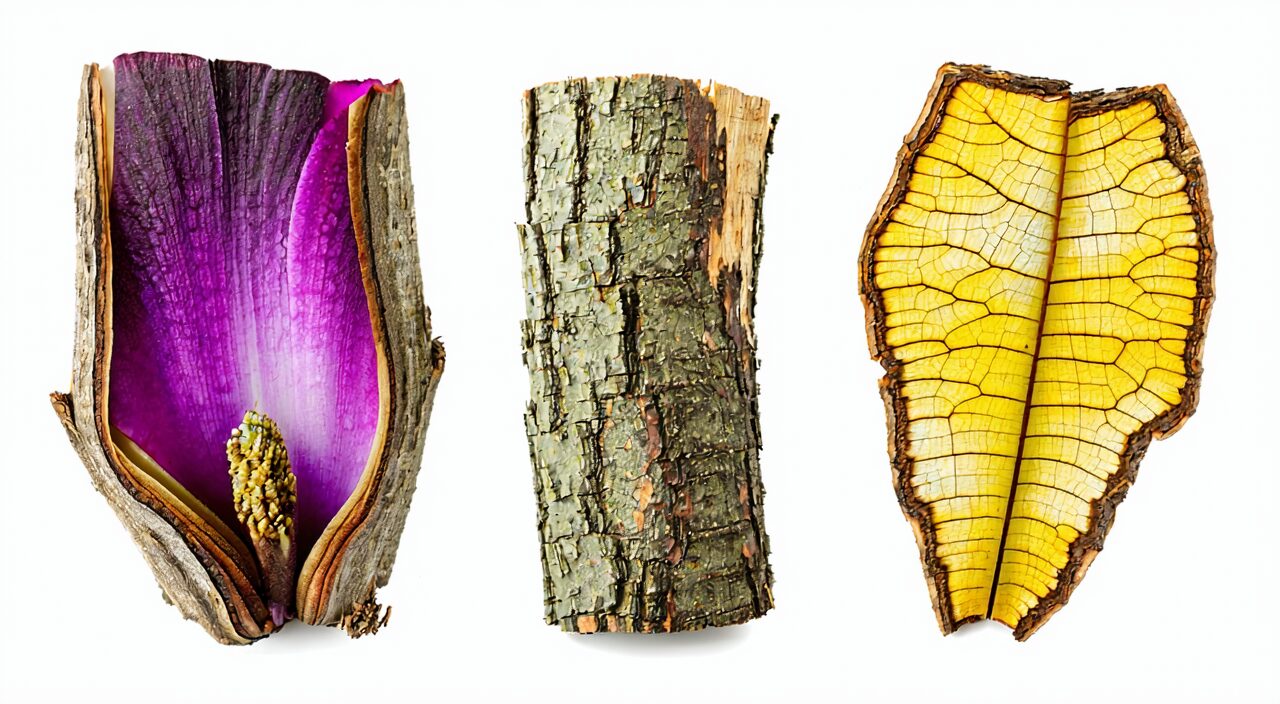
The prepared slices of Houpo, Duzhong (Eucommia bark), and Huangbai (Phellodendron bark) all belong to the bark category and are easily confused at first. In terms of appearance, Duzhong has an outer surface that is light brown or grayish-brown, and an inner surface that is dark purple; the cut surface has fine, dense, elastic silvery-white rubbery threads connecting it—the most prominent identifying feature of Duzhong, which Houpo lacks. Huangbai has an outer surface that is yellowish-brown or yellow-brown, an inner surface that is dark yellow or light brown, and a cut surface that is flaky and layered, distinctly yellow in color, while Houpo’s inner surface is more purple-brown with a more granular fracture.
The differences in odor are also distinct. Houpo has a pungent aroma; Duzhong has a faint smell and slightly bitter taste; Huangbai has a stronger bitter taste and is sticky when chewed. By comparing inner surface color, fracture characteristics, and odor, the three can generally be distinguished. From the perspective of function, each has its own emphasis: Duzhong excels at supplementing the liver and kidney and strengthening sinews and bones; Huangbai is inclined to clear heat, dry dampness, drain fire, and resolve toxins; while Houpo focuses on drying dampness, dissolving phlegm, directing qi downward, and relieving distension. The three differ considerably in therapeutic direction and should not be used interchangeably.
Which Formulas Use Houpo?
Houpo appears quite frequently and can be found in many classical formulas. Here are several common applications, for educational understanding only:
- Pingwei San (Stomach-Soothing Powder): Composed of Cangzhu, Houpo, Chenpi, Gancao (licorice), etc. It is traditionally used for epigastric and abdominal distension and fullness, lack of appetite, and bland taste in the mouth caused by dampness stagnating in the spleen and stomach.
- Banxia Houpo Tang (Pinellia and Magnolia Decoction): Composed of Banxia (pinellia), Houpo, Fuling (poria), Shengjiang (fresh ginger), Suye (perilla leaf), etc. It is often used as a reference approach for sensations like a lump in the throat, chest and rib distension related to emotional constraint and phlegm-qi binding.
- Houpo Wenzhong Tang (Magnolia Bark Center-Warming Decoction): Composed of Houpo, Chenpi, Gancao, Fuling, Caodoukou (alpinia katsumadai), Muxiang (aucklandia), Ganjiang (dried ginger), etc. It is mostly used for cold-dampness obstructing the middle burner, with symptoms such as cold pain and distension in the epigastrium and abdomen and loose stools.
- Da Chengqi Tang (Major Order-the-Qi Decoction): Contains Houpo, Zhishi, Dahuang, and Mangxiao (mirabilite). It belongs to the category of drastic purgative formulas and is traditionally used for Yangming bowel excess patterns presenting with focal distension, fullness, dryness, and repletion; it should only be used under strict pattern differentiation and professional guidance.
The selection of formulas is not a simple stacking of herbs; it requires comprehensive evaluation based on constitution, symptoms, accompanying presentations, and other factors. The above formulas only illustrate some classic positions of Houpo in compositions; whether they are appropriate must be determined based on individual circumstances and by a professional.
Precautions for Using Houpo
Although Houpo is widely used in traditional practice, it is not suitable for everyone or every situation. The following points deserve special attention:
- Generally, it is not advisable to use Houpo casually during pregnancy, as its strong qi-moving action is traditionally believed to potentially affect the gestational state.
- People who are prone to fatigue, dry mouth and tongue, and have a constitution of qi deficiency and fluid depletion should be especially cautious when using Houpo. Single-herb or large-dose use may consume qi and damage fluids, worsening discomfort.
- Houpo has a certain irritant effect on the gastrointestinal tract. If one has a weak spleen and stomach, poor digestion, or is prone to loose stools, the dosage should be adjusted based on traditional pattern differentiation, and long-term self-use is not recommended.
- Certain components in Houpo may have synergistic effects with sedative western medications. Readers taking sedatives or sleep aids should definitely consult a doctor or pharmacist before deciding to use formulas containing Houpo.
In summary, Houpo is an herb that leans toward “moving and dispersing” rather than a daily health tea ingredient; its direction of use and dosage require targeted judgment.
Conclusion
As a traditional medicinal material using bark, the key identification points of Houpo focus on its rolled tubular shape, purple-brown inner surface, and granular fracture. Understanding its differences from Duzhong and Huangbai helps form a basic judgment when encountering it. In traditional Chinese medicine thinking, Houpo mainly acts on the middle burner, addressing distension and discomfort caused by dampness obstruction and qi stagnation through drying dampness, dissolving phlegm, descending qi, and relieving fullness. However, it is not suitable for everyone, especially during pregnancy, for those with qi deficiency and fluid depletion, and for those using sedative medications—extra caution is needed. This article is for educational reference only. If you have specific health concerns, it is recommended to consult a local healthcare professional promptly.