
What Is Amber? Medicinal Parts, Identification Methods, and Common Formulas
Many people associate amber only with jewelry or collectibles, but as a traditional Chinese medicinal material, amber has completely different prerequisites and selection criteria. It originates from the long geological transformation of ancient resin, and not just any transparent stone can be used as medicine. This article covers visual identification, medicinal source, traditional understanding, differences from jewelry amber, common formulas, and usage precautions, helping readers interested in herbal wellness gain a clearer understanding of this medicinal material.
What Does Amber Look Like? How to Identify It?
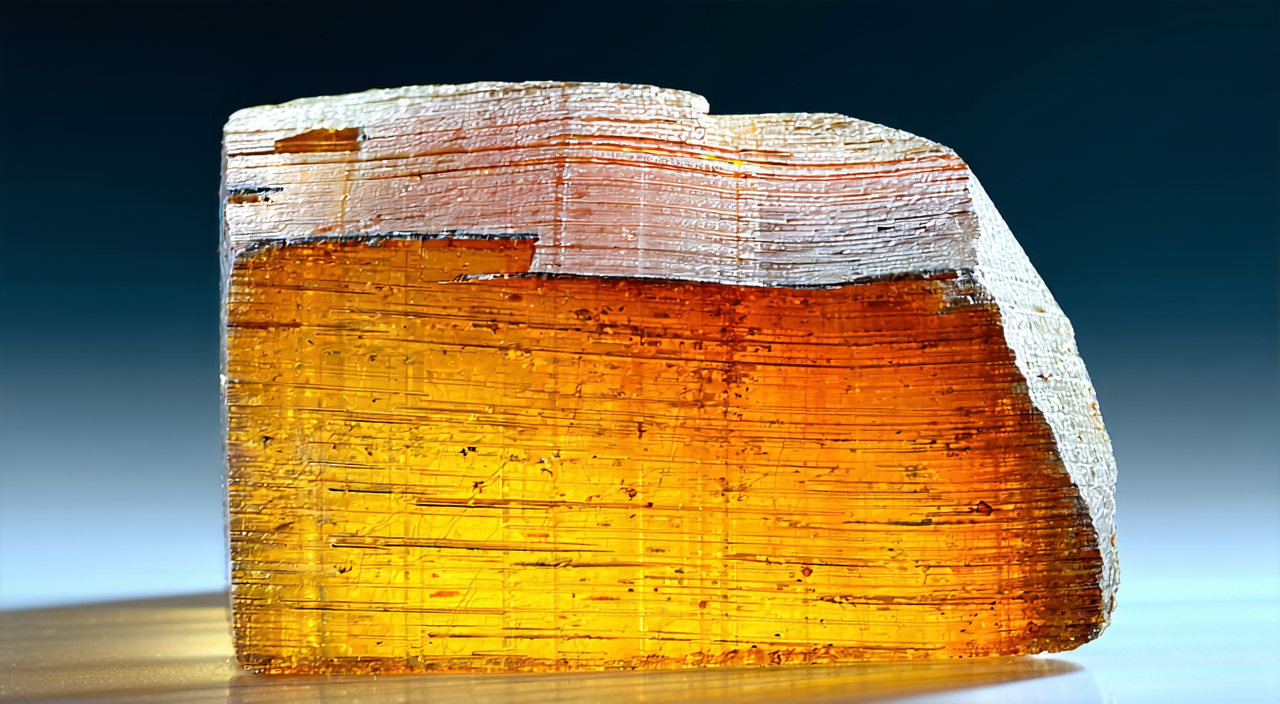
Medicinal amber usually appears as irregular lumps, crushed particles, or granules of varying sizes. Its color range is wide, from light yellow and yellowish-brown to deep reddish-brown; some pieces may show fine impurities or internal textures. In terms of texture, amber has relatively low hardness, produces a rather dull sound when tapped gently, and feels noticeably lightweight when held in the hand—quite different from the heavy sensation of ordinary minerals.
In appearance, medicinal amber is mostly transparent to translucent, with a conchoidal or uneven luster on fractured surfaces and a gentle, warm resinous gloss rather than a harsh vitreous sheen. Some amber can generate static electricity when rubbed and may even attract small bits of paper—an empirical method used by the ancients to aid identification. Moreover, when placed in water, genuine amber often floats or sinks slowly, whereas many imitations sink rapidly. These features together form the basis for preliminary identification of medicinal amber, although accurate judgment still requires a comprehensive evaluation combined with other factors.
What Are the Medicinal Parts of Amber?
The medicinal part of amber is the resin fossil itself. Resin secreted by ancient plants of the Pinaceae and Cupressaceae families, under specific geological conditions and after tens of millions or even hundreds of millions of years of burial and transformation, gradually solidified into a fossil-like substance, which then becomes amber suitable for medicinal use. After harvesting, it needs to be cleaned by removing surface silt and bark layers, and then further processed into fine or extremely fine powder before it can be used in preparations. Currently, commercially available medicinal amber is mostly ground into powder, although some is kept in block form for practitioners to grind before use as needed.
The cleaning and grinding process can affect the quality of amber; improper handling can easily introduce impurities or cause overheating and deterioration. Therefore, traditional practice emphasizes “removing the coarse to extract the fine,” stressing the selection of raw materials with uniform color and pure texture, and preserving its properties through appropriate crushing methods. This process also indirectly illustrates that simply grinding unprocessed raw amber or jewelry fragments for oral consumption not only fails to meet medicinal standards but may also introduce unnecessary safety risks.
How Does Traditional Chinese Medicine Understand Amber?
Within the theoretical framework of traditional Chinese medicine, amber is often categorized as a spirit-calming herb or a blood-activating and stasis-resolving herb. Its nature and flavor are generally sweet, bland, and neutral, and it mainly enters the Heart, Liver, and Bladder meridians. Ancient practitioners, using analogical thinking, believed that resin transformed into amber over a thousand years carries the intention of “consolidating the spirit” and “settling fright.” Therefore, it has often been used in approaches aimed at nourishing the heart, calming the mind, and settling fright. Especially for issues such as restlessness, difficulty falling asleep, or night crying in children following a fright, amber may serve as one of the auxiliary choices.
At the same time, amber also has the functions of activating blood, resolving stasis, promoting urination, and freeing strangury. In some traditional approaches, it has been used for menstrual irregularities caused by blood stasis, retained lochia after childbirth, or for painful, difficult, and dribbling urination—usually administered in small doses in powder or pill form. It should be noted that these understandings are based on observational experience within traditional thinking; their effectiveness varies from person to person, and suitability must be determined by considering individual constitution, symptom presentation, and professional judgment. They should not be directly interpreted as specific remedies.
Preliminary Findings from Modern Research on Amber
Modern laboratory research mainly focuses on organic components in amber, such as succinic acid, succinate esters, and small amounts of volatile oils. Some in vitro studies suggest that succinic acid may possess certain central sedative and anticonvulsant activities, providing a preliminary reference for the traditional use of “settling fright and calming the mind.” Other studies at the cellular and animal levels have observed that amber extracts show a certain tendency to intervene in inflammation-related models, but the evidence is still mainly at the experimental stage, and high-quality human clinical data remain insufficient.
Therefore, the preliminary findings of modern research are more about offering certain clues for understanding rather than providing definitive endorsements of amber’s efficacy. For readers, knowing this information helps form a more comprehensive view, but amber should not be regarded as a single-ingredient drug with confirmed pharmacological actions, nor can it replace conventional diagnosis and treatment.
How Does Medicinal Amber Differ from Jewelry Amber and Rosin?
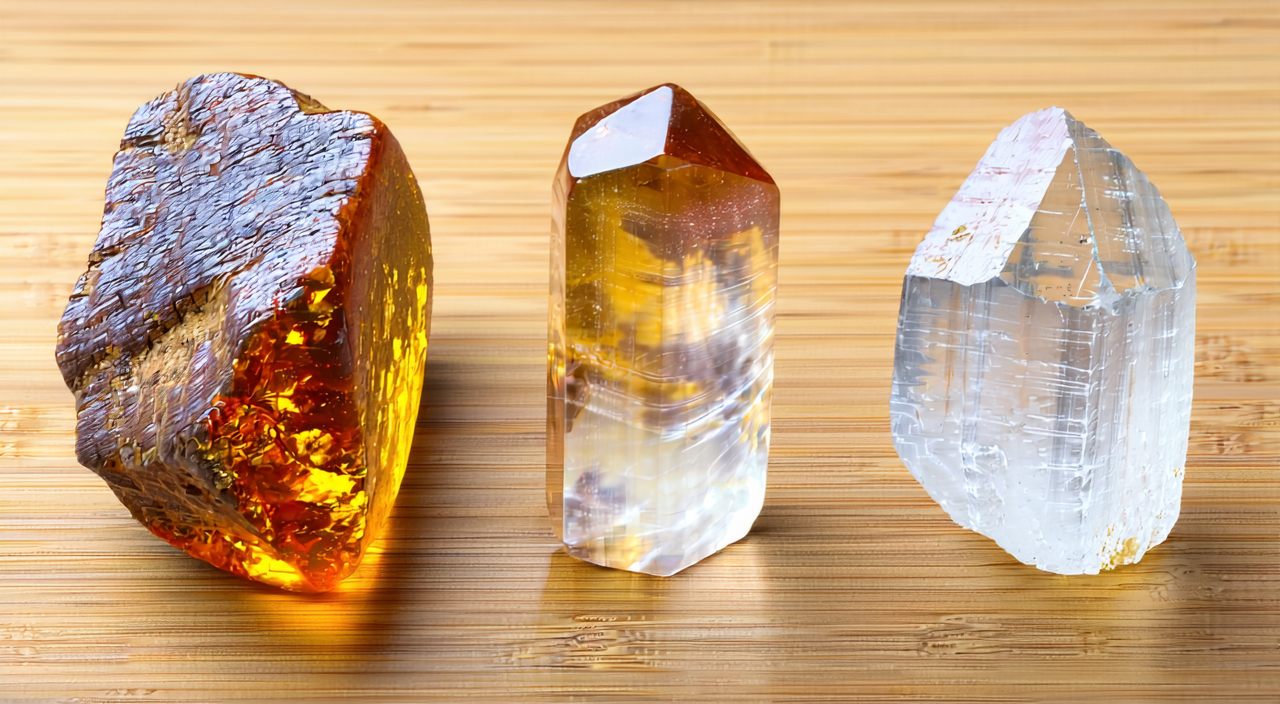
Although both medicinal amber and jewelry amber originate from fossilized resin, there are distinct differences in their selection criteria. Jewelry amber prioritizes vivid color, high transparency, and few internal impurities, and may sometimes undergo heat treatment or filling optimization to improve clarity and durability. Such optimized amber may involve the introduction of other substances and is unsuitable for medicinal use. Medicinal amber places greater importance on naturalness and safety, with relatively lower demands on visual transparency; some darker-colored, semi-transparent, or even opaque lumps are actually closer to traditional medicinal requirements.
Another easily confused substance is rosin. Rosin is resin directly secreted by pine trees, without having undergone a long geological fossilization process; it is relatively soft, has a low melting point, a strong odor, and is much younger than amber. Although some rosin resembles amber in appearance, rosin is not a fossil-type medicinal material; its nature, flavor, and traditional functions are different and cannot simply replace amber. In practical identification, one can scratch the surface with a fingernail: amber is relatively hard and does not easily leave a visible scratch, whereas rosin is comparatively brittle and more easily marked. Understanding these differences can help avoid mispurchasing and misuse.
Which Formulas Include Amber?
Traditional formulas or proprietary Chinese medicines containing amber are mostly formulated around the directions of calming the mind and settling fright, activating blood and resolving stasis, and promoting urination and freeing strangury. Below are several well-known formulas. This information is provided only for understanding traditional culture; specific use must be determined based on actual situations and professional advice through comprehensive assessment.
Amber Baolong Pill is one of the classic formulas commonly used for children’s regulation. Traditionally, it is mainly used for restlessness, night terrors, and unsettled sleep caused by fright or heat in the heart and liver. Its composition often includes ingredients such as Tianzhuhuang (Bamboo Sugar), Dannanxing (Arisaema cum Bile), and Jiangcan (Bombyx Batryticatus) to enhance the effects of settling fright and resolving phlegm. In Chinese medical thinking, such combinations are believed to help clear heat, resolve phlegm, calm the mind, and settle fright, but children have unique constitutions, and suitability must be judged under professional guidance.
Amber Powder is more often used for regulating gynecological conditions related to blood stasis. In traditional records, Amber Powder has been used for irregular menstruation, dysmenorrhea, and retained lochia caused by internal obstruction of static blood. It is often combined with Myrrh (Moyao), Corydalis (Yanhusuo), and Angelica Sinensis (Danggui) to synergistically activate blood, resolve stasis, regulate menstruation, and relieve pain. However, such formulas are not suitable for all constitutions; those with prominent blood heat or yin deficiency may need to exercise particular caution.
Amber Pill has a relatively broad application range. In some classical texts, it is used as an auxiliary measure for lower-jiao damp-heat patterns such as difficult urination and painful, dribbling urination. Through combinations with diuretic and strangury-freeing herbs like Mutong (Akebia), Bianxu (Polygonum Aviculare), and Poria (Fuling), amber plays a role in dispersing stasis and opening the orifices. These formulas are usually placed within the framework of promoting urination; they do not rely on amber alone, and the overall thinking still prioritizes pattern differentiation.
All the above formulas are the results of accumulated traditional experience. Whether they are suitable choices must be comprehensively evaluated based on the user’s current physical condition, constitutional characteristics, and formula composition; they should not be self-applied based solely on a single symptom.
What Should Be Noted When Using Amber?
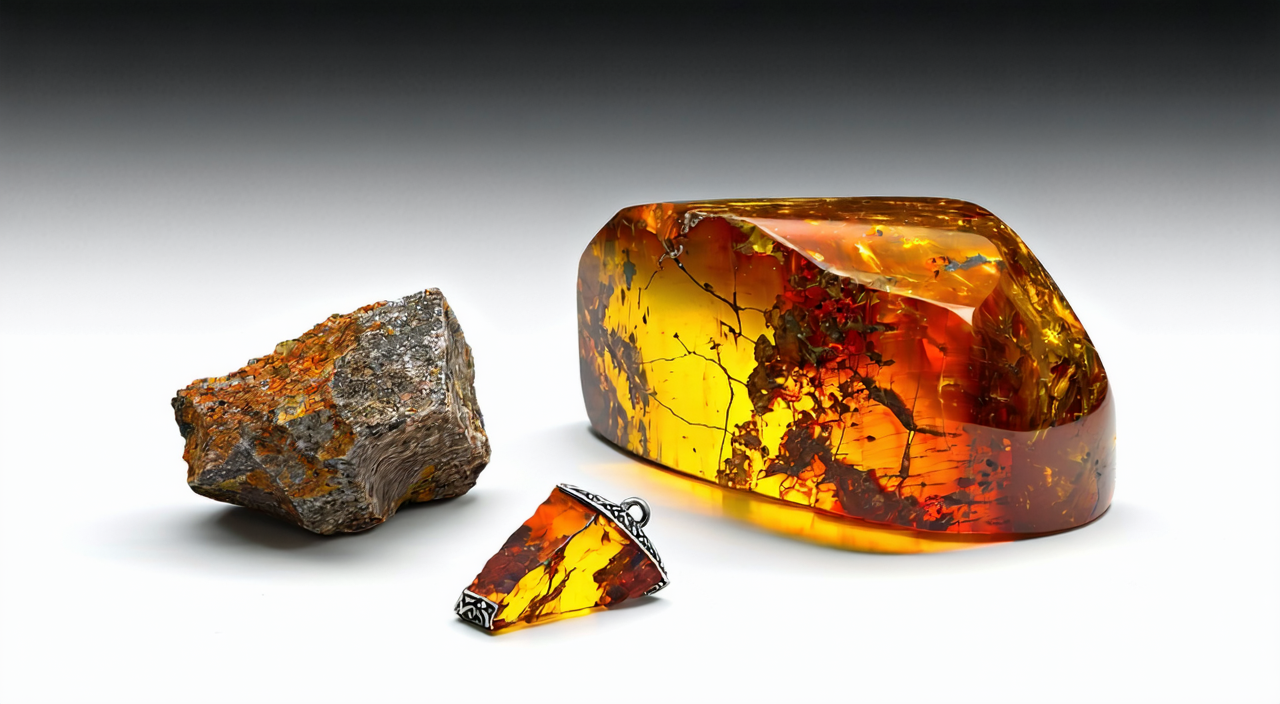
Although amber is a traditional medicinal material, there are some important safety points to note in its actual use. The first concerns authenticity and purity. The market may contain instances where synthetic resins, plastics, or inferior copal resins are passed off as amber. Such counterfeits not only lack the corresponding traditional medicinal value but may also contain unknown chemical additives. Dyed amber also appears occasionally; some merchants apply coloring treatments to mimic the color of aged amber, and the dye components could become a new risk factor.
Secondly, the use of amber during pregnancy requires particular caution. In traditional understanding, amber has the property of activating blood and dispersing stasis, which could potentially affect pregnancy. Therefore, pregnant women are generally advised to avoid using formulas or powders containing amber. The last and equally important point is that one must absolutely never grind down and consume jewelry-grade amber or amber used in crafts. During processing, such products may have been treated with cleaning agents, stabilizers, fillers, and other substances; even if they look pure, their safety for internal use cannot be guaranteed. Any amber used medicinally should be a properly cleaned product that complies with medicinal material standards and should be used under the guidance of a professional who understands the individual’s situation.
Summary
Amber, a traditional medicinal material derived from fossilized plant resin, mainly embodies its medicinal value through the traditional approaches of calming the mind and settling fright, activating blood and resolving stasis, and promoting urination and freeing strangury. It can be preliminarily identified by its color, transparency, texture, and luster. However, there are essential differences between medicinal amber, jewelry amber, and rosin; the application of formulas must also be viewed comprehensively in conjunction with individual constitution and symptoms. During use, special attention should be paid to distinguishing genuine from fake items, avoiding misuse by pregnant women, and never using raw materials from jewelry or crafts as direct substitutes for the medicinal substance. This article is for informational reference only and cannot replace professional diagnosis or treatment advice. If you have persistent discomfort or concerns, it is recommended to consult a doctor or a relevant professional promptly.