
What Is Turmeric? Medicinal Parts, Identification, and Common Formulas
When people hear “turmeric,” they often think first of the bright yellow hue in curry. As a common spice in daily cooking, turmeric is widely used in Asian cuisine. In Traditional Chinese Medicine (TCM), however, turmeric is a medicinal substance with a long history, and it is not entirely the same as the turmeric powder we encounter in the kitchen. Understanding what turmeric is, its physical appearance, the medicinal part used, and how it differs from the similar herb Curcuma Radix (Yujin) can help clarify the identity of this traditional botanical medicine, especially when used abroad.
What Does Turmeric Look Like? How to Identify It?
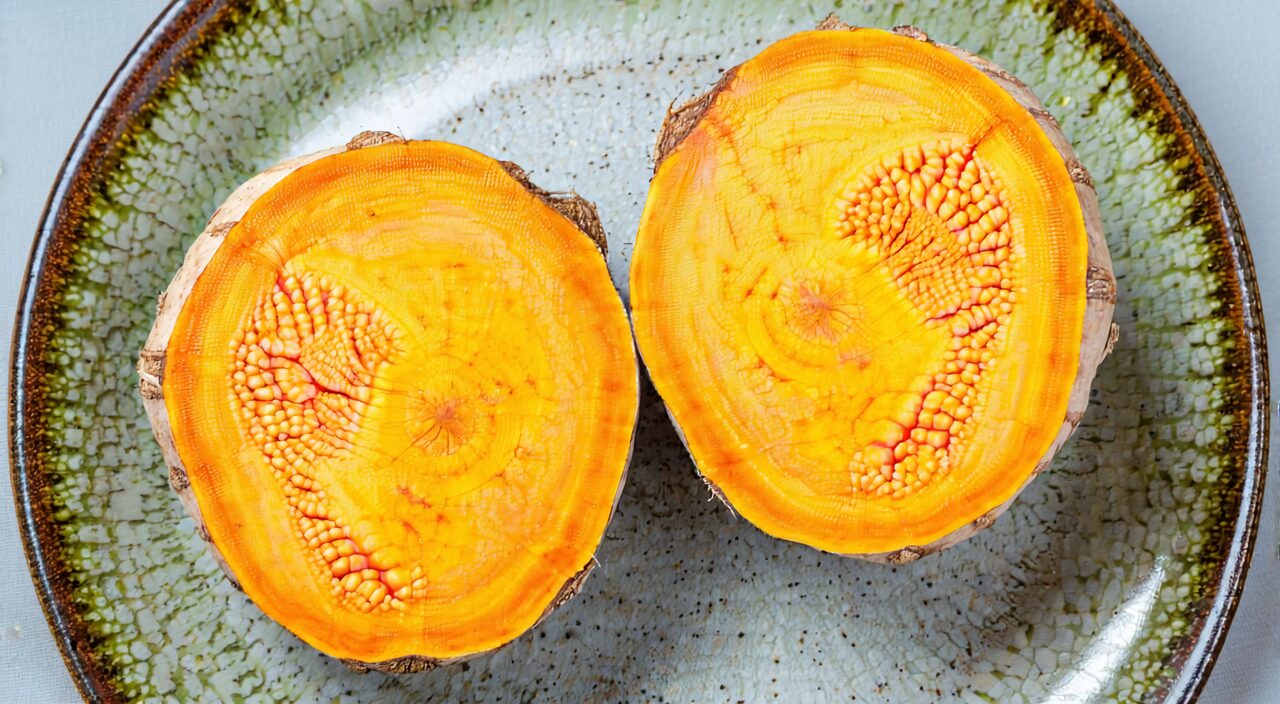
When examining medicinal slices or whole dried turmeric, it often appears as irregularly ovoid, cylindrical, or spindle-shaped, sometimes curved or with short forked branches.
- Surface: Usually deep yellow or yellowish-brown, relatively rough, with visible ring-like node scars and fine rootlet remnants.
- Texture: Firm and hard to break.
- Cut surface: After breaking or cutting, the interior is a vivid orange-yellow or brownish-yellow, often with a horn-like, slightly waxy sheen. Near the outer margin, a ring of lighter-colored endodermis can be seen, with scattered small vascular bundles appearing as dots.
- Odor: Has a distinctive aroma, somewhat reminiscent of a blend of orange peel and ginger.
- Taste: Bitter and pungent, leaving a mild but lasting numbing sensation when chewed. When turmeric powder is moistened with water or saliva, the bright yellow color becomes even more apparent.
These appearance and odor characteristics are key points to consider when identifying turmeric in daily use.
What Is the Medicinal Part of Turmeric?
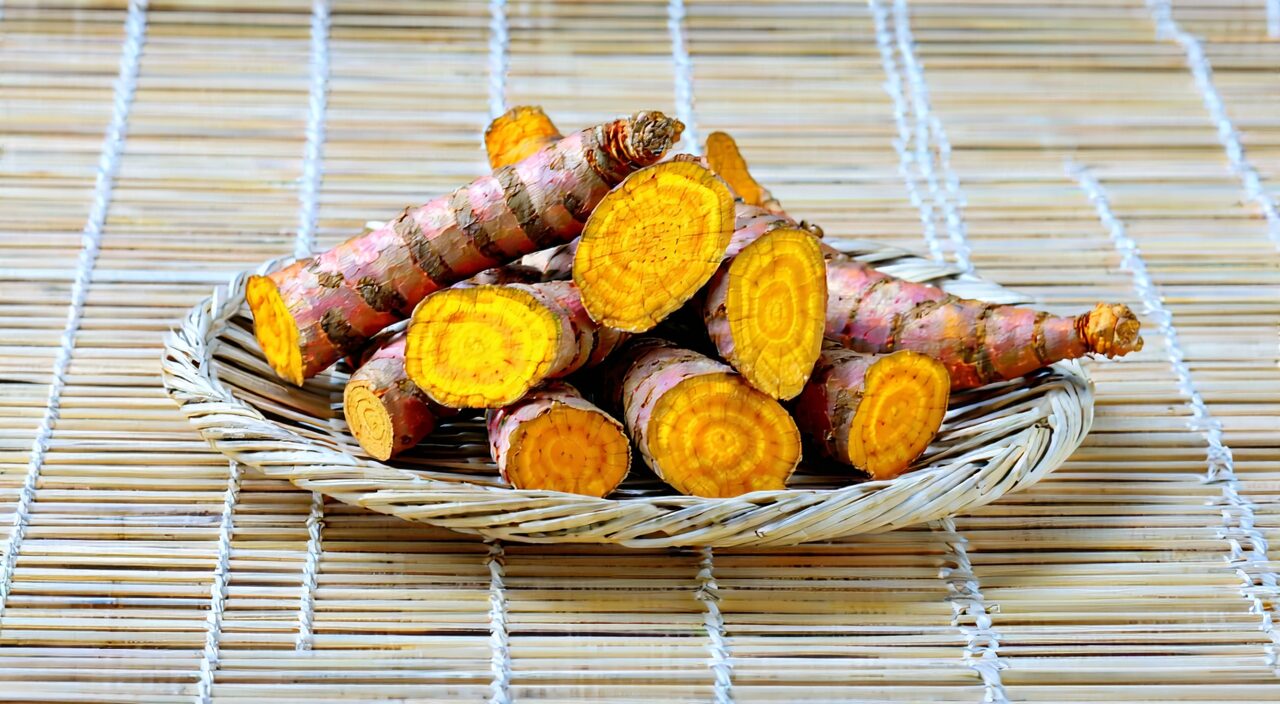
In TCM, the medicinal part of turmeric is the dried rhizome of the turmeric plant (Curcuma longa L.).
Harvesting usually takes place in autumn or winter when the aerial parts wither. The rhizomes are dug up, cleaned of soil and fine rootlets. The processing method is crucial: traditionally, the rhizomes are steamed or boiled until the interior is fully cooked, then sun-dried or dried at a low temperature. This process gelatinizes the starch inside, making the dried turmeric extremely hard and firm, with the horn-like cut surface described earlier.
If not cooked thoroughly, the exterior may dry while moisture remains inside, affecting long-term storage. Therefore, when assessing quality turmeric, one should check whether the cut surface is fully horny in texture, which is closely tied to proper post-harvest processing.
How Does TCM Understand Turmeric?
In traditional Chinese medical theory, turmeric is generally considered pungent and bitter in flavor, warm in nature, and enters the Liver and Spleen meridians. Its core function is often understood through the concept of “breaking blood stasis and moving qi, unblocking meridians to stop pain”—meaning it excels at promoting the movement of blood and qi to relieve various types of pain caused by blood stasis and qi stagnation.
Based on this understanding, turmeric has traditionally been used for hypochondriac stabbing pain, amenorrhea, masses, and rheumatic shoulder and arm pain due to blood stasis and qi stagnation. For example, for soreness or restricted movement of the shoulders and upper limbs caused by poor circulation of qi and blood, practitioners in the past might have considered combining turmeric with other herbs.
However, these are traditional application ideas, and individual situations vary greatly. Whether turmeric is suitable depends on one’s constitution, specific symptoms, and advice from a qualified professional. This article is for informational purposes only and cannot replace professional diagnosis or treatment advice.
What Compounds and Effects Are the Focus of Modern Research on Turmeric?
Modern research on turmeric focuses mainly on natural compounds such as curcumin. Relevant experiments in cell or animal models have observed effects involving pathways related to inflammatory responses, oxidative stress, and so on.
But these results are often obtained under high-concentration conditions, using specific extracts, or in isolated systems. They cannot be simply equated with using the whole turmeric herb or consuming small amounts of turmeric powder in the daily diet.
The curcumin intake from turmeric used as a spice in cooking is generally low. When used as a Chinese medicinal substance, turmeric is often combined with other herbs in formulas and used for relatively short durations based on specific conditions. Therefore, it is advisable to take a rational view of the relationship between “curcumin research” and “turmeric as a herb or food,” neither neglecting its traditional use nor over-extrapolating research findings. Incorporating turmeric as part of a diet or traditional wellness practice is far more complex than treating it as a supplement for a single isolated component.
What Are the Differences Between Turmeric and Curcuma Radix (Yujin)?
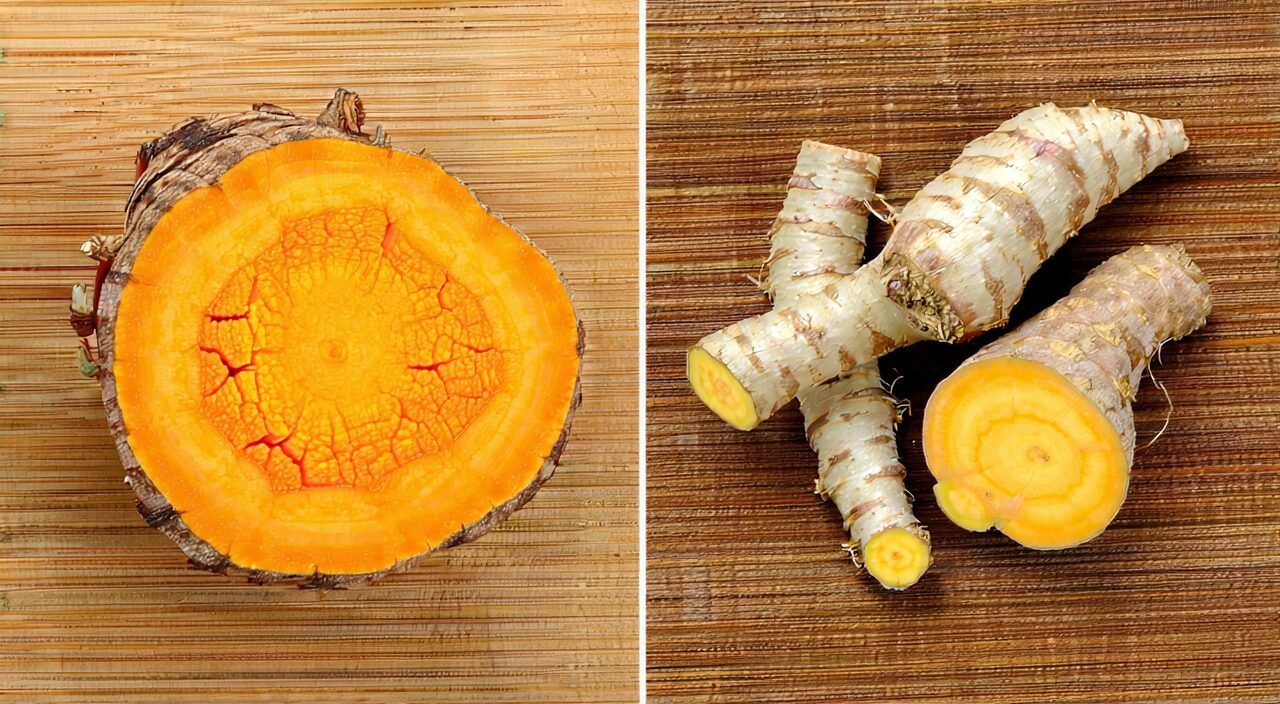
Both turmeric and Curcuma Radix (Yujin) come from plants in the Zingiberaceae family, and their botanical origins overlap, so many people easily confuse them. The main differences can be seen in the plant source, the medicinal part used, and the focus of traditional applications.
| Comparison Aspect | Turmeric (Jianghuang) | Curcuma Radix (Yujin) |
|---|---|---|
| Medicinal part | Rhizome of Curcuma longa L. | Tuberous roots of Curcuma aromatica, C. wenyujin, C. longa, C. kwangsiensis, or C. phaeocaulis |
| Appearance | Irregularly ovoid or cylindrical, cut surface orange-yellow, bright in color | Spindle-shaped or elongated ovoid, outer surface grayish-brown or grayish-yellow, cut surface grayish-brown, yellowish-brown, or dark brown, horn-like, less vivid than turmeric |
| Traditional application focus | More focused on breaking blood stasis and moving qi, unblocking meridians to stop pain; often used for shoulder and arm pain, chest or hypochondriac pain, and amenorrhea due to blood stasis and qi stagnation | More focused on activating blood and stopping pain, moving qi and resolving depression; additionally clears heart heat and cools blood, promotes bile flow to relieve jaundice; often used for blood stasis and qi stagnation accompanied by heat signs or liver-gallbladder damp-heat |
When both names appear in a pharmacy or herbal formula, clarifying the botanical source and the exact medicinal part is especially important.
Which Traditional Formulas Use Turmeric?
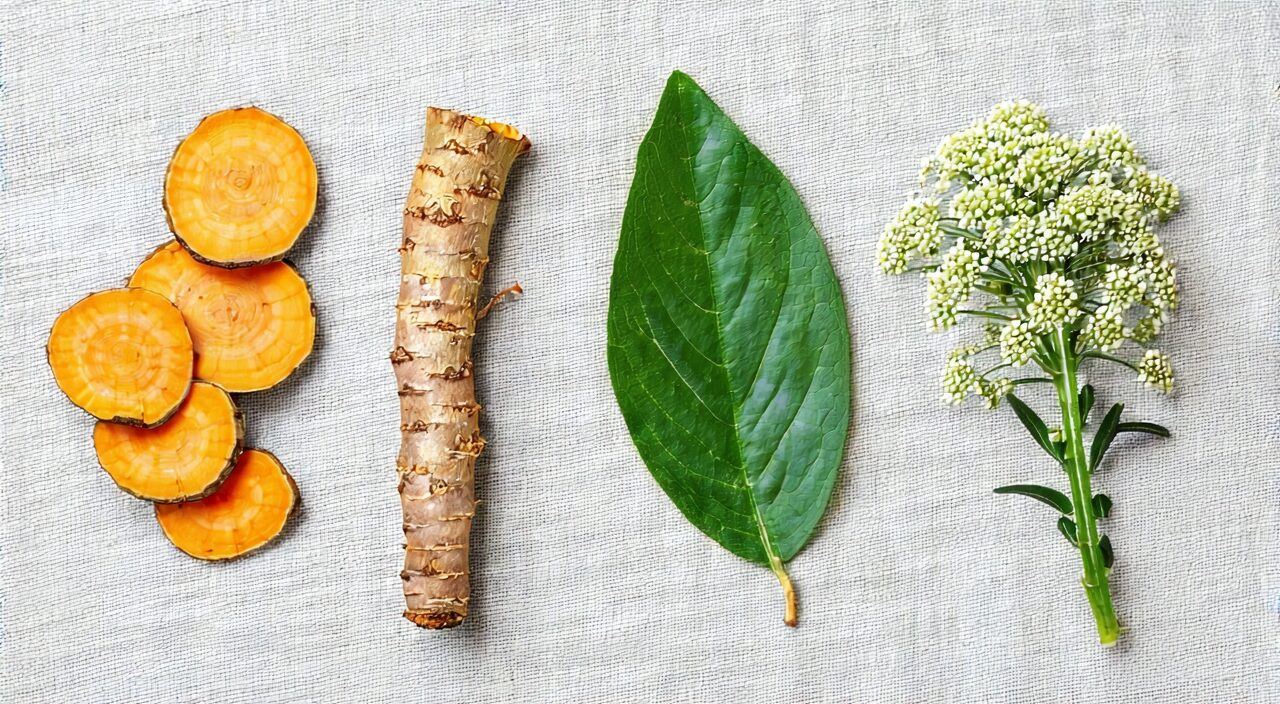
Turmeric is not among the most frequently used herbs in classical formulas, but it is often included in combinations for specific conditions.
A representative formula is Juanbi Decoction, which typically contains Notopterygium Root (Qianghuo), Saposhnikovia Root (Fangfeng), Astragalus Root (Huangqi), Chinese Angelica Root (Danggui), Red Peony Root (Chishao), and Turmeric (Jianghuang). The original formula concept is to boost qi and harmonize the “ying” system, dispel wind and eliminate dampness. It can serve as a reference for traditional management of shoulder and arm pain or limited joint mobility caused by wind-dampness obstructing the collaterals and disharmony of qi and blood. In this formula, turmeric mainly plays the role of activating blood and unblocking the collaterals.
Another commonly mentioned formula is Jianghuang Powder, whose composition varies among medical texts but generally revolves around issues of heart and abdominal pain, or irregular menstruation, related to blood stasis and qi stagnation.
It should be noted that both Juanbi Decoction and Jianghuang Powder are classical formulas, and their suitability depends on specific pattern differentiation and the individual’s constitution. Whether to use these formulas and how to modify them based on individual conditions should be determined under the guidance of a qualified professional; self-prescription is not recommended.
What Precautions Should Be Taken When Using Turmeric?
Turmeric’s medicinal nature is quite pungent and dispersing, with a pronounced effect on moving blood; therefore, several aspects require special attention before use.
- Bleeding tendency: Traditionally, turmeric is thought to break blood, so it should generally be avoided by those with heavy menstrual bleeding, during pregnancy, or by individuals with established bleeding disorders or a tendency to bleed.
- Medication and surgery interactions: For those using anticoagulant or antiplatelet medications, or about to undergo surgery, turmeric may interfere with the clotting process. It is essential to consult a doctor or pharmacist before use to avoid unnecessary bleeding risks.
- Digestive system reactions: In sensitive individuals or those with weak digestive systems, large doses or prolonged use may cause stomach discomfort; therefore, self-prescribed long-term, high-dose use is not advised.
For short-term, recurrent, or persistent pain, especially when accompanied by chest tightness, palpitations, difficulty breathing, severe abdominal pain, black stools, or unintended weight loss, it is not advisable to rely solely on a single herb for self-care; prompt medical evaluation to identify the cause is necessary.
Summary
Turmeric, as a traditional Chinese medicinal substance, has a distinctive appearance and a vivid orange-yellow cut surface, and the medicinal part used is the rhizome that has been steamed or boiled and then dried. It comes from the same plant family as Curcuma Radix (Yujin), but they differ in medicinal part and traditional application focus. Understanding these differences helps us use and identify turmeric more accurately, especially abroad.
Overall, turmeric’s traditional use centers on certain types of pain caused by blood stasis and qi stagnation. However, because of its strong blood-moving and qi-activating properties, special attention must be paid to bleeding risks and concurrent medication use. When in doubt, seek advice from a qualified professional first.