
What Is Juluo? Its Medicinal Part, Identification, and Common Formulas
After peeling an orange or other citrus fruit, you may notice white, slender fibers attached to the inner side of the peel and the surface of the fruit segments. In traditional Chinese medicine, these fibers are commonly known as Juluo. Many people confuse them with aged citrus peel, citrus seeds, or citrus leaves. Others wonder what Juluo looks like and which part is traditionally considered medicinal. This article introduces its source, appearance, medicinal part, traditional applications, and safety considerations to help overseas Chinese readers build a basic understanding.
What Does Juluo Look Like? How Can It Be Identified?

Juluo mainly comes from citrus fruits in the Rutaceae family, including oranges and mandarins. Its most distinctive feature is the white to yellowish-white network of fine fibers attached to the inner layer of the peel and the surface of the fruit pulp. When fresh, Juluo is usually moist and flexible. After being separated and dried, it may turn pale yellow or light brownish yellow. It is generally lightweight, soft to the touch, and sometimes slightly brittle yet resilient.
In terms of form, Juluo is neither a complete piece of peel nor the juice sacs inside the fruit. Instead, it is a network formed by many small branches interwoven with one another. More intact pieces may show radial or irregular openings, with fibers of varying thickness that can easily become tangled. It usually has a mild citrus aroma. The smell should not be excessively pungent, sour, rancid, or moldy.
When identifying Juluo, observe three aspects. First, check the color: white, yellowish-white, or pale yellow is typical. Second, examine the structure: it should be thread-like and web-like rather than thick and sheet-like. Third, consider its source: it is usually found on the inner side of a peeled citrus rind or on the outer layer of the fruit segments. If the material is unusually black, visibly damp and clumped, or has a moldy or abnormal odor, do not assume that it is suitable for medicinal use based on appearance alone.
What Is the Medicinal Part of Juluo?
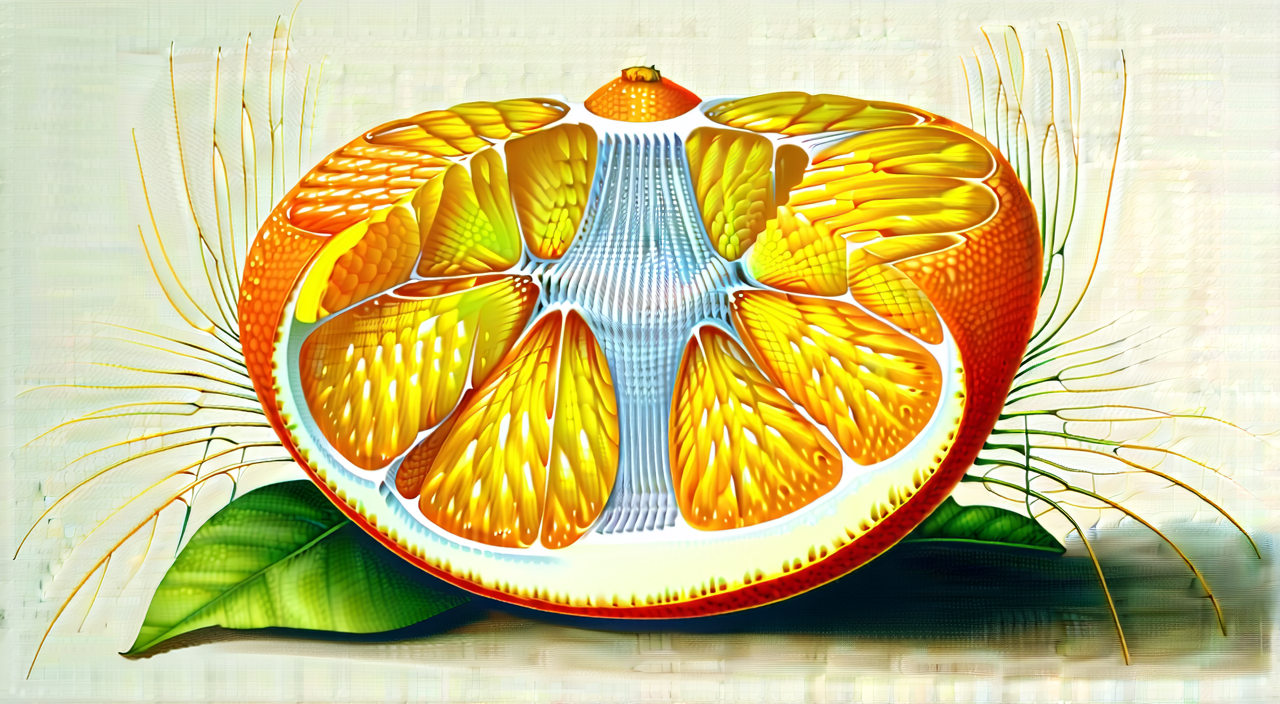
The part of Juluo traditionally used medicinally is mainly the white, web-like vascular bundles found on the inner layer of citrus peel and the surface of the fruit pulp. This is different from the outer orange-red or yellow-orange peel. When the outer peel is dried, it becomes aged citrus peel, while the inner network of fibers is considered Juluo only after being separately removed, sorted, and dried.
From a botanical perspective, these fibers are related to the transport tissues inside the fruit and help connect the peel with the pulp. During processing, fresh citrus fruits are generally peeled first, after which the attached white fibers are removed and obvious pulp residue is cleared away before drying. The color, length, cleanliness, and aroma of the finished material may vary according to its region of origin, variety, maturity at harvest, and processing method.
It is important to note that the small amount of Juluo casually left behind when eating an orange is not exactly the same as a properly sorted, dried, and stored medicinal material. Food-processing by-products may retain moisture, juice, or contaminants if they have not been appropriately handled. They should therefore not be used directly as a substitute for medicinal materials.
How Does Traditional Chinese Medicine Understand Juluo?
Traditional Chinese medicine commonly understands Juluo from the perspectives of the collaterals, phlegm-dampness, and the movement of qi and blood. In classical herbal texts and traditional formulas, Juluo is often associated with directions such as unblocking the collaterals, transforming phlegm, regulating qi, and promoting blood circulation. Particular attention may be given to traditional patterns involving the chest and hypochondrium, the collaterals, or obstruction by phlegm and qi. These concepts belong to traditional Chinese medicine theory and clinical experience and are not equivalent to modern medical diagnoses or treatment conclusions.
From the perspective of herbal combinations, Juluo is generally not used alone as a complete treatment approach. Instead, it may be combined with herbs intended to regulate qi, transform phlegm, promote blood circulation, or strengthen the spleen, depending on the individual situation. Traditional Chinese medicine pattern identification emphasizes symptoms, tongue and pulse characteristics, constitution, and changes over the course of an illness. Therefore, even when descriptions involve “phlegm” or “qi stagnation,” the actual approach to herbal use may differ.
If you are taking other medications or have persistent or recurrent chest tightness, pain, coughing, or shortness of breath, do not rely solely on the traditional effects of Juluo to make your own judgment. Whether a related formula or patent Chinese medicine is appropriate should be assessed comprehensively based on your constitution, symptoms, product information, and professional advice.
How Can Modern Research on Juluo Be Understood?
Modern research on Juluo generally focuses on its flavonoids, volatile compounds, dietary fiber, and other plant compounds. However, the chemical composition of Juluo may be affected by the citrus variety, maturity, place of origin, drying temperature, and storage conditions. Differences may therefore exist between individual samples.
Experimental studies on citrus peels, fruit fibers, and their extracts may address areas such as antioxidant activity, inflammation-related pathways, or microcirculation. However, the experimental materials, extraction methods, and research subjects are not always the same. Results from in vitro experiments, animal studies, or component analyses cannot be directly interpreted as proof that Juluo is effective for a specific disease, nor can they replace clinical evaluation.
When reviewing modern research, it is therefore important to distinguish between traditional applications, experimental observations, and evidence from human use. For Juluo and products containing it, research findings should be viewed as supplementary information for understanding the material, not as a basis for changing the dosage or replacing proper medical care.
What Is the Difference Between Juluo, Aged Citrus Peel, and Loofah Sponge?
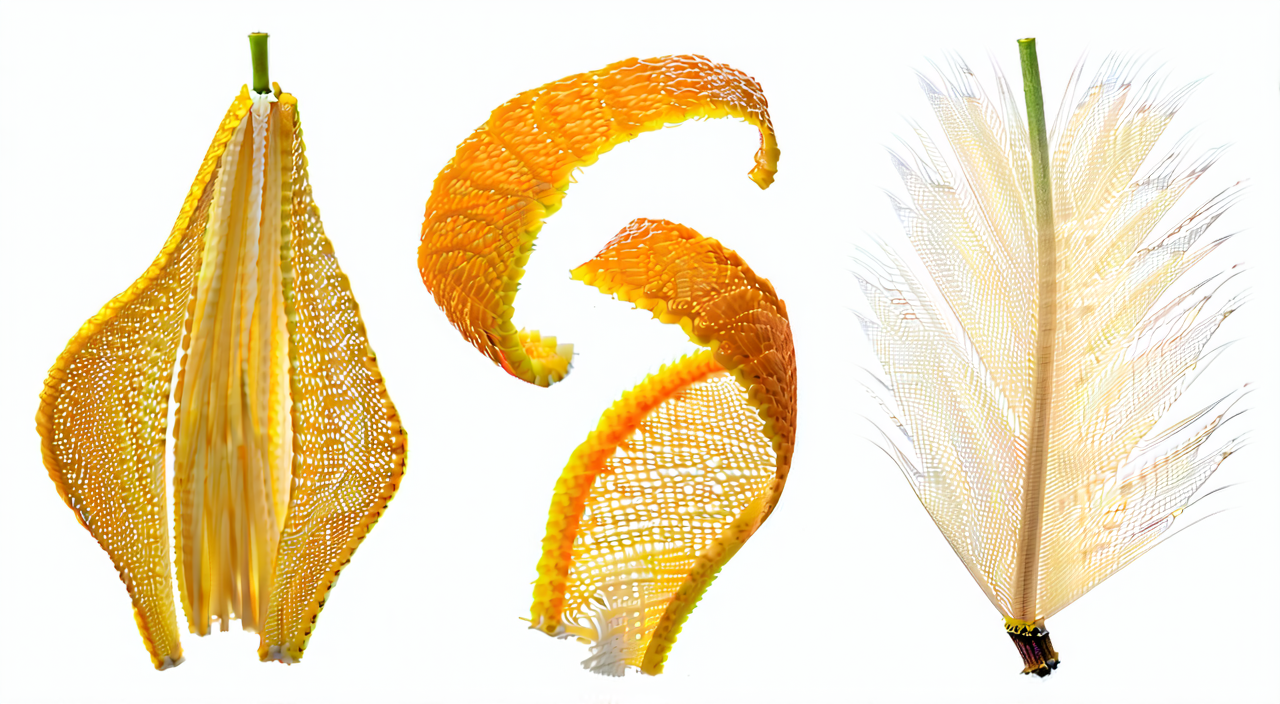
Juluo, aged citrus peel, and loofah sponge may all be described as fibrous or network-like materials, but their sources and medicinal parts are different.
| Name | Source and Part | Appearance | Traditional Direction |
|---|---|---|---|
| Juluo | Web-like vascular bundles on the inner layer of the peel and the surface of the pulp of oranges, mandarins, and other citrus fruits | White to yellowish-white fine fibers woven into a network | Traditionally understood in terms of unblocking the collaterals, transforming phlegm, regulating qi, and promoting blood circulation |
| Aged citrus peel | The mature, dried peel of citrus fruits | Usually curled or irregularly shaped pieces, with an orange-red to dark brown outer surface | Traditionally understood in terms of regulating qi, strengthening the spleen, drying dampness, and transforming phlegm |
| Loofah sponge | The vascular bundle tissue of mature loofah fruits | A relatively large tubular or sheet-like network of fibers that is coarser than Juluo | Traditionally understood in terms of unblocking the collaterals and promoting blood circulation |
Juluo and aged citrus peel both come from citrus fruits, but aged citrus peel mainly refers to the outer peel, while Juluo is the white network tissue on the inside. They differ in appearance, aroma, traditional herbal combinations, and the parts used. Although loofah sponge also has a network-like fibrous structure, it comes from mature loofah fruits and is generally coarser and tougher than Juluo. The two should not be substituted for each other simply because both names contain the word “collateral.”
Which Formulas Use Juluo?
In traditional formula and patent Chinese medicine references, Juluo may appear in Juluo Pills, formulas for unblocking the collaterals and transforming phlegm, and formulas for regulating qi and promoting blood circulation. The ingredients, dosage, dosage form, and intended use of different formulas vary. Products with similar names may also have different formulations, so their purpose should not be inferred from the formula name alone.
Juluo Pills can serve as an example for understanding the traditional combination principles associated with Juluo, but the complete prescription and product instructions should be consulted before making any judgment. Formulas for unblocking the collaterals and transforming phlegm place greater emphasis on combining Juluo with herbs that transform phlegm, regulate qi, or unblock the collaterals. Formulas for regulating qi and promoting blood circulation may be assembled according to traditional pattern-identification concepts involving impaired qi movement or obstructed collaterals. These descriptions refer to combination concepts within traditional Chinese medicine and do not constitute treatment claims for specific diseases.
For formulas and patent Chinese medicines, pay attention to approval information, the complete ingredient list, directions and dosage, contraindications, and precautions. Pregnant or breastfeeding individuals, children, older adults, and people taking anticoagulants or medications for chronic conditions should consult a doctor, pharmacist, or qualified traditional Chinese medicine practitioner before use. If symptoms are severe, persistent, or recurrent, do not rely on formulas containing Juluo without professional guidance.
What Precautions Should Be Taken When Using Juluo?
First, consider your constitution and the nature of your symptoms. Traditionally, people with qi deficiency, including those who tire easily or experience poor appetite, shortness of breath, or weakness, should not begin long-term self-use simply because Juluo is described as helping to “unblock the collaterals and transform phlegm.” If you have symptoms associated with dryness, such as a dry cough, dry throat, or dry mouth, you should also assess its use cautiously, because different combinations may affect different constitutions in different ways. Suitability should be determined based on the overall situation.
Second, be aware of allergies and product quality. Anyone with a history of allergies to citrus fruits, citrus peels, or related components should consult a professional before use. If a rash, itching, lip or mouth discomfort, breathing abnormalities, or other symptoms occur, stop contact with the product and seek medical attention promptly. Choose compliant products with a clear source that are thoroughly dried and free of mold or unusual odors. Moldy, damp, or citrus fibers that have been exposed to air for a long time should not be treated as medicinal materials.
In addition, fibers left after peeling an orange at home, residue on the inner side of citrus peel, and food-processing by-products cannot directly replace properly processed Chinese herbal slices or patent Chinese medicines. If you experience significant chest pain, chest tightness, difficulty breathing, persistent vomiting, black stools, unexplained weight loss, or marked anxiety, depression, or palpitations, consult a doctor or qualified professional promptly instead of trying Juluo or related formulas on your own.
Summary
Juluo is the white, web-like vascular bundle found on the inner layer of citrus peel and the surface of the fruit pulp. After being separated, sorted, and dried, it becomes a traditional medicinal material. It is different from aged citrus peel, which is made from the outer peel, and loofah sponge, which comes from loofah fruits. Traditional Chinese medicine commonly understands Juluo in terms of unblocking the collaterals, transforming phlegm, regulating qi, and promoting blood circulation. Related formulas should be assessed according to individual constitution, symptoms, product information, and professional advice. This article is for educational reference only and cannot replace professional diagnosis or treatment advice.