
What Is Tangerine Leaf? Medicinal Parts, Identification, and Common Formulas
What is tangerine leaf? Simply put, tangerine leaf is the dried leaf of the tangerine and its cultivated varieties. In traditional Chinese herbal medicine, it belongs to the same plant group as aged tangerine peel and citrus pith, but represents a different medicinal part. Because the leaves of different citrus varieties look similar, tangerine leaf can also be confused with ordinary ornamental citrus leaves and loquat leaves. Understanding its appearance, source, and traditional uses can help overseas Chinese readers develop a clearer framework for evaluating information about Chinese herbal medicines.
It is important to note that the same herbal name does not mean that a product is suitable for everyone. This article is intended primarily as educational information about traditional herbal medicine. When formulas or herbs are involved, personal constitution, symptoms, product instructions, and professional advice should all be considered together.
What Does Tangerine Leaf Look Like? How Can It Be Identified?
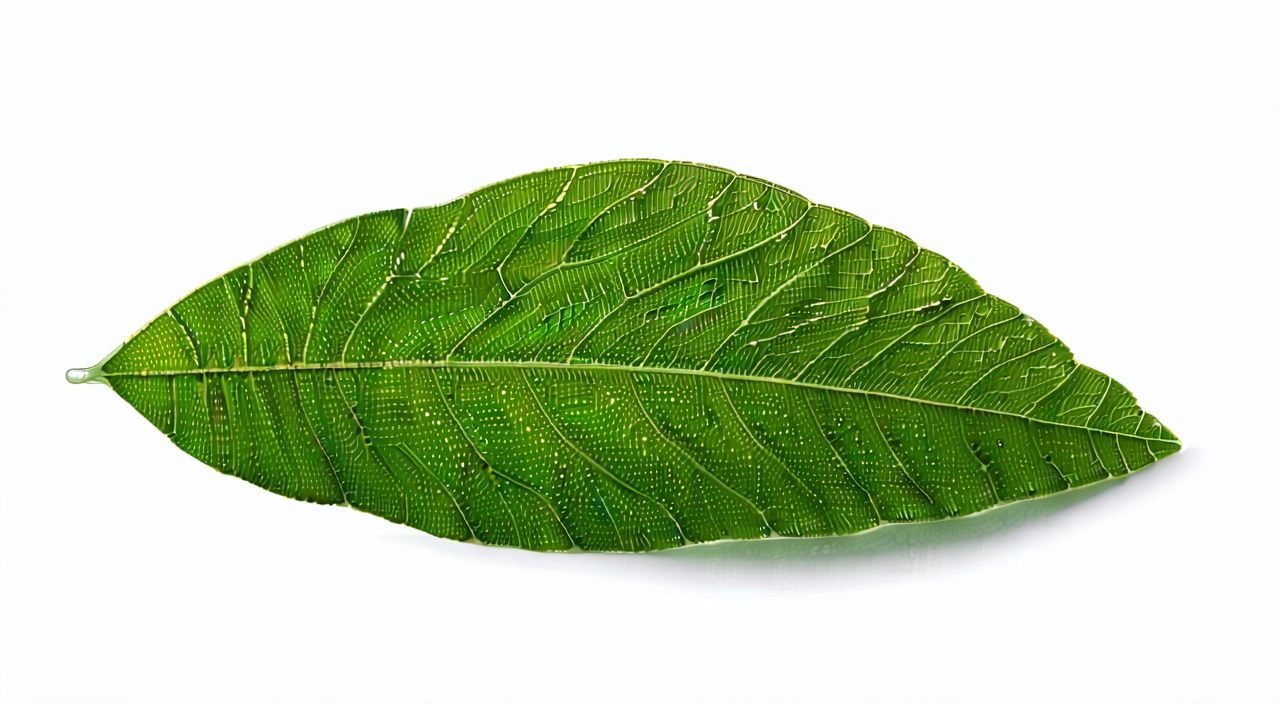
Tangerine leaf generally comes from plants in the Citrus genus of the Rutaceae family. Fresh leaves are usually elliptical, ovate-elliptical, or somewhat narrow and lance-shaped. They are relatively thick, somewhat glossy, and firm to the touch, with a leathery or nearly leathery texture. The tip is usually pointed, the base may be wedge-shaped, and the leaf margins often have fine serrations, although these features can vary between varieties.
One relatively distinctive feature of tangerine leaf is the possible presence of a prominent winged petiole near the base of the leaf stalk. A winged petiole is a structure in which the two sides of the petiole expand outward, forming small wing-like flanges. The width of these wings may be affected by the variety, leaf maturity, and growing environment. Therefore, this feature should not be used alone to reach a conclusion, but it can be considered together with the leaf shape, aroma, and surface characteristics.
Under good lighting, small oil glands may be visible on the leaf surface. Gently rubbing a fresh leaf usually releases the characteristic fresh citrus aroma produced by volatile compounds within the leaf. As tangerine leaves dry, their color commonly changes from blue-green to yellow-green, yellow-brown, or brownish green. The leaves may shrink, curl, or develop creases, and their aroma may become weaker than that of fresh leaves.
Online images or aroma alone cannot fully confirm the source of an herbal material. Leaves collected from city roadsides, residential landscaping, or public gardens may have been exposed to pesticides, herbicides, vehicle exhaust, or environmental contaminants. They should not be used directly as herbal decoction pieces.
What Is the Medicinal Part of Tangerine Leaf?
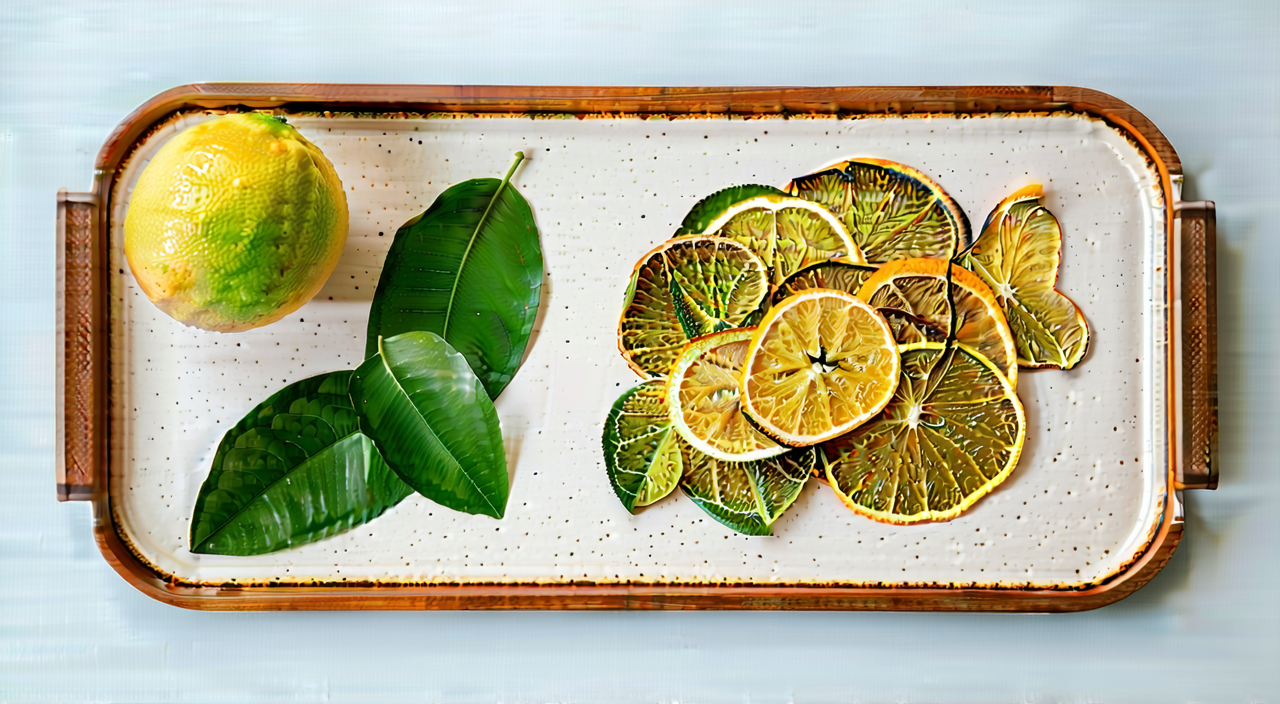
The medicinal part of tangerine leaf is the leaf of the tangerine and its cultivated varieties. It is not the fruit peel, the white fibrous pith beneath the peel, or the internal tissues of the fruit. Traditional herbal processing generally uses the leaves as the main material, which is then harvested, cleaned, dried, and stored. The exact harvesting period, drying method, and commercial form may vary according to the region of origin, variety, and processing standards.
When examining commercial tangerine leaf, check whether the product mainly consists of whole leaves or leaf fragments, whether the color appears natural, and whether there are signs of mold, unusual odors, excessive moisture, softness, or insect damage. Dried leaves break easily, but they should not have a sharp chemical odor or obvious signs of contamination. If the product has already been cut or mixed with other herbs, visual inspection alone may not be sufficient. Priority should be given to official labels, source information, and quality details.
Although tangerine leaf and aged tangerine peel are both traditional medicinal materials from citrus plants, their medicinal parts are entirely different. Tangerine leaf uses the leaf, while aged tangerine peel uses the dried peel of a mature fruit. Citrus pith is the white fibrous network attached to the inside of the peel. These three materials should not be substituted for one another simply because their names are similar.
How Is Tangerine Leaf Viewed in Traditional Chinese Medicine?
In traditional Chinese medicine theory, tangerine leaf is commonly discussed in terms of soothing the Liver, promoting the movement of qi, dispersing clumps, and reducing swelling. Here, “soothing the Liver” is a functional expression from traditional theory, often used to describe approaches for patterns associated with emotional constraint or stagnant qi. “Dispersing clumps” is also a traditional description of herbal properties and should not be equated directly with a modern medical assessment of a lump or disease.
In traditional applications, tangerine leaf may sometimes be considered in pattern-based approaches involving chest and rib-side discomfort, breast distension and pain, or localized accumulations. Whether this type of herb is appropriate generally also depends on the duration of symptoms, the nature of the pain, tongue and pulse findings, personal constitution, and the presence of other medical conditions. Breast pain or a palpable lump should not be treated independently according to a “soothe the Liver and disperse clumps” approach.
If a local area becomes red, swollen, hot, or significantly painful, or if a new lump appears and persists, seek a proper medical examination promptly. Symptoms such as abnormal nipple discharge, skin changes, or fever also should not be monitored solely through the use of herbs or traditional formulas.
What Can Modern Research Tell Us About Tangerine Leaf?
Modern research on the leaves of Citrus plants often examines volatile compounds, flavonoids, and other phytochemicals. The chemical characteristics of research samples can be influenced by the species, variety, growing region, harvesting season, and extraction method. Results from laboratory extracts, cell studies, or animal research cannot be directly equated with a confirmed effect in humans after oral consumption of tangerine leaf.
When reviewing related research, it is important to distinguish descriptions from traditional theory, basic experimental findings, and clinical evidence. More standardized information and professional judgment are still needed regarding the specific uses, dosage, duration, and potential interactions of tangerine leaf. Modern research can provide one perspective for understanding the herb, but it should not replace a medical diagnosis or be used as a basis for adjusting a prescription or stopping medication without guidance.
What Is the Difference Between Tangerine Leaf, Aged Tangerine Peel, and Loquat Leaf?
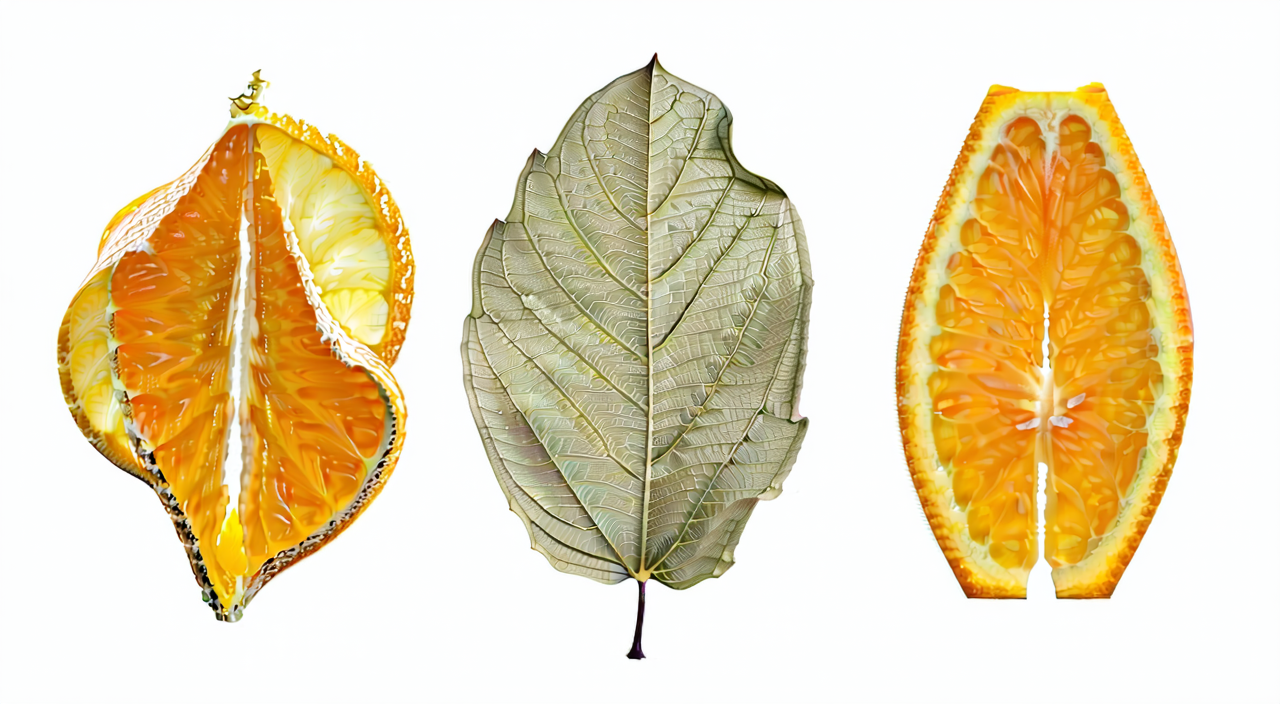
Tangerine leaf, aged tangerine peel, and loquat leaf may all appear in Chinese herbal medicine references, but they are not the same herb. The most direct way to distinguish them is to first identify the medicinal part: tangerine leaf uses the leaf of a citrus plant, aged tangerine peel uses the mature peel of a tangerine-type fruit, and loquat leaf uses the leaf of the loquat tree.
| Comparison | Tangerine Leaf | Aged Tangerine Peel | Loquat Leaf |
|---|---|---|---|
| Medicinal part | Leaves of the tangerine and its cultivated varieties | Dried peel of mature tangerine-type fruit | Leaves of the loquat tree |
| Appearance | Elliptical or lance-shaped, with fine serrations and possibly a winged petiole | Usually curled or irregular pieces of peel, with white fibrous pith visible on the inner side | Larger, oblong leaves, often with noticeable hairs on the underside |
| Underside or inner surface | The underside usually does not have the dense hairs characteristic of loquat leaves | The inner surface is relatively rough and may show traces of the fruit pith | The underside is grayish white or light brown, with more noticeable hairs |
| Aroma | Usually releases a fresh citrus aroma when rubbed | Often has an aged, fruity-peel, or aromatic fragrance | Has a different aroma and usually lacks the characteristic scent of tangerine peel |
Commercial products may be cut, dried, or stored for extended periods, causing their color and aroma to change. Therefore, identification should not rely on a single feature. When tangerine leaf resembles the leaves of other Citrus species, its botanical source, product label, and formal identification information should be considered together.
Which Traditional Formulas Contain Tangerine Leaf?
Traditional formula references include names such as Tangerine Leaf Powder and Tangerine Leaf Decoction. Some other traditional combinations are also based on the principles of soothing the Liver, promoting qi movement, dispersing clumps, and reducing swelling. The recorded ingredients, proportions, preparation methods, and applicable patterns may differ between medical texts, schools of thought, and editions. The specific use of a formula cannot be inferred from its name alone.
In traditional sources, Tangerine Leaf Powder is often discussed in relation to breast distension and pain, qi stagnation, and localized accumulations. Tangerine Leaf Decoction may likewise be used within different pattern-based approaches depending on its accompanying ingredients. This information is intended to help readers understand formula names and their traditional background; it is not a prescription recommendation for individual symptoms. Even when symptoms appear similar, differences in constitution, cause, and accompanying signs may require different approaches.
If you are considering a formula containing tangerine leaf or a related proprietary Chinese medicine, first confirm its ingredients, directions, dosage, contraindications, and precautions. These should also be evaluated alongside any medications, chronic conditions, and allergy history. Pregnant or breastfeeding individuals, children, older adults, and people receiving treatment for chronic diseases should be especially cautious about using herbs independently for extended periods or in large amounts. If discomfort persists or repeatedly returns, consult a physician or a qualified Chinese medicine professional.
What Precautions Should Be Taken When Using Tangerine Leaf?
First, tangerine leaf should not be regarded as a substitute for appropriate medical evaluation. If the breast becomes red, swollen, hot, or significantly painful, or if there is a persistent lump accompanied by fever, abnormal discharge, skin dimpling, or other changes, seek medical assessment as soon as possible. Unexplained lumps in other areas, ongoing weight loss, marked fatigue, or symptoms that repeatedly worsen also require professional attention.
Second, anyone who is pregnant or breastfeeding should consult a physician or qualified professional before using any Chinese herb or formula. People with allergies, abnormal liver or kidney function, or those taking anticoagulants or other prescription medicines should also disclose their current medications and avoid adding herbs on their own.
Finally, randomly collecting citrus leaves from landscaped areas or roadsides is not recommended. Ornamental plants may have been treated with pesticides, and their species and growing conditions may be uncertain. When choosing tangerine leaf decoction pieces or related preparations, pay attention to the source, packaging label, batch information, and storage condition. If the product shows mold, moisture damage, a strong unusual odor, or an unclear source, stop using it and consult a professional.
Summary
Tangerine leaf is the dried leaf of the tangerine and its cultivated varieties. Common characteristics include relatively thick elliptical or lance-shaped leaves, fine serrations, a possible winged petiole, and a citrus aroma. It is different from aged tangerine peel, which uses the fruit peel, and loquat leaf, which usually has many hairs on its underside. Traditional formulas such as Tangerine Leaf Powder, Tangerine Leaf Decoction, and other combinations based on soothing the Liver and dispersing clumps can provide useful background for learning about traditional applications, but suitability must be assessed according to individual circumstances. This article is for educational reference only and cannot replace professional diagnosis or treatment advice.