
What Is Coltsfoot Flower? Medicinal Parts, Identification, and Common Formulas
When exploring traditional Chinese remedies for cough and phlegm, many people are familiar with the name “coltsfoot flower” (kuan dong hua). It often appears in formulas that address cough and wheezing, yet taken on its own, it can be hard to picture what it actually is or which part of the plant it comes from. Essentially, coltsfoot flower is the dried flower bud of Tussilago farfara, a plant in the Asteraceae family. Its name comes from the fact that the buds are often gathered in winter or early spring, before the flowers open. This article will cover what the flower buds look like, key identification points, how traditional Chinese medicine understands its functions, how it differs from herbs like purple aster (zi wan), related formulas, and important precautions.
What Does Coltsfoot Flower Look Like? How to Identify It
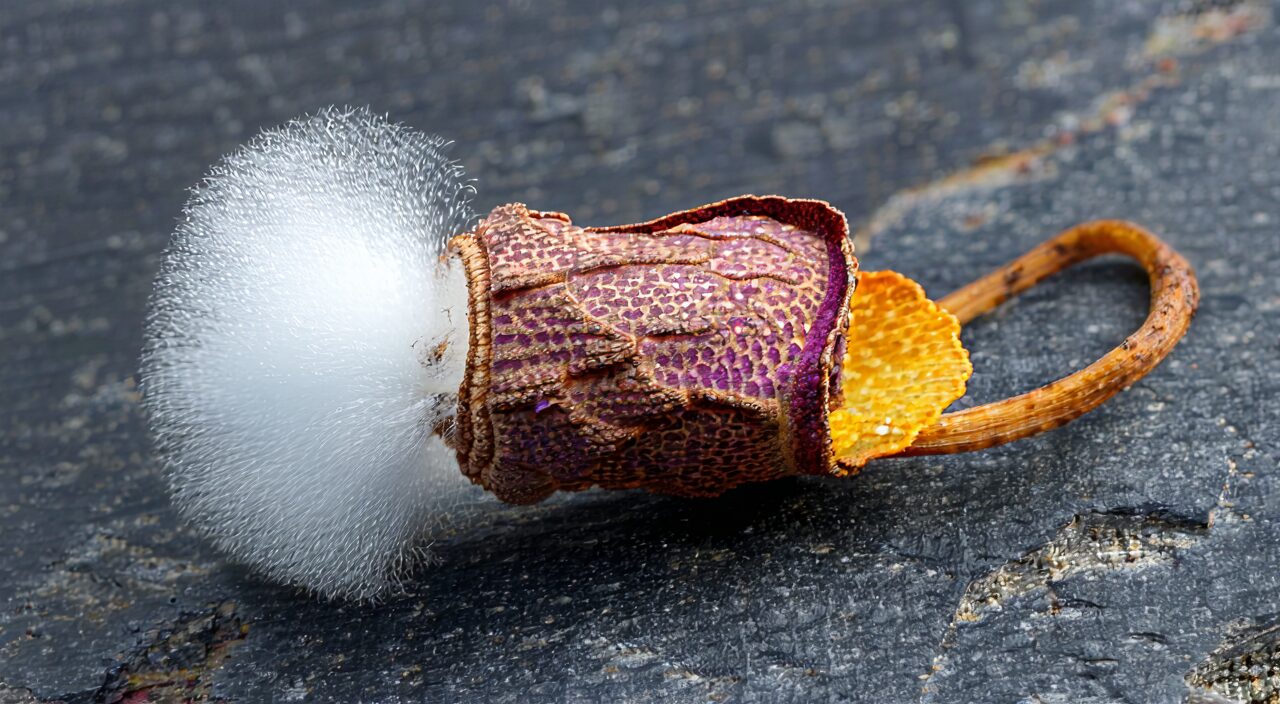
Coltsfoot flower has a distinctive appearance that becomes easy to recognize once a few key features are remembered. The dried buds are long and slightly club-shaped, often occurring singly, though sometimes two or three are joined at the base. They typically measure 1 to 2.5 centimeters in length and about 0.5 to 1 centimeter in diameter at the middle. The upper end is slightly thicker, while the lower end gradually tapers, occasionally with a short stem attached.
The most noticeable feature is the covering of many fish-scale-like bracts. The outer surface of these bracts is purplish-red or pale red, while the inner surface is densely covered with white, fluffy down-like hairs. When the bud is torn open, white fuzz can also be seen inside. The whole bud is light in texture, gives off a distinct fragrance, and tastes slightly bitter with a faint spicy note. Traditionally, buds that are large, purplish-red in color, and have short stems are considered the best quality.
From an herb identification perspective, coltsfoot flower can be distinguished from similar-looking buds by its color, the density of its fuzz, and its fragrance. The white fuzz on the inner layers, in particular, is one of the most important identification clues.
What Part of the Plant Is Used Medicinally?
The medicinal part of coltsfoot flower is the unopened, dried flower bud of the Tussilago farfara plant. Harvesting generally takes place in December or before the ground freezes the following year, when the buds have not yet emerged above ground. The stems and sediment are removed, and the buds are dried in the shade. The emphasis on harvesting before blooming is because the active constituents are believed to be more concentrated during this period, consistent with traditional usage.
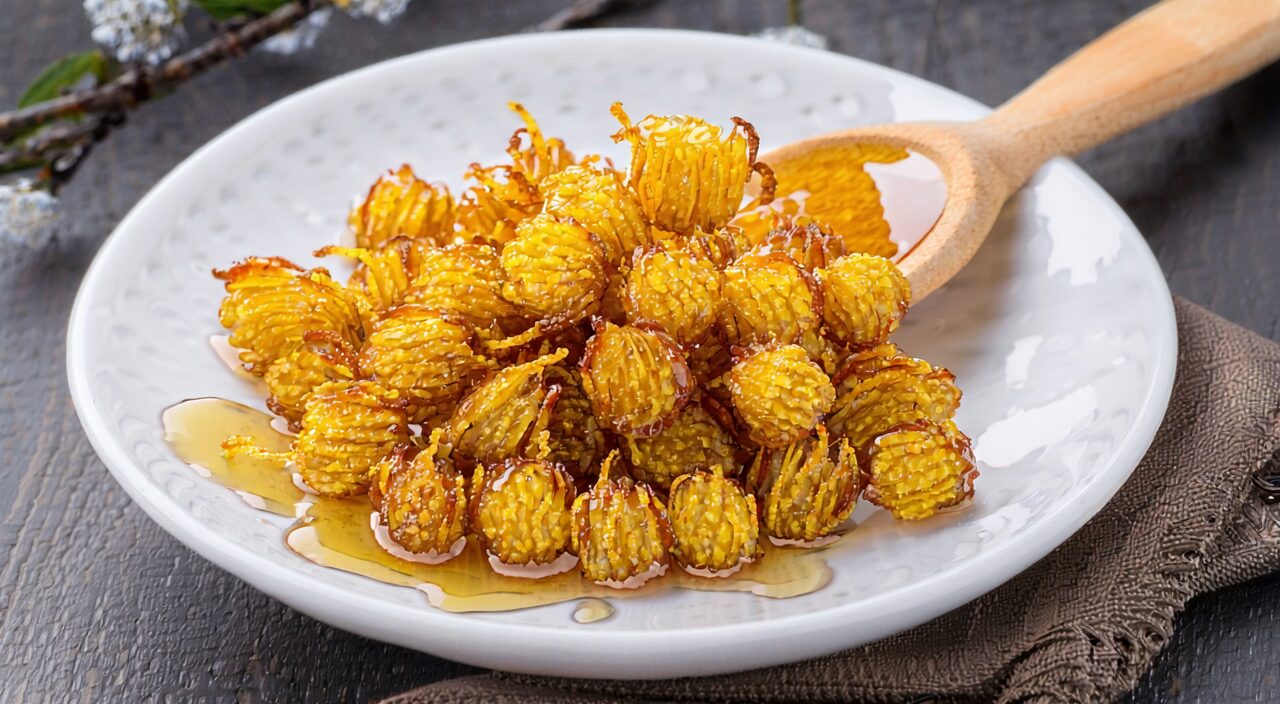
In practice, coltsfoot flower is used in two main forms: raw (unprocessed) and honey-fried. Honey-fried coltsfoot flower is prepared by stir-frying the buds with refined honey until they are no longer sticky. After honey-frying, its lung-moistening and cough-stopping effects are considered more pronounced, making it more commonly used for chronic coughs, dry coughs, or coughs with scant phlegm. Traditional experience also holds that honey-frying can somewhat moderate the herb’s nature. However, whether used raw or honey-fried, it should be considered as part of a complete formula and with regard to the individual’s constitution. It is not recommended to use it alone or for extended periods without guidance.
How Does Traditional Chinese Medicine Understand Coltsfoot Flower?
Traditional Chinese medicine generally evaluates coltsfoot flower based on its nature, flavor, and meridian tropism: it is acrid in flavor, slightly bitter, warm in nature, and enters the Lung meridian. Its core actions are summarized as “moistening the lungs, directing qi downward, stopping coughing, and transforming phlegm.” “Moistening the lungs and directing qi downward” can be understood as calming rebellious lung qi to relieve coughing and shortness of breath, while also helping to expel phlegm and prevent phlegm-dampness from stagnating.
In historical materia medica texts, coltsfoot flower has often been called an “essential herb for treating cough.” The types of cough it addresses are not limited to a single pattern. From coughs caused by recently contracted external pathogens to chronic, lingering coughs and even cases involving blood-streaked sputum, it can be combined with other herbs after pattern differentiation. For example, for cold-type coughs, it is often paired with purple aster and ephedra; for chronic coughs due to lung deficiency, herbs that supplement qi and nourish yin may be added. These are directional therapeutic concepts, and actual use requires a professional TCM practitioner’s detailed assessment based on specific symptoms, tongue and pulse diagnosis.
Findings from Modern Research and Cautions
As modern phytochemical and pharmacological research has progressed, various constituents, including flavonoids and phenolic acids, have been identified in coltsfoot flower. Some of these have shown antitussive, expectorant, and anti-inflammatory activities in experimental studies, providing a degree of explanation for its traditional uses. At the same time, research has also indicated that coltsfoot flower contains pyrrolizidine alkaloids (PAs), a class of compounds that may cause liver damage under certain conditions.
It is important to note that the content and types of pyrrolizidine alkaloids can vary considerably depending on the plant’s growing environment, harvest time, processing methods, and species differences. Traditional honey-frying, decoction, and appropriate formula combinations may reduce the exposure level to these compounds, but they cannot completely eliminate them. Given this background, individuals with compromised liver function, a history of liver disease, or those who need to use it in large amounts over a long period should especially weigh the benefits and risks under professional guidance. For general users who only use it occasionally or as one herb in a formula for a short time, there is no need for excessive worry, provided that the source is legitimate and the quality is controlled.
How Is Coltsfoot Flower Different from Purple Aster and Magnolia Flower Bud?
Because coltsfoot flower is also a flower bud herb, it is often compared in everyday conversation with herbs like purple aster (zi wan) and magnolia flower bud (xin yi).
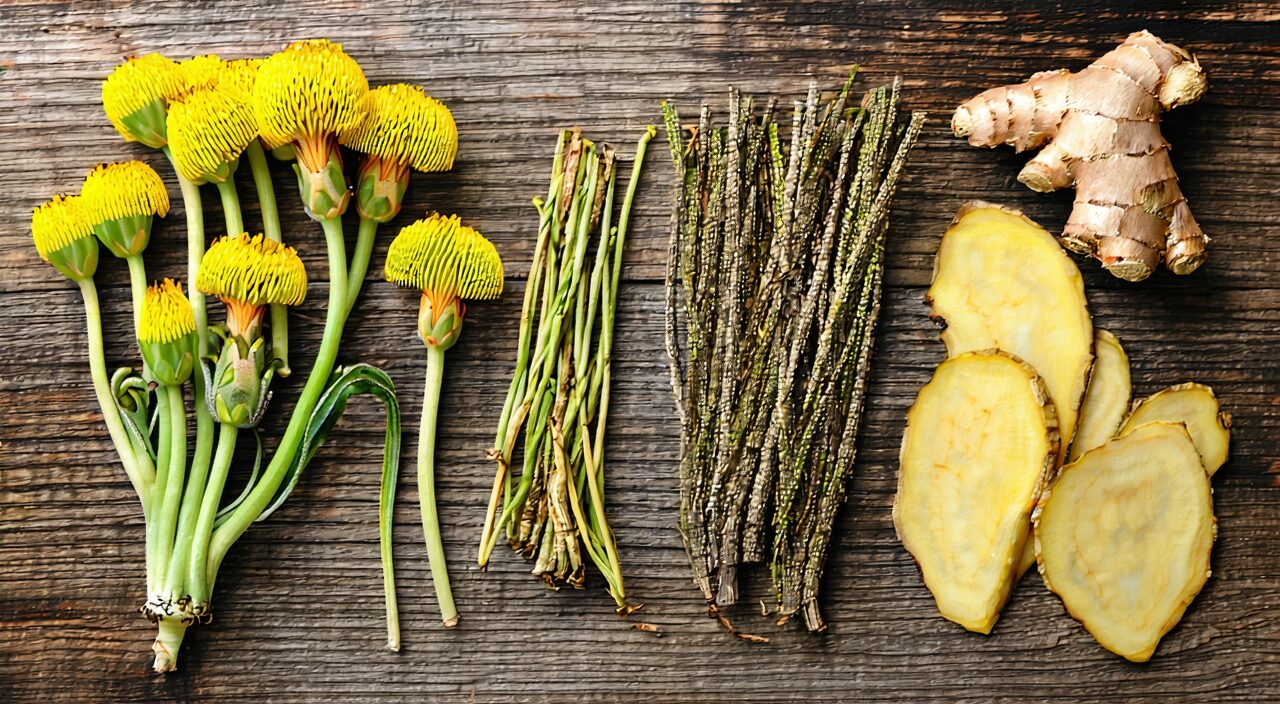
Although purple aster often appears together with coltsfoot flower in cough and phlegm formulas, its medicinal part is the root and rhizome, not the flower bud. In appearance, purple aster consists of slender roots with a purplish-red or grayish-brown surface and a pliable texture, completely different from the club-shaped buds with their overlapping bracts. Functionally, purple aster is stronger at transforming phlegm, while coltsfoot flower is stronger at stopping cough. The two are often seen as a “mutually reinforcing” pair, each with its own emphasis.
Magnolia flower bud, on the other hand, is the dried flower bud of Magnolia biondii, Magnolia denudata, or Magnolia sprengeri. Its shape resembles a writing-brush tip or an elongated oval, and the outer surface is densely covered with grayish-white or pale yellow fuzz. The bract structure is clearly different from that of coltsfoot flower. In Chinese medicine, magnolia flower bud is mainly used to open the nasal passages and is often applied for nasal congestion and sinusitis. While its Lung meridian connection overlaps somewhat with that of coltsfoot flower, their therapeutic focuses are quite distinct.
Which Formulas Commonly Include Coltsfoot Flower?
Coltsfoot flower is rarely used as a single herb; instead, it usually plays an important role within compound formulas. The following formulas are traditional and representative.
Belamcanda and Ephedra Decoction (She Gan Ma Huang Tang) originates from the Essential Prescriptions from the Golden Cabinet. The original formula is used for a pattern of cough with qi rushing upward and a “water-fowl sound in the throat.” In this formula, coltsfoot flower is combined with belamcanda (she gan), ephedra (ma huang), asarum (xi xin), pinellia (ban xia), and others to warm the lungs, transform retained fluids, direct qi downward, and stop coughing. Within the formula, coltsfoot flower and purple aster work together—one emphasizing cough suppression and the other emphasizing phlegm transformation—to address cough and shortness of breath caused by cold-fluid retention in the lungs. Note that this is a classical combination for a specific pattern and is not suitable for all cough presentations.
Coltsfoot Flower Powder (Kuan Dong Hua San) is a formula named after the herb. It is traditionally used for persistent coughing, copious phlegm, and chest tightness. Combining coltsfoot flower with anemarrhena (zhi mu), white mulberry root bark (sang bai pi), fritillaria (bei mu), and others, it leans towards clearing the lungs, transforming phlegm, stopping coughing, and calming wheezing, making it suited for coughs with a heat or dryness presentation.
Nine Immortals Powder (Jiu Xian San) is often used for chronic cough due to lung deficiency and damage to both qi and yin. In this formula, coltsfoot flower is paired with poppy husk (ying su qiao), schisandra (wu wei zi), and ginseng (ren shen) to astringe the lungs, stop coughing, and boost qi and nourish yin. This formula emphasizes astringency and is generally indicated only for deficiency-type coughs without lingering external pathogens; it should not be used when an external condition has not yet cleared.
All of these formulas have their own specific indications and must be selected based on pattern differentiation, tongue and pulse findings, and individual constitution. Self-prescribing or long-term use without guidance is not recommended.
What Should You Pay Attention to When Using Coltsfoot Flower?
Coltsfoot flower has a long history of traditional use, but that does not mean it can be used indiscriminately. The following points deserve special attention.
First, individuals with underlying liver conditions, abnormal liver function, or those who are taking medications that affect the liver should consult a healthcare professional before using products containing coltsfoot flower. Second, because of their unique physiological states and potentially greater sensitivity to pyrrolizidine alkaloids, pregnant and breastfeeding women, as well as infants and young children, are generally not advised to use it on their own. Moreover, no one should use coltsfoot flower in high doses or over extended periods. If longer-term use is necessary, liver function should be periodically monitored under professional guidance.
The safety of the source should not be overlooked. Since flower bud herbs can be morphologically confused with one another, products should be obtained from reputable channels, with a clearly identified origin and quality testing. If a cough persists for more than a week, or is accompanied by fever, chest pain, difficulty breathing, blood-streaked sputum, weight loss, or other symptoms, it is essential to seek medical attention promptly. Only after a clear diagnosis can an appropriate follow-up plan be made. Do not rely solely on one or a few herbs and delay proper treatment.
Summary
Coltsfoot flower, a traditional Chinese medicinal herb consisting of unopened flower buds, holds an important place in formulas for stopping cough and transforming phlegm. It has highly distinctive features and can be initially identified by its purplish-red scales, internal white fuzz, and unique aroma. It frequently forms a paired combination with purple aster, which differs clearly in function from magnolia flower bud, an herb that opens the nasal passages. It is worth noting that although coltsfoot flower is a commonly used herb, it contains pyrrolizidine alkaloids that may affect the liver. Therefore, attention must be paid to source quality, processing methods, and individual constitution—especially for those with liver conditions, pregnant women, and others who should exercise particular caution. This article is intended only as a factual background reference on Chinese herbal medicine. Professional guidance should be sought before any specific application, and it should not be used as a basis for self-directed medical decisions.