
What Is Forsythia? Medicinal Parts, Identification Methods, and Common Formulas
In early spring, shrubs along roadsides are often adorned with clusters of golden yellow flowers—this is very likely Forsythia suspensa. Many people notice it because of its bright color, but may not realize that its dried fruit is a commonly used medicinal material in traditional Chinese medicine (TCM). For readers who want to understand forsythia from the basics, it is essential to clarify: What kind of plant is forsythia? Which part is used medicinally? How can it be identified by its appearance? What are the characteristics of green (unripe) forsythia harvested before maturity and ripe forsythia harvested after maturity? What roles does forsythia play in well-known formulas such as Yinqiao San and Baohe Wan? This article addresses these common questions, systematically presenting forsythia knowledge in an objective, science-based manner to help you build a comprehensive understanding of this herb.
What Does Forsythia Look Like? How to Identify It?
Forsythia is a deciduous shrub in the genus Forsythia of the Oleaceae family, usually growing 2–3 meters tall. The branches spread outward, and young twigs are slightly quadrangular. It blooms in spring before leaves emerge; the flowers are golden yellow, with 1–3 flowers borne in leaf axils, splitting into four petals, somewhat resembling winter jasmine, so careful distinction is needed. However, for medicinal users, the focus is primarily on the fruit.
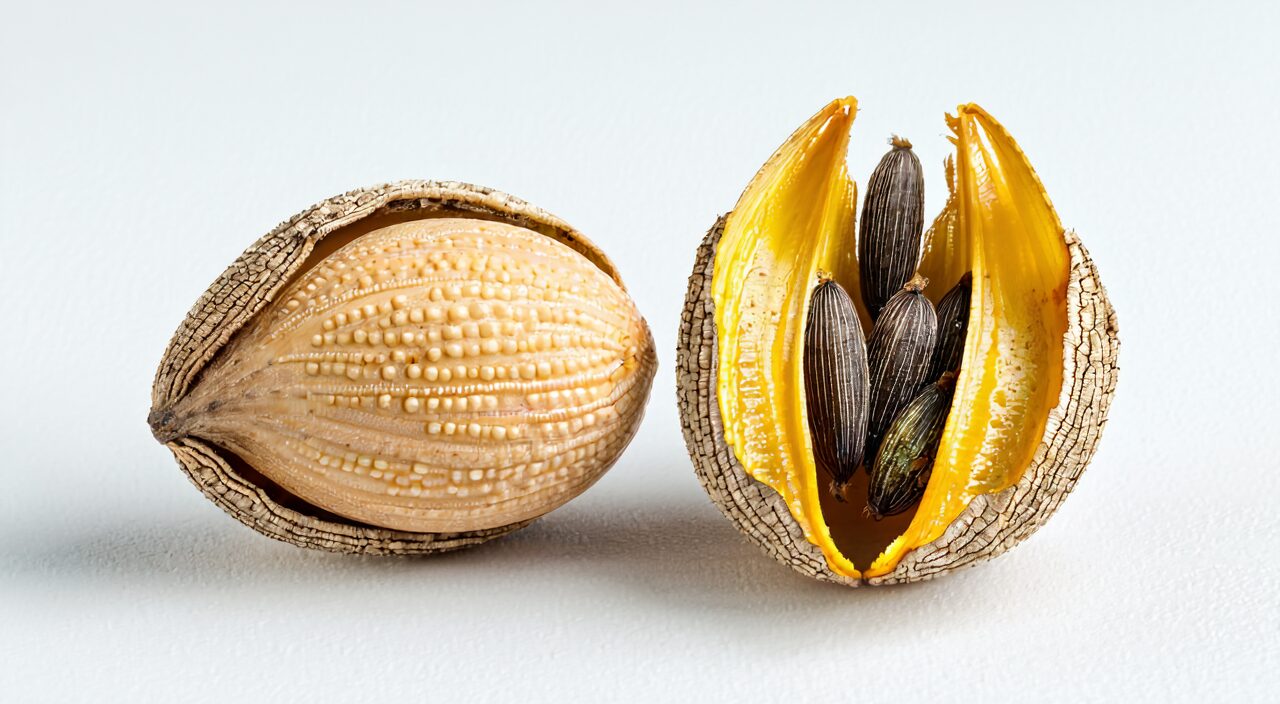
The medicinal part of forsythia is the fruit, botanically a capsule. The fruit is elongated ovoid or ovoid, about 1.5–2.5 cm long and 0.5–1 cm in diameter. The fruit surface has many raised small tubercles, which is a very typical identification feature. When ripe, the fruit dehisces upward along the ventral and dorsal sutures into two valves, resembling a tiny canoe. The pericarp becomes hard, turning yellowish-brown or reddish-brown externally, while the inside is smooth and yellowish-white.
Breaking open the fruit reveals the seeds inside. The seeds are mostly attached to the fruit valves, lanceolate in shape, with a membranous wing, facilitating natural dispersal by wind. The morphology varies with harvest time: green (unripe) forsythia is mostly greenish-brown, unopened, with more prominent surface tubercles; ripe forsythia is yellowish-brown to reddish-brown, mostly dehisced, often with traces of seed loss. In practical identification, you can quickly distinguish forsythia from similar-looking seed-based herbs by looking at the fruit shape, surface tubercles, whether it splits into two valves, and the presence or absence of winged seeds.
What Is the Medicinal Part of Forsythia?
The medicinal part of forsythia is unequivocally the dried fruit of Forsythia suspensa. In other words, it is not the flower, leaf, or root bark—the fruit is used. However, during harvesting and processing, based on the degree of ripeness, two commercial grades are traditionally distinguished: green (unripe) forsythia and ripe forsythia.
Simply put, “green forsythia” is harvested when the fruit is just ripe but still greenish, then processed by boiling in water or steaming thoroughly before drying; “ripe forsythia” is harvested when the fruit is fully mature, then directly sun-dried or shade-dried. Because of the high degree of ripeness, most fruits have naturally dehisced, and some may even have lost their seeds. Although both come from the same plant, the difference in harvest time gives them different emphases in appearance and in some component levels, but this does not mean one is absolutely superior. Traditional experience often selects one or the other based on the therapeutic direction: some formulas habitually use green forsythia, while others do not strictly distinguish. For ordinary users, understanding this mainly helps with basic judgment when encountering related products; actual use should still be guided by instructions and professional advice.
How Does TCM View Forsythia?
From the TCM perspective, forsythia is bitter in taste and slightly cold in nature, entering the Lung, Heart, and Small Intestine meridians. Based on these properties, it is commonly classified as a heat-clearing and detoxifying herb, primarily used in various syndromes related to “heat.”
First, forsythia excels at clearing heat and resolving toxicity. When external wind-heat or early-stage warm diseases manifest with fever, mild aversion to wind, and sore throat, TCM often approaches by dispersing wind-heat and clearing heat-toxicity; forsythia is one of the frequently used herbs in this strategy. Additionally, for skin redness, swelling, heat-pain, and early-stage sores and ulcers, ancient physicians also commonly used forsythia to reduce swelling and dissipate masses, believing it can vent heat-toxicity outward and alleviate swollen lumps.
Furthermore, forsythia is known for “dissipating masses,” and was traditionally used for conditions such as scrofula and phlegm nodules, which correspond to modern concepts of lymph node enlargement. In clinical practice, forsythia is rarely used alone; it is typically combined with herbs like Lonicera flower (Jinyinhua), mint (Bohe), Scutellaria root (Huangqin), and Coptis rhizome (Huanglian) to form a comprehensive formula. It should be emphasized that no single herb acts in isolation in a formula. Whether it is suitable for a specific individual depends on the constitution, current presentation, and overall combination—one should not infer effects based solely on a single ingredient.
How Does Modern Research View Forsythia?
Modern research has also explored forsythia. To date, forsythia has been found to contain various constituents such as forsythin, forsythoside A, oleanolic acid, and ursolic acid. Laboratory studies indicate that these components may exhibit anti-inflammatory, antibacterial, and antiviral activities in vitro; for example, they show certain inhibitory effects on some respiratory viruses or bacteria. Research has also investigated the potential of forsythia in antioxidant and hepatoprotective aspects.
However, these findings need to be viewed rationally. Results from in vitro or animal studies do not equate to the same effects in the human body, and are still a long way from establishing recognized clinical protocols. The significance of this research lies more in offering a modern scientific perspective for understanding traditional use, rather than claiming a specific effect. Therefore, understanding of forsythia should still be based on traditional experience and standardized knowledge, not directly applying experimental data.
What Are the Differences Between Green and Ripe Forsythia?
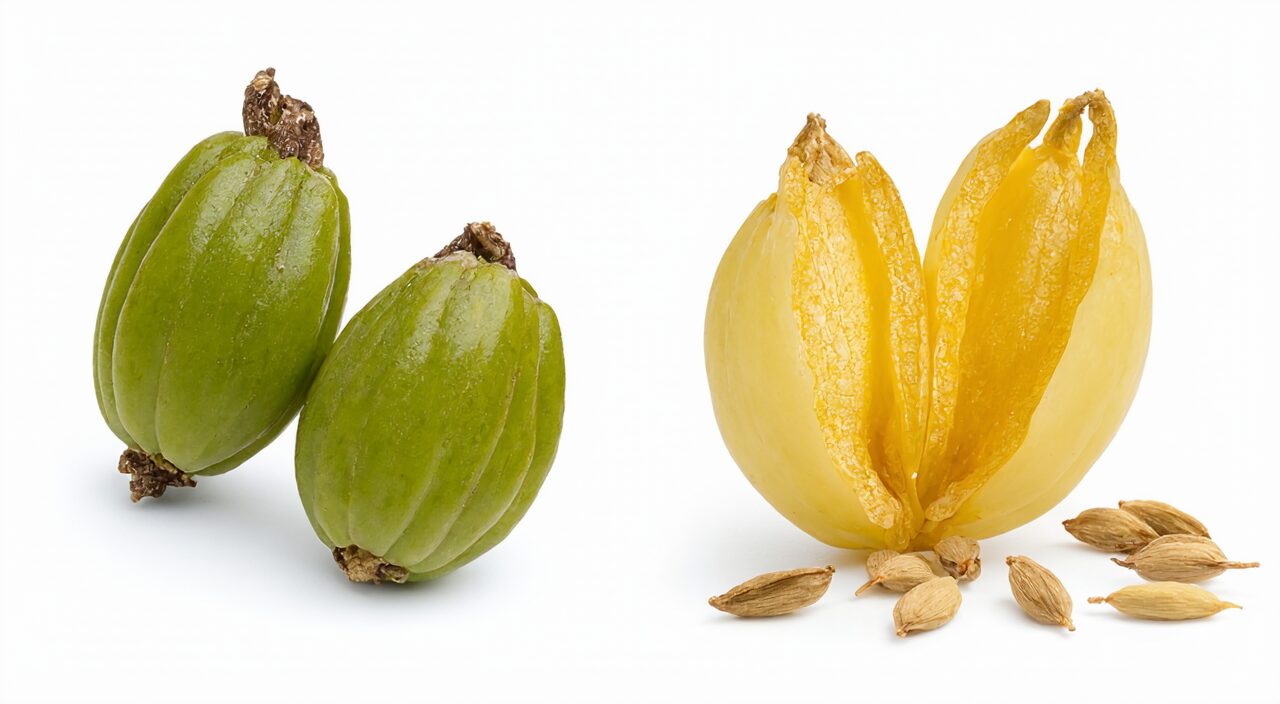
Having introduced the concepts of green and ripe forsythia earlier, here we provide a clearer summary from the perspectives of harvest time, appearance, and traditional usage emphasis.
In terms of harvest time, green forsythia is generally picked around White Dew (around early September), when the fruit is basically formed but not yet fully ripe and still greenish; ripe forsythia is harvested after Cold Dew (around early October), when the fruit is fully mature. In appearance, green forsythia is mostly elongated-ovoid, with a pointed apex and a fruit stalk scar at the base, remaining unopened, with a greenish-brown or grayish-green surface and distinct tubercles, and a somewhat hard texture. Ripe forsythia usually splits open at both ends, appearing more like a two-valved boat; the outer surface is yellowish-brown or reddish-brown, the inner surface is lighter in color, the texture is more brittle, and scattered or residual seeds are often visible.
In traditional usage, some practitioners believe that green forsythia has stronger heat-clearing and detoxifying effects, suitable for early-stage warm diseases and sore throat; ripe forsythia, due to its light and dispersing quality, is more focused on venting heat to the exterior and dissipating masses to reduce swelling, applicable for wind-heat eruptions and abscesses. However, this is merely a summary of experience, not an absolute rule. Many formulas do not strictly require green or ripe forsythia, and sometimes both are used together. Therefore, when learning about or purchasing related products, one need not consider “green forsythia is always better than ripe forsythia” or vice versa as a rigid rule; instead, focus on whether the source is legitimate and storage conditions are proper.
Which Formulas Use Forsythia?
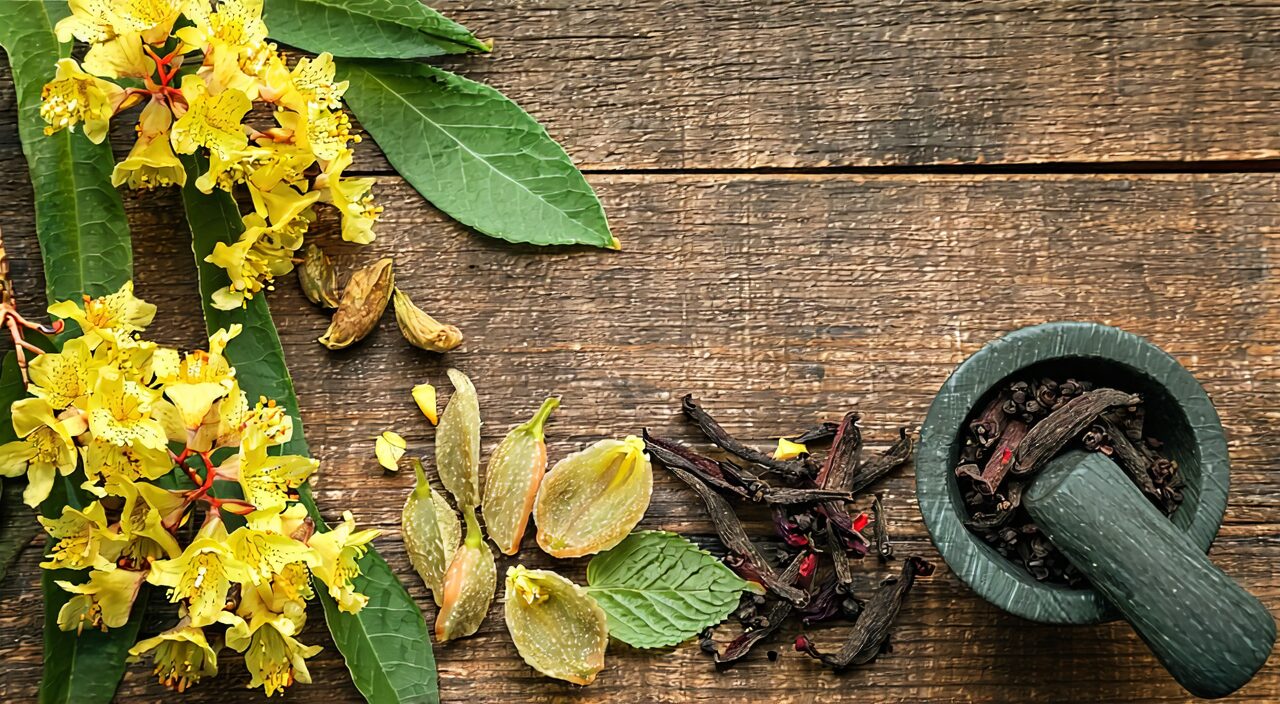
Forsythia appears in many classic formulas. The following are a few common examples, presented only as an introduction to traditional applications, not as personal treatment recommendations.
Yinqiao San: This formula is often used at the early stage of wind-heat common cold, presenting with fever, mild aversion to wind, sore throat, and thirst. In the formula, forsythia and Lonicera flower (Jinyinhua) serve together as principal herbs, combined with mint (Bohe), arctium fruit (Niubangzi), and schizonepeta (Jingjie) to disperse wind-heat, clear heat, and remove toxins. Many over-the-counter Chinese patent medicines for early-stage colds follow a similar approach.
Baohe Wan: Commonly used for food stagnation, epigastric and abdominal distension, belching with foul odor, and acid regurgitation, this formula employs forsythia to clear heat and dissipate masses, together with hawthorn (Shanzha), medicated leaven (Shenqu), and radish seed (Laifuzi) to promote digestion and remove food retention, helping to clear the “stagnant heat” generated by food accumulation.
Qingying Tang: Traditionally used when warm pathogenic heat goes deep into the nutrient (ying) level, manifesting as fever worse at night, irritability, insomnia, and faint skin rashes. In this formula, forsythia is combined with rhinoceros horn (now often replaced with substitutes), rehmannia root (Shengdihuang), and scrophularia (Xuanshen) to clear the ying level, vent heat, and remove toxins.
Puji Xiaodu Yin: Historically used for “swollen head epidemic”-type conditions, characterized by redness and swelling of the head and face, sore throat, and submandibular swelling. The formula uses forsythia, Scutellaria (Huangqin), and Coptis (Huanglian) to clear heat and remove toxins, combined with cimicifuga (Shengma) and bupleurum (Chaihu) to disperse wind-heat, helping alleviate these manifestations.
These formulas each have their own emphasis. Their suitability must be judged comprehensively by a qualified TCM professional based on the individual’s specific manifestations, constitution, and diagnosis. Self-prescribing based on these descriptions is not recommended.
What Precautions Should Be Taken When Using Forsythia?
Although forsythia is a common herb, the following points should still be noted when using it.
First, forsythia is slightly cold in nature. Traditionally, individuals with spleen-stomach deficiency cold, prone to diarrhea or loose stools, should use it cautiously, or combine it with other herbs in formulas to moderate its coldness. If used long-term or in large doses on one’s own without appropriate indications, it may cause digestive discomfort.
Second, allergies are also a concern. People with known allergies to forsythia or plants in the Oleaceae family should avoid contact or use. If symptoms such as rash, itching, or difficulty breathing occur after use, discontinue immediately and seek help promptly.
Third, it is not advisable to take related preparations on one’s own over a long period without a clear therapeutic direction. Especially in cases involving complex symptoms with multiple aspects, it is crucial to first clarify the root of the problem rather than relying on a single herb.
Finally, when purchasing forsythia or related products, use reliable channels to ensure traceable sources, freedom from mold and insect damage, and store them in a sealed, dry place. If any discomfort worsens or new problems arise during use, discontinue use and consult a physician.
Summary
Forsythia is a traditional herb whose dried fruit is used medicinally, and knowledge of its appearance and effects comes from long-term practical accumulation. The key to understanding forsythia is to grasp identification points such as surface tubercles and two-valved dehiscence, distinguish between green and ripe forsythia based on harvest time, comprehend its traditional role in clearing heat, detoxifying, and dispersing wind-heat, and its function within formulas like Yinqiao San—not to simplistically view it as a standalone “specific remedy.” The use of any Chinese herb must be weighed against an individual’s constitution and actual condition. This article is for objective informational reference only and cannot replace professional diagnosis or treatment advice.