
What Is Lotus Plumule? Medicinal Part, Identification, and Common Formulas
Lotus plumule is the tiny green young leaf and radicle found inside the mature seed of Nelumbo nucifera (the lotus plant). When you peel open an old lotus seed with its seed coat intact, nestled between the two white cotyledons is usually a tender green “core”—that is the lotus plumule. Though inconspicuous, it has long been used as a medicinal substance, distinct from lotus seed, lotus receptacle, and other parts of the same plant. For overseas readers wanting to understand the basics of Chinese herbal medicine, learning to recognize its appearance and traditional uses is a clear starting point.
What Does Lotus Plumule Look Like? How to Identify It
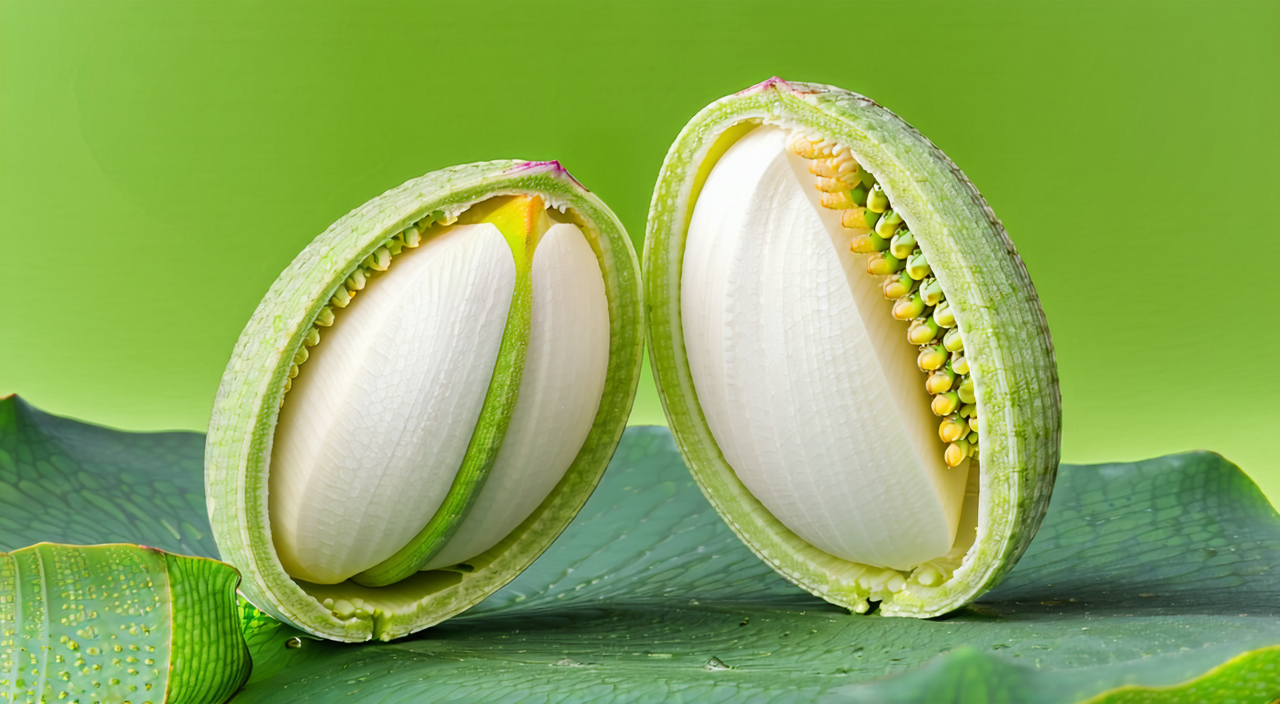
Dried lotus plumule looks like a slender, tiny green rod, 1–2 cm long and about 1–2 mm in diameter. One end is slightly pointed, which is the radicle; the other end has two small, curled young leaves that are yellowish-green or yellowish-white. The texture is very brittle and breaks with a light pinch. The odor is mild, but once placed in the mouth, it delivers an extremely distinct and lasting bitterness—one of its defining characteristics.
When fresh, the plumule is brighter green and slightly softer, while the lotus seed meat consists of thick, white, starchy cotyledons that taste sweet and powdery. To identify it, just remember these three features: “tiny green rod,” “curled young leaves at the tip,” and “intensely bitter.” That will help distinguish lotus plumule from lotus seed fragments.
What Is the Medicinal Part of Lotus Plumule?
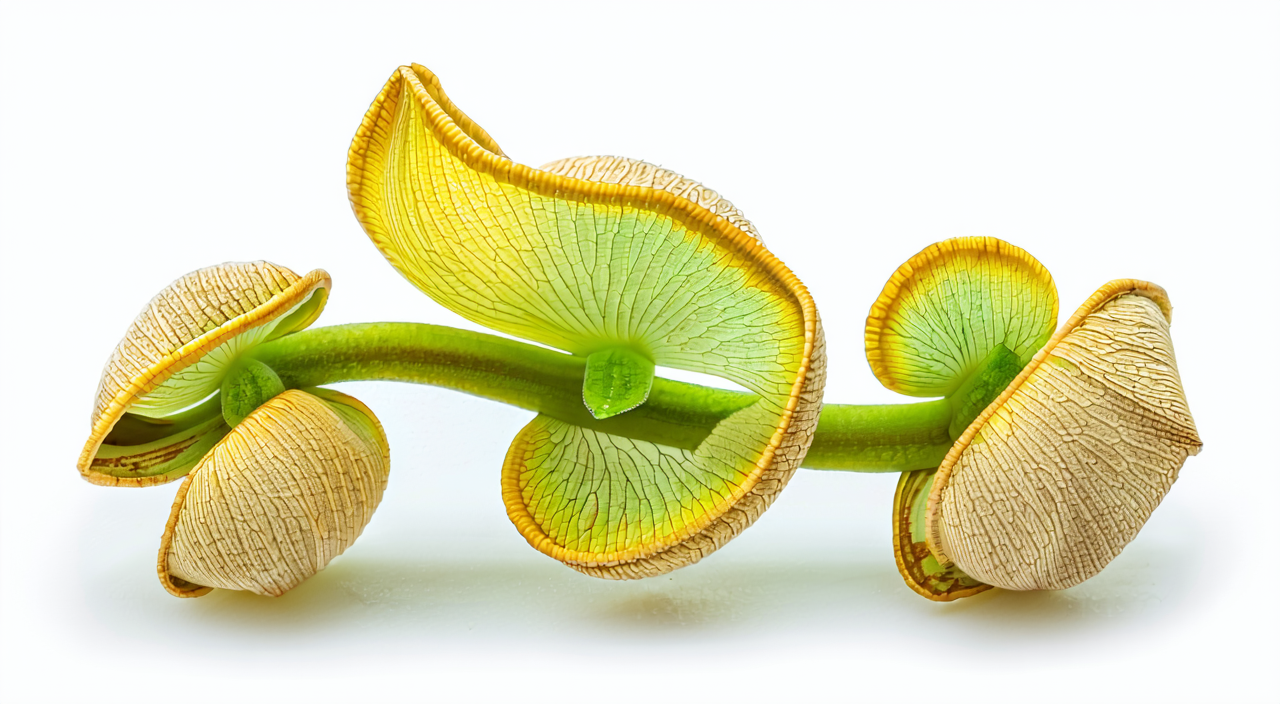
The medicinal part of lotus plumule is the dried young leaf and radicle from mature lotus seeds. After the seeds are harvested, they are split open, the green embryo is removed, cleaned of impurities, and dried in the sun or at a low temperature. It is light and fine in texture; the plumules extracted from a hundred lotus seeds often amount to barely a small pinch. Among medicinal materials, it is considered a delicate grade.
It is only a small portion of the lotus seed, sharing the same botanical origin as lotus seed (the whole kernel), lotus receptacle (the flower base), and lotus stamen (the stamens), but the medicinal parts and applications are all different. It is usually used in dried form, though occasionally the fresh form is used as well.
How Does Chinese Medicine Understand Lotus Plumule?
In Chinese medicine, lotus plumule mainly enters the Heart and Kidney meridians. Traditionally, it is used to clear the heart and calm the mind, promote communication between the heart and kidneys, and astringe essence and stop bleeding.
“Clearing the heart and calming the mind” does not mean it directly treats insomnia. Rather, when there is internal heat and deficiency fire rising, leading to irritability, difficulty falling asleep, or excessive dreaming, lotus plumule may serve as an auxiliary to help clear heart fire and alleviate restlessness. It is more of a reference for a regulating approach when specific heat signs are present, not a calming agent suitable for everyone.
“Promoting communication between the heart and kidneys” refers to situations where excessive heart fire and insufficient kidney water may cause palpitations, light sleep, dry mouth, and soreness of the lower back. Lotus plumule, through its bitter and cold property, aims to clear heart fire, hoping to bring heart fire and kidney water into harmony. This is only a traditional understanding and should not be interpreted as treatment for the above symptoms. Astringing essence and stopping bleeding have also been used in some formulas for seminal emission or bleeding due to heat in the blood, but always under the guidance of a professional.
In summary, Chinese medicine does not view lotus plumule as a sleeping pill but as an herb that clears the heart and reduces fire, suitable for heat presentations such as irritability, a slightly red tongue tip, bitter taste in the mouth, and dry mouth. If a person’s sleep problems are related to qi and blood deficiency, dual deficiency of the heart and spleen, or exposure to cold, using lotus plumule may be inappropriate. Whether it is suitable needs to be determined based on individual constitution, symptoms, and professional advice.
Modern Research Findings on Lotus Plumule
Modern compositional analysis has found that lotus plumule contains alkaloids such as liensinine and isoliensinine. Some laboratory studies suggest these components may have certain effects on the cardiovascular system, but they are mostly in vitro or animal studies and cannot be equated with the effects of daily consumption. The bitterness of lotus plumule mainly comes from these alkaloids, which is also one reason why long-term, large-quantity steeping is not recommended without caution.
How Does Lotus Plumule Differ from Lotus Seed and Bamboo Leaf?
Lotus seed meat is sweet and astringent in taste and neutral in nature; it is commonly used to tonify the spleen, stop diarrhea, benefit the kidneys, consolidate essence, and nourish the heart to calm the mind—leaning toward “astringing” and “tonifying.” Lotus plumule is bitter and cold, leaning toward “clearing” and “descending.” The two go in almost opposite directions. If you feel the need to clear heat, you should not consume large amounts of lotus seed meat, and people with a cold spleen and stomach need to be especially cautious when using lotus plumule.
Bamboo leaf comes from the leaves of Lophatherum gracile (a grass); it can also clear the heart, relieve irritability, and promote urination, but it tends to act on the upper burner and is used for heat-related irritability, thirst, and scanty dark urine. Lotus plumule specifically enters the Heart meridian and is often used for irritability and sleep disturbance caused by exuberant heart fire. Although they occasionally appear in the same formula, they cannot be simply interchanged.
Which Formulas Use Lotus Plumule?
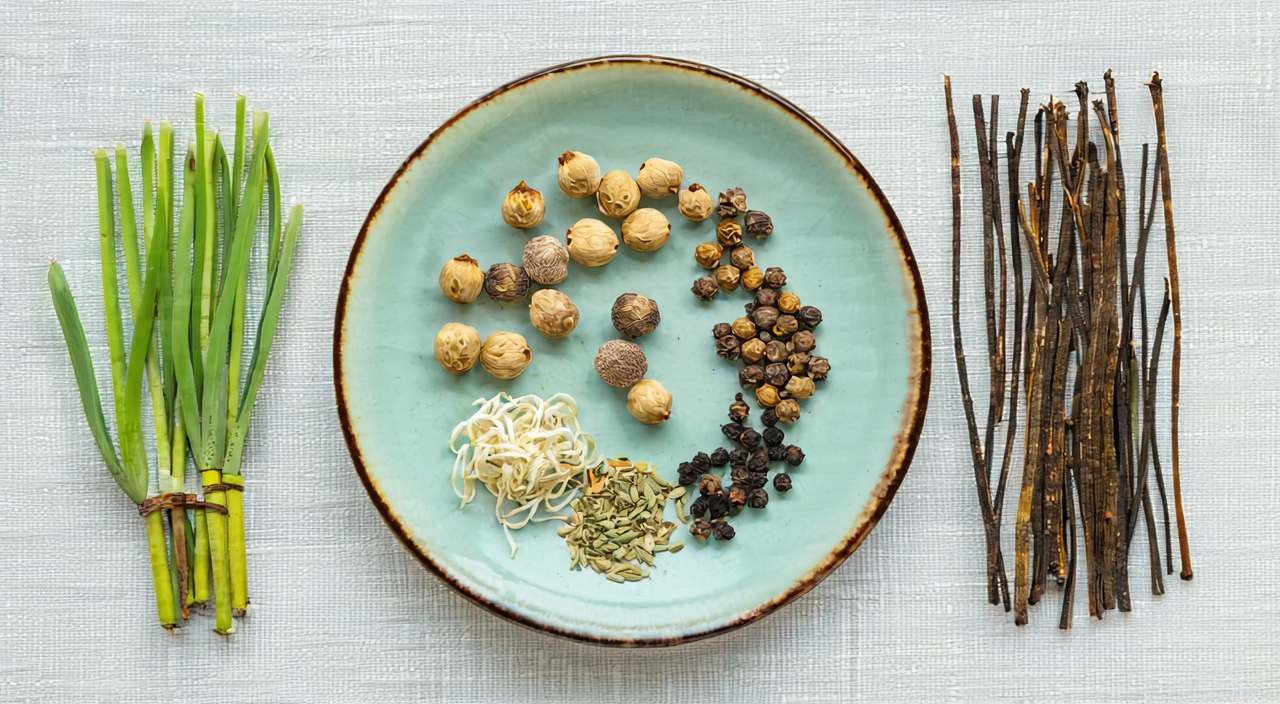
In “Qingxin Lianzi Yin” (Clear the Heart Lotus Seed Drink), lotus plumule is not the main ingredient in the original formula; it may be added as a modification to enhance the effect of clearing heart heat. There are also empirical formulas such as “Lotus Plumule Decoction,” which often combines lotus plumule with licorice, rehmannia root, and others for irritability, mouth sores, and reddish painful urination when heart fire is predominant, but still requires adjustment by a Chinese medicine practitioner based on individual conditions.
In daily combinations for clearing the heart and calming the mind, lotus plumule is sometimes used together with sour jujube seed, lily bulb, and ophiopogon root to make teas or decoctions. These mainly address daily health maintenance and are not aimed at acute problems. Users are advised to refer to product instructions and personal conditions, and consult a professional when necessary; do not take large quantities over a long period on your own.
What Precautions Should Be Taken When Using Lotus Plumule?
First, lotus plumule is cold in nature. People with a cold-deficient spleen and stomach may experience cold abdominal pain, diarrhea, or reduced appetite after use. Such individuals often tend to feel cold, have cold hands and feet, and loose stools; drinking lotus plumule tea may worsen the discomfort.
Second, lotus plumule may affect blood pressure. Those with a tendency toward low blood pressure or taking related medications should consult a doctor before use and should not drink it frequently on their own.
Third, lotus plumule should not be consumed in strong concentrations for extended periods. Bitter and cold substances can damage spleen and stomach yang qi over time. The usual single dosage should be kept small, and it is advisable to pause after drinking it continuously for a period.
It is especially important to remind that bitter lotus plumule tea should not be regarded as a routine solution for insomnia. The causes of irritability and difficulty sleeping are complex. If insomnia is severe, chronic, recurring, or accompanied by marked anxiety, palpitations, chest tightness, or headache, professional diagnosis should be sought rather than relying on a single herb.
Summary
Lotus plumule is the green embryo inside the lotus seed, characterized by its tiny rod-like shape and intense bitterness, and its action is completely different from the tonifying lotus seed meat. Traditionally, it is used to clear the heart and calm the mind and promote heart-kidney communication; it is more suitable for heat presentations such as exuberant heart fire, irritability, and dry mouth. However, it is not suitable for everyone. Precautions should be taken for conditions such as spleen-stomach cold deficiency and low blood pressure. More importantly, do not simply equate lotus plumule tea with a treatment for insomnia. This article is for informational reference only and cannot replace professional diagnosis or treatment advice. If you have health concerns, please promptly consult a relevant professional.