
What Is Sulfur? Medicinal Parts, Identification, and Common Formulas
What is sulfur? In the context of traditional Chinese medicine, sulfur generally refers to medicinal mineral material made from natural sulfur or sulfur-containing minerals after standardized processing and preparation. It is often yellow in color and can easily be confused with other minerals or industrial materials. Because sulfur is used in both topical preparations and traditional oral formulas, its proper use and source quality deserve particular attention. This article introduces sulfur’s basic characteristics, medicinal sources, traditional understanding, common formulas, and safety risks for educational reference among overseas Chinese readers.
What Does Sulfur Look Like? How Can It Be Identified?
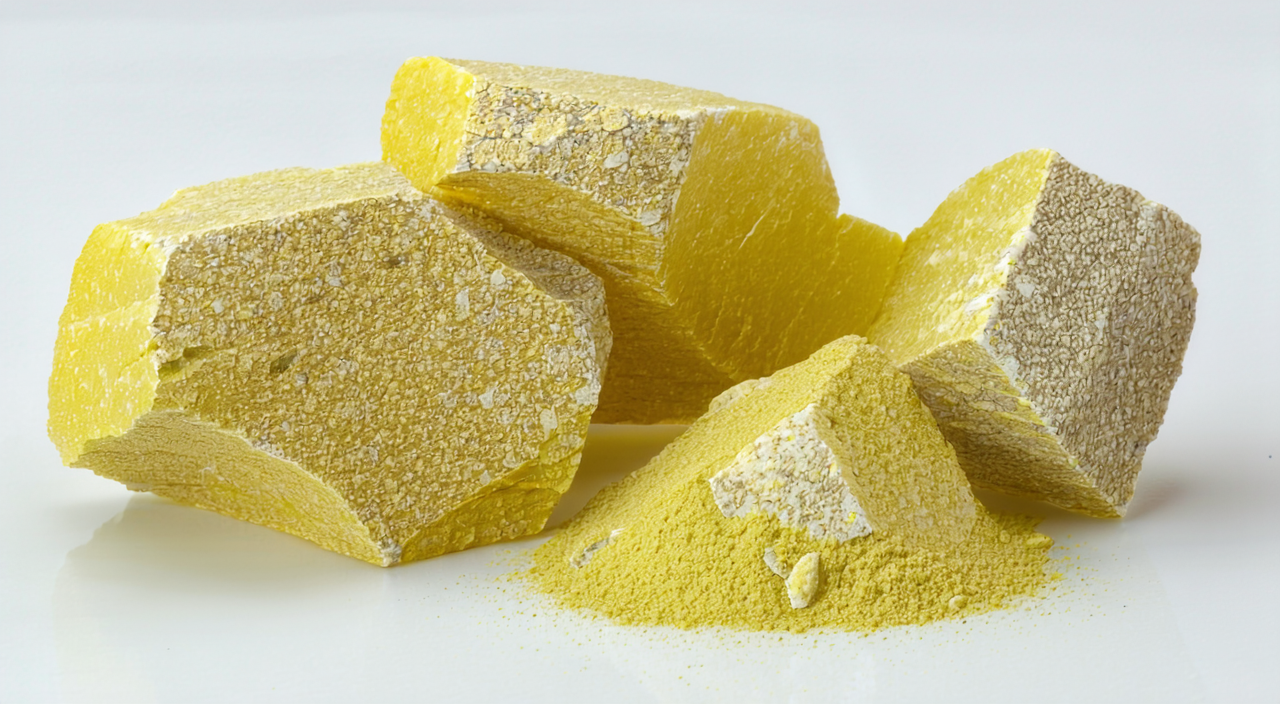
Common Appearance and Physical Characteristics
Natural sulfur is usually yellow, pale yellow, or yellowish brown. As a medicinal material, it may appear in chunks or granules, and it may also be processed into powder. Relatively intact sulfur chunks typically have a resinous or greasy luster. They are comparatively brittle, and their fractured surfaces may not be even. Powder may have a more uniform color than the original mineral, but color alone cannot confirm whether it is medicinal sulfur.
At room temperature, sulfur does not necessarily have a strong odor. Some processed products or sulfur-containing preparations may have a distinctive smell. The color, luster, and odor can all be affected by the mineral’s source, processing method, and impurity content. Industrial sulfur, agricultural materials, or unidentified yellow powders must not be used as traditional medicinal materials simply because their appearance is similar.
Do Not Attempt Home Burning Tests
Sulfur is combustible, and heating or burning it may produce irritating gases. Attempting to ignite or heat it, or bringing it close to the nose to smell it, cannot replace professional identification and may cause inhalation irritation, burns, or fire hazards. Medicinal sulfur should be obtained through正规 channels and assessed using packaging information, quality testing, and professional identification rather than simple household experiments.
What Is the Medicinal Part of Sulfur?
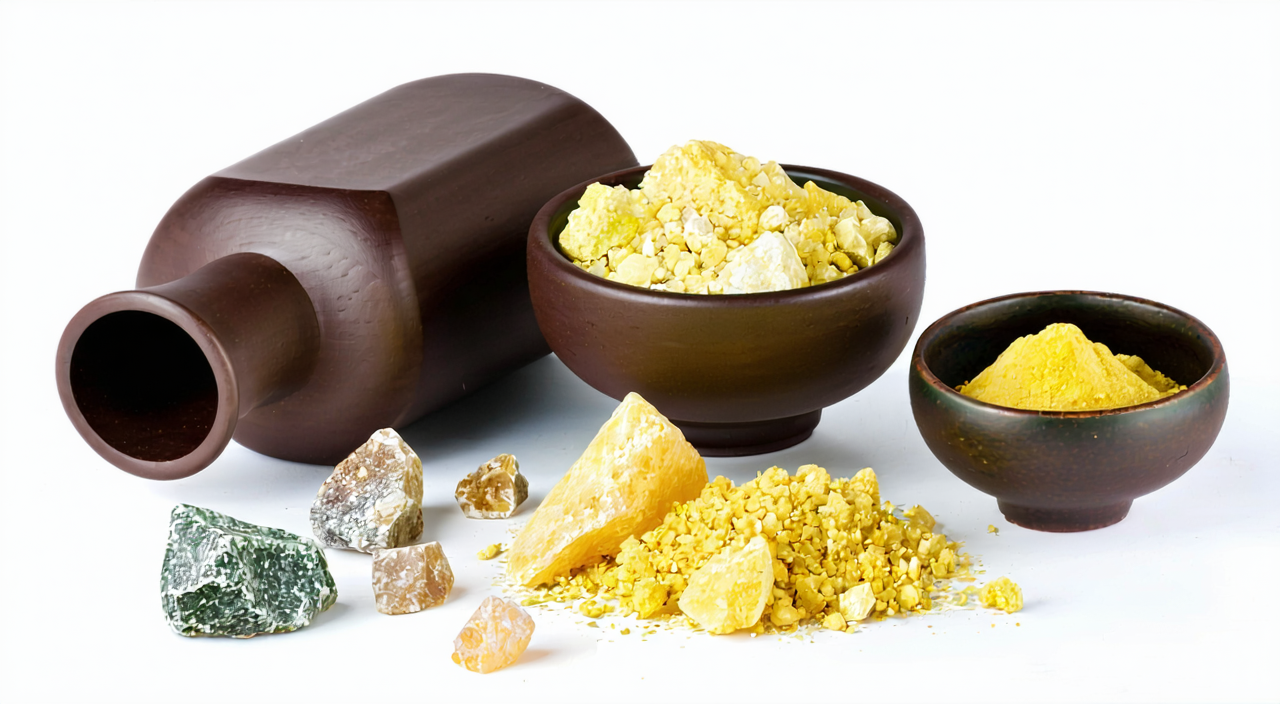
Strictly speaking, sulfur is not the root, stem, leaf, or fruit of a plant, but a mineral medicinal material. Its traditional medicinal source is primarily natural sulfur, which is used after screening, cleaning, and standardized processing or preparation. Requirements for its source, preparation method, quality standards, and use may vary between regions and pharmacopoeial systems. Local pharmacopoeias, product instructions, and professional advice should therefore take precedence.
Processed Mineral Materials Are Different from Industrial Raw Materials
Medicinal sulfur must have a traceable source, controlled impurities, and standardized processing. Industrial sulfur may contain ash, heavy metals, acidic substances, or other production residues. Even if its appearance resembles that of medicinal material, it must not be considered suitable for oral or topical use. Sulfur intended for agriculture, rubber, paper, matches, or other industrial applications should never be placed in a household medicine cabinet.
The traditional purpose of preparation generally includes reducing irritation, improving the form in which the material is used, or facilitating combination with other ingredients. However, preparation does not mean that all risks disappear. Whether the material is suitable for a particular use also depends on dosage, preparation quality, application site, individual constitution, and concurrent medications.
How Does Traditional Chinese Medicine Understand Sulfur?
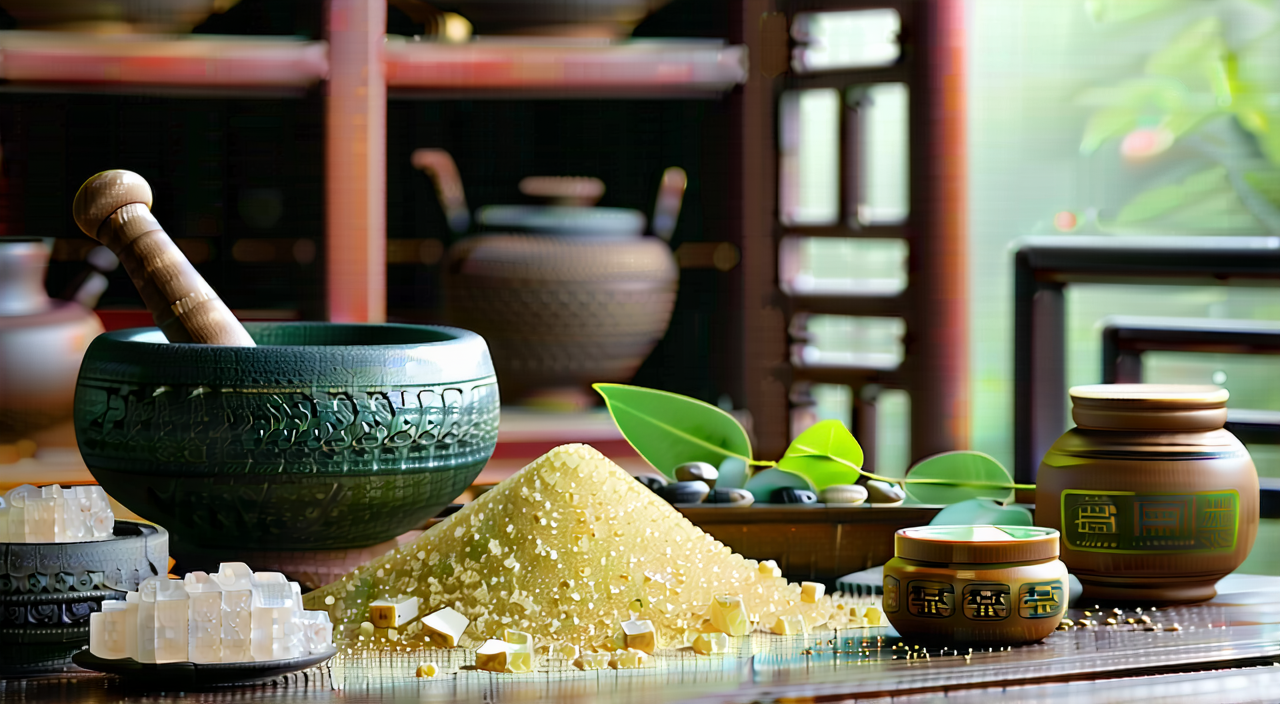
Traditional Chinese medicine often understands sulfur in terms of its medicinal properties and meridian associations. In relevant materia medica records, sulfur is generally described as warming and somewhat irritating, and its topical and oral applications are discussed in different contexts. Traditional topical applications mainly involve concepts such as detoxification, insect elimination, and itch relief, and sulfur may be found in certain skin powders, ointments, or compound preparations. Topical use does not mean it can be applied freely. Risks may increase when the skin barrier is damaged, the affected area is large, or there is a tendency toward allergic reactions.
Traditional oral applications are discussed mainly in terms of warming and supporting yang and relieving constipation, generally as part of treatment strategies for specific constitutions and patterns. Because sulfur has relatively strong medicinal properties and mineral medicines require careful attention to source, preparation, and dosage, people should not decide on their own whether it is appropriate based on a single symptom. For oral use, a qualified traditional Chinese medicine practitioner or physician should assess the person’s constitution, symptoms, medical history, and current medications.
It is important to note that traditional theories belong to the empirical and explanatory framework of traditional Chinese medicine and cannot replace modern medical diagnosis of skin problems, digestive issues, or other symptoms. If symptoms are severe or recurrent, or if they are accompanied by significant pain, bleeding, weight loss, persistent vomiting, or other warning signs, consult a physician promptly.
Modern Safety Priorities: Skin Irritation, Inhalation Hazards, and Industrial Impurities
From a modern safety perspective, local irritation is one of the primary concerns with sulfur and sulfur-containing preparations. Some people may experience dryness, redness, stinging, scaling, or contact skin reactions after use. When applying sulfur topically, follow the product instructions carefully and avoid contact with the eyes, mouth, and large areas of damaged skin. When trying a new topical product for the first time, monitor the local reaction. Stop using it and consult a professional if significant discomfort occurs.
Sulfur dust or fumes produced by heating may irritate the eyes and respiratory tract. When portioning, grinding, or using sulfur powder, avoid creating dust, do not work in poorly ventilated areas, and do not bring the powder close to the nose or mouth to identify it by smell. Industrial raw materials may also pose risks from heavy metals, acid residues, solvents, or other impurities. This is an important reason why medicinal sources must be properly regulated.
Sulfur is combustible and should be stored away from open flames, high temperatures, and incompatible substances. For topical preparations, also follow the storage conditions on the packaging and prevent children from touching or ingesting the product accidentally. Modern research and safety assessments are primarily intended to identify risks related to irritation, exposure, and contamination; they do not guarantee the effectiveness of any particular formula or product.
What Is the Difference Between Sulfur, Realgar, and Alum?
Sulfur, realgar, and alum may all be discussed as mineral medicinal materials in traditional Chinese medicine, but they are not the same substance.
| Name | Typical Appearance | Key Composition | Traditional Use Context |
|---|---|---|---|
| Sulfur | Yellow or yellowish brown; chunky or powdery | Primarily sourced from natural sulfur | Topical detoxification, insect elimination, and itch relief; oral warming and supporting yang, relieving constipation, and related applications |
| Realgar | Orange-red or orange-yellow; commonly crystalline or powdery | Primarily contains arsenic sulfide | Traditionally used for purposes such as detoxification and drying dampness; its safety risks require particular attention |
| Alum | White, colorless, or slightly translucent; crystalline or powdery | Primarily an aluminum-containing sulfate mineral | Traditionally used for purposes such as drying dampness, relieving itching, and securing astringent functions |
Color can serve only as an initial observation and cannot replace professional identification. Realgar contains arsenic compounds and must not be mixed with or substituted for sulfur. Alum also differs from sulfur in both chemical composition and medicinal properties. When purchasing or using mineral medicinal materials, verify the name, batch, intended use, and quality information to avoid misuse caused by common names, similar colors, or unclear packaging.
Which Traditional Formulas Contain Sulfur?
Ban Liu Wan
Ban Liu Wan is the name of a traditional formula. Historically, it commonly combines sulfur with ingredients such as pinellia, and it has mainly been discussed in relation to cold accumulation, constipation, and impaired middle-jiao function. It is not suitable for everyone with constipation, and it should not be taken independently based on descriptions found online. If constipation persists or is accompanied by severe abdominal pain, vomiting, abdominal distension, black stools, bloody stools, or significant weight loss, seek medical evaluation first.
Sulfur Ointment
Sulfur ointment is a sulfur-containing topical preparation traditionally used for skin itching, certain skin conditions associated with parasites, or skin care when sebum production is excessive. The concentration, excipients, and suitable application sites may vary between products. Follow the product instructions and professional recommendations. Do not apply it around the eyes, to mucous membranes, or over large areas of damaged skin, and do not increase the application frequency simply because it is a topical product.
Sulfur Powder
Sulfur Powder is one of the names used for traditional powders containing sulfur. Its exact ingredients and directions may vary according to the version, region, and dosage form. Powders can easily generate dust, so inhalation should be avoided. Confirm that the product is a正规 medicinal preparation rather than mineral powder ground independently. Children, pregnant people, and those with a damaged skin barrier should consult a physician or pharmacist before use.
These formulas and preparations should be regarded only as examples of traditional applications or subjects for further learning. Suitability must be judged by considering constitution, symptoms, product instructions, medical history, and professional advice. A formula name must not be treated as an individual medication plan.
What Precautions Are Needed When Using Sulfur?
First, do not take sulfur orally without professional guidance, and do not use industrial sulfur, agricultural sulfur, or mineral powder with no clear source on the body. Oral use involves the preparation of the medicinal material, dosage, compatibility with other ingredients, and contraindications, all of which must be assessed by a professional. For topical use, choose a正规 medicinal preparation and follow the package instructions or medical advice. Avoid applying it to large areas of damaged skin, the eyes, the mouth, or other mucous membranes.
Second, keep sulfur away from open flames, high temperatures, and areas accessible to children during use and storage. Avoid inhaling powder products, wash your hands promptly after handling them, and maintain good ventilation. If marked redness, burning pain, a rash, breathing discomfort, or accidental ingestion occurs, stop exposure and seek medical help as soon as possible.
Children, older adults, and people who are pregnant or breastfeeding, as well as those with liver or kidney disease, chronic skin conditions, or a history of allergies, should exercise particular caution before use. People taking prescription medicines, dietary supplements, or other traditional Chinese medicines should also inform their physician or pharmacist. Persistent or recurrent skin itching, constipation, or other symptoms should not be managed independently for an extended period. If symptoms are accompanied by marked anxiety, palpitations, chest tightness, pain, abnormal breathing, severe abdominal pain, persistent vomiting, black stools, or weight loss, consult a physician or other qualified professional promptly.
Summary
Sulfur is a traditional Chinese medicinal material made from mineral sources such as natural sulfur through standardized processing and preparation. It commonly appears as yellow chunks or powder, but it cannot be identified reliably through color, odor, or burning tests alone. Sulfur differs from realgar and alum in both composition and traditional uses, and its related formulas and topical preparations should not be used without guidance. Avoid industrial raw materials, and pay close attention to irritation, inhalation, flammability, and impurity risks. This article is for educational reference only and cannot replace professional diagnosis or medication advice.