
What Is Long Gu? Medicinal Parts, Identification, and Common Formulas
Many people are curious about the name “Long Gu,” easily associating it with giant dragons from myths. In fact, Long Gu in Chinese medicine has nothing to do with dragons; it refers to fossilized bones or teeth of ancient large mammals. For those living overseas who wish to learn about traditional Chinese medicine, understanding what Long Gu is, what it looks like, how it is used, and what precautions to take is the first step toward safe and rational contact with this type of medicinal substance.
What does Long Gu look like? How to identify it?
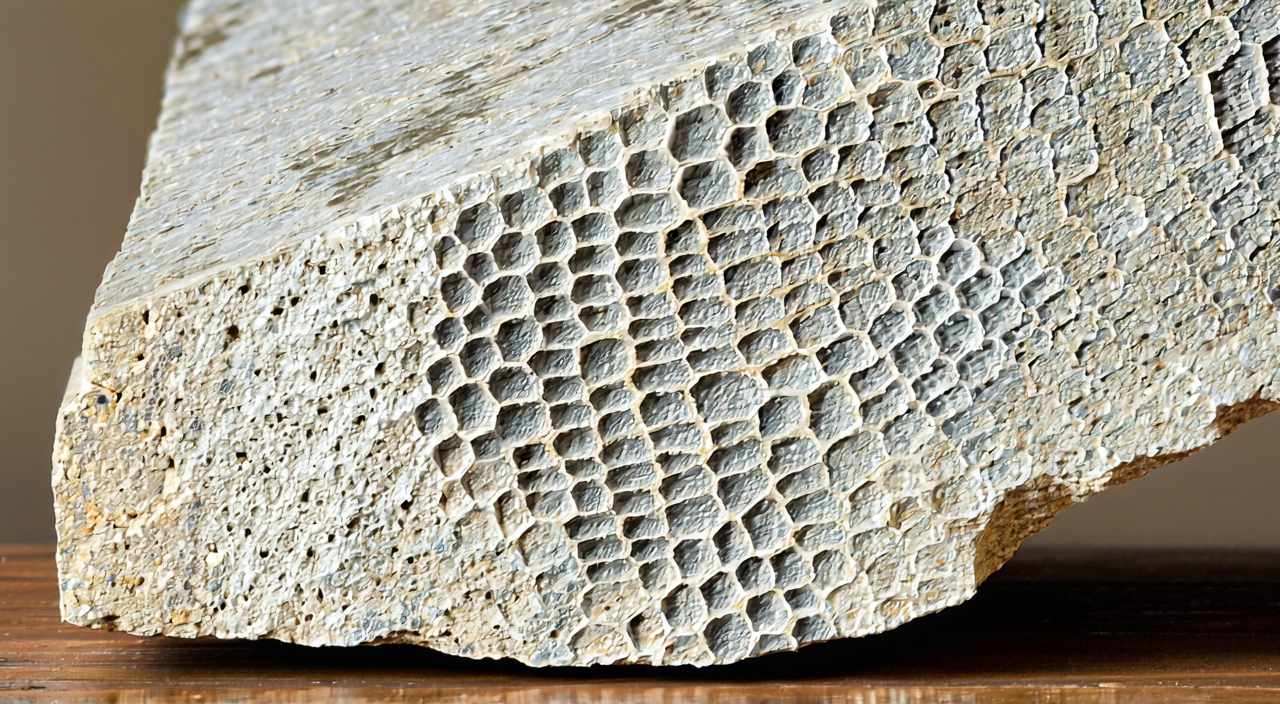
The appearance of Long Gu is quite different from the plant-based herbs we commonly see. When encountering it for the first time, you can identify it by its shape, color, and texture.
Long Gu usually appears as irregular bone fragments, some resembling broken bone pieces, while others may show tooth-like shapes. Well-preserved tooth fossils are called “Long Chi” in the market, another common form of this substance. Commercially available Long Gu mostly consists of bone-like fragments with uneven edges and surfaces often bearing weathering cracks.
Its color is mostly grayish white, yellowish white, or light brown, and some surfaces may have gray-black soil traces. The texture is relatively brittle and possesses a distinctive hygroscopic quality. When lightly touched with the tip of the tongue, it produces a noticeable sticking sensation; this is a traditional empirical method for identifying Long Gu. It feels lighter than ordinary stone in the hand, and the broken surface reveals fine pores that appear honeycomb-like or powdery, without the greasy feel of fresh animal bones. These characteristics are related to its long burial and fossilization process.
What is the medicinal part of Long Gu?
Long Gu comes from fossilized bones or teeth of ancient mammals, commonly including rhinoceros, horse, deer, cattle, elephant, and others. For medicinal use, the excavated fossils must be cleaned by removing soil and impurities before use, and this is called “raw Long Gu” (Sheng Long Gu). There is also a processed form called “calcined Long Gu” (Duan Long Gu), which involves heating the cleaned Long Gu in a suitable container until red hot, then cooling and crushing it. After calcination, the texture becomes even more friable, and its astringent and securing properties become relatively more prominent.
Whether used raw or calcined, Long Gu, as a mineral fossil medicinal, has strict requirements regarding its source. Long Gu from legitimate channels should be labeled with its place of origin and must undergo quality inspection, with special attention to whether it contains excessive heavy metals or harmful elements. Therefore, understanding the processing method and source background of Long Gu is an important part of ensuring safety when using it.
How does Chinese medicine understand Long Gu?
In traditional Chinese medicine theory, Long Gu is a classic heavy-settling and spirit-calming medicinal. Its actions can be understood from three aspects.
First, it settles fright and calms the spirit. For conditions such as vexation, palpitations with anxiety, and restless sleep—signs of a disturbed spirit—Long Gu is often used together with oyster shell (Muli) and other herbs, as it is believed to weigh down floating yang and help stabilize the spirit. Second, it pacifies the liver and subdues yang. When liver yang hyperactivity causes dizziness, distending headache, irritability, and irascibility, traditional thinking may add Long Gu to anchor the rising yang. Third, it astringes and secures. After calcination, Long Gu’s astringent property is enhanced, and it is commonly used for conditions requiring consolidation in chronic consumptive patterns, such as excessive sweating, persistent cough or wheezing, nocturnal emission, spermatorrhea, leukorrhea, and uterine bleeding, as an auxiliary securing and holding choice.
These understandings stem from thousands of years of empirical summarization, reflecting a traditional approach to adjusting the body’s state rather than a direct treatment for any modern disease name. Whether it suits a specific individual still requires comprehensive evaluation of constitution, symptoms, and professional judgment.
What does modern research focus on?
From a modern scientific perspective, the main components of Long Gu are calcium carbonate, calcium phosphate, and small amounts of mineral elements such as iron, magnesium, and aluminum. Such components exhibit certain adsorptive and neutralizing effects in vitro, which is relevant to its traditional astringent and securing uses.
However, modern research focuses more on two aspects: first, the identification of fossil origin, using morphological and even paleontological methods to confirm the true source of Long Gu and avoid adulterants; second, quality control and safety evaluation, with emphasis on monitoring the content of heavy metals and harmful elements like arsenic, because animal fossils extracted from strata with mineral associations may carry a risk of elevated harmful elements. For individuals with long-term use or specific constitutions, paying attention to these aspects is more meaningful than merely pursuing “active ingredients.”
What are the differences between Long Gu, oyster shell, and Long Chi?
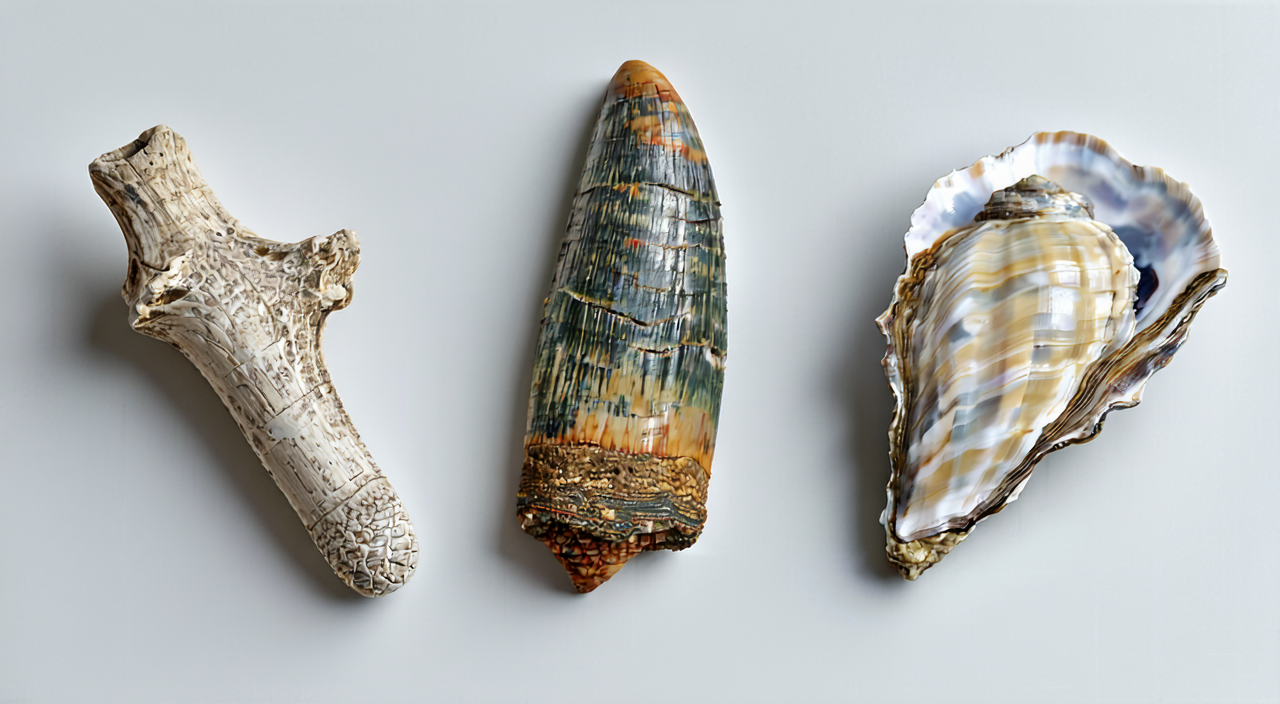
Many people easily confuse Long Gu, Long Chi, and oyster shell, but in fact they have different origins and traditional uses.
Long Gu is fossilized bone or teeth of mammals, Long Chi specifically refers to fossilized teeth, and oyster shell (Muli) is a shell-based medicinal derived from animals of the Ostreidae family. In terms of appearance, Long Gu mostly appears as bone fragments with pores; Long Chi is harder, with a stronger enamel-like surface luster, often conical or molar-shaped; oyster shell is layered and plate-like, hard and heavy, easily fractured when struck, with obvious layered striations on the cross-section.
In traditional application, Long Gu and oyster shell are often used together to mutually enhance their heavy-settling, spirit-calming, liver-pacifying, yang-subduing, astringent and securing effects. However, Long Chi is slightly stronger in settling fright and calming the spirit, while oyster shell also has the characteristic of softening hardness and dissipating masses. Long Chi leans more toward stabilizing the spirit and settling the mind, while Long Gu has broader astringent and securing applications. Understanding these differences helps grasp the direction when interpreting formulas, but one should not arbitrarily substitute one for another.
Which formulas use Long Gu?
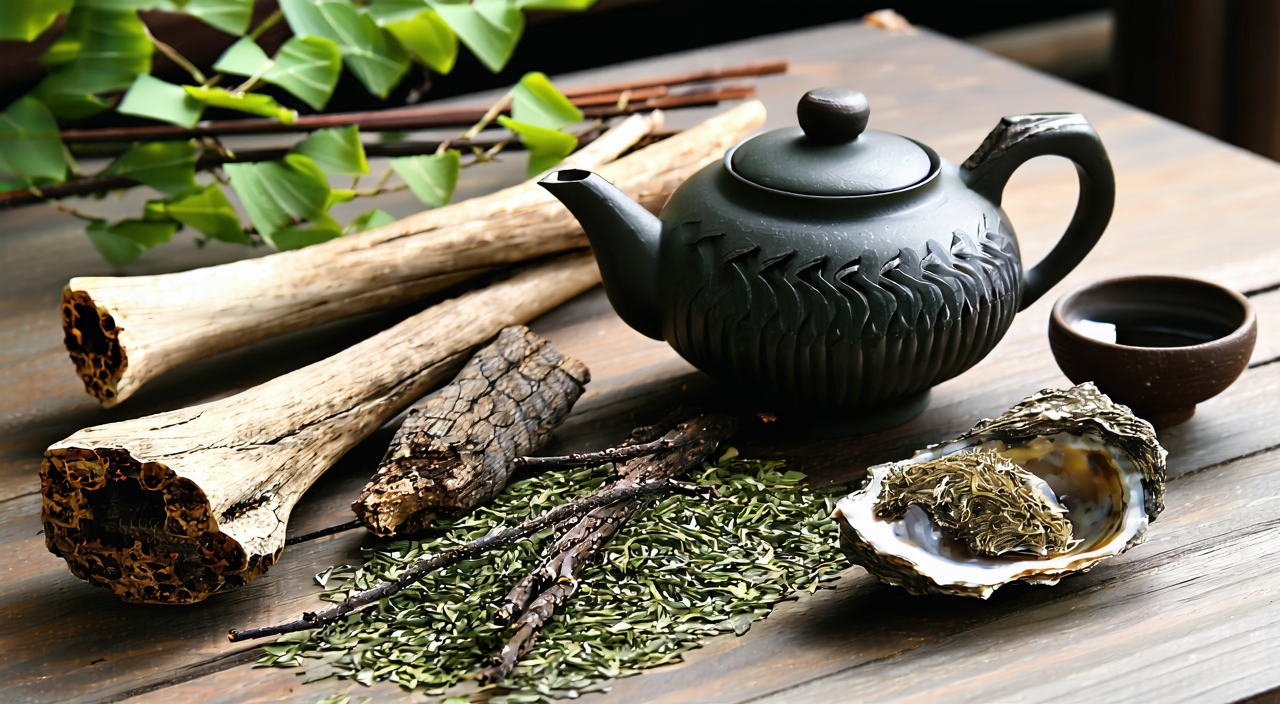
Long Gu appears in many classic formulas. Here are several representative formulas with brief descriptions of their traditional application directions.
Guizhi Jia Longgu Muli Tang (Cinnamon Twig Decoction plus Long Gu and Oyster Shell) is formed by adding Long Gu and oyster shell to Guizhi Tang. It is commonly used for conditions such as nocturnal emission, excessive sweating, and palpitations with anxiety caused by yin-yang disharmony and floating of deficiency yang, traditionally seen as an approach to harmonize the nutritive and defensive, with added settling, subduing, and securing.
Chaihu Jia Longgu Muli Tang (Bupleurum Decoction plus Long Gu and Oyster Shell) is a modification of Xiao Chaihu Tang, with the addition of Long Gu, oyster shell, Poria, and other herbs. It is often used for more complex presentations such as chest and hypochondriac fullness, vexation, palpitations with anxiety, and a heavy body sensation with difficulty turning, combining spirit-calming and constraint-resolving methods.
Jin Suo Gu Jing Wan (Golden Lock Essence-Securing Pill) primarily focuses on securing essence and preventing loss. In this formula, Long Gu is combined with oyster shell, Euryale seed, lotus stamen, and others, traditionally used for insecure essence gate, nocturnal emission, and spermatorrhea requiring consolidation.
Zhen Gan Xi Feng Tang (Liver-Sedating and Wind-Extinguishing Decoction) uses Achyranthes root, red ochre, Long Gu, oyster shell, and other key herbs. It is indicated for dizziness and headache, flushed complexion, and limb disadvantage due to liver and kidney yin deficiency and liver yang hyperactivity, emphasizing guiding blood downward and subduing yang to extinguish wind.
Each of these formulas has its own emphasis. Choosing which one to use requires comprehensive differentiation based on individual constitution, symptom characteristics, and tongue and pulse signs; one cannot simply match a formula to one or two symptoms. It is recommended to understand these traditional directions under professional guidance and carefully select products according to product instructions.
What precautions should be taken when using Long Gu?
Although Long Gu is a traditional medicinal substance, it is not suitable for all constitutions or all situations. Several points should be kept in mind.
People with internal excess heat, damp-heat stagnation, or severe constipation are generally not suitable for using Long Gu alone or in large doses, because its astringent and securing nature may trap pathogenic factors inside the body. Second, as a mineral fossil medicinal, the source of Long Gu must be reliable. If excavated from unknown areas or strata with high heavy metal content, there may be a risk of mineral contamination. In addition, Long Gu belongs to the category of paleontological fossils, and many countries and regions have strict legal regulations on the collection and trade of paleontological fossils. When purchasing cross-border or carrying it, one needs to understand local resource compliance requirements to avoid unnecessary legal risks.
If your discomfort is severe, chronic, recurrent, or accompanied by obvious anxiety, depression, palpitations, chest tightness, pain, respiratory abnormalities, severe abdominal pain, persistent vomiting, black stools, unexplained weight loss, etc., you should promptly consult a doctor or professional healthcare provider, and not rely on a single herb or formula to self-treat.
Summary
Long Gu is not the mythical dragon bone; it is a traditional medicinal substance derived from fossilized ancient mammals. Basic identification can be made through features such as shape, color, and hygroscopicity. Raw and calcined forms differ in their securing and astringent properties. In traditional formulas, Long Gu is often used with oyster shell for calming the spirit, pacifying the liver, and securing, but those with damp-heat stagnation, constipation, etc. should use it with caution. Due to its fossil nature, attention must also be paid to source safety and resource compliance. The use of any medicinal substance should be based on individual actual conditions and under professional guidance; this article provides only foundational knowledge for reference.