
What Is Lou Lu? Its Medicinal Part, Identification, and Common Formulas
Lou Lu is not one of the most frequently used Chinese medicinal herbs, but it is often mentioned in traditional formulas for resolving abscesses and promoting lactation. When many overseas Chinese users search for “what is Lou Lu,” they are usually trying to learn which part of the plant is used, what it looks like, how it differs from burdock root and Pulsatilla root, and what traditional formulas containing Lou Lu are generally used for. This article focuses on the dried root of Qizhou Lou Lu and provides a clear overview of the basic information.
What Does Lou Lu Look Like? How Can It Be Identified?
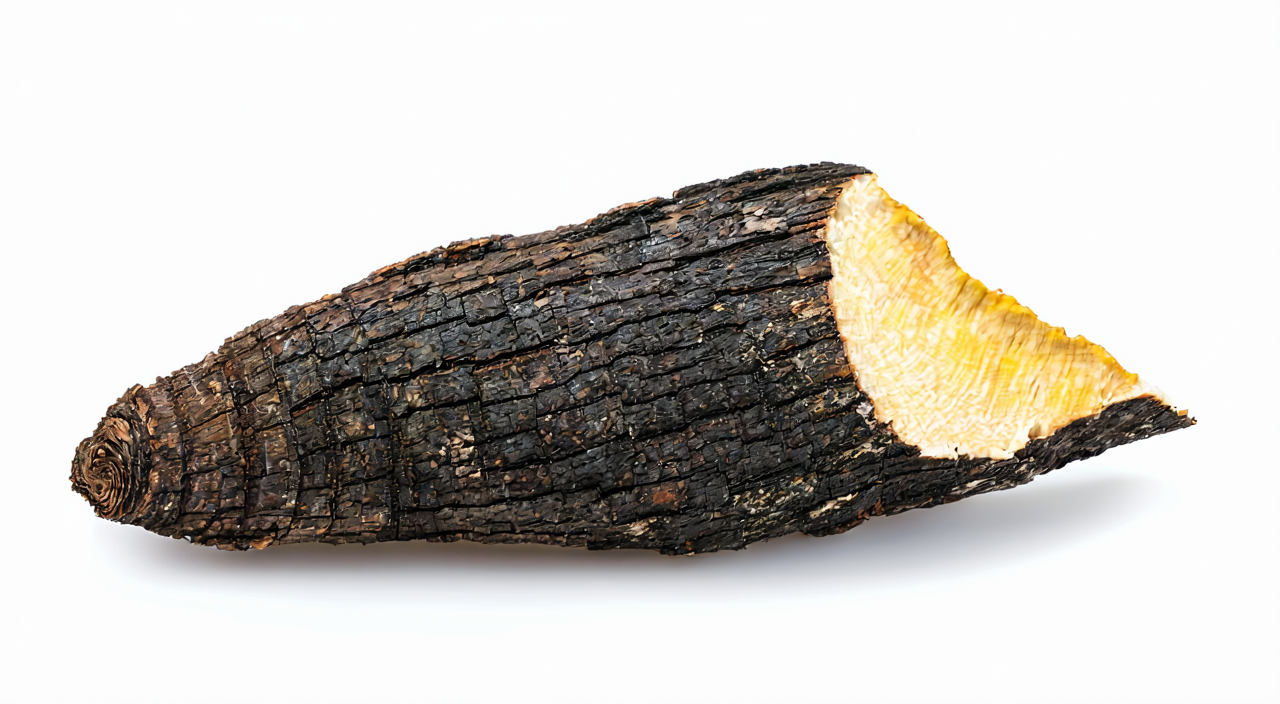
The root of Qizhou Lou Lu is usually conical or cylindrical and may be slightly curved, with a diameter generally ranging from 1 to 2 centimeters. Its surface is typically blackish-brown or deep brownish-black, with longitudinal grooves of varying depth and irregular transverse cracks. The root crown is an important identification feature and often retains fibrous leaf-stalk bases, which may appear as dark, hair-like remnants. The broken surface is generally yellowish-white and relatively loose in texture, sometimes showing fissures or radiating patterns. Its odor is mild, while the taste may be slightly bitter or mildly pungent.
However, its appearance can be affected by the place of origin, harvesting season, and processing method. Members of the public should not attempt to collect or identify it solely from written descriptions, especially when purchasing it overseas. It is important to check whether the product clearly states the specific scientific name and source.
Which Part of Lou Lu Is Used Medicinally?
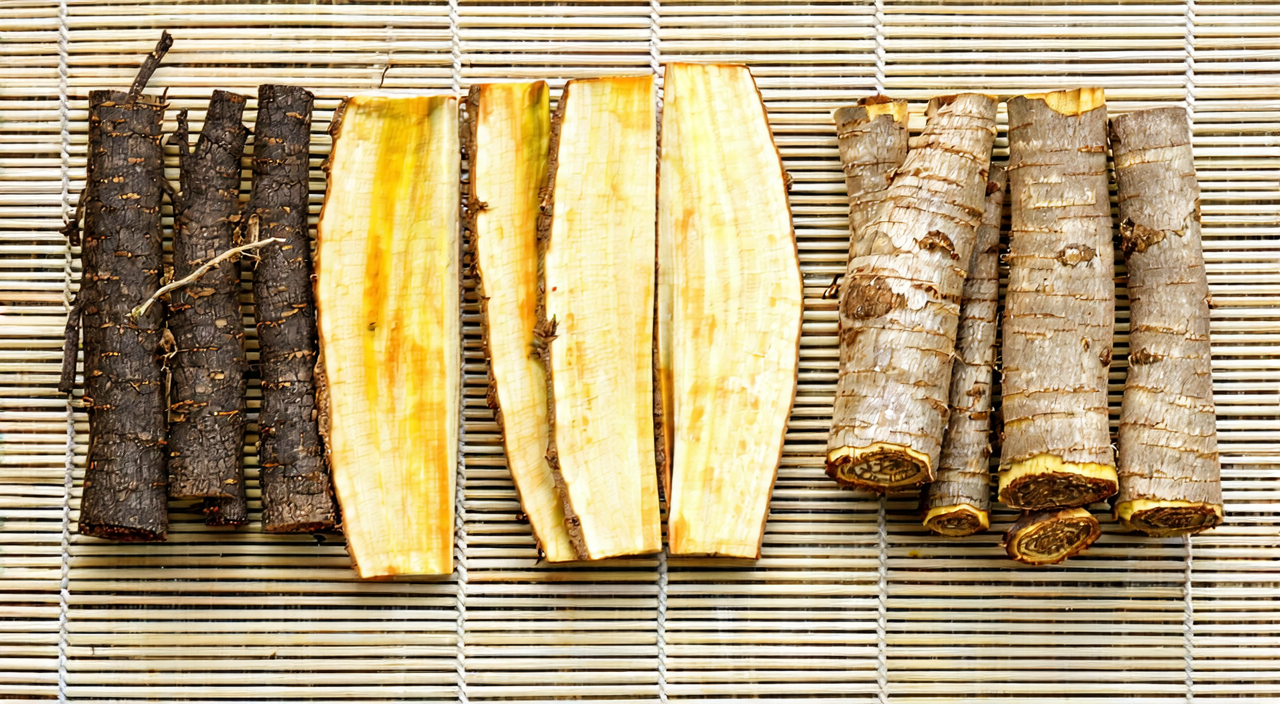
The root is the part of Lou Lu most commonly used. The mainstream source is the dried root of the Asteraceae plant known as Qizhou Lou Lu. Traditional harvesting is generally carried out in spring and autumn. After being dug up, the roots are cleared of soil, above-ground stems and leaves, and fibrous roots, then washed and sun-dried. Some commercial products are sliced into thick pieces before drying.
It is important to note that the historical understanding of the botanical source of “Lou Lu” has not been entirely consistent across different regions. In some areas, other similar root plants have been used as substitutes. Therefore, simply saying that “the root is used medicinally” is not sufficiently precise; it is necessary to distinguish Qizhou Lou Lu from related species or confusing substitutes.
How Does Traditional Chinese Medicine Understand Lou Lu?
Traditional Chinese medicine generally classifies Lou Lu as bitter and cold in nature, understanding it primarily through the two functions of “clearing” and “通,” or promoting movement and flow.
In terms of clearing heat and removing toxins, traditional theory holds that Lou Lu may be used for manifestations such as abscesses, swellings, and sores caused by constrained heat toxins, particularly abscess-like conditions affecting the breasts. In resolving abscesses and promoting lactation, it is traditionally believed to help disperse localized stagnation, so it may appear in traditional approaches for postpartum difficulty with milk flow or the early stages of breast abscesses. In relation to relaxing the sinews and promoting the circulation of the channels, herbal texts also contain references to its use for restricted joint movement and contracted sinews or channels.
These descriptions reflect traditional interpretations of herbal properties and are not conclusions about efficacy in modern medicine. Whether it is appropriate for a particular person depends on their constitution and symptoms and should be assessed by an experienced professional.
What Does Modern Research Say About Lou Lu?
Modern research has focused more on its chemical constituents. Existing literature suggests that Lou Lu may contain polyacetylenes, steroids, flavonoids, and other compounds. Some in vitro studies have also examined its potential anti-inflammatory and antioxidant properties. However, most of this research remains at the laboratory stage and cannot be directly interpreted as evidence of therapeutic effects in humans.
When considering descriptions of related products, it is important to distinguish rationally between “research findings” and “clinical evidence” and to avoid treating preliminary experiments as proof of safety and effectiveness.
How Does Lou Lu Differ from Burdock Root and Pulsatilla Root?
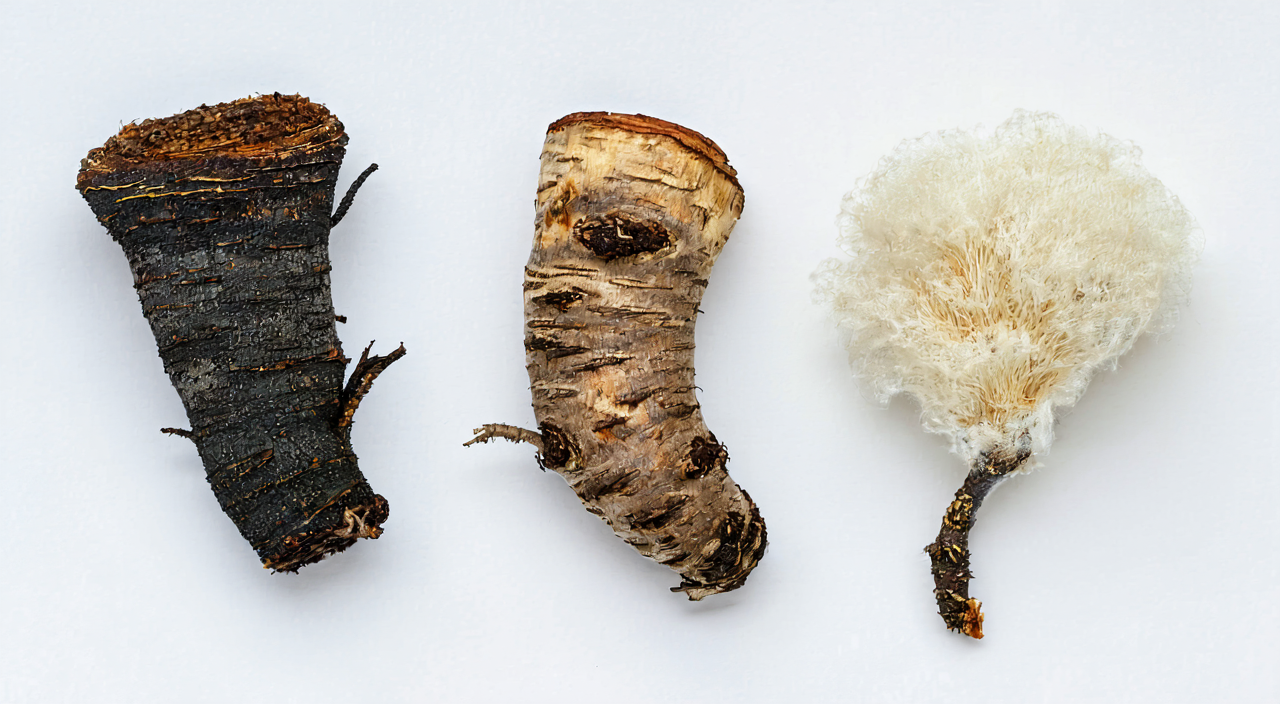
The sliced herbal materials of these three plants share some similarities and can easily be confused when clear labeling is absent.
Lou Lu root has a blackish-brown surface, and its root crown commonly retains fibrous leaf-base remnants. Its broken surface is yellowish-white. Burdock root is usually brown or grayish-brown, with more pronounced longitudinal wrinkles. Its root crown generally lacks the prominent fibrous remnants seen on Lou Lu. Its traditional uses tend to focus more on dispersing wind-heat, soothing the throat, and reducing swelling. The area around the root crown of Pulsatilla root often retains white, downy leaf-stalk remnants. It tastes bitter and has a certain degree of irritation, and it is traditionally used mainly for conditions associated with damp-heat dysentery.
When purchasing through overseas channels, the most reliable approach is to verify the Latin name and request packaging that specifies the exact botanical source. Do not attempt to identify the product solely by its color or shape.
Which Formulas Contain Lou Lu?
In traditional formulas, Lou Lu is most often associated with resolving abscesses and promoting lactation. The following formulas or formula approaches are commonly mentioned.
Lou Lu Decoction: Several formulas with this name appear in different texts. In some versions, Lou Lu is an important ingredient, and the formula is used within a traditional approach for abscess-like swellings caused by exuberant heat toxins. Specific applications require modifications according to the pattern and symptoms.
Lou Lu Powder: This is traditionally associated with postpartum difficulty in milk flow or the early stages of breast abscesses, but the ingredients and combinations vary considerably among different versions.
Modified Xia Ru Yong Quan Powder: This formula is commonly mentioned in traditional approaches for postpartum insufficient lactation or impaired milk flow. Traditionally, modifications are made according to the mother’s qi and blood condition. If insufficient milk production is caused by qi and blood deficiency, using Lou Lu alone, as a bitter, cold herb that promotes movement and flow, may not be appropriate.
These formulas are provided only to explain traditional areas of use and should not be treated as universal treatment plans. Their specific ingredients, dosages, and duration of use should be determined by a qualified Chinese medicine practitioner based on the individual’s condition.
What Precautions Should Be Taken When Using Lou Lu?
Lou Lu is relatively bitter and cold in nature and is not suitable for everyone. The following situations call for caution in traditional herbal use.
First, people with qi and blood deficiency should be cautious. Postpartum insufficient lactation may involve either impaired flow or inadequate production. If the problem is insufficient milk production caused by qi and blood deficiency, the traditional approach may not favor bitter, cold, and flow-promoting herbs such as Lou Lu. Second, pregnant women should exercise caution. Unless there is a clear reason for use under professional guidance, self-administering herbs with flow-promoting effects is generally not recommended during pregnancy. Third, if the breasts are red, swollen, hot, or significantly painful, or if absent milk flow is accompanied by low mood, fatigue, or similar symptoms, medical evaluation should take priority to rule out mastitis, an abscess, or other possible conditions. It is not advisable to rely on a single herb or traditional formula.
Confusion about the botanical source is another concern. Check whether the packaging identifies the product as “Qizhou Lou Lu” or provides the corresponding Latin name, and avoid accidentally purchasing Pulsatilla root, burdock root, or other similar roots. Historical differences in botanical sources across regions make accurate identification especially important.
Summary
What is Lou Lu? It can be understood by examining its source, appearance, medicinal part, and traditional uses. The mainstream source is the dried root of Qizhou Lou Lu. Common identifying features include a blackish-brown surface, longitudinal grooves, leaf-base remnants around the root crown, and a yellowish-white cross-section. In traditional Chinese medicine, it is generally understood in terms of clearing heat and removing toxins, resolving abscesses and promoting lactation, and relaxing the sinews and promoting channel circulation. It may also be found in traditional formula approaches such as Lou Lu Decoction, Lou Lu Powder, and modified Xia Ru Yong Quan Powder. Whether it is appropriate for a particular person depends on their constitution, symptoms, and professional advice. This article is provided for educational reference only and cannot replace professional diagnosis or treatment advice.