
What Is Dense-flowered Buddleja? Medicinal Parts, Identification, and Common Formulas
What is dense-flowered Buddleja? For many people who are just beginning to learn about traditional Chinese medicinal materials, the name may seem unfamiliar. It does not refer to the fresh flowers of an ornamental plant, but to the dried flower buds and inflorescences of a plant in the Strychnaceae family. In traditional Chinese medicine, it is often discussed in connection with clearing heat, improving vision, and removing visual obstructions. When identifying medicinal materials in practice, however, dense-flowered Buddleja can easily be confused with Eriocaulon and chrysanthemum because of certain similarities in appearance. Understanding its medicinal parts, typical appearance, and precautions can help readers develop a more reliable understanding of this type of herb.
What Does Dense-flowered Buddleja Look Like? How to Identify Its Inflorescences and Flower Buds
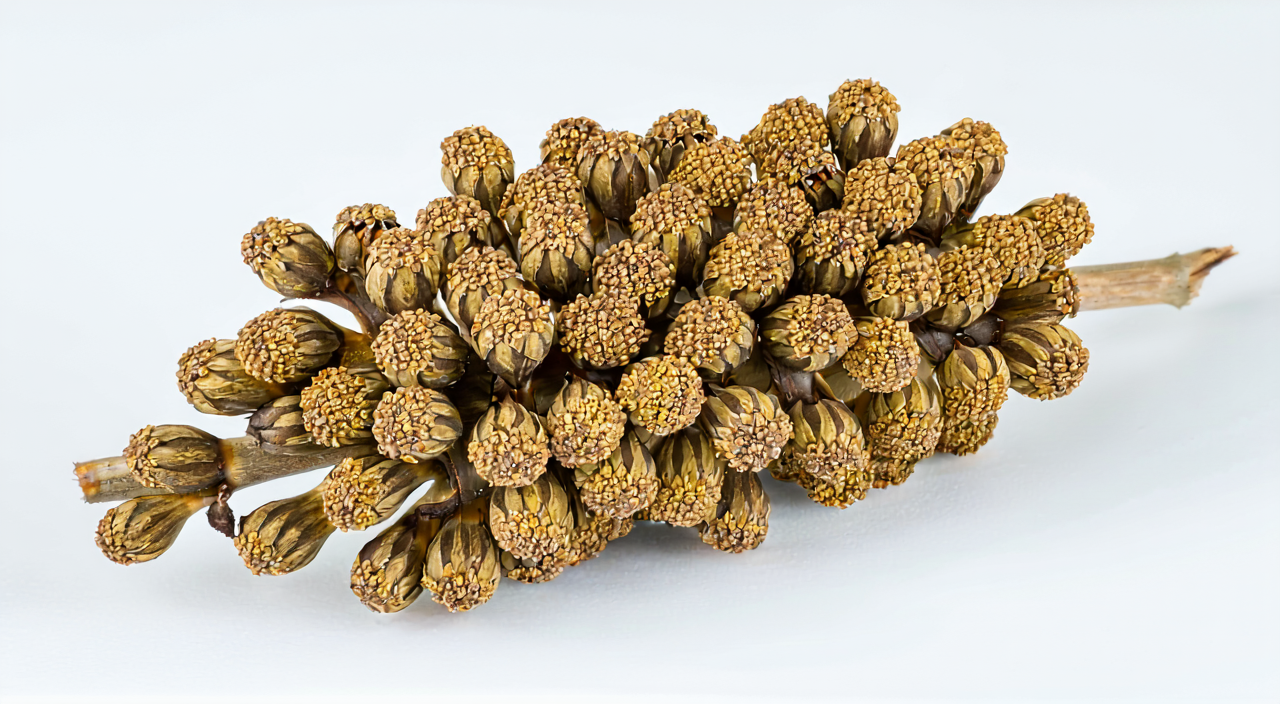
The most immediately recognizable feature of dense-flowered Buddleja is its dense, paniculate inflorescences, which are made up of numerous small flower buds. Rather than resembling a single fully opened flower, the material looks more like a compact cluster of short, firm, rod-shaped flower buds.
Examine the Overall Inflorescence
The inflorescences are usually dense, with the flower buds packed closely together, making distinct pedicels difficult to see. Some of the inflorescence axis may remain in the medicinal material, but the primary medicinal portion consists of the small flower buds.
Examine an Individual Flower Bud
Individual flower buds are generally small and rod-shaped or short and rod-shaped. Their surface is usually grayish-yellow to yellow-brown and densely covered with fine hairs. The corolla is concealed within the calyx, and the tip may sometimes appear slightly swollen. Because of these fine hairs, dense-flowered Buddleja has a subtly velvety texture, which is one of its more characteristic identification features.
Key Identification Points
Traditionally, dense-flowered Buddleja with tightly clustered flower buds, a grayish-yellow color, abundant hairs, and minimal coarse stalks or impurities is considered preferable. If appearance alone does not provide enough certainty, it is advisable to purchase the material through reliable channels and consult an actual specimen or a qualified professional.
Which Parts of Dense-flowered Buddleja Are Used Medicinally?
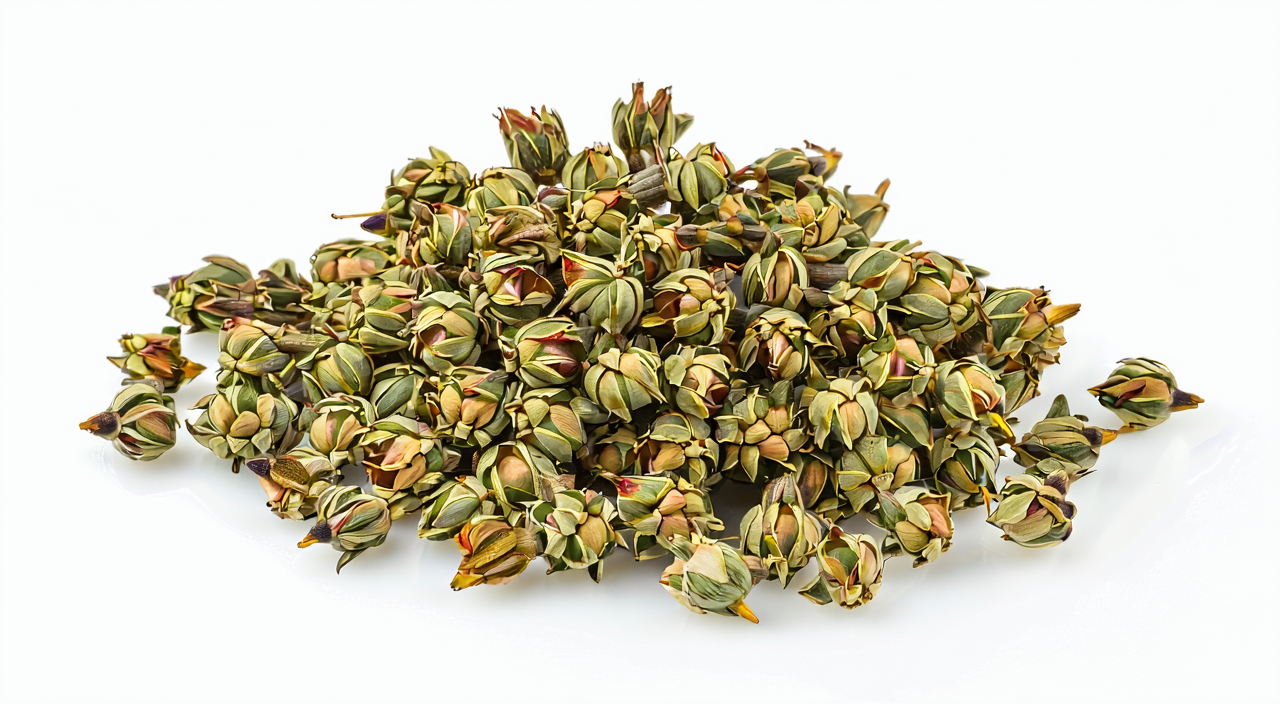
The medicinal parts of dense-flowered Buddleja are its dried flower buds and inflorescences, not its roots, stems, or leaves. The inflorescences or flower buds are generally harvested in spring, before the flowers have fully opened. After impurities are removed, they are dried and used as medicinal material.
Why Are the Flower Buds and Inflorescences Used?
Traditional experience suggests that the fragrance and color of the flower buds and inflorescences are particularly characteristic at this stage, which may be related to the concentration of active constituents. Modern research also examines how different harvesting periods affect the constituents, but more data are still needed to support firm conclusions.
Harvesting and Drying
The inflorescences are usually harvested before flowering or shortly after the flowers begin to open, helping to prevent them from falling apart after full bloom. During drying, adequate ventilation is needed to prevent mold and darkening. For ordinary users, the main point is to recognize that the material should consist of dry, clean flower buds or inflorescences with a natural color, rather than broken powder or a mixture containing stems and leaves.
How Is Dense-flowered Buddleja Understood in Traditional Chinese Medicine?
In traditional Chinese medicine theory, dense-flowered Buddleja is commonly described as sweet and slightly cold, and associated with the Liver meridian. It is generally understood in terms of clearing heat and purging fire, nourishing the Liver and improving vision, and removing visual obstructions. The term “visual obstruction” broadly refers to cloudiness or a blocking sensation affecting the eye or cornea, but it is not equivalent to a specific diagnosis in modern medicine.
Traditional Uses
Some traditional formula texts consider dense-flowered Buddleja for manifestations such as red eyes, sensitivity to light, excessive tearing, blurred vision, and the formation of cloudy membranes over the eyes. It is generally not used alone, but combined with other medicinal materials according to an overall pattern-based assessment. For example, those with a tendency toward Liver heat may be given herbs that clear Liver heat, while those with insufficient Yin and blood may be prescribed herbs that nourish Yin and blood.
The Importance of a Balanced Perspective
“Clearing heat and purging fire” and “nourishing the Liver and improving vision” are traditional terms. They do not mean that the herb is a targeted or curative treatment for a specific eye disease under modern medicine. If eye symptoms are significant, persistent, or recurrent, the underlying cause should be determined first rather than self-diagnosed.
Preliminary Observations from Modern Research on Dense-flowered Buddleja
Modern research on dense-flowered Buddleja has focused on constituents such as flavonoids and phenylethanoid glycosides. Preliminary experimental observations suggest that these compounds may be associated with areas such as antioxidant and anti-inflammatory activity. However, most studies remain limited to in vitro experiments or small-sample observations, and further research is needed before drawing clear conclusions about use in humans.
Useful as Background Information
This type of research may help explain why dense-flowered Buddleja repeatedly appears in traditional formulas for improving vision, but laboratory findings cannot be directly equated with the claim that consuming it will improve a particular eye disease. Modern research is best regarded as background information.
How Does Dense-flowered Buddleja Differ from Eriocaulon and Chrysanthemum?
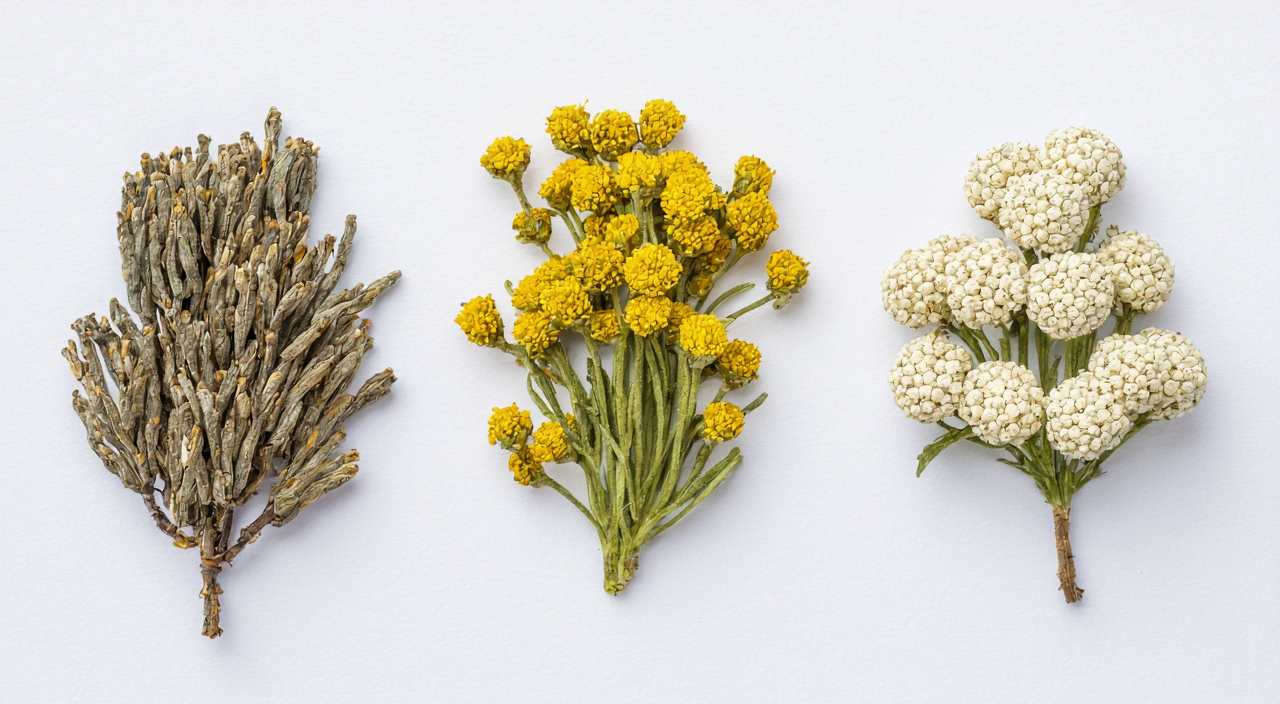
Dense-flowered Buddleja, Eriocaulon, and chrysanthemum are all commonly associated with eye-care applications, but their appearances differ considerably.
Different Inflorescence Forms
Dense-flowered Buddleja has a dense, paniculate inflorescence made up of small, rod-shaped flower buds. The buds range from grayish-yellow to yellow-brown and are densely covered with fine hairs. Eriocaulon generally has small, head-like inflorescences on flower stalks. These inflorescences are often nearly spherical and white to pale yellowish-white, unlike the dense clusters of short rod-shaped buds found in dense-flowered Buddleja. Chrysanthemum has a clearly recognizable head-like inflorescence, with distinct ray or disc florets. Its color and form vary by cultivar, but it is generally easier to identify.
Different Traditional Emphases
Eriocaulon is commonly used in traditional practice for red eyes and cloudy membranes associated with wind-heat or Liver heat, with an emphasis on dispersing wind-heat. Chrysanthemum also clears Liver heat and improves vision, but is more often used for manifestations such as wind-heat colds, headaches, and dizziness. Dense-flowered Buddleja is more closely associated with clearing and nourishing the Liver and removing visual obstructions. The three may sometimes be used together, but suitability depends on the individual situation.
What Common Traditional Formulas Contain Dense-flowered Buddleja?
In traditional formulas, dense-flowered Buddleja often appears in combinations associated with improving vision and removing visual obstructions. Common examples include Mi Meng Hua San and Meng Hua San, as well as other traditional formulas designed to improve vision and address visual obstructions.
Mi Meng Hua San and Meng Hua San
These traditional formulas commonly use dense-flowered Buddleja as one of the principal herbs, combined with other ingredients that clear Liver heat, improve vision, and address visual obstructions. They are traditionally considered for manifestations such as dim vision, ocular cloudiness, and unclear vision. The exact ingredients and directions may differ among historical sources, so no single version should be treated as a fixed regimen.
Formulas for Improving Vision and Removing Visual Obstructions
Some catalogs or formula texts list formulas in this category, with dense-flowered Buddleja included as one of the ingredients. These formulas often emphasize both clearing the Liver and providing nourishment. However, “removing visual obstructions” is a traditional description of disease mechanisms and does not indicate that the formulas can reverse structural lesions recognized by modern medicine.
Guidance on Use
These formulas and patent medicines should be regarded only as references to traditional applications. Suitability should be assessed by considering individual constitution, symptoms, product instructions, and professional advice. Do not select or use them solely based on their names.
What Precautions Should Be Observed When Using Dense-flowered Buddleja?
Although dense-flowered Buddleja is commonly associated with eye care, several precautions should be kept in mind.
People with Cold or Weak Digestion Should Use Caution
Traditional herbal texts often advise caution for people with a cold or weak digestive system, a tendency toward diarrhea, or poor appetite. Because the herb is considered slightly cold in nature, it may not be suitable for long-term or high-dose use.
Do Not Self-treat Eye Emergencies
If you experience a sudden loss of vision, severe eye pain, pronounced redness or swelling, an injury, or unusual discharge, or if eye discomfort is recurrent or progressively worsening, seek medical advice promptly. Do not rely on a single herb or herbal tea preparation for such symptoms.
Pollen Allergies and Long-term Herbal Tea Use
Dense-flowered Buddleja consists of flower buds and inflorescences, so people with pollen allergies may experience discomfort when handling or using it. If you have a history of allergies, consider consulting a professional before use. Long-term or high-volume consumption of dense-flowered Buddleja as an ordinary tea is also not recommended. Herbal tea preparations are not risk-free, and frequency and dosage should be considered in light of individual circumstances.
Special Populations
Pregnant or breastfeeding women, children, and people taking other medications should consult a doctor or pharmacist before use and avoid combining products without professional guidance.
Summary
Dense-flowered Buddleja is a medicinal material made from dried flower buds and inflorescences. Its main identifying features are dense paniculate inflorescences, grayish-yellow to yellow-brown short rod-shaped flower buds, and a surface covered with fine hairs. Traditional Chinese medicine generally understands it in terms of clearing heat and purging fire, nourishing the Liver and improving vision, and removing visual obstructions. It differs from Eriocaulon and chrysanthemum in both appearance and traditional applications. Formulas containing dense-flowered Buddleja are commonly associated with traditional approaches for improving vision and removing visual obstructions, but precautions are needed for people with cold or weak digestion, eye emergencies, pollen allergies, and long-term herbal tea use. This article is provided for general educational purposes only and cannot replace professional diagnosis or treatment advice.