
What Is Mu Gua? Medicinal Parts, Identification Methods, and Common Formulas
In everyday contexts for overseas Chinese readers, “mu gua” often brings to mind the papaya sold at fruit shops. However, Mu Gua in Chinese medicine is not this tropical fruit. It comes from the nearly ripe fruit of Chaenomeles speciosa (flowering quince), a plant in the Rosaceae family, and is used as a prepared slice after being cut lengthwise and dried. Many people are confused by the name when they first encounter Chinese medicinal Mu Gua, so it is important to clarify what it looks like, what its medicinal part is, and how it differs from the fruit papaya.
What Does Mu Gua Look Like? How Is It Identified?
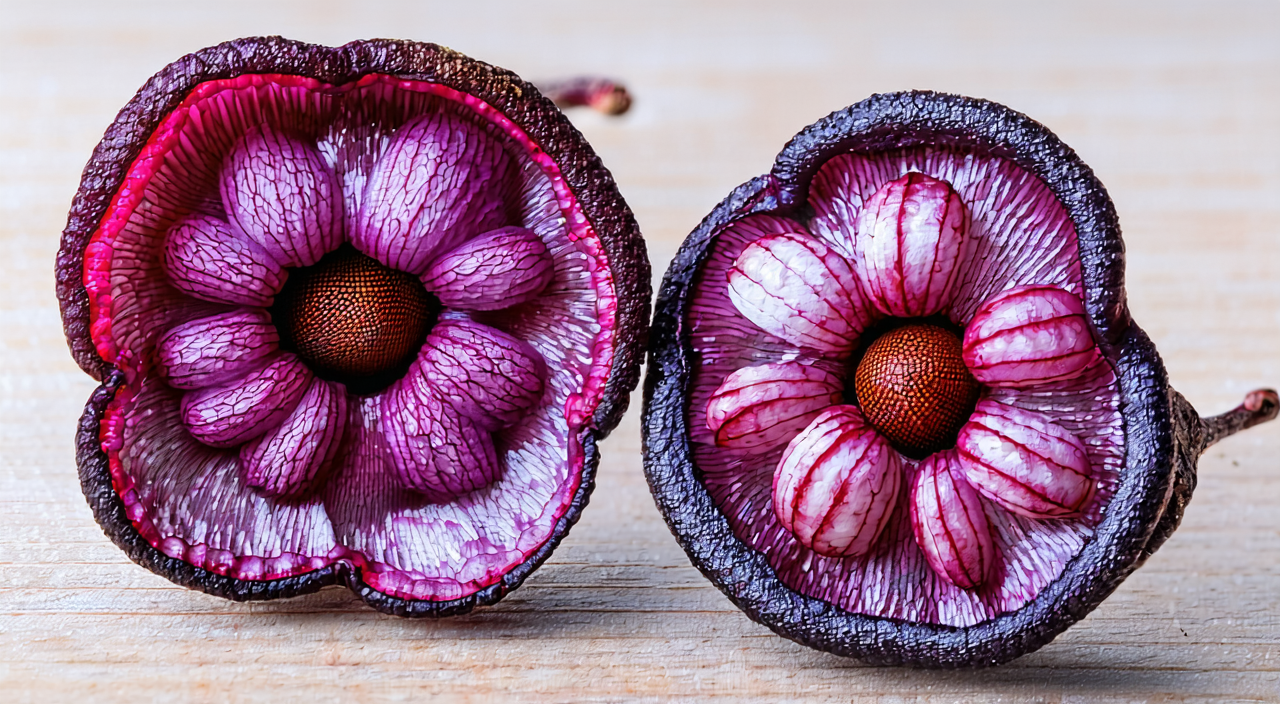
Prepared slices of Chinese medicinal Mu Gua usually appear as oblong or semi-circular pieces cut lengthwise into two halves. The outer skin is mostly purple-red or reddish-brown, often wrinkled, with edges curling inward. More intact pieces are about 4 to 9 cm long, 2 to 5 cm wide, and 1 to 2 cm thick. After cutting, the flesh appears brownish-red or brownish-yellow and is relatively firm; in the center, a depression or cavity may remain because the seeds fall out during processing. It has a mild sour aroma and tastes sour and astringent. According to traditional experience, Mu Gua with purple-red outer skin, firm texture, and obvious sour aroma is usually considered better in quality. If you see a large fruit with thick, sweet, juicy flesh, it is likely not Chinese medicinal Mu Gua but papaya.
What Is the Medicinal Part of Mu Gua?
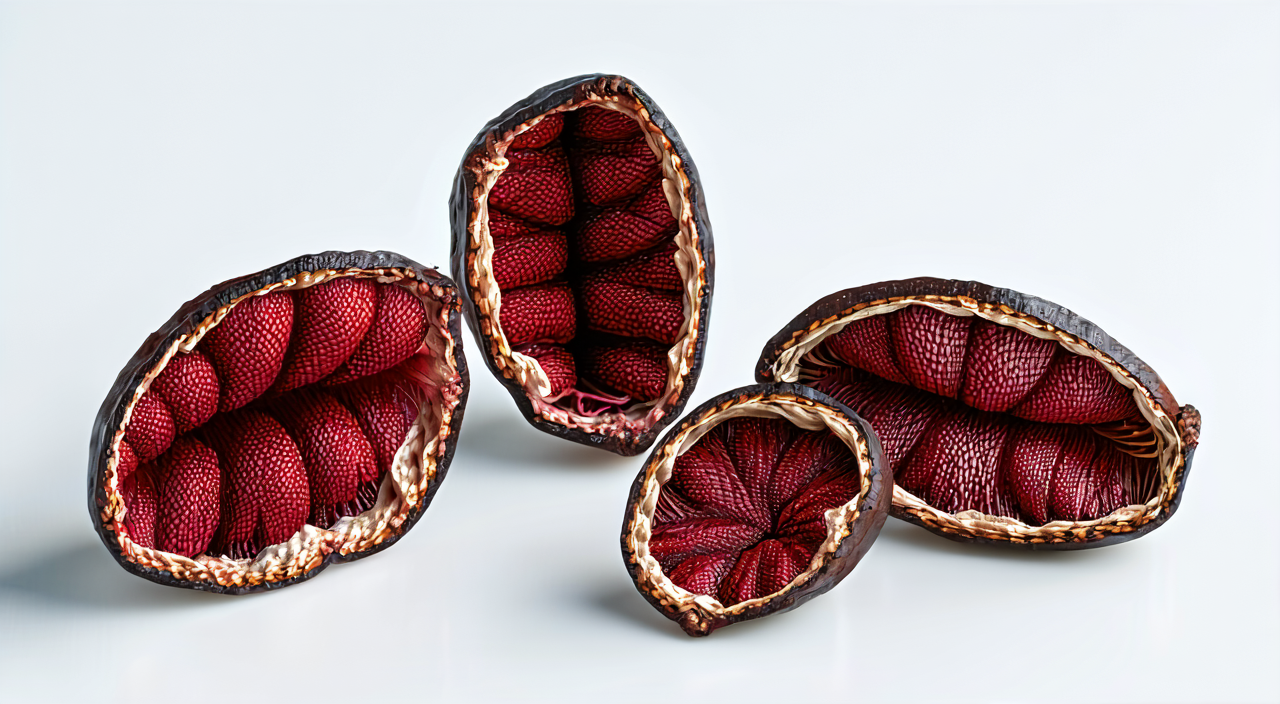
The medicinal part of Mu Gua is the nearly ripe fruit. Specifically, it comes from the nearly ripe fruit of Chaenomeles speciosa. After harvesting, the fruit is cut lengthwise into two halves and then dried. In medicinal use, it mostly appears as dried prepared slices, sometimes as lengthwise halves and sometimes cut into pieces. According to traditional experience, harvesting when the fruit skin begins to turn red but is not yet fully ripe better meets medicinal needs. It should be clear that the fruit is used here, not the leaves, roots, or stems. The sour, astringent taste and aromatic components of the nearly ripe fruit are more valued in traditional usage. Knowing the medicinal part helps avoid confusion with other fruit-based medicinal materials when purchasing or observing prepared slices.
How Does Traditional Chinese Medicine Understand Mu Gua?
Traditional Chinese medicine often understands Mu Gua from the perspective of relaxing the sinews, activating the channels, harmonizing the stomach, and transforming dampness. When dampness affects the sinews and vessels, causing heaviness of the limbs or difficulty bending and stretching, Mu Gua may be used as one of the auxiliary regulating materials. It is also used for patterns such as dampness obstructing the middle burner, poor appetite, nausea, and vomiting, often combined with other herbs in compound formulas. It should be noted that these are only traditional usage ideas; Mu Gua alone cannot solve all problems. Whether it is suitable depends on the individual’s constitution, specific manifestations, and professional judgment.
What Directions Does Modern Research Explore?
Modern phytochemical research focuses more on components in Mu Gua such as organic acids, triterpenoids, and flavonoids. Some basic studies suggest that these components may have antioxidant, anti-inflammatory, or gastrointestinal function-regulating potential. However, most of these studies remain at the laboratory stage or involve small-sample observations and cannot yet be directly equated with clinical conclusions. Therefore, understanding modern research can serve as background reference, but it should not be used as a basis for treating disease.
What Are the Differences Between Medicinal Mu Gua, Papaya, and Hawthorn?
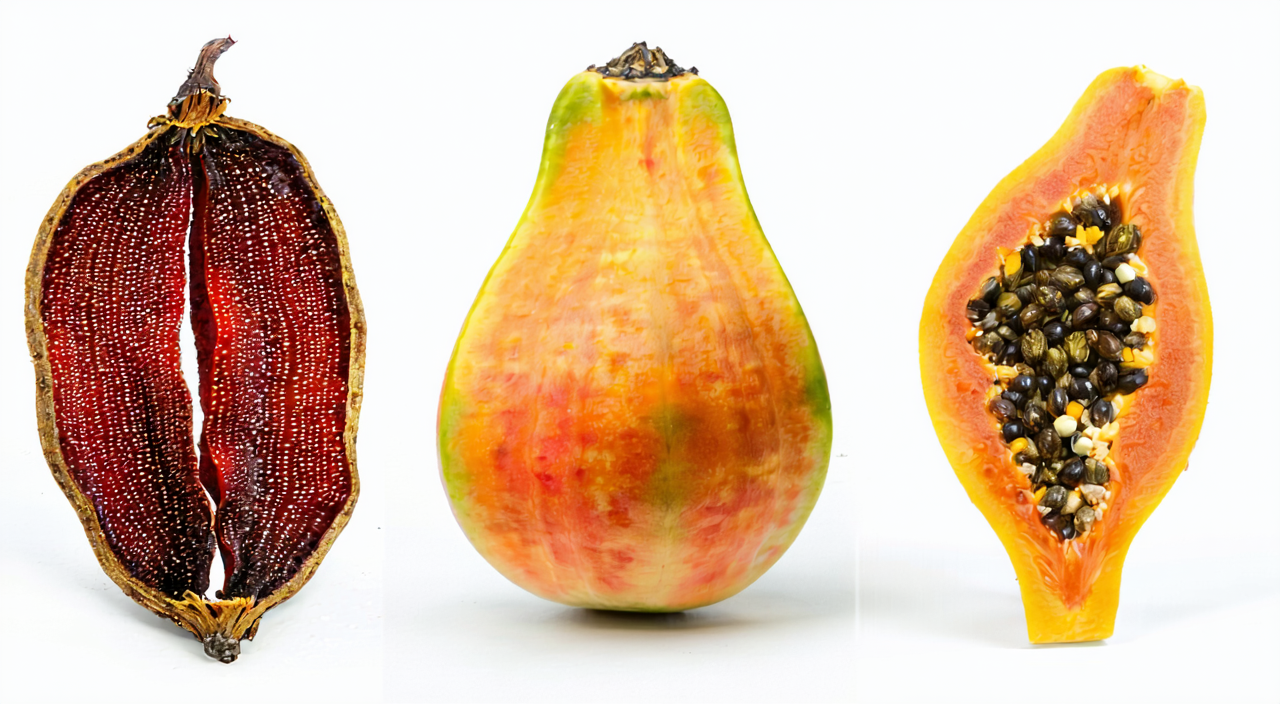
The most fundamental difference between medicinal Mu Gua and papaya lies in their plant source. Chinese medicinal Mu Gua comes from Chaenomeles speciosa in the Rosaceae family, while papaya is a plant in the Caricaceae family. In appearance, papaya fruit is large, juicy when ripe, and sweet in taste, and it is eaten as a fruit. Chinese medicinal Mu Gua fruit is smaller, hard after drying, and more sour and astringent. Although hawthorn also belongs to the Rosaceae family, it is in a different genus from Mu Gua. Its fruit is smaller, the outer skin often has fine spots, and seeds are often visible after slicing. Hawthorn is more commonly used to promote digestion and reduce food stagnation, while the traditional use of Mu Gua leans more toward relaxing the sinews and transforming dampness. When buying or studying, one should not confuse papaya or hawthorn with medicinal Mu Gua.
Which Formulas Use Mu Gua?
Mu Gua appears as a companion herb in some traditional formulas. Common examples include Mu Gua Wan, Ji Ming San, Shi Pi San, and Can Shi Tang.
Mu Gua Wan is traditionally used for patterns such as wind-cold-dampness attacking the sinews and vessels, with soreness and heaviness in the joints, and is often combined with herbs that dispel wind, disperse cold, unblock the channels, and relieve pain. Ji Ming San is often used for manifestations such as swelling of the feet and lower legs caused by damp turbidity pouring downward, reflecting the approach of moving qi, descending turbidity, transforming dampness, and unblocking the channels. Shi Pi San leans toward warming yang, strengthening the spleen, moving qi, and promoting urination; Mu Gua plays a supporting role in transforming dampness and relaxing the sinews. Can Shi Tang is more often used for patterns of damp-heat accumulating internally and failure to separate clear from turbid, and is often used together with herbs that clear heat, transform dampness, harmonize the middle, and resolve turbidity.
These formulas have different application approaches, so one should not simply choose them on the basis that they all contain Mu Gua. Before use, it is advisable to make a comprehensive judgment based on constitution, symptoms, product instructions, and professional advice.
What Precautions Should Be Taken When Using Mu Gua?
When using Mu Gua, caution is needed in several situations. People with excessive stomach acid or frequent acid reflux and heartburn may need to reduce or avoid it. Traditional experience holds that people with yin deficiency, depleted fluids, or insufficient body fluids are also not well suited to use it alone. During pregnancy and breastfeeding, consult a doctor or professional before use. Eating the fruit papaya daily cannot replace Chinese medicinal prepared slices, because the two differ greatly in source, components, and traditional use. If discomfort persists, or if obvious pain, swelling, or digestive abnormalities occur, seek professional evaluation as soon as possible.
Summary
Chinese medicinal Mu Gua is not the same as the fruit papaya. It comes from the nearly ripe fruit of Chaenomeles speciosa and is used medicinally after the fruit is cut lengthwise and dried. Traditionally, it is often used from the perspective of relaxing the sinews, activating the channels, harmonizing the stomach, and transforming dampness. Understanding its appearance, medicinal part, and differences from papaya and hawthorn helps one more accurately understand related formulas. In actual use, decisions should still be made based on individual circumstances and professional advice. This article is for informational reference only and cannot replace professional diagnosis or treatment advice.