
What Is Lotus Root Node? Medicinal Parts, Identification, and Common Formulas
Many people are familiar with lotus root but may not know what a lotus root node is. Simply put, it comes from the jointed section of the lotus rhizome—the point where one section of lotus root connects to another. The lotus root served at the table mainly consists of the thick, fleshy internodes, while the medicinal material known as lotus root node places greater emphasis on the rhizome joints and their dried form. Both come from the lotus plant, but they are not completely interchangeable in appearance, intended use, or traditional applications.
Understanding lotus root node usually begins with three questions: What does it look like, which part is used medicinally, and how is it understood in traditional Chinese medicine? This article also introduces charred lotus root node, common formulas, and important considerations for use.
What Does Lotus Root Node Look Like?
Appearance and Cut-Surface Features
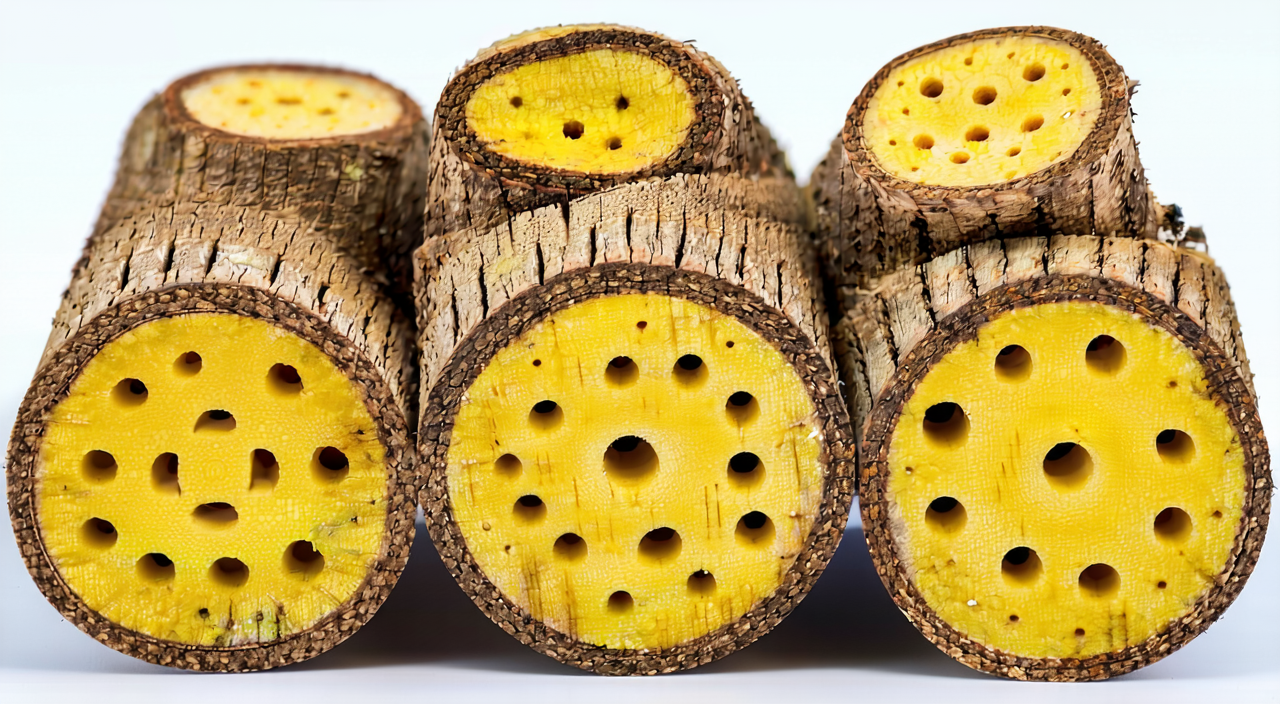
Fresh lotus root nodes are usually short, cylindrical, or slightly flattened segments. Their length and thickness vary according to the lotus root variety, harvest time, and processing method. They are often shorter than the root sections on either side, and ring-shaped or irregular joint marks may be visible on the surface. After drying, lotus root nodes are generally yellowish-brown, reddish-brown, or grayish-brown. They become fairly hard, and the surface may show wrinkles, residual root marks, or signs of processing.
When identifying one, examine both ends. A complete or relatively intact lotus root node often retains some of the lotus root’s internode tissue at both ends, while the edges may show cut surfaces. If it has been sliced thinly or dried, it may look more like an irregular short segment. The cut surface usually reveals holes in or near the center, along with radially distributed vascular bundles extending outward. The thickness of the slices, the number and size of the holes, and their arrangement may vary among medicinal materials, so identification should not rely on a single feature.
Relationship to the Appearance of Ordinary Lotus Root
Edible lotus root generally consists mainly of longer, fleshy internodes. When cut open, it shows multiple holes and may have a crisp or starchy, soft texture. The lotus root node is the part that connects these internodes and is usually shorter, firmer, and somewhat more fibrous. Dried lotus root nodes sold in the market may have been washed, cut into segments, and dried, making them look quite different from fresh material.
When identifying dried lotus root node, consider its color, shape, holes on the cut surface, smell, and source information together. Purchasing based only on online images or a product name does not necessarily confirm the variety or processing status. For actual use, also pay attention to the reliability of the source, package labeling, and product instructions.
What Is the Medicinal Part of Lotus Root Node?
The Jointed Section of the Rhizome
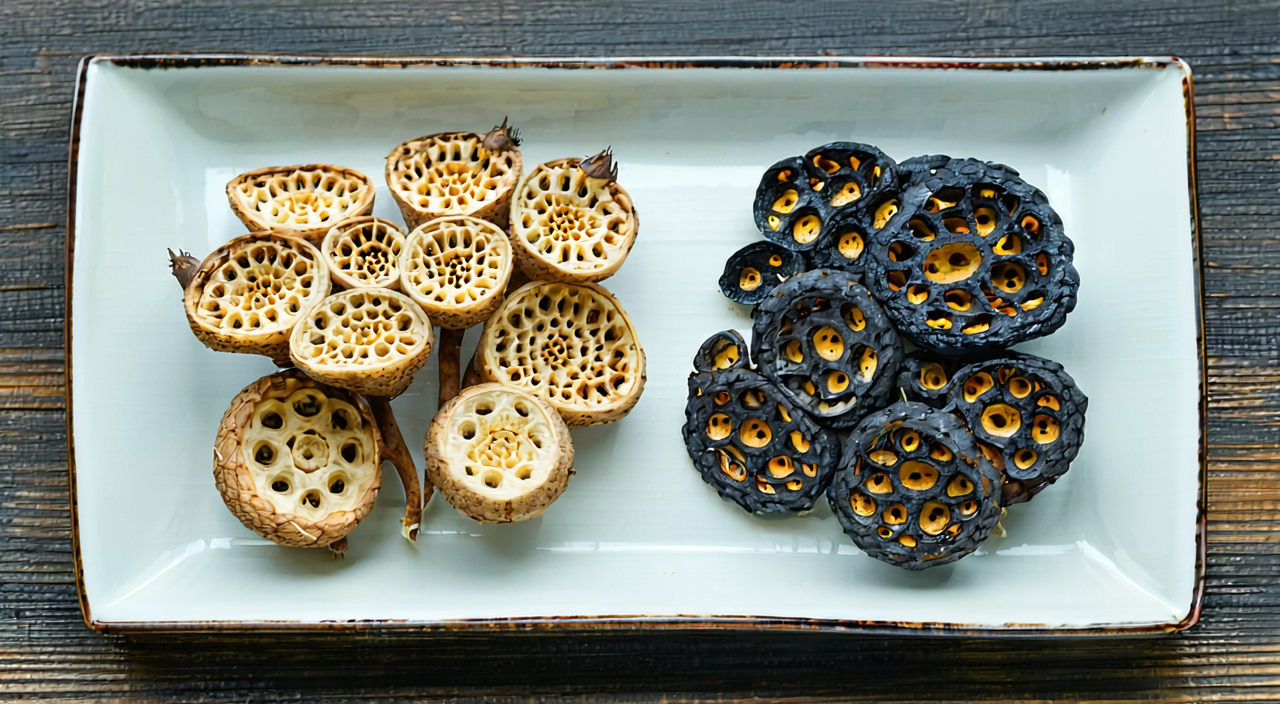
The medicinal part of lotus root node is mainly the jointed section of the lotus rhizome. The lotus rhizome grows horizontally through the mud, with joints connecting different internodes and producing fibrous roots and buds. After harvesting, it is generally cleaned of mud and sediment, the joints are cut out, and they are then dried. Different growing regions and processing standards may affect the material’s size, color, moisture content, and storage characteristics.
It is important to distinguish lotus root node from the entire lotus root, as well as from the lotus leaf, flower, and fruit. Information about the plant part in a medicinal name is significant because the rhizome, leaves, receptacle, and seeds of the same plant may have different properties and traditional applications in herbal classification.
What Is Charred Lotus Root Node?
Charred lotus root node is a processed product made by heating lotus root node until it becomes charred. Traditional processing emphasizes the heat level, duration, and degree of charring. The finished product is usually darker in color, and its appearance and smell may differ from those of unprocessed lotus root node. In traditional Chinese medicine, charred lotus root node is commonly understood from the perspective of astringing and stopping bleeding. However, deeper charring is not necessarily better; excessive charring or improper storage may affect quality.
Unprocessed lotus root node and charred lotus root node are not exactly the same product for use. When dealing with formulas, prepared herbal pieces, or proprietary Chinese medicines, first confirm which processed form the product contains. Consider the instructions, personal circumstances, and advice from a qualified professional, rather than replacing one form with another based solely on the name.
How Is Lotus Root Node Understood in Traditional Chinese Medicine?
In traditional Chinese medicine theory, lotus root node is often discussed among herbs used to stop bleeding. Traditionally, it is understood through approaches involving astringing and stopping bleeding, sometimes combined with the concept of helping resolve blood stasis. Here, “stopping bleeding” is a general description of its traditional herbal application. It does not mean that it has a proven or certain effect for real-life bleeding, nor can it replace medical assessment of the cause of bleeding.
Some traditional views hold that lotus root node draws on the characteristics of the rhizome’s jointed section and may be included in approaches related to bleeding. After charring, its traditional focus is often considered to shift more toward astringing and stopping bleeding. Whether it is needed, which processed form should be used, and how it should be combined with other herbs all depend on the bleeding site, duration, accompanying symptoms, constitution, and previous health conditions.
If there is heavy or persistent bleeding, recurrent unexplained bleeding, or symptoms such as dizziness, fatigue, palpitations, chest tightness, severe abdominal pain, black stools, or vomiting blood, seek medical care or emergency assistance promptly. Do not rely solely on lotus root node or other herbs for self-treatment. People who are pregnant or breastfeeding, children, older adults, and those taking anticoagulant or antiplatelet medications should also consult a doctor or qualified traditional Chinese medicine professional first.
How Can Modern Research Be Viewed?
Modern research may examine the lotus plant and its various parts from perspectives such as phytochemical constituents, antioxidant-related indicators, blood-clotting processes, or tissue responses. However, laboratory studies, animal studies, and traditional use experience cannot be directly equated with a definite effect on a specific human symptom. Research on lotus root node and charred lotus root node may also be influenced by differences in sample origin, processing methods, extraction techniques, and evaluation criteria.
When reading related information, it is therefore best to view modern research as a supplementary way to understand the medicinal material, rather than the sole basis for judging its effects. For long-term, recurring, or unexplained bleeding, identifying the possible cause and receiving examinations and treatment according to a doctor’s advice are more important. Online articles can help explain the name and basic characteristics of a medicinal material, but they cannot replace diagnosis, prescribing, or medication monitoring.
How Does Lotus Root Node Differ from Lotus Receptacle and Lotus Leaf?
Different Plant Parts
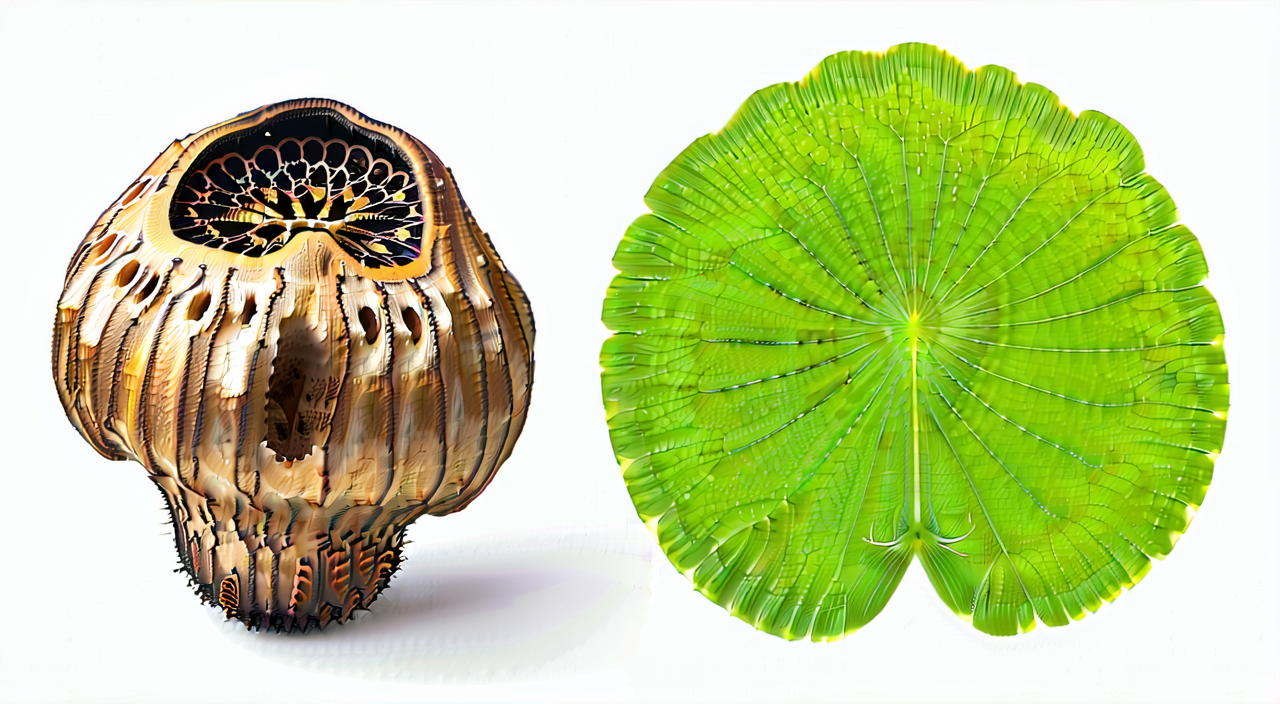
Lotus root node comes from the jointed section of the lotus rhizome, which lies in the lotus root structure beneath the mud. The lotus receptacle is the inverted cone-shaped flower base that forms after the lotus flower fades; its surface commonly has a honeycomb-like pattern of holes associated with the locations where lotus seeds develop. The lotus leaf is the leaf of the lotus plant, usually floating on or rising above the water, with prominent veins and a round leaf blade.
Although all three come from different parts of the lotus plant, they should not be treated as the same medicinal material simply because they share the same botanical source. Lotus root node, lotus receptacle, and lotus leaf listed by pharmacies or on product labels should be distinguished according to their respective names and processing specifications.
Different Appearances and Traditional Applications
Lotus root node commonly appears as a short segment with holes and radially arranged vascular bundles on the cut surface. The lotus receptacle often has a cup-like or honeycomb-like structure, while the lotus leaf is a thin sheet or intact leaf with visible veins after drying. Traditional herbal texts describe the properties, meridian associations, and applications of these three materials differently. When discussing theoretical directions such as stopping bleeding, clearing summer heat, or resolving dampness, the specific medicinal material and formula should be taken into account.
Which Formulas Contain Lotus Root Node?
Ten Ashes Powder
Ten Ashes Powder is one of the representative traditional formulas for stopping bleeding. Its name relates to the processing approach of stir-frying or burning multiple ingredients into char or ash, and some traditional versions include lotus root node among the ingredients. The composition may differ among classical texts, preparation methods, and modern products, so the exact combination should not be inferred from the formula name alone. It can serve as an example for understanding the structure of traditional bleeding-control formulas, but it should not be prepared independently or used as a substitute for professional care.
Lotus Root Node Powder
Lotus Root Node Powder refers to a traditional formula category identified by lotus root node in its name or as a key ingredient. Different sources of this formula may vary in composition, dosage, processing requirements, and descriptions of use. When reading about it, confirm the source and product instructions, and do not confuse different versions. Whether it is suitable for a particular person still depends on the symptoms, constitution, medication history, and professional advice.
Other Formulas for Stopping Bleeding
Within the traditional formula system, lotus root node may also be combined with other herbs used to stop bleeding for different pattern-based approaches. The direction of a formula depends on the combination as a whole, not on simply adding the effects of lotus root node alone. In particular, when dealing with nosebleeds, bleeding gums, abnormal female bleeding, blood in the stool, or blood in the urine, the cause and severity of the bleeding should be considered first.
If you choose a proprietary Chinese medicine or prepared herbal pieces containing lotus root node, read the product instructions, confirm the appropriate users, contraindications, and precautions, and make a comprehensive judgment based on your personal circumstances and professional advice. The presence of lotus root node in a formula name does not mean that the product is suitable for every type of bleeding.
What Precautions Apply When Using Lotus Root Node?
First, severe or persistent bleeding requires priority medical assessment. If the bleeding is heavy, cannot be stopped, or occurs with fainting, marked weakness, palpitations, chest tightness, black stools, vomiting blood, severe abdominal pain, persistent vomiting, unexplained weight loss, or other concerning symptoms, seek medical attention promptly. Even recurrent bleeding that is small in volume each time should be investigated.
Second, distinguish edible lotus root from medicinal lotus root node. Lotus root served as food can be consumed as an ordinary ingredient, but it cannot simply be equated with properly processed medicinal pieces, nor can the same traditional applications be inferred from it. Lotus root node and charred lotus root node also differ in processing, so confirm the name and specification before use.
Third, special populations should exercise caution. People who are pregnant or breastfeeding, children, older adults, those with chronic illnesses, and people taking anticoagulants, antiplatelet drugs, or other prescription medications should consult a doctor or qualified professional before use. If skin discomfort, gastrointestinal discomfort, or any other unusual reaction occurs, stop self-use and seek advice.
Fourth, do not independently use large amounts or combine multiple formulas intended to stop bleeding over a long period. Traditional medicinal materials are generally used according to the overall pattern, dosage, processing, and combination. Individuals should not decide how to use them based only on appearance or an online article. This article is intended for general educational reference about Chinese medicinal materials and cannot replace professional diagnosis or treatment advice.
Summary
Lotus root node is the jointed section of the lotus rhizome. Common features include a short, cylindrical shape, a yellowish-brown surface, and holes with radially arranged vascular bundles on the cut surface. Charred lotus root node is a separate processed form. Traditional Chinese medicine generally understands it in terms of astringing and stopping bleeding, as well as helping resolve blood stasis. Ten Ashes Powder and Lotus Root Node Powder can serve as starting points for learning about traditional formulas for stopping bleeding, but edible lotus root should not be directly equated with medicinal lotus root node. Severe, persistent, or recurrent bleeding requires timely consultation with a doctor or qualified professional.