
What Is Madder? Medicinal Parts, Identification, and Common Formulas
Madder comes from the dried root and rhizome of Rubia cordifolia. It is not only a traditional Chinese medicinal herb, but its roots were long used as a red dye for textiles. Many people interested in Chinese medicine ask, “What is madder?” This article will guide you through its physical characteristics, medicinal parts, differences from Salvia, common formulas, and precautions, helping you understand this herb correctly.
What does madder look like? How to identify it?
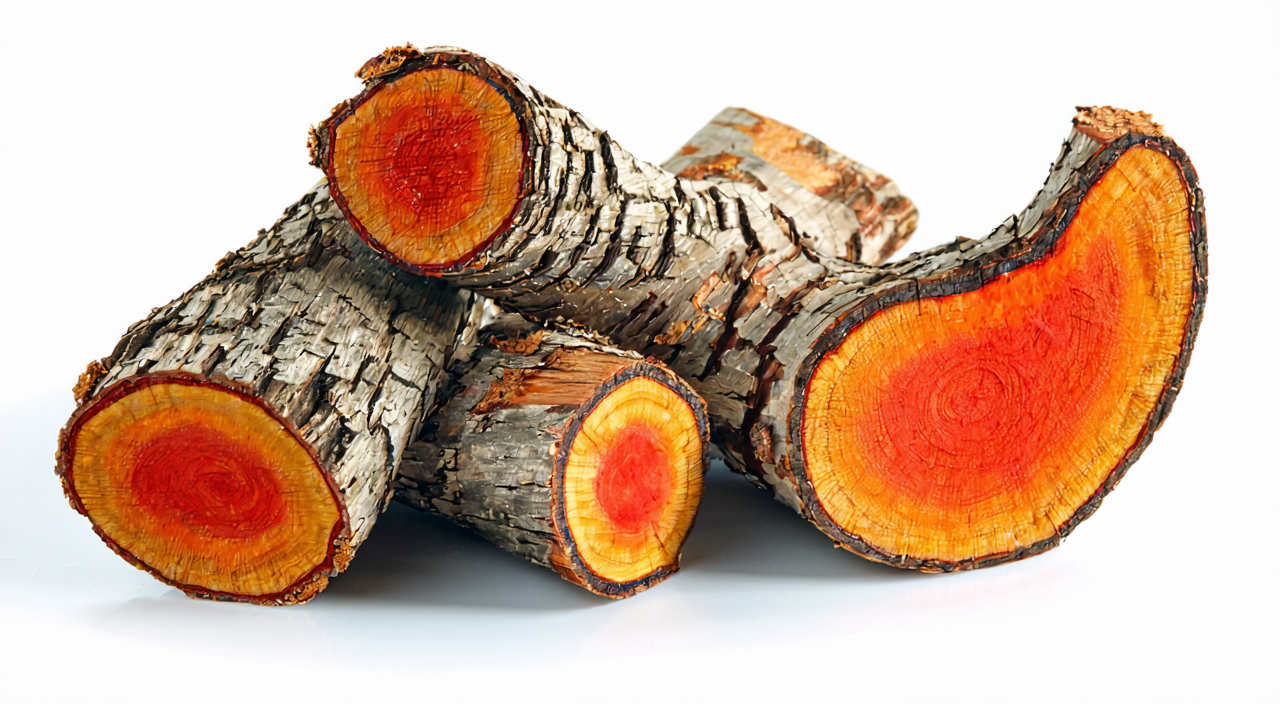
The original plant is a perennial climbing herb in the Rubiaceae family, with square stems bearing small reflexed prickles along the ridges, and typically four whorled leaves, with one pair usually larger. In everyday use, however, “madder” mainly refers to the dried root and rhizome. The medicinal madder root is slender, cylindrical, slightly curved, with a reddish-brown or dark red surface, showing fine longitudinal wrinkles and a few rootlet scars. The rhizome part is thicker, with nodes, and may have residual stem bases and sparse fine roots. When broken, the cut surface is flat and appears orange-red or yellowish-red—a key identifying feature. Commercially available decoction pieces are often cut into short sections; the outer bark sometimes falls off, revealing an orange-red xylem, commonly called “madder segments.” Traditional experience holds that thicker, longer roots with a reddish-brown outer bark and an orange-red cross-section are of superior quality.
What are the medicinal parts of madder?
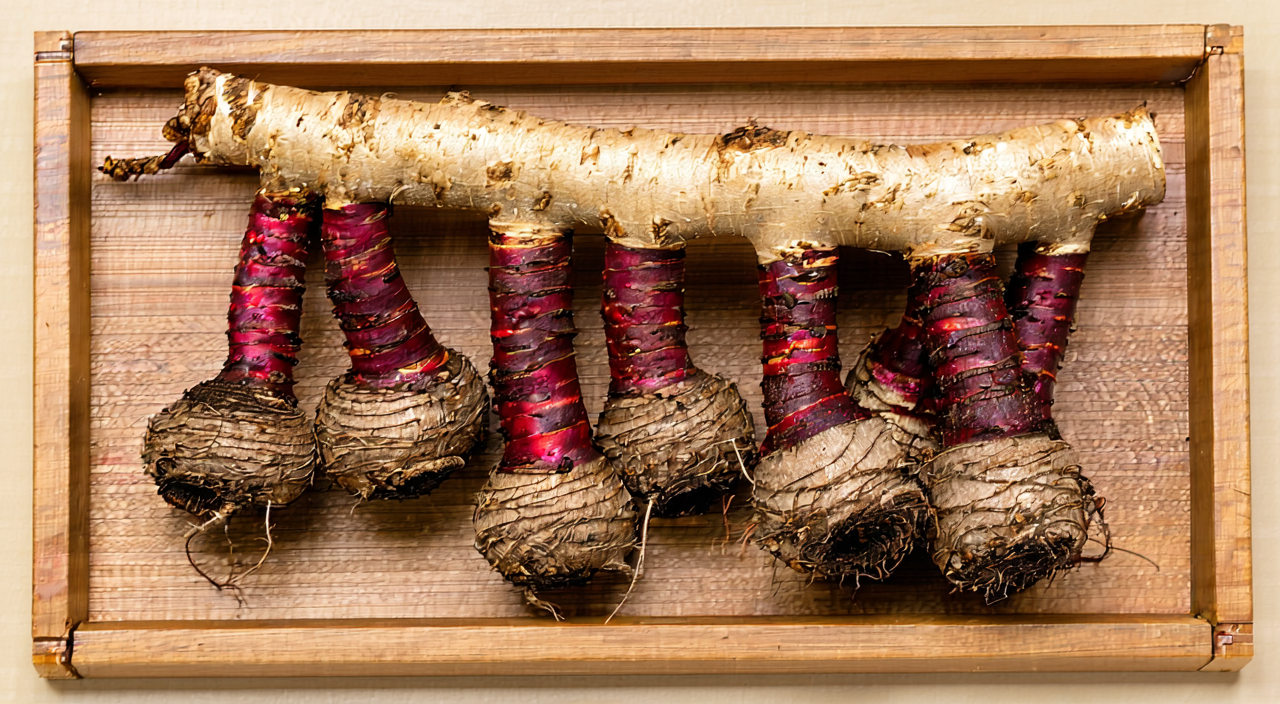
The medicinal parts of madder are the root and rhizome. They are generally harvested in spring or autumn, removing aboveground stems and leaves and soil, then dried in the sun or by heat. The main producing areas include Shaanxi, Henan, Hebei, and Shandong. Depending on clinical needs, raw madder (Sheng Qiancao) or carbonized madder (Qiancao Tan) may be selected. Carbonized madder is prepared by stir-frying clean madder in a pot over medium heat until the surface is charred black and the interior is charred brown, then taking it out to cool. The raw form tends to cool blood and unblock menstruation, while the charred version enhances the effect of stopping bleeding; the choice between them in formulas differs. Which one to use should be decided based on individual constitution and TCM pattern differentiation—do not substitute one for the other on your own.
How does traditional Chinese medicine view madder?
Traditional Chinese medicine considers madder a commonly used herb for cooling blood and resolving stasis. It is cold in nature, bitter in taste, and enters the Liver meridian. Its core functions can be summarized as cooling the blood, dispelling stasis, stopping bleeding, and unblocking menstruation. When there is heat in the blood aspect combined with stasis, bleeding may occur with bright red, sticky blood, or blocked menstruation and uterine bleeding. Madder clears blood heat to cool it and resolves stasis to free the channels, thereby stopping bleeding without leaving stasis behind. In clinical practice, practitioners often combine tongue and pulse diagnosis with other signs to determine whether blood-heat with stasis is present. When used appropriately, it may help relieve related symptoms, but any application must undergo professional pattern differentiation and should not be self-diagnosed.
What does modern research say about madder?
Modern chemical analysis shows that madder contains anthraquinones, naphthoquinones, iridoid glycosides, polysaccharides, and other constituents. Some pharmacological studies have found that madder extracts exhibit activities such as promoting blood coagulation, inhibiting platelet aggregation, and antioxidation in vitro, providing a scientific reference for its traditional hemostatic use. However, these studies remain largely at the experimental stage, and the modes of action and safety in humans still require more clinical verification, so they should not be directly equated with therapeutic efficacy. Readers may take this information as background knowledge.
How does madder differ from Salvia and Red Peony?
Madder, Salvia (Danshen), and Red Peony (Chishao) are all blood-invigorating and stasis-resolving herbs, but their traditional applications and identifying features are distinctly different. In appearance, madder root is reddish-brown with an orange-red cross-section; Salvia root has a brownish-red outer bark, a grayish-brown cross-section, a firm texture, and a yellowish-white xylem; Red Peony root has a brownish surface, a fine and smooth, powdery white or slightly reddish cross-section, and breaks easily. Comparing traditional functions: madder excels at cooling blood and stopping bleeding, suitable for bleeding caused by blood-heat with stasis; Salvia leans towards invigorating blood, regulating menstruation, clearing the heart, and calming the mind, often used for chest pain, irritability, insomnia, and menstrual irregularities; Red Peony is good at clearing heat, cooling blood, dispersing stasis, and relieving pain, commonly seen in warm toxin macules, red, swollen and painful eyes, and liver qi stagnation with hypochondriac pain. Grasping these differences can help avoid confusion in use.
Which formulas contain madder?
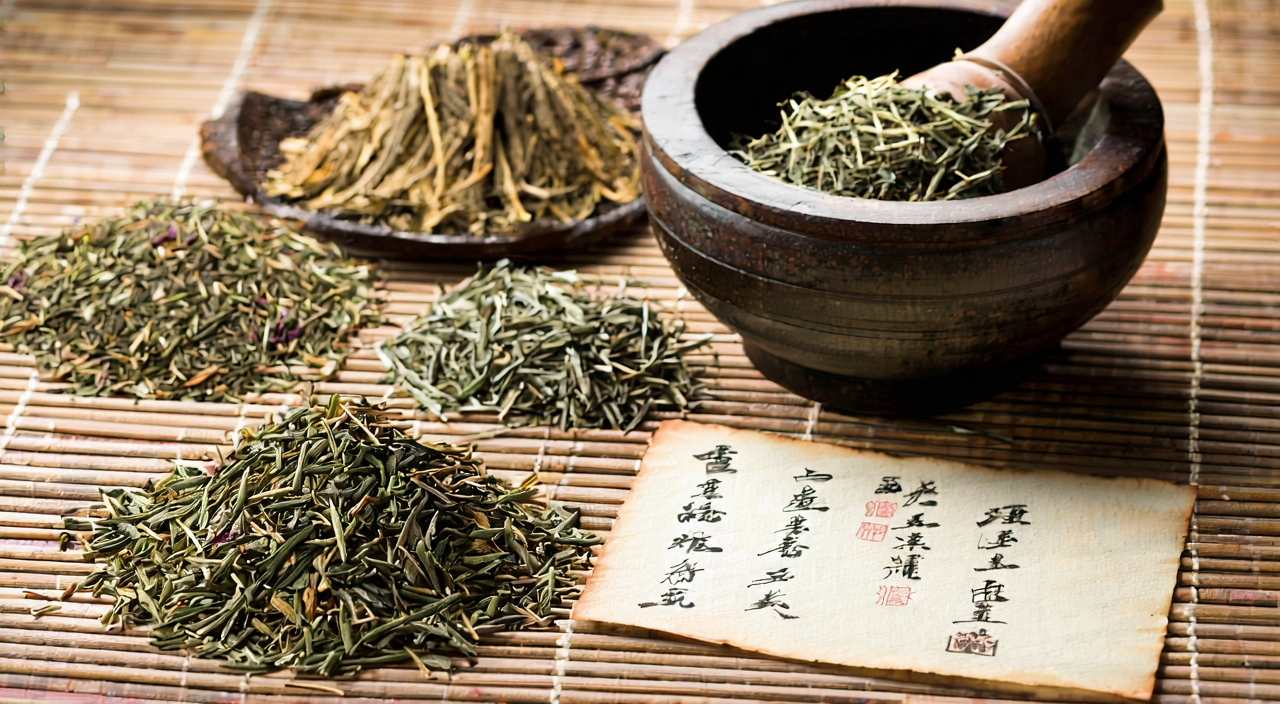
Formulas containing madder in TCM literature are mostly used for blood-heat bleeding or gynecological flooding and spotting. The following are for informational purposes only:
- Gutong Decoction: Originating from Records of Chinese Medicine with Reference to Western Medicine, composed of madder, Atractylodes, raw Astragalus, calcined dragon bone, etc. The original formula treats flooding and spotting due to spleen qi deficiency and instability of the Chong vessel; madder plays the role of resolving stasis and stopping bleeding.
- Qian Gen San (Madder Root Powder): With madder root as the main ingredient, combined with Cacumen Platycladi, raw Rehmannia, Scutellaria, etc., it cools blood and stops bleeding, suitable for hematemesis and epistaxis caused by reckless movement of blood due to heat.
- Shi Hui San (Ten-Charred Powder): Ten herbs including Japanese Thistle, Small Thistle, madder, and rhubarb are charred and used primarily for bleeding caused by heat damaging the collaterals, such as hemoptysis and vomiting of blood.
- Madder Decoction (Qian Cao Tang): Compositions vary across different medical texts, but most use madder combined with other medicinals for blood-heat flooding and spotting or heavy menstrual bleeding.
These formulas should be used only after pattern differentiation by a TCM practitioner; self-prescribing based on the formula list is strictly inadvisable.
What are the precautions for using madder?
Although madder is a commonly used medicinal herb, the following points should be noted. Pregnant women should avoid it because its menstruation-unblocking effect may affect pregnancy. For heavy menstrual bleeding not caused by blood-heat and stasis, or accompanied by severe anemia, madder alone is not appropriate; the cause should be investigated before deciding on a plan. People taking anticoagulants (such as warfarin or aspirin) should avoid concomitant use of madder to prevent interference with blood coagulation. After taking madder, urine may appear reddish—a normal phenomenon caused by pigment excreted through the kidneys. However, if accompanied by frequent urination, painful urination, or an unexplained color change without clear reason, discontinue use promptly and consult a doctor. Most importantly, for any recurrent or heavy bleeding—such as black stools, coughing up blood, or heavy vaginal bleeding—organic pathological changes must first be ruled out; one should not self-medicate with Chinese herbs to stop bleeding.
Summary
The key to identifying madder is the reddish-brown root color and orange-red cross-section; the medicinal parts are the root and rhizome, with raw and carbonized madder having different emphases. Traditional Chinese medicine uses madder based on the core principles of cooling blood, resolving stasis, stopping bleeding, and unblocking menstruation. It differs from Salvia and Red Peony in color, texture, and application. Classic formulas such as Gutong Decoction and Qian Gen San illustrate its combination direction, but they equally emphasize individualized pattern differentiation and risk awareness, especially caution during pregnancy, anticoagulant therapy, and unexplained bleeding. This article is intended for educational reference only and does not replace professional medical advice.