
What Is Qing Xiang Zi? Medicinal Parts, Identification, and Common Formulas
What is Qing Xiang Zi? In traditional Chinese medicine, this name usually refers to the mature seeds of Celosia argentea, a plant in the Amaranthaceae family. It is commonly discussed among herbs used to clear liver heat and support eye health. Overseas Chinese users learning about or purchasing Chinese medicinal herbs may easily confuse it with cassia seeds or celosia seeds. This article provides an educational overview of its appearance, medicinal part, traditional Chinese medicine perspective, common formulas, and usage precautions to help readers develop a basic understanding.
What Does Qing Xiang Zi Look Like? How Can It Be Identified?
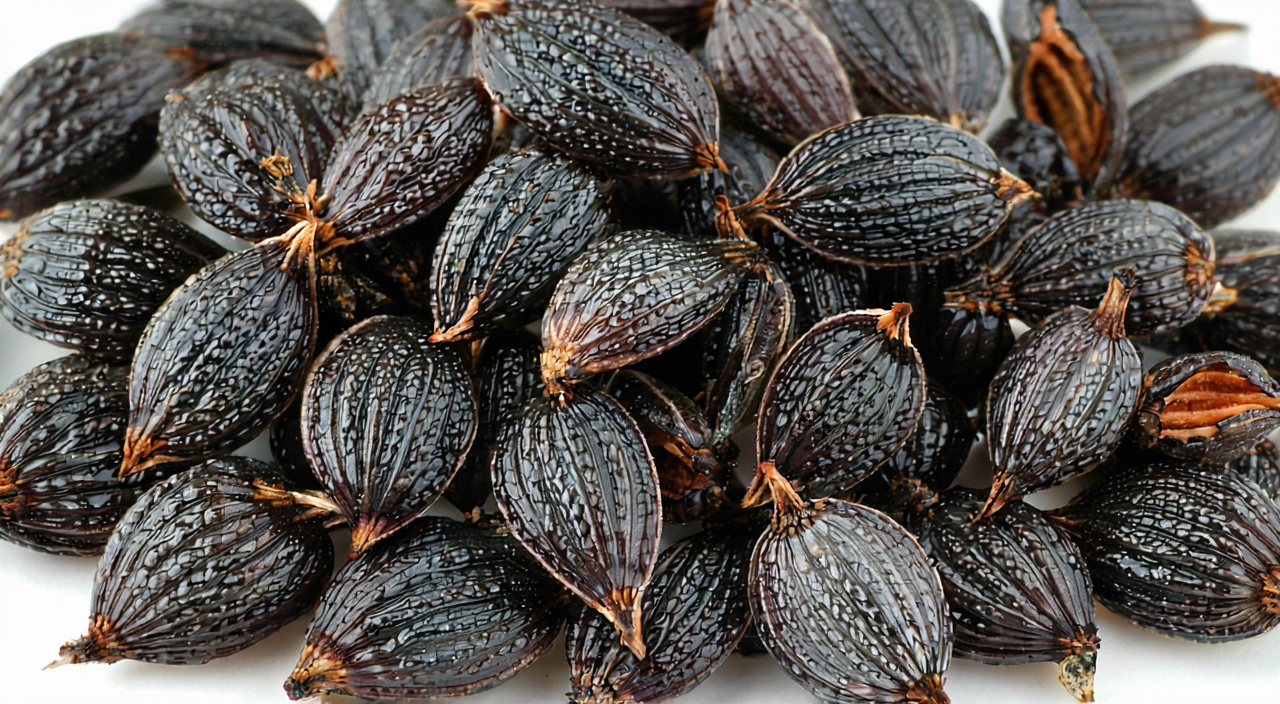
Individual Qing Xiang Zi seeds are small and generally flat, round, or slightly kidney-shaped. Their surface is black or blackish brown with a certain degree of gloss. Under light, dried seeds may show fine concentric ring-like markings and a relatively inconspicuous hilum. When held in the hand, they feel like small, glossy black granules.
When identifying them, first check whether the shape is flat and round or kidney-shaped, then look at whether the surface is glossy black and has ring-like markings, and finally note the position of the hilum. Do not rely on color alone, because the place of origin, harvest time, and drying method may cause the color to vary from black to blackish brown. Compared with cassia seeds, Qing Xiang Zi is usually smaller, flatter, and darker. Cassia seeds are generally rhomboid or short cylindrical, with colors ranging from brownish black and grayish brown to yellowish green. Celosia seeds may look similar, but they come from a different source and should not be treated as interchangeable.
What Is the Medicinal Part of Qing Xiang Zi?
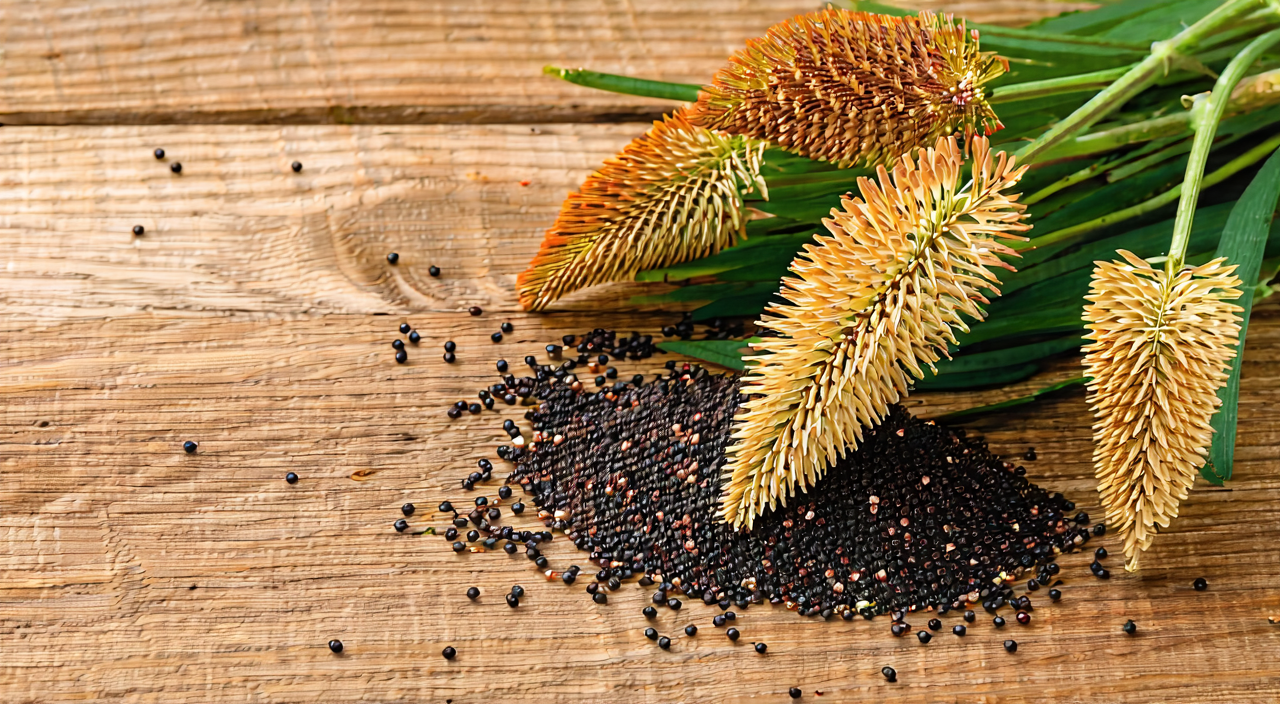
The medicinal part of Qing Xiang Zi is the mature seed of Celosia argentea, not its leaves, flowers, or roots. Traditional harvesting is generally carried out in autumn, when the fruits have matured. The flower spikes are dried in the sun and then threshed, with impurities and shriveled seeds removed to retain plump, mature seeds with a glossy black appearance. The degree of maturity and dryness can affect the seeds’ appearance and storage quality. Immature seeds or seeds that have become damp or moldy are not suitable for use as medicinal material.
It is especially important to distinguish Qing Xiang, the plant, from ornamental cockscomb. Although they are closely related botanically, the Qing Xiang Zi discussed as a medicinal material specifically refers to the mature seeds of Celosia argentea. Seeds from ornamental cockscomb should not be casually used as substitutes even if they look similar.
How Does Traditional Chinese Medicine Understand Qing Xiang Zi?
Traditional Chinese medicine generally characterizes Qing Xiang Zi as bitter and slightly cold, with an association with the Liver meridian. Descriptions of its traditional functions commonly focus on “clearing liver fire” and “improving vision and reducing corneal opacity.” Here, “liver fire” is a traditional diagnostic concept and does not refer directly to liver disease as understood by modern medicine. It more often describes a group of possible manifestations associated with red eyes, dry eyes, blurred vision, irritability, and similar symptoms.
In classical formulas and herbal texts, Qing Xiang Zi is commonly discussed for patterns involving red, swollen, painful eyes, corneal opacity, and unclear vision. However, it is not suitable for every type of eye discomfort. It is more traditionally associated with conditions considered related to liver fire or wind-heat in the Liver meridian. Whether it is appropriate depends on an individual’s constitution, tongue and pulse findings, and specific symptoms, so it should not be used alone without professional guidance.
What Areas Have Modern Studies Focused On?
Modern research on Qing Xiang Zi has mainly focused on compounds found in its seeds, including fatty oils, flavonoids, and saponins. Some laboratory studies have explored its potential antioxidant, antibacterial, and eye-related effects in cellular models, but most of this work remains exploratory and cannot be directly equated with clinical efficacy. For overseas Chinese users, this information helps clarify that Qing Xiang Zi is not simply an “eye-health food,” and it should not replace a proper ophthalmological examination.
How Does Qing Xiang Zi Differ from Cassia Seeds and Celosia Seeds?
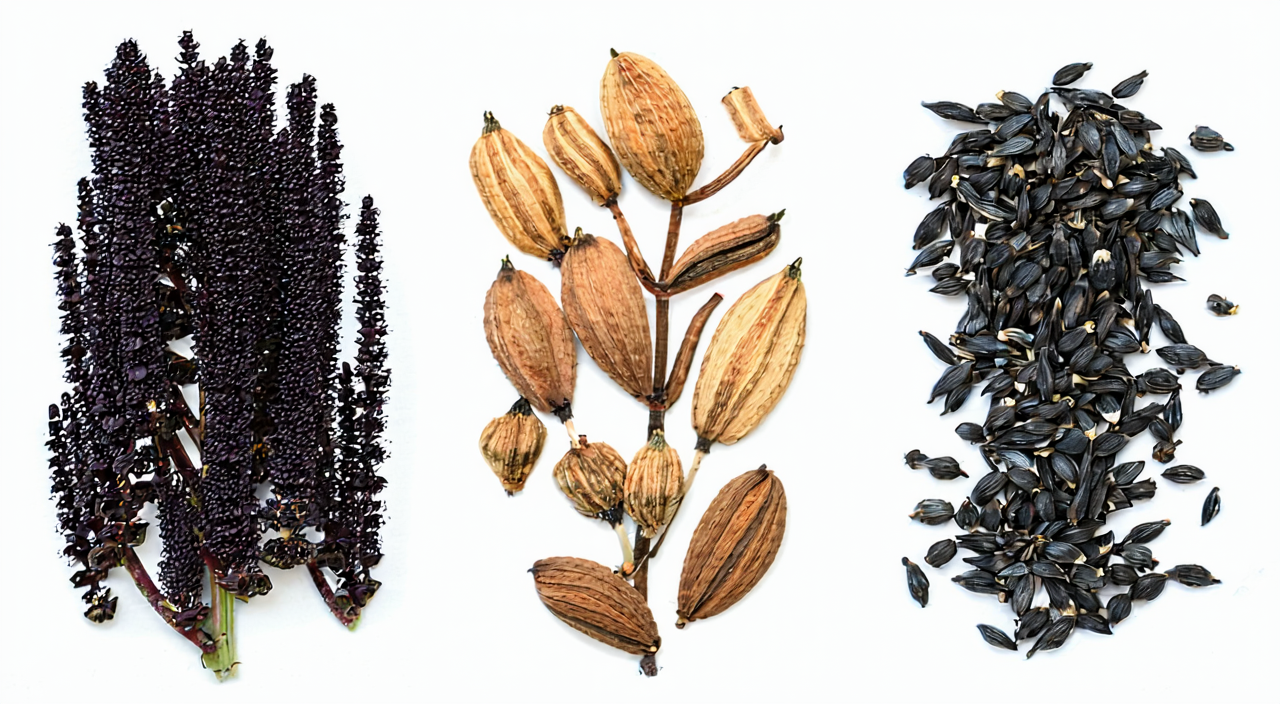
These three types of seeds differ in appearance, size, and traditional uses. Qing Xiang Zi is usually smaller, flat and round or kidney-shaped, with a glossy black surface and ring-like markings. Traditionally, it is associated with clearing liver heat, supporting vision, and reducing corneal opacity. Cassia seeds are relatively larger, with a more angular, rhomboid, or short cylindrical shape. Their color is generally brownish black, grayish brown, or yellowish green. Traditionally, in addition to supporting eye health, they are also commonly associated with promoting bowel movements. Celosia seeds may resemble Qing Xiang Zi in appearance, but they come from a different source and should not be casually substituted for one another in traditional medicinal use.
In practice, color alone is not enough for identification. The color of Chinese medicinal materials may change after drying and storage. It is advisable to assess size, shape, hilum, surface markings, and source information together. If material sold as Qing Xiang Zi appears noticeably larger or has a different shape, the botanical source should be verified.
Which Traditional Formulas Contain Qing Xiang Zi?
Qing Xiang Zi commonly appears in formulas traditionally used to clear liver heat and support eye health. Directions found in classical formula books include Qing Xiang Zi Wan and Qing Xiang Zi San.
The formulation principles of Qing Xiang Zi Wan generally focus on clearing liver heat, supporting vision, and reducing corneal opacity. Qing Xiang Zi is often combined with herbs such as chrysanthemum, cassia seeds, Buddleja flower, and prepared rehmannia root. In some classical texts, Qing Xiang Zi San appears as an oral powder or for external use, commonly addressing manifestations such as red eyes and ocular opacity. The specific ingredients and methods of use are not completely consistent across different historical sources.
Formulas for clearing liver heat and supporting eye health that contain Qing Xiang Zi often emphasize herbal combinations rather than using Qing Xiang Zi alone. When wind-heat is also present, mulberry leaves and chrysanthemum may be added. When liver blood deficiency is involved, dong quai and white peony root may be used. In cases of yin deficiency, prepared rehmannia root and Scrophularia root may be included. Whether such formulas are appropriate should be determined by considering an individual’s constitution and symptoms together with professional advice. If eye discomfort recurs or continues to worsen, do not prepare classical formulas on your own.
What Precautions Should Be Taken When Using Qing Xiang Zi?
Qing Xiang Zi is considered relatively cold in nature, and traditional Chinese medicine advises caution in people with spleen and stomach deficiency-cold. Common manifestations include abdominal pain that feels better with warmth, loose stools, poor appetite, and cold hands and feet. People with this type of constitution should not use it alone without an appropriate formula or professional guidance.
Eye-pressure-related problems require particular caution. People diagnosed with glaucoma or elevated intraocular pressure, as well as those who recently developed a sudden decline in vision, visual field loss, eye pressure or pain, halos around lights, or similar symptoms, should seek prompt medical evaluation. They should not self-administer Qing Xiang Zi or formulas containing it. Pregnant or breastfeeding women, children, and people with chronic health conditions should also consult a doctor or pharmacist before use. Traditional medicinal herbs are not suitable for everyone, and dosage, processing, combination with other herbs, and duration of use may all affect safety.
Summary
Qing Xiang Zi is a traditional Chinese medicinal material made from the mature seeds of Celosia argentea. The seeds are generally small, glossy black, flat and round, or kidney-shaped. Traditional Chinese medicine mainly understands it as an herb for clearing liver heat and supporting eye health, and it commonly appears in formulas such as Qing Xiang Zi Wan and Qing Xiang Zi San. Because it can be confused with cassia seeds and celosia seeds, users should pay particular attention to abnormal eye pressure, spleen and stomach deficiency-cold, pregnancy, and other special circumstances. This article is for educational reference only and cannot replace professional diagnosis or treatment advice.