
What Is Nutmeg? Medicinal Part, Identification, and Common Formulas
Many overseas friends interested in Chinese medicine may notice “doukou” (cardamom-like spices) both on the kitchen spice rack and among Chinese herbal medicines, but not all doukou come from the same source. Nutmeg sounds like a type of cardamom, yet it comes from an entirely different plant, and its medicinal part is fundamentally different from the commonly mentioned white cardamom and katsumadai seed. This article will help you build a clear and safe understanding of nutmeg, covering its botanical origin, appearance and identification, medicinal part, traditional Chinese medicine perspective, modern research, comparison with similar species, common formulas, and precautions for use.
What Does Nutmeg Look Like? How to Identify It?
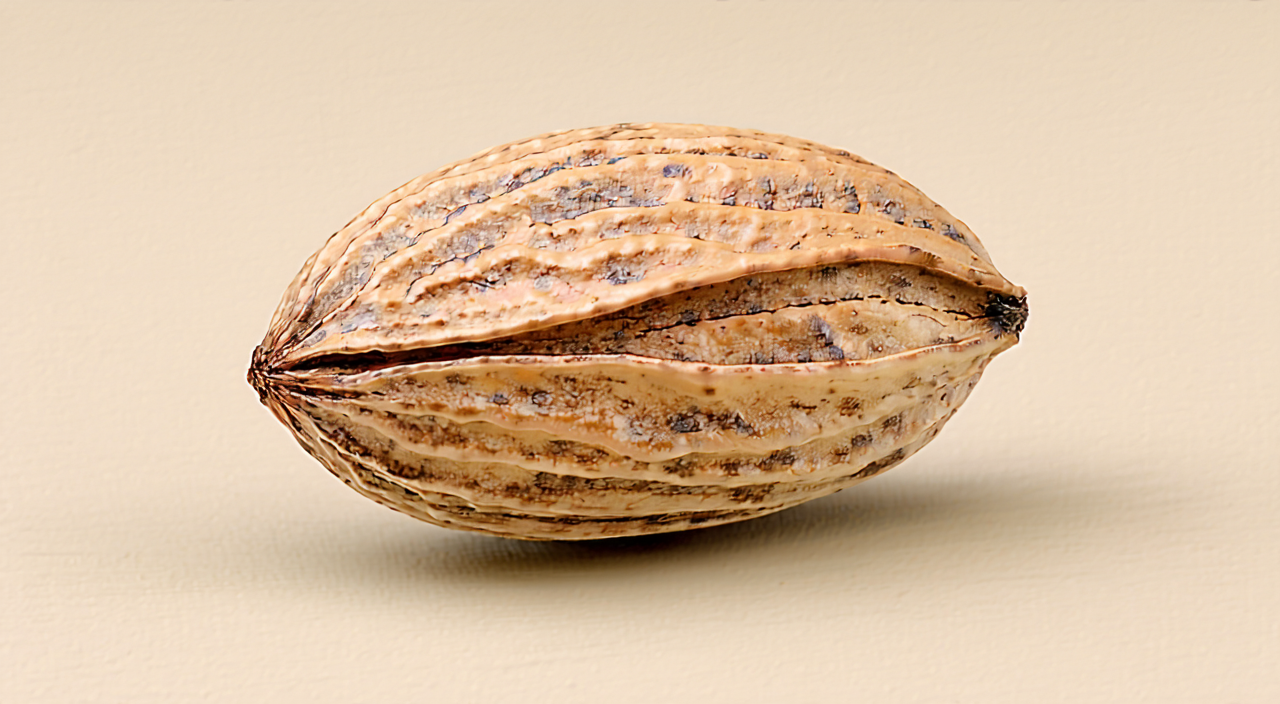
The medicinal part of nutmeg is the ripe kernel from an evergreen tree. After drying, it appears ovoid or elliptical, about 2–3 cm long and 1.5–2.5 cm in diameter, considerably larger than white cardamom. The surface is grayish-brown or grayish-yellow, sometimes covered with a white, lime-like powder—a remnant of traditional insect-proofing and moisture-proofing treatment, not mold.
Upon closer inspection, the kernel surface is covered with a net-like pattern of fine, irregular grooves running longitudinally. The texture is firm and not easily crushed by hand. When cut open, it reveals a marbled pattern of yellowish-brown and dark brown, caused by the interlacing of endosperm tissues, producing an oily cross-section that feels distinctly greasy to the touch. The aroma is very strong and distinctive; bringing it close releases a warm, spicy-sweet scent. Tasting it yields a pronounced pungency with slight bitterness, without strong numbing sensation, but the fragrance lingers in the mouth for quite a while.
In the market, nutmeg is often divided into whole “nutmeg-in-shell” and shelled “nutmeg kernel”; most Chinese medicine formulas use the kernel directly. Additionally, the aril of nutmeg, called “nutmeg mace” or “yuguohua,” is reddish-brown and also used as a spice, but it is not the medicinal part discussed here. By recognizing the ovoid kernel, net-like grooves, oily marbled cross-section, and strong spicy aroma, you can basically distinguish nutmeg from other seed-based medicinal substances.
What Is the Medicinal Part of Nutmeg?
The medicinal part of nutmeg is precisely the ripe kernel of Myristica fragrans (nutmeg tree) in the family Myristicaceae. Harvesting takes place when the fruit fully ripens and the husk splits open; the seed with its red aril is removed, the aril is stripped off, and the kernel is collected and dried. In some producing areas, the kernel is soaked in lime water and then sun-dried, forming a protective layer on the surface.
In practice, Chinese medicine employs a processing method called “roasted nutmeg” (wei rou dou kou). The raw product has a high oil content with relatively strong warm, drying, and intestine-moistening properties. It is usually wrapped in flour and roasted in hot ash until the dough turns brown, or wrapped in wet paper and slowly roasted to remove some of the oils. After roasting, nutmeg’s intestine-astringing and anti-diarrheal effects are enhanced, while its tendency to lubricate the intestines is reduced, making it more suitable for conditions requiring astringent and securing actions. Therefore, whether you are a beginner enthusiast or a professional, it is important to pay attention to the processing method when dealing with nutmeg slices, as it directly affects subsequent usage and dosage.
How Does Traditional Chinese Medicine View Nutmeg?
Traditional Chinese medicine (TCM) understands nutmeg mainly from two angles: astringing the intestines to stop diarrhea, and warming the middle to move qi. Its nature and flavor are acrid and warm, and it enters the spleen, stomach, and large intestine meridians. For chronic diarrhea, chronic dysentery, abdominal cold pain, poor appetite, and nausea with a tendency to vomit caused by spleen-stomach deficiency cold and impaired transportation, nutmeg is often included in treatment strategies. This type of deficiency-cold diarrhea typically presents as loose stools or stools containing undigested food, with the abdomen feeling better with warmth and pressure, worsening with cold—completely different from the urgent, foul-smelling diarrhea of damp-heat type.
In clinical combination, nutmeg is often used with herbs that warm and supplement the spleen and kidney, such as Psoralea (bu gu zhi), Evodia (wu zhu yu), and Schisandra (wu wei zi), to enhance the warming and anti-diarrheal effect. This is not simply stopping diarrhea, but rather regulating through a dual mechanism: dispersing cold pathogen in the middle burner and astringing intestinal leakage. However, whether it suits an individual’s constitution must be determined by specific symptoms and professional syndrome differentiation. The same herb can yield completely different results in a person with deficiency-cold chronic diarrhea versus one with excess heat and accumulation. Thus, it is better to take this as an entry point for understanding traditional herbal approaches.
How Does Modern Research View Nutmeg?
Modern research mainly focuses on the volatile oil components of nutmeg, especially myristicin, safrole, and eugenol. Myristicin is an important substance responsible for its characteristic aroma and also possesses certain central nervous system activity. Under experimental conditions, high doses of myristicin can cause central nervous system excitation and even hallucinogenic effects, accompanied by dizziness, palpitations, increased heart rate, dilated pupils, hallucinations, delirium, and in severe cases may lead to convulsions or coma.
In traditional use, the dosage of nutmeg is usually very small—only a few grams in decoctions—and it is often roasted, which itself reduces the risks posed by large amounts of oily substances. However, if nutmeg is treated as a “natural spice” or “health supplement” and taken in large quantities without guidance, the risk is very clear. Natural does not mean harmless; nutmeg should not be added casually like an ordinary cooking condiment, nor should it be consumed in large doses in an attempt to achieve mood regulation or euphoric effects. Overseas users should be especially vigilant about this, as there have been reported cases of poisoning requiring hospitalization after ingesting large amounts of nutmeg powder or whole seeds.
How Does Nutmeg Differ from White Cardamom and Katsumadai Seed?
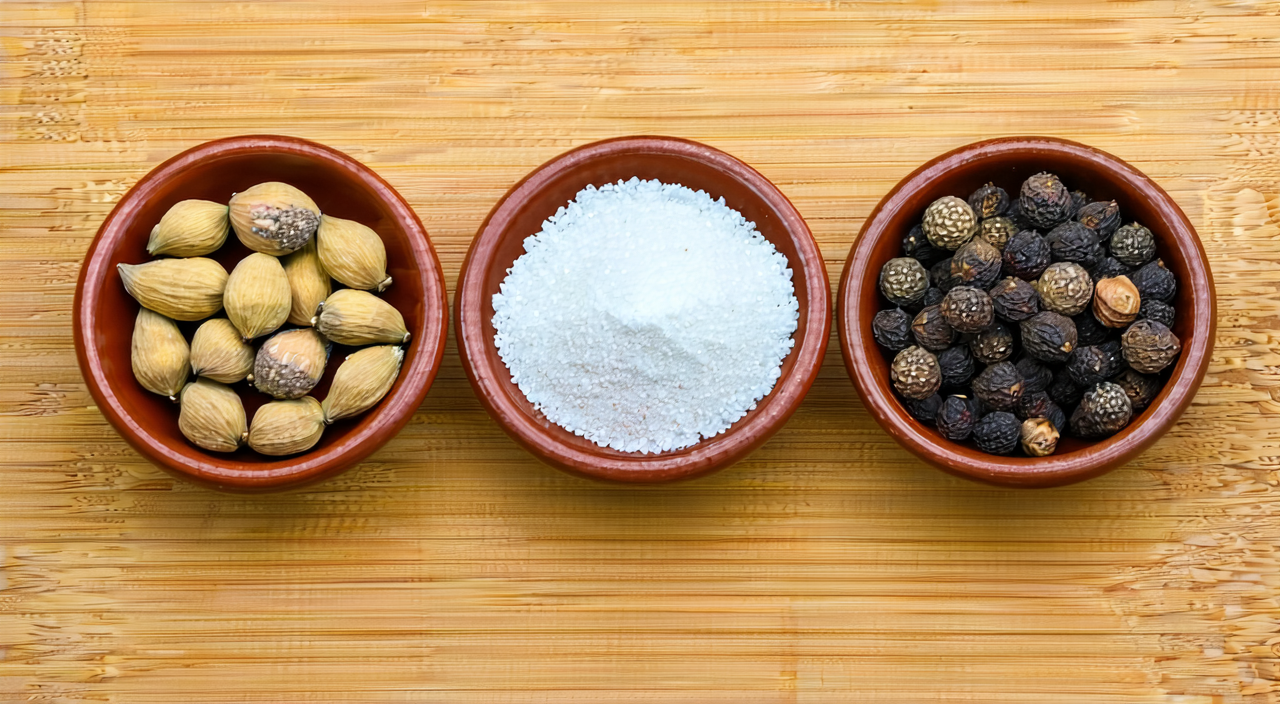
Although all three share the name “doukou,” they differ greatly in plant origin, medicinal part, and traditional therapeutic direction. Nutmeg comes from the Myristicaceae family, and the medicinal part is the ripe kernel, leaning toward astringing the intestines to stop diarrhea and warming the middle to move qi, mainly used for lower burner and abdominal areas with deficiency-cold patterns. White cardamom (often simply called “doukou”) is the ripe fruit of Amomum kravanh or Amomum compactum (Zingiberaceae family). It is nearly spherical, with a yellowish-white surface and fragrant volatile oil. It is skilled at aromatically transforming dampness and moving qi to relieve epigastric stuffiness, chest oppression, poor appetite, and nausea caused by dampness turbidity obstructing the middle burner. Katsumadai seed (cao dou kou) is also from the Zingiberaceae family, and its medicinal part is the nearly ripe seed mass. It has stronger dampness-drying and qi-moving power, traditionally used for internal blockage of cold-dampness with epigastric cold pain, distension, and fullness.
The “cardamom” commonly used in cooking usually refers to white cardamom, which has completely different aroma and usage scenarios from nutmeg. Nutmeg has a more intense, oily fragrance and is often used in complex spice blends for braising and stewing, or for flavoring desserts, while white cardamom has a fresh, pungent, and cooling aroma generally used to enhance the fragrance of marinades and soups. Therefore, clearly understanding the differences among the three not only helps correctly identify Chinese medicinal materials but also avoids misdirection when using them on your own.
Which Formulas Contain Nutmeg?
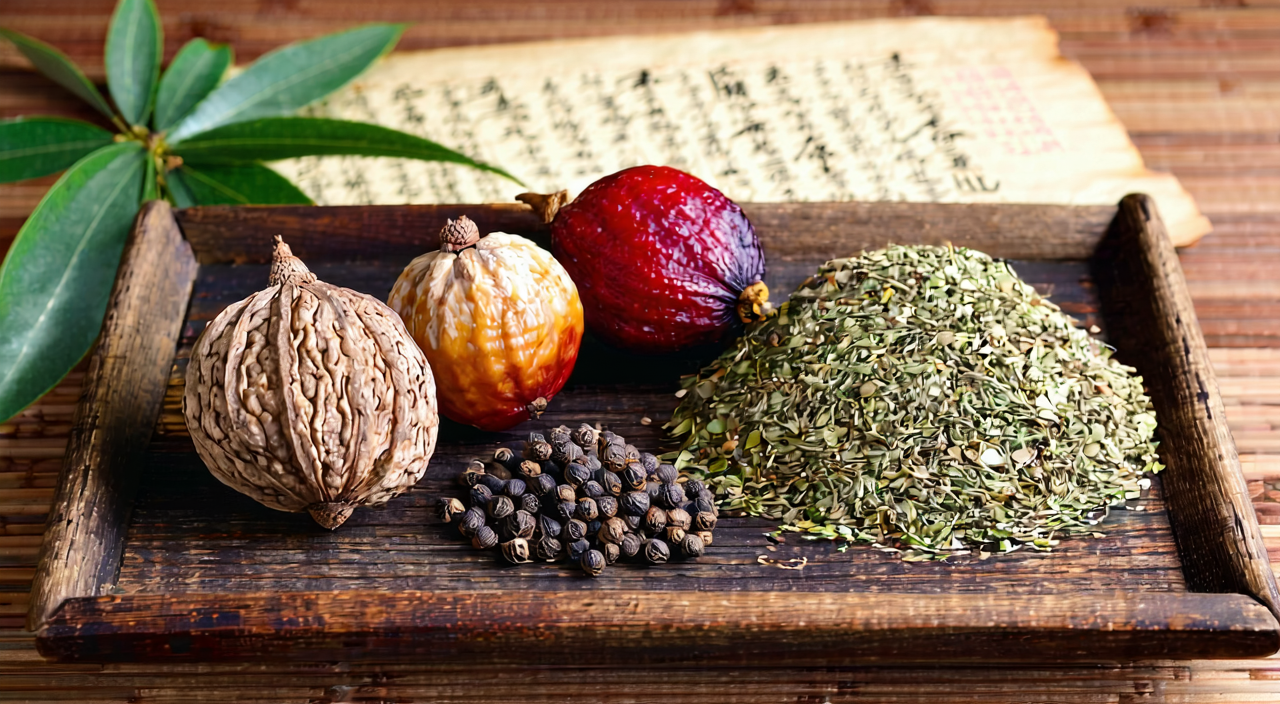
Nutmeg appears in several traditional formulas for treating diarrhea due to spleen-kidney deficiency cold. Below are a few common examples, meant only as a reference for understanding classical combination approaches. Si Shen Wan (Four-Miracle Pill) is one of the best known; it combines nutmeg with Psoralea (bu gu zhi), Evodia (wu zhu yu), Schisandra (wu wei zi), and others. It is often used for early-morning diarrhea (daybreak diarrhea) caused by spleen-kidney yang deficiency, characterized by abdominal pain below the navel and borborygmus with diarrhea just before dawn. In this chronic deficiency-cold condition, nutmeg primarily serves to warm the middle and astringe the intestines. Zhen Ren Yang Zang Tang (True Man’s Organ-Nourishing Decoction) is a formula for chronic diarrhea and dysentery with spleen-stomach deficiency cold and unremitting leakage; it contains nutmeg along with poppy capsule, cinnamon, ginseng, and other herbs, providing stronger astringent and securing power. Nutmeg Pill (Rou Dou Kou Wan) and Yang Zang Tang also center on nutmeg, with the aim of warming the spleen, astringing the intestines, and securing against leakage to stop diarrhea.
It is important to emphasize that whether these formulas are suitable for an individual requires rigorous TCM syndrome differentiation; one should not self-prescribe based solely on the symptom of diarrhea. In cases of long-term, recurrent diarrhea or when accompanied by significant weight loss, bloody stools, or persistent abdominal pain, priority should be given to seeking medical evaluation to rule out organic diseases. These formulas serve only as a window for further understanding TCM thinking.
What Precautions Should Be Taken When Using Nutmeg?
The boundary for using nutmeg is very clear: the cardinal rule is that it must never be used in large quantities. The usual dosage in decoctions is generally 3–10 grams, and the dose should be significantly reduced if taken as a powder. Overdose may cause nausea, vomiting, palpitations, hallucinations, excessive excitement, or coma—poisoning symptoms primarily related to the neurotoxicity of myristicin. There have been cases of emergency hospital visits after consuming whole nutmeg seeds or large amounts of nutmeg powder.
Pregnant and breastfeeding women, and children, should avoid medicinal preparations and patent medicines containing nutmeg. People with excess heat, accumulation, or damp-heat diarrhea are also not suitable, because excess-heat diarrhea often presents with foul-smelling stools, anal burning, and acute abdominal pain—nutmeg’s warming and astringing nature would make it harder for the pathogenic factors to be expelled. If used as an everyday kitchen spice, occasional small amounts in stews or hot beverages for flavoring are relatively safe, but it should never be treated as a health supplement for long-term or high-dose consumption. If any discomfort occurs after taking it, discontinue use immediately and seek professional help. Learning to discern your body’s signals is more important than blindly using any medicinal substance.
Summary
Nutmeg is a Chinese medicinal that needs to be understood with a sense of boundary. It is characterized by an ovoid shape, oily cross-section, and strong aroma; its medicinal part is the kernel, and after roasting it leans more toward astringing the intestines and stopping diarrhea. Distinguishing it from white cardamom and katsumadai seed helps avoid confusion in usage direction. The neurotoxicity risk indicated by modern research also reminds us that we must treat it within a reasonable dosage and under syndrome differentiation guidance, never crossing the red line of safe use. This article is for educational reference only and cannot replace professional diagnosis or treatment advice.