
What Is Sang Bai Pi? Medicinal Parts, Identification, and Common Formulas
Many people interested in Chinese herbal medicine think of mulberry leaves, mulberry twigs, and mulberry fruit when they hear the word “mulberry.” Though Sang Bai Pi comes from the same plant, it does not appear as often in daily health discussions as the other three, yet it holds an important place in traditional formulas. Sang Bai Pi is derived from the dried root bark of Morus alba (mulberry). While it originates from the same plant as mulberry leaf, twig, and fruit, it is a completely different medicinal part. For overseas readers, understanding its appearance, medicinal part, and traditional applications helps build a more complete picture of this herb.
What Does Sang Bai Pi Look Like? How to Identify It
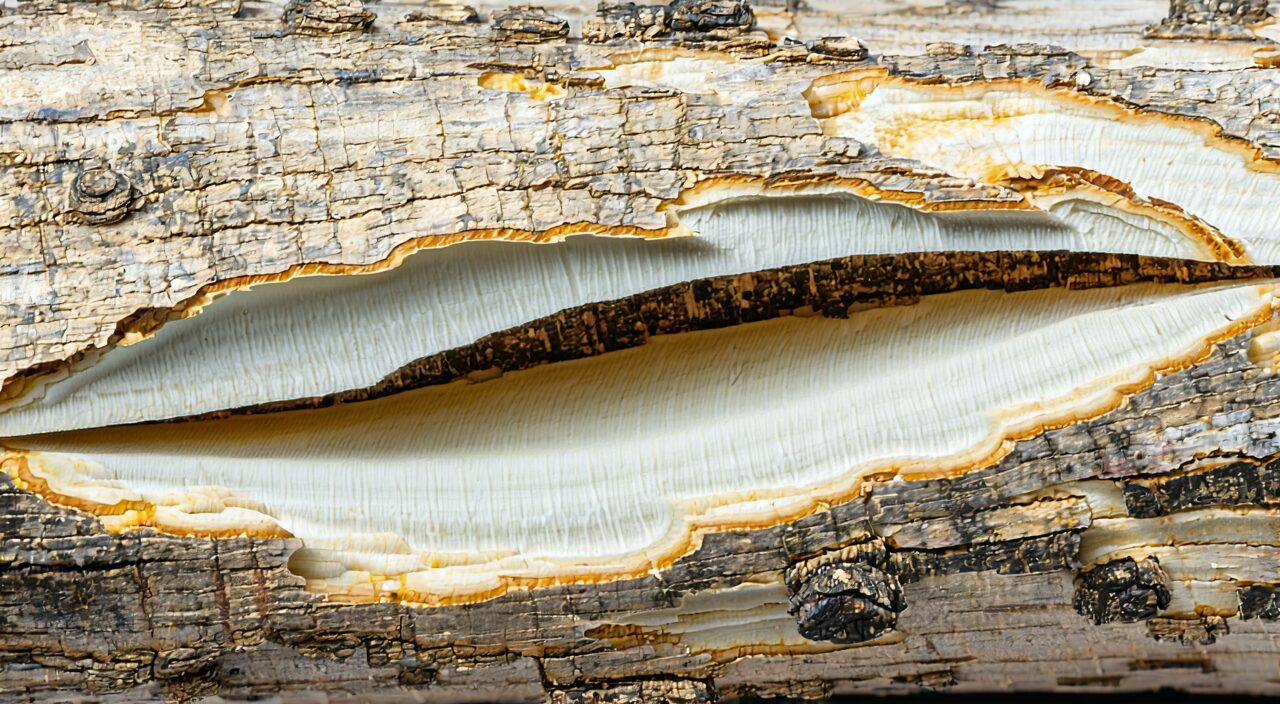
Sang Bai Pi prepared slices are typically twisted into tubular, semi-tubular, or trough-like shapes, with some appearing as irregular flakes. The outer surface is mostly white or pale yellowish-white, sometimes with residual brownish-yellow cork; the inner surface is yellowish-white or pale yellow and relatively smooth.
It is light in weight yet tough, and extremely fibrous—one of its most important identifying features. When you try to bend it, it resists snapping but tears easily lengthwise. The torn surface is fibrous and often carries fine powder. The odor is faint, and the taste is slightly sweet.
If the slices are overly dark in color, break easily with almost no fiber, you should consider whether they have been improperly processed or confused with other materials. Compared to other root bark herbs, Sang Bai Pi’s combination of clean white color and strong fiber is a relatively easy recognition point.
What Is the Medicinal Part of Sang Bai Pi?
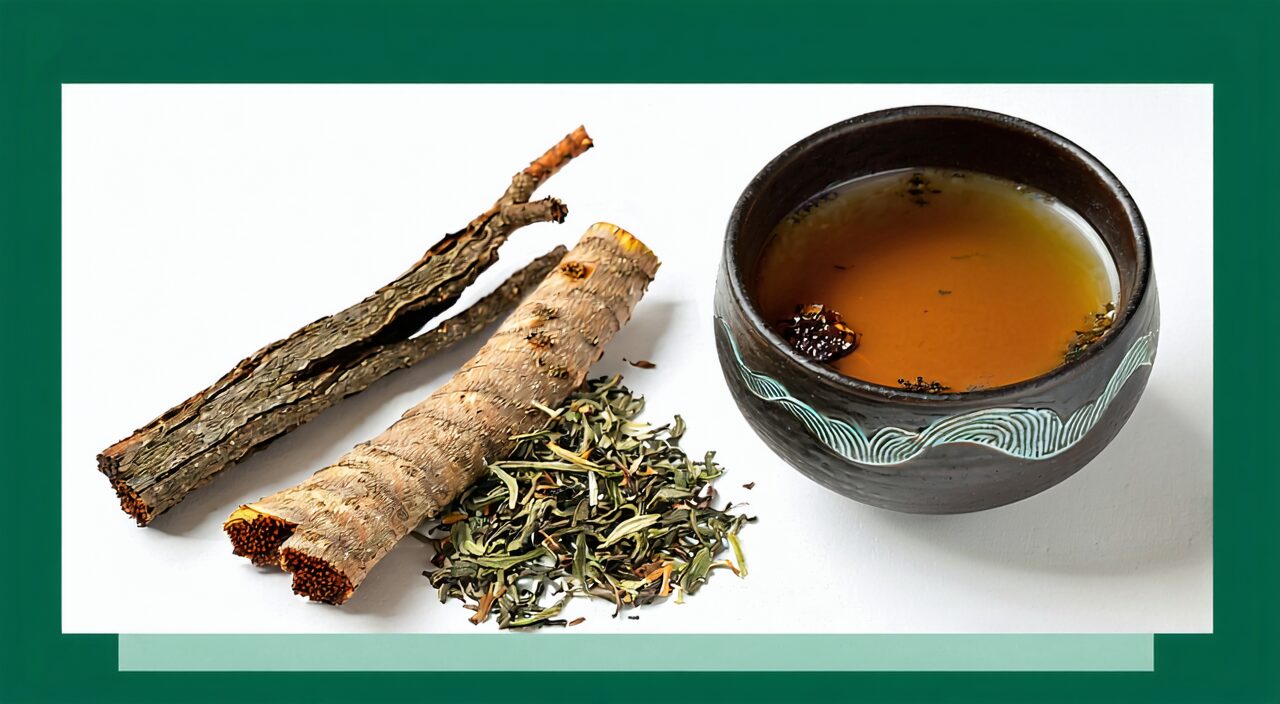
The part used for Sang Bai Pi is specifically the dried root bark of the mulberry tree. It is usually harvested in spring and autumn. After washing, the rough outer cork layer is scraped off, the root is slit lengthwise, and the root bark is peeled, dried in the sun, and then cut into strips for use.
On the market you may also find honey-fried Sang Bai Pi (Mi Sang Bai Pi), which is the cleaned herb stir-fried with refined honey. After honey processing, its cold nature is moderated, and it is more often used to moisten the lung and stop coughing, especially suitable for dry cough or cases with pronounced dryness. For general consumers, checking the packaging label can help distinguish between raw Sang Bai Pi and honey-fried Sang Bai Pi, so as to better understand their common uses.
How Does Traditional Chinese Medicine Understand Sang Bai Pi?
Traditional Chinese medicine typically assigns Sang Bai Pi to the Lung meridian. It is generally regarded as sweet in flavor and cold in nature. The main therapeutic ideas revolve around “purging the lung to relieve wheezing” and “promoting diuresis to reduce swelling.” When the body suffers from internal lung heat causing qi to rebel upward, leading to cough, wheezing, thick yellow sputum, or facial edema and inhibited urination, physicians throughout history have often considered Sang Bai Pi as a direction for regulation.
For example, when lung heat with qi rebellion is obvious, Chinese medicine tends to use it to help restore the lung’s dispersing and descending function. When water-dampness accumulates and causes edema and distension, it is also often relied upon to drive water downward and improve the condition. However, these considerations must be based on pattern differentiation; not all types of cough or edema are suitable for Sang Bai Pi. For users, it is best to view this as a reference direction within traditional experience rather than a universal solution.
Modern Related Research
Modern research on the constituents of Sang Bai Pi mainly focuses on flavonoids, coumarins, and some polysaccharides. Some in vitro experiments and animal studies have observed that Sang Bai Pi extracts may have certain effects on respiratory smooth muscle and have shown some tendencies in diuretic experiments. However, such studies are mostly at a preliminary exploratory stage, and their results cannot be directly equated with clinical efficacy. Therefore, it is not advisable to treat Sang Bai Pi as a functional product based solely on experimental data, nor should one expect it to deliver a specific pharmacological action.
How Does Sang Bai Pi Differ from Digupi and Huangbai?
Although both Sang Bai Pi and Digupi are root barks, their sources and appearances are very different. Digupi is the dried root bark of Lycium barbarum or Lycium chinense (wolfberry) from the Solanaceae family. It often appears as irregular tubular or semi-tubular pieces, with an outer surface grayish-yellow to brownish-yellow, rough and cracked, and the cork tends to peel off in scales. Sang Bai Pi, on the other hand, is predominantly white or pale yellowish-white on the outer surface, highly fibrous, resistant to snapping but easily torn lengthwise. In terms of touch and cross-section features, Sang Bai Pi is pliable and slightly powdery, whereas Digupi is more brittle and fragile overall.
Huangbai (Phellodendron bark) is not a root bark at all, but the bark of Phellodendron chinense or related species from the Rutaceae family. Its inner and outer surfaces are darker, and the fractured surface is granular rather than fibrous, making the difference from Sang Bai Pi very obvious.
In traditional use, Digupi tends to cool blood and eliminate steaming fever and clear lung-fire, often used for deficiency heat, steaming bone tidal fever, etc. Sang Bai Pi is more for purging lung to relieve wheezing and promoting diuresis to reduce swelling. Huangbai excels at clearing heat, drying dampness, and resolving toxins. While all three may involve clearing heat, their positioning and suitable scenarios differ considerably, and they must be distinguished based on specific constitution and pattern before use.
Which Formulas Use Sang Bai Pi?
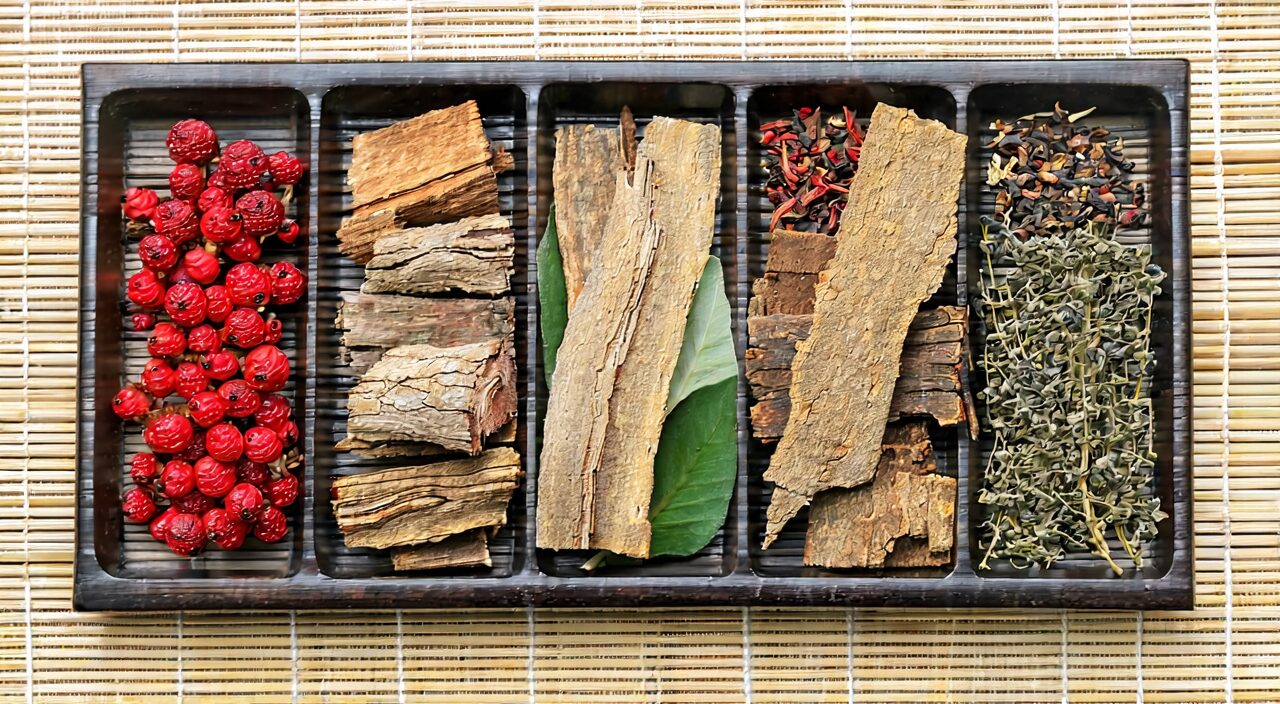
Several classic formulas include Sang Bai Pi. Each leans in a different direction and serves as a window into its traditional application thinking.
Xiebai San (Lung-Heat Expelling Powder): Mainly Sang Bai Pi and Digupi, commonly used to clear lung heat, stop cough, and relieve wheezing. It is often considered when there are signs of lung heat with wheezing cough, steaming skin heat, red tongue, and yellow coating.
Wupi Yin (Five-Peel Decoction): Composed of Sang Bai Pi, Fuling Pi (Poria peel), Dafupi (Areca peel), Chenpi (Tangerine peel), and Shengjiang Pi (fresh ginger peel). The traditional idea is to promote diuresis, reduce swelling, regulate qi, and strengthen the spleen. It is mostly considered for systemic edema, inhibited urination, and chest and abdominal distension caused by internal water-dampness.
Bufei Ejiao Tang (Lung-Tonifying Ass-Hide Gelatin Decoction): Contains Sang Bai Pi, Ejiao (donkey-hide gelatin), Xingren (apricot kernel), etc. It focuses on nourishing yin, tonifying the lung, stopping cough, and stopping bleeding, suitable for patterns of lung deficiency with heat, dry cough with little sputum, or blood-streaked sputum. Sang Bai Pi here mainly directs qi downward and prevents Ejiao from being overly cloying.
Qingzao Jiufei Tang (Dryness-Clearing Lung-Rescuing Decoction): Combines Sang Bai Pi, Shigao (gypsum), Maimendong (Ophiopogon root), etc. It targets qi counterflow cough and wheezing, dry throat and thirst, restlessness, and chest fullness caused by dryness-heat damaging the lung, leaning toward clearing dryness, moistening the lung, descending qi, and relieving wheezing.
It must be noted that the above formulas all have their own applicable pattern types and compatibility rules and must be used under the premise of Chinese medicine pattern differentiation. One should not self-prescribe them.
What Precautions Should Be Taken When Using Sang Bai Pi?
Although Sang Bai Pi is commonly seen in many formulas, it is not suitable for everyone. Traditional experience generally suggests that it is inappropriate for conditions involving lung deficiency without heat, wind-cold cough, or cold-phlegm cough, as its cold nature may aggravate the discomfort. In addition, Sang Bai Pi may have some influence on blood pressure; people with low blood pressure or those taking antihypertensive medication need to be especially cautious.
People with abnormal kidney function or those already using diuretics should also determine suitability under professional guidance. It must be emphasized that symptoms such as edema and breathing difficulty can involve health problems of the heart, lungs, kidneys, and other systems. If there is persistent, unrelieved edema, wheezing, inability to lie flat, or if accompanied by chest pain, palpitations, or changes in consciousness, one should seek medical attention promptly rather than attempting self-regulation solely with Sang Bai Pi or formulas containing it.
Summary
Sang Bai Pi is the dried root bark of the mulberry tree. Its key identification points are twisted tubular shape, white inner surface, and extremely high fiber content. Traditional Chinese medicine mainly understands it through the lens of purging the lung to relieve wheezing and promoting diuresis to reduce swelling, but it differs significantly in source and application from similar herbs like Digupi. For those with relevant health needs, the directions of Sang Bai Pi use are worth exploring as a reference, though one must still integrate personal constitution, symptoms, and professional advice, and never use it as a substitute for necessary medical care.