
What Is Shayuanzi? Medicinal Parts, Identification, and Common Formulas
Many people associate Shayuanzi with Huangqi (Astragalus root) when they first hear the name. In fact, Shayuanzi and Huangqi are botanically related: it comes from the mature seeds of the legume plant flat-stem milkvetch (Astragalus complanatus), while Huangqi is usually the root. What is Shayuanzi? From a medicinal perspective, it is a traditional Chinese medicinal whose medicinal part is the mature seed, and in Chinese medicine it is often classified under directions such as securing essence, reducing urination, and nourishing the liver to improve vision. For readers who want to understand the appearance, medicinal parts, differences from dodder seed, and common formulas for securing essence and improving vision, it is easier to form a full picture by looking at the source, identification, and precautions together.
What Does Shayuanzi Look Like? How to Identify It?
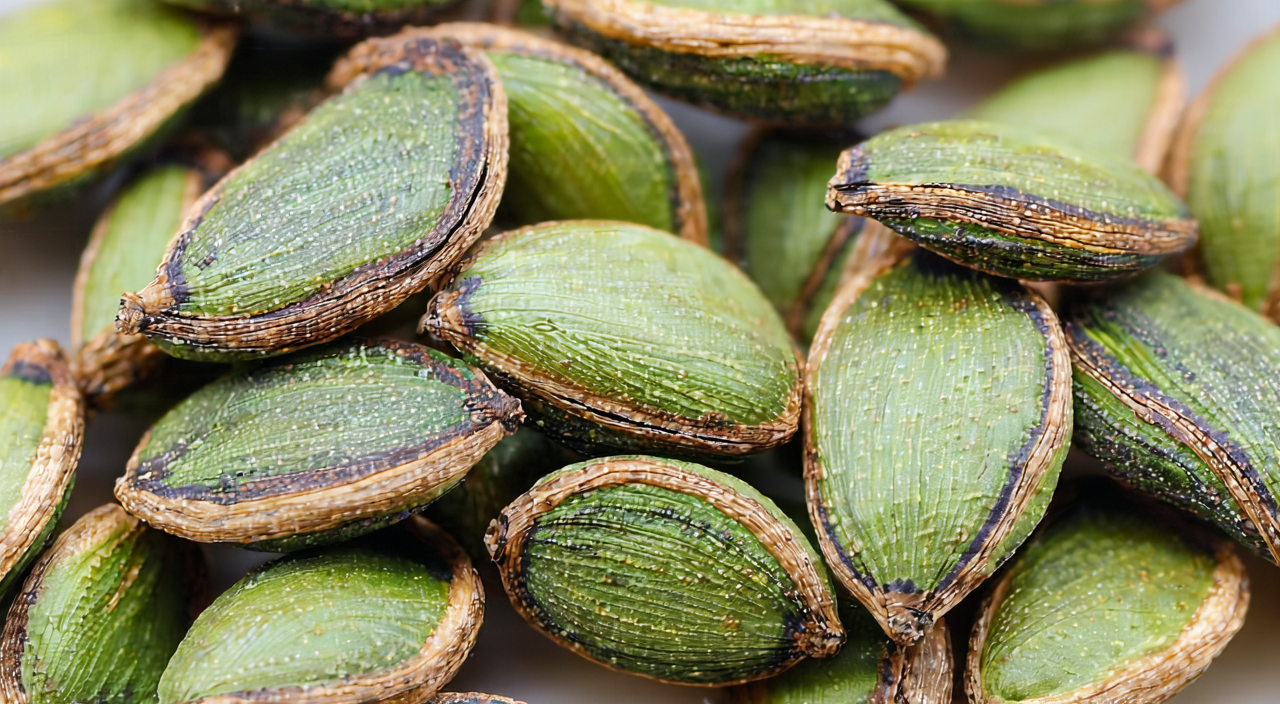
As a seed-based medicinal, Shayuanzi is small but has fairly distinct features. It is generally kidney-shaped and slightly flattened, resembling a miniature kidney bean. It is mostly about 2–2.5 mm long, about 1.5–2 mm wide, and about 1 mm thick. The surface is relatively smooth, usually greenish-brown to grayish-brown, and some seeds may have darker small spots. The most important feature is the depression in the center of one side of the seed: that is the hilum, and it is a key identification point for Shayuanzi.
In terms of texture, dried Shayuanzi is relatively hard and not easy to crush by hand, with a fine granular feel in the palm. The odor is usually very mild, and chewing it directly gives a slight bean-like or bland taste. Traditionally, the preferred ones are plump, uniform in size, greenish-brown in color, and free of sand and impurities. If there are many broken seeds, mold spots, or darkened color, they should be identified with caution.
In practice, it is not advisable to make a judgment based only on the kidney-like shape. Seed medicinals may show slight differences between different producing areas and batches, so it is best to observe the shape, color, hilum position, and surface texture together.
What Is the Medicinal Part of Shayuanzi?
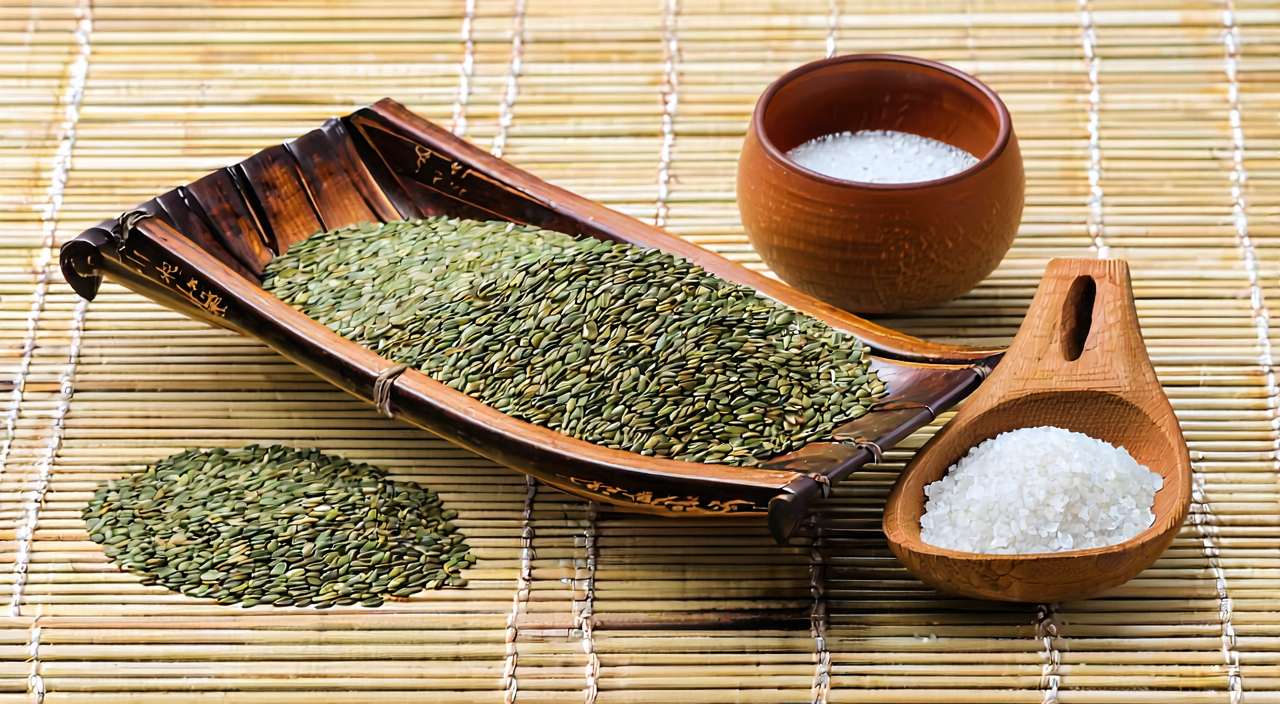
The medicinal part of Shayuanzi is the mature seed of flat-stem milkvetch (Astragalus complanatus), which is often mistakenly associated with Astragalus root. Flat-stem milkvetch is a legume plant. It belongs to the same family as the medicinal Astragalus membranaceus and Astragalus mongholicus but is a different species, and the medicinal parts differ greatly. Huangqi is traditionally used as the root, while Shayuanzi uses the seed; the two cannot replace each other.
For harvesting and processing, the aerial parts are usually cut in late autumn or early winter after the seeds mature, dried in the sun, and then the seeds are threshed and separated from the pods, stems, leaves, and impurities. What is obtained at this stage is mostly raw Shayuanzi. In addition, salt-processed Shayuanzi is a common processed product. It is made by mixing clean Shayuanzi with an appropriate amount of salt water, allowing it to absorb the liquid briefly, and then dry-frying or steaming it. Traditional theory holds that salt processing helps guide the medicinal action to the kidney, but in daily use, whether a salt-processed product is necessary should be judged by a professional based on the specific formula and constitution; individuals should not blindly pursue a particular processing method.
How Does Traditional Chinese Medicine View Shayuanzi?
Traditional Chinese medicine understands Shayuanzi mainly through the concepts of warming supplementation and astringing. It is sweet in flavor and warm in nature, and enters the liver and kidney meridians. Its common action directions include tonifying the kidney and assisting yang, securing essence and reducing urination, and nourishing the liver to improve vision.
From the perspective of “tonifying the kidney and assisting yang,” Shayuanzi has traditionally been used for manifestations such as soreness and weakness of the lower back and knees, aversion to cold, cold limbs, and frequent nighttime urination caused by insufficient kidney yang and deficiency cold in the lower origin. From the perspective of “securing essence and reducing urination,” it is often used in traditional approaches for nocturnal emission, spermatorrhea, cloudy urine, and enuresis related to insecurity of the lower origin. From the perspective of “nourishing the liver and improving vision,” Shayuanzi is also often combined with ingredients such as goji berry, dodder seed, and plantain seed for blurred vision and poor eyesight caused by liver and kidney deficiency.
These understandings come from traditional experience and provide a basic framework for understanding Shayuanzi, but they do not mean that everyone with similar symptoms is suitable for using it. Suitability needs to be judged by combining the specific constitution, symptom presentation, tongue, and pulse; it is not advisable to prepare formulas on one’s own based only on a single manifestation.
What Does Modern Research Say About Shayuanzi?
Modern research on Shayuanzi mainly focuses on its nutritional components and phytochemical constituents, such as fatty acids, amino acids, flavonoids, polysaccharides, and various trace elements. Some animal experiments or in vitro studies have also explored changes in certain physiological indicators after using Shayuanzi extracts. However, these studies vary in scale, and their conclusions still require more rigorous evidence.
Therefore, modern research can serve as a supplement for understanding Shayuanzi, but it should not be directly interpreted as “having certain health benefits.” For overseas Chinese-speaking users, a more prudent attitude is to regard it as a traditional seed-based medicinal, understand its traditional context of use, and remain rational without exaggerating its effects.
What Are the Differences Between Shayuanzi, Dodder Seed, and Chive Seed?
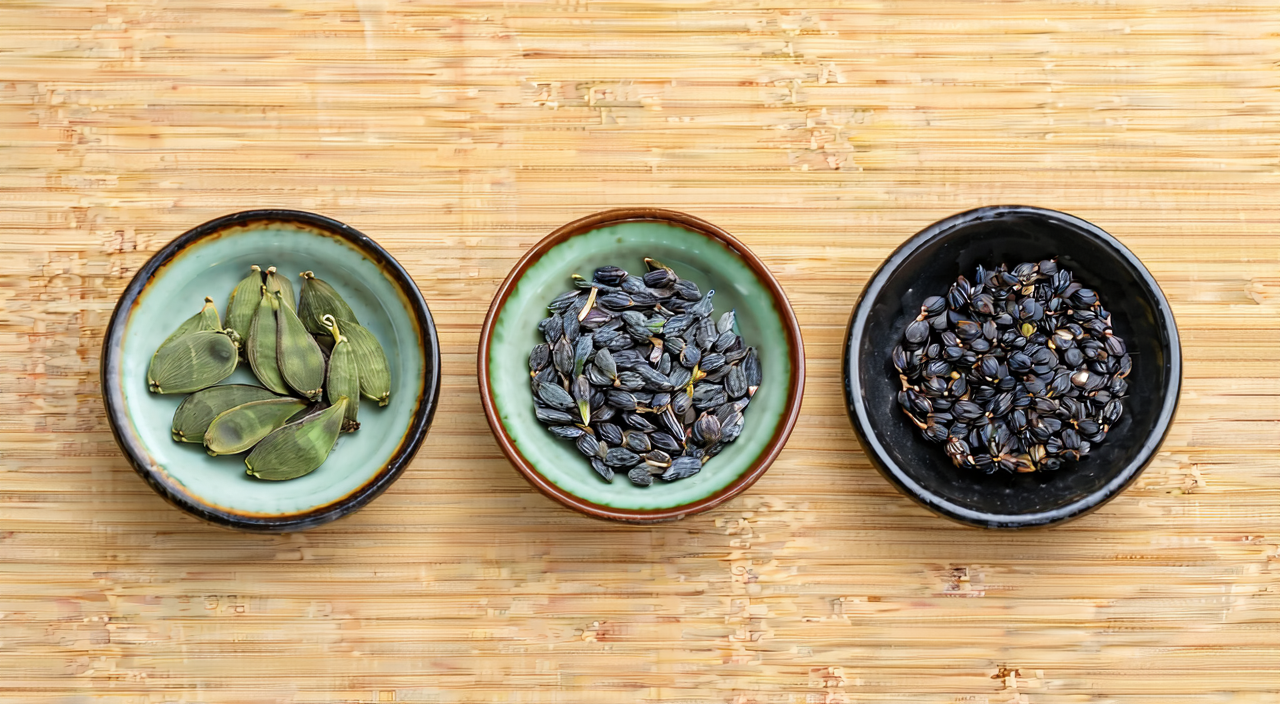
Shayuanzi, dodder seed, and chive seed are all seed-based medicinals. They sometimes appear together in formulas for securing essence and improving vision, yet their appearances have distinct features. They can be compared from three aspects: shape, color, and surface texture.
Shayuanzi: kidney-shaped and slightly flattened, with a smooth surface. The color is mostly greenish-brown or grayish-brown, and the depression at the hilum is obvious. Under magnification, the surface is relatively smooth, unlike dodder seed, which has obvious net-like markings.
Dodder seed: smaller in size, mostly nearly spherical or oval, with a grayish-brown or yellowish-brown surface and fine net-like markings. A common identification method is to soak dodder seed in hot water; after the seed coat breaks, a white coiled embryo can be seen, which is a fairly typical feature.
Chive seed: often semicircular or semi-oval, slightly flattened, with a black or grayish-black surface. One side is raised, and the other side has slightly depressed grooves; the texture is also relatively hard.
When comparing the three together, the greenish-brown color and kidney-shaped flat body of Shayuanzi are the most intuitive; dodder seed is more spherical with net-like markings; chive seed is black and semicircular. In actual identification, it is best to compare with physical samples or standard images rather than focusing on only one feature.
Which Formulas Use Shayuanzi?
Shayuanzi is not usually a chief medicinal in traditional formulas, but it is often used as an auxiliary ingredient for securing essence, reducing urination, and nourishing the liver to improve vision. The following formulas or types of formulas are often mentioned when learning about the uses of Shayuanzi.
Jinsuo Gujing Wan: traditionally often used for manifestations such as insecurity of the lower origin and insecurity of the essence gate. Shayuanzi is mostly used as an astringent in this formula. Different texts and products may have slightly different compositions, so “containing Shayuanzi” should not be equated with “suitable for your own use.”
Shayuanzi Wan: a traditional formula named after Shayuanzi, mostly designed around liver and kidney deficiency, soreness and weakness of the lower back and knees, and blurred vision. The specific composition varies according to different classical versions, so it can be understood as a traditional formula direction rather than a fixed recipe.
Formulas for improving vision and securing essence: this type of formula often combines Shayuanzi with dodder seed, goji berry, plantain seed, prepared rehmannia root, and other medicinals. The approach tends to regulate the liver and kidney together while addressing both astringing and vision improvement. Whether it is suitable needs to be judged comprehensively based on constitution, symptoms, formula composition, and product instructions.
It should be emphasized that the above formulas are only examples of traditional usage directions and should not be regarded as ready-to-use protocols. If you are interested in related products, consult a professional and evaluate them in light of your own situation.
What Precautions Should Be Taken When Using Shayuanzi?
Shayuanzi is warm in nature and tends to have an astringing effect, so not all constitutions are suitable for long-term or self-directed use. Special caution is needed in the following situations:
Those with obvious yin deficiency with fire excess: if you usually have dry mouth and throat, heat in the palms and soles, tidal fever, night sweats, and a red tongue with little coating, using Shayuanzi alone may worsen discomfort related to fluid depletion. In this case, it should not be eaten or steeped in water on your own.
Those with difficult urination: Shayuanzi traditionally has an astringing nature. When there is scanty urine, poor urination, or obvious hesitation, it should not be used casually, so as not to affect the normal rhythm of urination.
Those with constipation: especially people with dry, hard stools and difficult bowel movements should be more careful when using medicinals that are warm, drying, or astringing. Shayuanzi may not be suitable to use alone in such cases.
Long-term self-directed use: it is not recommended to treat Shayuanzi as a daily health ingredient by steeping it in water, cooking it into porridge, or increasing the dose casually over a long period. How long to use it, what to combine it with, and whether salt processing is needed should all be evaluated by a professional based on the specific situation.
If obvious discomfort occurs during use, or the original symptoms recur or worsen, or if there are accompanying symptoms such as anxiety, palpitations, chest tightness, pain, blood in the urine, or black stools, stop using it and consult a doctor or professional as soon as possible.
Summary
What is Shayuanzi? It is a traditional Chinese medicinal made from the mature seeds of flat-stem milkvetch. In appearance, it is kidney-shaped and slightly flattened with a smooth surface, clearly different from dodder seed and chive seed. Chinese medicine often understands it from the perspectives of tonifying the kidney and assisting yang, securing essence and reducing urination, and nourishing the liver to improve vision. In traditional formulas, it is mostly used in directions related to securing essence and improving vision. Before use, it should be judged according to constitution, especially paying attention to risks such as yin deficiency with fire excess, difficult urination, constipation, and long-term self-directed use. This article is for informational reference only and cannot replace professional diagnosis or treatment advice.