
What Is Shichangpu? Medicinal Parts, Identification, and Common Formulas
Shichangpu (Acorus tatarinowii rhizome) is a commonly used medicinal herb in clinical Chinese medicine, derived from the dried rhizome of Acorus tatarinowii, a plant in the Araceae family. Because of similar names and appearance, it is often mistaken for common Sweet Flag (Acorus calamus), but there are clear differences between the two in origin, morphology, and traditional usage. For those who wish to understand the appearance, medicinal parts, and practical applications of Chinese herbs, clarifying “what Shichangpu is” and how to correctly identify it is a crucial step to avoid confusion. This article will explore the visual characteristics, medicinal parts, traditional understanding, modern research interests, differentiation from Sweet Flag and Polygala, common formulas, and precautions for use, helping readers build a comprehensive understanding.
What Does Shichangpu Look Like? How to Identify It?
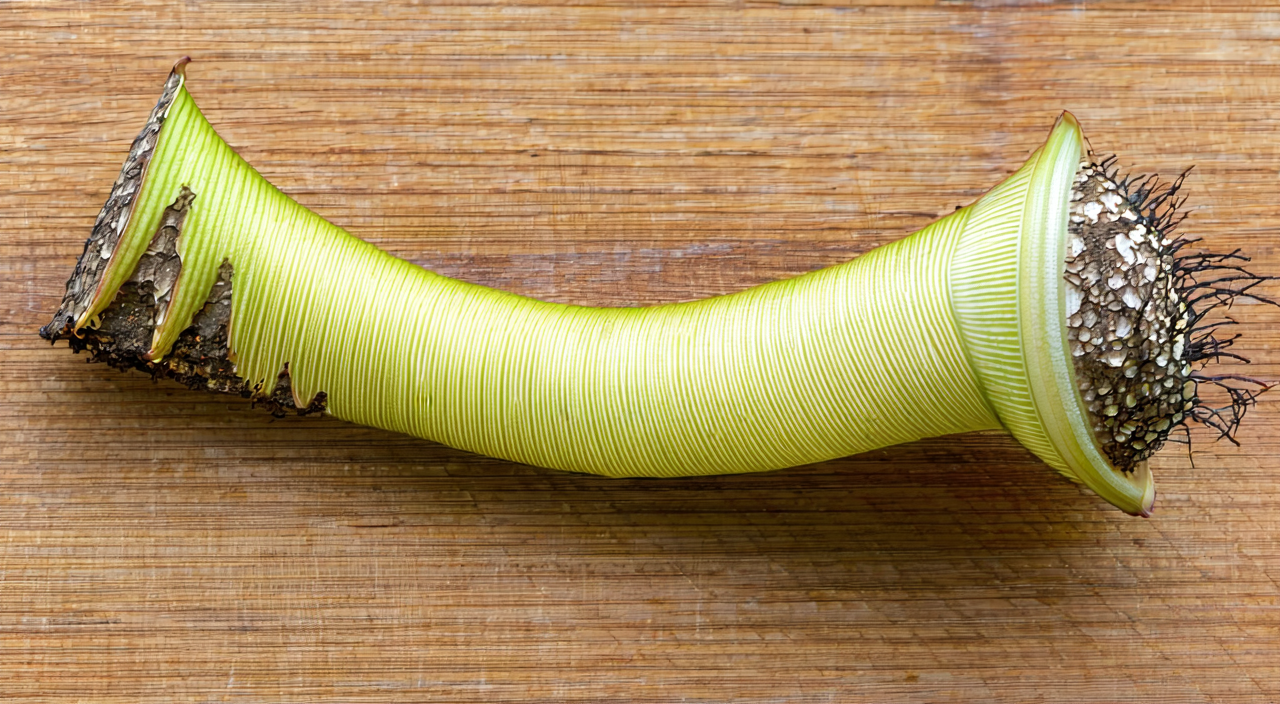
The dried rhizome of Shichangpu is flat-cylindrical, often curved and frequently branched, generally ranging from 3 to 20 cm in length and about 0.3 to 1 cm in diameter. The surface is brownish-brown or grayish-brown, relatively rough, with nodes spaced at varying densities; the internode length is about 2–8 mm. A very typical feature is the presence of numerous triangular leaf scars left on the rhizome, arranged alternately left and right, resembling the marks left after petioles fall off. Some surfaces may also show fine longitudinal wrinkles, remnant fibrous roots, or punctate root traces.
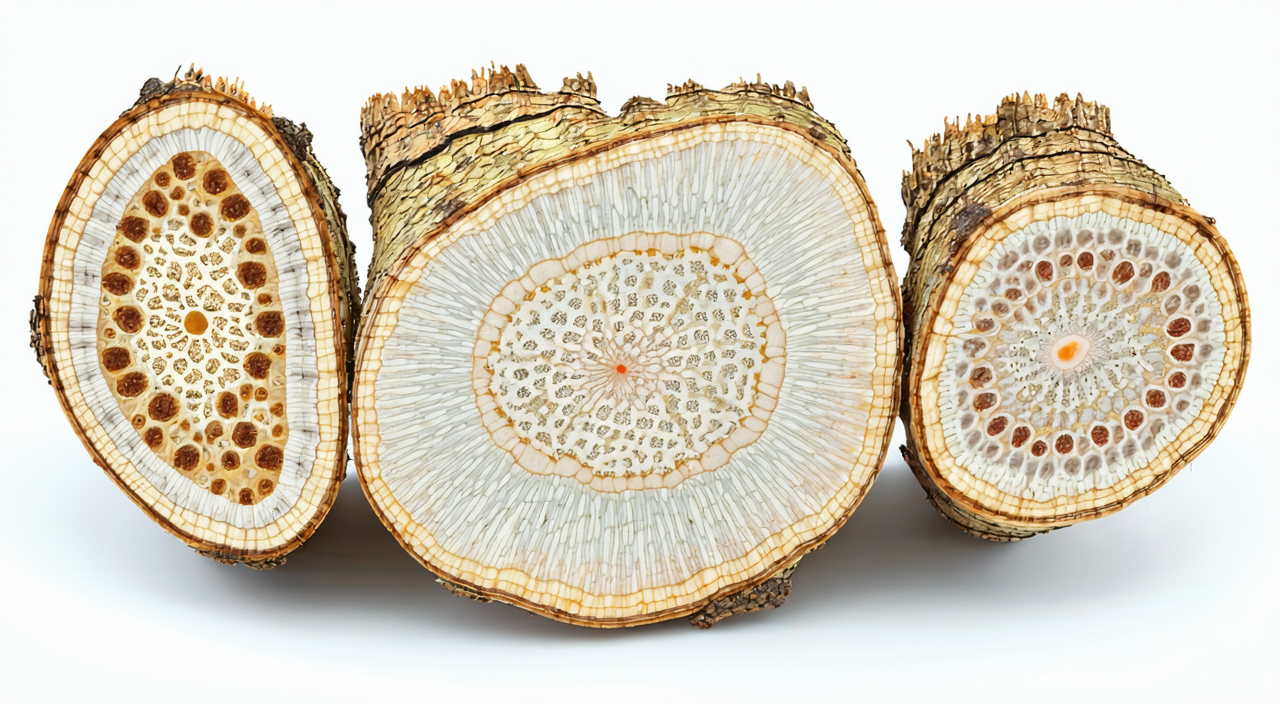
Although hard in texture, the fractured surface is fibrous, whitish or slightly reddish, with a clear endodermal ring and visible scattered vascular bundle dots and brown oil cells. It has a strong and distinctive aromatic odor, and tastes acrid and slightly bitter. This potent aroma is a key sensory characteristic for identifying Shichangpu and distinguishes it from other similar medicinal materials. Many people, when identifying it, will break off a small piece to smell it; a pure, rich fragrance usually indicates good quality.
What Is the Medicinal Part of Shichangpu?
The medicinal part used is its dried rhizome. Traditional harvesting typically occurs in autumn and winter, when the stems and leaves turn yellow, or in early spring before budding. After digging up, the fibrous roots and soil are removed, and it is dried in the sun or shade. Sometimes, before drying, thicker rhizomes are sliced to facilitate later formulation and decoction.
Processing usually avoids excessive manipulation to preserve its volatile components. In some regions, methods such as stir-frying with bran or processing with wine are used to moderate the herb’s nature or enhance certain effects. The raw and processed forms differ slightly in appearance: the raw product is brownish-yellow with a distinctly fibrous fracture surface; after stir-frying, the color deepens slightly, and the aroma may become more pronounced. Understanding the medicinal part and processing methods gives people an additional perspective for evaluating the material.
How Does Traditional Chinese Medicine Understand Shichangpu?
Within traditional Chinese medicine theory, Shichangpu is generally considered to have actions of opening the orifices, expelling phlegm, refreshing the mind and enhancing cognition, and transforming dampness to stimulate the appetite, mainly entering the Heart and Stomach meridians. Ancient herbal texts, drawing on its aromatic and dispersing nature, often state that it “can open the nine orifices, brighten the eyes and ears, and bring out the voice,” and may be used for patterns related to phlegm-turbidity or dampness-turbidity clouding the clear orifices.
For example, in situations where internal obstruction of phlegm-dampness manifests as a heavy sensation in the head, mental fatigue, unclear thinking, or memory decline, Shichangpu has traditionally been considered one of the herbs to help transform phlegm, open the orifices, and refresh the brain and boost cognition. For epigastric fullness, poor appetite, and a greasy tongue coating caused by dampness-turbidity obstructing the middle burner, it is often used together with herbs that transform dampness and harmonize the middle, assisting in restoring the spleen and stomach’s transportation and transformation functions.
It must be emphasized that these effects are based on traditional empirical summaries and serve more as a reference for a regulating approach. Whether it is suitable for a specific individual still requires a comprehensive differentiation of patterns and modern professional judgment. Self-directed use based on a single symptom is not recommended.
What Directions Do Modern Research Focus On?
Modern research on Shichangpu primarily focuses on its volatile oil components, especially asarone-type compounds. Some experiments suggest that the volatile oil of Shichangpu may have certain effects on the central nervous system, exhibiting tendencies toward sedation, anticonvulsant activity, or improvements in learning and memory in specific models. Additionally, some studies explore its potential for regulating gastrointestinal smooth muscle and anti-hypoxia effects.
However, most of these studies are still at the stage of animal experiments or in vitro tests, and there is still a considerable distance to direct application in daily health regulation. Furthermore, volatile oils may cause some irritation or discomfort at high concentrations; therefore, it is not advisable to use Shichangpu essential oil or excessively strong decoctions in large amounts or over a long period without guidance. Regarding safety, there is currently no long-term data support for unrestricted use, so a conservative approach should be maintained.
What Are the Differences Between Shichangpu, Sweet Flag, and Polygala?
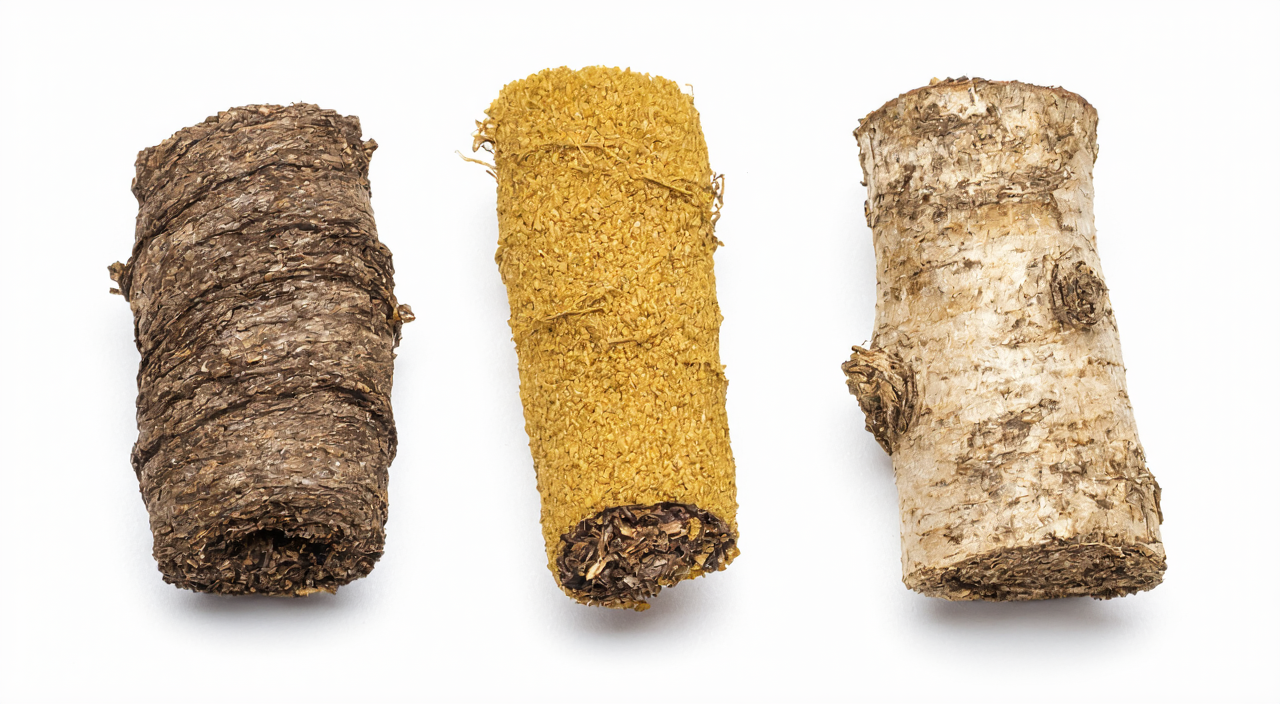
On the market, Shichangpu is easily confused with Sweet Flag (Acorus calamus). Occasionally, people also compare Shichangpu with Polygala (Polygala tenuifolia), because both are traditionally associated with “boosting cognition” and “calming the mind.”
Although Shichangpu and Sweet Flag both belong to the Araceae family, Sweet Flag is mostly the rhizome of Acorus calamus. It is thicker in appearance, with a diameter often exceeding 1–2 cm, sparser nodes, a spongier fracture surface, a heavier and somewhat muddy aroma that can sometimes carry an earthy smell. In traditional applications, Sweet Flag tends more toward transforming dampness, dispelling phlegm, and opening orifices, but its actions are not entirely identical to Shichangpu and cannot be substituted arbitrarily.
Polygala, on the other hand, is the root of Polygala tenuifolia, a plant in the Polygalaceae family. It is hard and brittle, with the cortex easily peeling off, and has a mild odor, completely different from the strong fragrance of Shichangpu. In traditional understanding, Polygala focuses more on calming the spirit and facilitating communication between the Heart and Kidney, while Shichangpu leans toward transforming phlegm to open the orifices and harmonizing the stomach to refresh the mind. The three come from different sources, with distinct characteristics and traditional perspectives, so conscious differentiation is required when purchasing and using them.
Which Formulas Use Shichangpu?
Shichangpu appears in many classic formulas, often paired with herbs that calm the mind, regulate qi, or transform phlegm. The following are a few common examples:
- Anshen Dingzhi Wan (Calm the Spirit and Settle the Mind Pill): Composed of Shichangpu, Polygala, fossilized teeth (Longchi), Poria, and others. Traditionally used in the context of heart qi deficiency and restless spirit, Shichangpu mainly exerts an orifice-opening and spirit-calming effect in the formula. If one sees manifestations such as mental restlessness, easy fright, and forgetfulness, this formula may serve as one direction for consideration. Whether it is suitable needs to be evaluated in combination with an individual’s constitution and professional judgment.
- Kaixin San (Joyful Powder): Contains four herbs: Shichangpu, Polygala, Ginseng, and Poria. It first appeared in Important Formulas Worth a Thousand Gold and is mostly used for traditional “forgetfulness” patterns. Here, Shichangpu works in tandem with Polygala, one opening and the other astringing, jointly promoting clarity of the heart orifice. Some modern studies have also looked into its potential for improving cognitive function, but this should not be directly equated with a therapeutic medication.
- Suhexiang Wan (Storax Pill): This is a formula that tends toward warm opening, containing multiple aromatic herbs such as storax, benzoin, borneol, and Shichangpu. It is often used for situations like sudden collapse with clenched jaw caused by cold blockage or phlegm-turbidity clouding the heart orifice. Shichangpu’s aromatic orifice-opening property assists the entire formula’s effect. However, this formula is intended for acute patterns and must be used under a physician’s guidance; individuals should not self-medicate.
- Ditan Tang (Phlegm-Flushing Decoction): This formula contains Shichangpu, arisaema with bile (Dan Nanxing), Pinellia, immature bitter orange, and others. It is mostly used for stiffness of the tongue with inability to speak, dizziness, and chest oppression caused by profuse phlegm congestion clouding the clear orifices. Shichangpu here transforms phlegm and opens the orifices, working with other ingredients to strengthen the phlegm-clearing effect. Formulas of this type are relatively potent and require strict pattern differentiation before use.
These formulas only illustrate a portion of the combined applications using Shichangpu and do not imply suitability for everyone. The selection of a formula should be based on a comprehensive evaluation of the entire body condition, symptom manifestations, and constitutional tendencies.
What Precautions Should Be Taken When Using Shichangpu?
Although Shichangpu is a traditional herbal medicine, there are several points to note when using it.
Firstly, because Shichangpu is acrid, aromatic, and dispersing, it is traditionally considered that those with yin deficiency with yang hyperaactivity, irritability with profuse sweating, or reckless movement of hot blood should use it with caution. Pregnant women should especially avoid it to prevent affecting fetal stability.
Secondly, the volatile oil of Shichangpu may cause local irritation or central excitation at high concentrations, and may even lead to adverse reactions. Therefore, it is not advisable to arbitrarily use large doses or prolonged decoction for drinking, nor is it recommended to use undiluted volatile oil in large amounts.
Moreover, because the appearance of the herbs is similar, on the market, Sweet Flag is occasionally sold as Shichangpu. When using, one must pay attention to source identification and choose products from reliable channels.
Furthermore, if you are taking other medications or have a special medical condition, you should consult a professional before using formulas or preparations containing Shichangpu to avoid interactions.
Finally, for severe, chronic, or recurrent mental symptoms such as persistent insomnia, significant anxiety, depression, palpitations, chest oppression, or serious digestive system discomfort, one should not rely solely on formulas containing Shichangpu for regulation and should promptly seek professional medical assistance.
Summary
Shichangpu is a widely used aromatic orifice-opening medicinal herb in Chinese medicine. Its flat-cylindrical rhizome with distinct nodes and triangular leaf scars is a key identification feature, and its strong fragrance also helps distinguish it from similar herbs like Sweet Flag. In traditional perspectives, it mainly acts to open orifices and expel phlegm, refresh the mind and enhance cognition, and transform dampness to stimulate the appetite. It is commonly found in classic formulas such as Anshen Dingzhi Wan and Kaixin San, but specific usage must be combined with an individual’s actual situation and professional guidance. This article is for popular science reference only and cannot replace professional diagnosis or advice.