
What is Gypsum? Identifying It, Its Medicinal Parts, and Common Formulas
When mentioning “gypsum,” many people’s first reaction may be the gypsum board or gypsum lines used in decoration. In Chinese medicine, there is also a medicinal substance called gypsum, but it is a completely different concept from construction plaster. Chinese medicinal gypsum comes from natural minerals of hydrous calcium sulfate, and can only be used after specific cleaning and processing. Understanding what it looks like, where it comes from, how it is understood in traditional Chinese medicine, and what to be aware of when using it, is very helpful for those who want to learn about mineral medicines.
What Does Gypsum Look Like? How to Identify It?
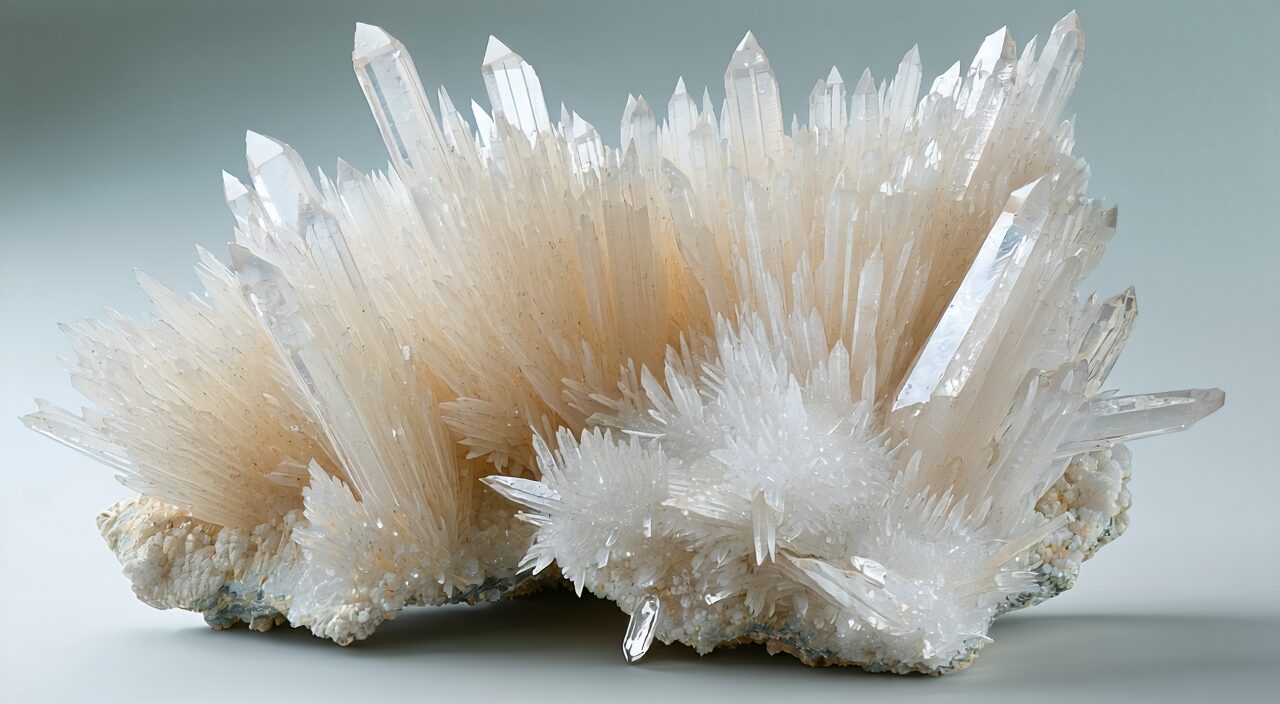
Gypsum’s typical appearance is a fibrous aggregate, often appearing as long blocks, slab-like pieces, or irregular chunks. The color is mainly white or grayish-white, sometimes with a slight yellowish or light brown tone. If you look closely at its fractured surface, you can see a luster resembling fine silk threads, which is called “silky luster,” somewhat like the soft sheen of silk.
There are two very practical features for identifying gypsum. First, it is relatively soft; a fingernail can scratch its surface, and when ground between fingers, it feels slightly slippery. Second, when broken into thin flakes, the flakes usually have a certain transparency or translucency. In addition, when drawn on an unglazed porcelain plate, it leaves a white streak, which is another helpful identification clue. If you see a mineral crystal that is granular or tabular but lacks a fibrous feel, it is probably not the fibrous gypsum commonly used in Chinese medicine.
What Is the Medicinal Part of Gypsum?
The medicinal part of Chinese gypsum is the natural calcium sulfate mineral, mainly composed of calcium sulfate dihydrate. After mining, the surface mud, sand, and impurities need to be removed, and then it is cleaned. In traditional use, gypsum can be divided into two main types: raw gypsum and calcined gypsum. Raw gypsum is washed, dried, and then directly broken into small pieces or ground into fine powder for use; calcined gypsum is clean gypsum calcined at high temperature until it becomes loose and friable, and then ground into fine powder.
Here is a common point of confusion: the gypsum used in construction is mostly industrially calcined to form plaster of Paris, aimed at shaping and rapid setting. It differs from natural gypsum used in Chinese medicine in terms of impurity control and processing concepts. Chinese medicinal gypsum has specific mineral sources and processing standards; it cannot simply be replaced with industrial gypsum.
How Does Traditional Chinese Medicine View Gypsum?
In traditional Chinese medicine theory, gypsum is characterized as very cold in property, mainly sweet and pungent in flavor, and primarily enters the lung and stomach meridians. Its basic actions are clearing heat, purging fire, relieving restlessness, and quenching thirst.
When external pathogenic heat is prevalent and the body shows high fever, irritability, thirst with a desire for cold drinks, raw gypsum is often included in treatment strategies. For panting and cough caused by lung heat, or dry mouth and swollen, painful gums due to stomach fire rising, it is also traditionally used in combination with other herbs. Calcined gypsum is mainly used externally; its heat-clearing effect is relatively reduced, while its astringent, tissue-generating, and dampness-absorbing properties become more prominent. Therefore, it is more commonly applied in external conditions such as non-healing sores, damp itching, and oozing.
Focus of Modern Research
Modern research on gypsum mainly focuses on its chemical composition and physical properties. The main component, calcium sulfate dihydrate, loses its crystal water when heated and calcined, turning into anhydrous calcium sulfate or hemihydrate calcium sulfate. This change explains the functional differences between raw and calcined gypsum. Some experimental observations found that trace amounts of calcium ions and other minerals may dissolve out in gypsum decoctions. Meanwhile, some studies have attempted to explore its mechanisms from anti-inflammatory and antipyretic perspectives, but overall, the evidence is still accumulating, and its traditional uses cannot be simply explained by a single component. Therefore, the understanding of gypsum still needs to combine traditional experience and individual conditions.
What Is the Difference Between Raw Gypsum and Calcined Gypsum?
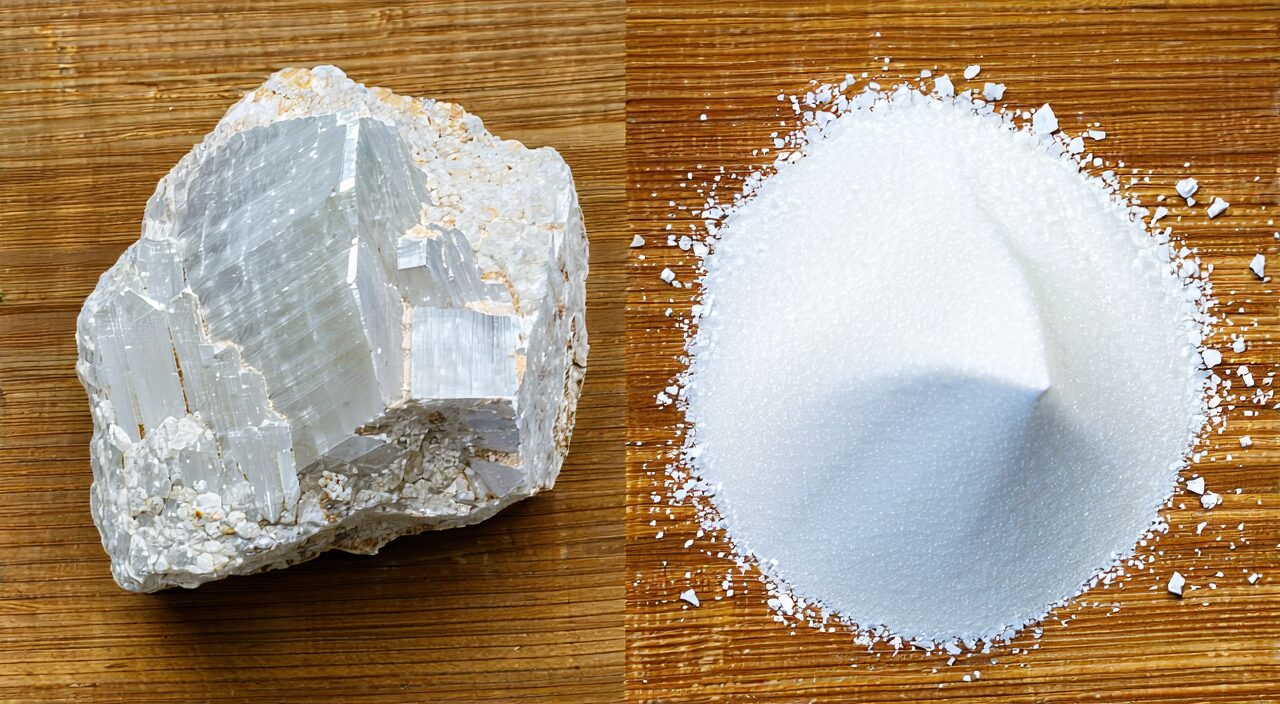
Although raw gypsum and calcined gypsum share the same origin, they differ significantly in appearance, properties, and usage occasions, and cannot be interchanged.
In terms of processing, raw gypsum is directly crushed or ground after cleaning, retaining its original fibrous crystalline structure. Calcined gypsum must be calcined at high temperature until it becomes loose; it loses almost all its crystal water and becomes an extremely fine white powder that feels rough, not smooth, when rubbed between fingers. Regarding functional emphasis, raw gypsum focuses on clearing heat and purging fire, mainly for internal use to address high fever, irritability, thirst, and lung heat cough. Calcined gypsum emphasizes absorbing dampness, healing sores, generating tissue, and stopping bleeding; it is generally used externally only and is unsuitable for internal use.
It is particularly important to note that some people may have the misconception that “the calcined form is more effective” and attempt to use calcined gypsum internally in place of raw gypsum. This is not recommended in traditional practice. Calcined gypsum has lost its core heat-clearing property; internal use not only fails to achieve the desired effect but may also place an unnecessary burden on the spleen and stomach.
Which Formulas Use Gypsum?
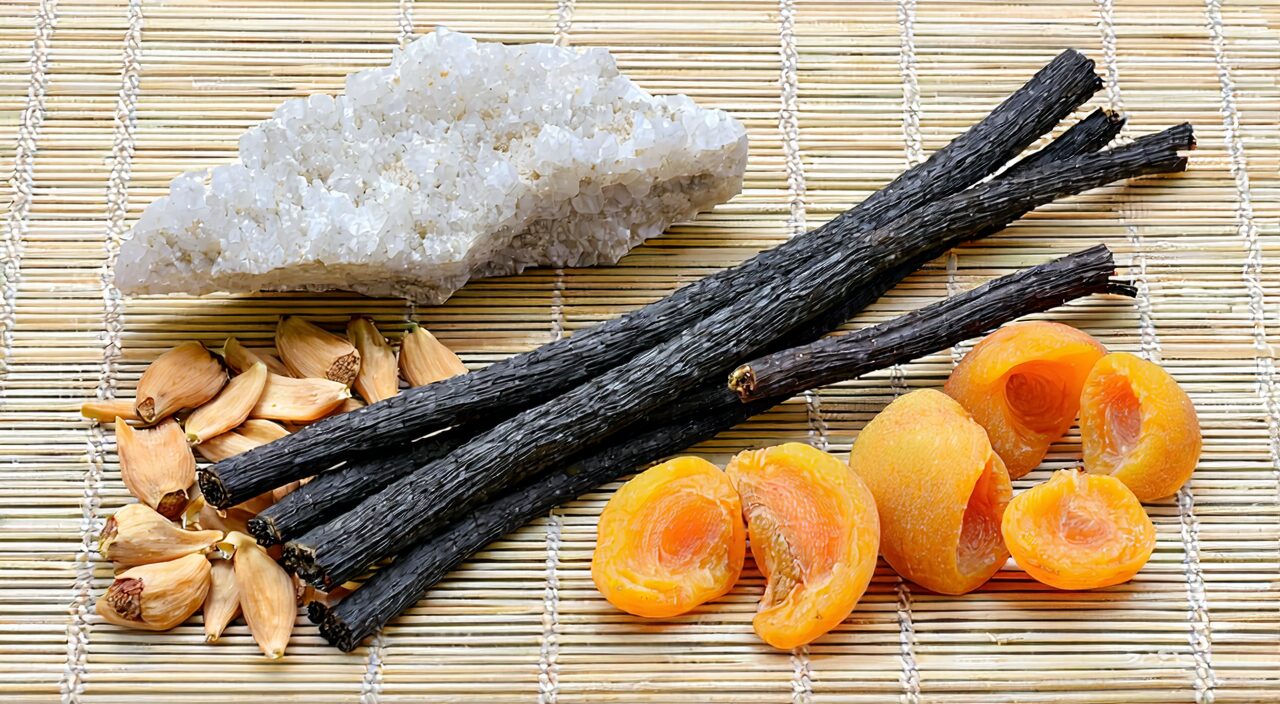
Gypsum appears in many classic formulas. Here are a few common examples that illustrate different aspects of its combination strategies.
Bai Hu Tang (White Tiger Decoction) is a very representative heat-clearing formula, composed of gypsum, zhi mu (Anemarrhena), gan cao (licorice), and jing mi (rice). Traditionally, it is used as a reference when external heat diseases present with persistent high fever, profuse sweating, severe thirst, and a large, surging pulse. Ma Xing Shi Gan Tang (Ephedra, Apricot Kernel, Gypsum, and Licorice Decoction) combines gypsum with ma huang (ephedra), xing ren (apricot kernel), and gan cao, and is often used for cough, panting, and fever caused by pathogenic heat congesting the lung, focusing on clearing lung heat and relieving panting. Zhu Ye Shi Gao Tang (Lophatherum and Gypsum Decoction) pairs gypsum with zhu ye (lophatherum), mai dong (ophiopogon), ban xia (pinellia), and others. It is commonly used in the later stages of febrile diseases when qi and fluids are damaged but residual heat remains, manifesting as deficiency irritability, dry heaves, and spontaneous sweating. Qing Zao Jiu Fei Tang (Dryness-Clearing and Lung-Rescuing Decoction) is a formula for treating warm-dryness damaging the lung; gypsum is used together with sang ye (mulberry leaf), mai dong, e jiao (donkey-hide gelatin), and others to clear dryness and moisten the lung.
It is important to emphasize that these formulas each have their own focus in composition and application. Individual constitution and specific manifestations vary greatly. Whether a particular formula is suitable should be comprehensively judged after fully understanding one’s personal condition and seeking professional advice. Self-prescription is not advisable.
What Precautions Should Be Taken When Using Gypsum?
Although gypsum is a mineral medicine, it is equally important not to overlook individual differences and personal conditions when using it. For people who usually have a spleen-stomach cold deficiency, tend to experience cold abdominal pain, poor appetite, loose stools, or aversion to cold and preference for warmth, raw gypsum should be used with caution in traditional practice because its extremely cold nature may further damage spleen and stomach functions.
At the same time, it must be reiterated that calcined gypsum cannot replace raw gypsum for internal use; their application directions are entirely different. In addition, as gypsum is a mineral medicine, the purity of its source is especially important. One should choose genuine products that meet medicinal standards and avoid contamination with other harmful minerals or impurities. In terms of dosage, even experienced practitioners adjust it according to actual manifestations and constitutional characteristics. Individuals should not arbitrarily use large doses or take it long-term without guidance. If high fever persists or recurs, or if there are obvious symptoms such as cough, chest pain, shortness of breath, or severe digestive discomfort, one should promptly consult a doctor rather than relying solely on a single mineral drug.
Summary
The mineral medicine gypsum has a long history of use in Chinese medicine. The key to identifying it lies in its fibrous structure and silky luster, while the functional differences between raw and calcined gypsum determine their completely different usage scenarios. This knowledge can give us a clearer outline of gypsum, but specific application involves complex constitutional differentiation and formula balancing. Self-prescribing and self-testing are not recommended. This article is for informational reference only and cannot replace professional diagnosis or treatment advice.