
What Is Pomegranate Peel? Medicinal Part, Identification, and Common Formulas
For many people, pomegranate is a juicy and sweet fruit, but the “pomegranate peel” used in traditional Chinese medicine has little to do with the fresh fruit pulp we commonly eat. It is the dried rind of ripe pomegranates, used as a medicinally astringent substance. For overseas Chinese readers seeking natural astringent and securing strategies, understanding what pomegranate peel is, how to identify it, and how it differs from similar herbs like chebula (hezi) and mume (wumei) is the prerequisite for avoiding misuse. Below, we will explore its appearance, medicinal part, traditional understanding, formula examples, and precautions.
What Does Pomegranate Peel Look Like? How to Identify It?
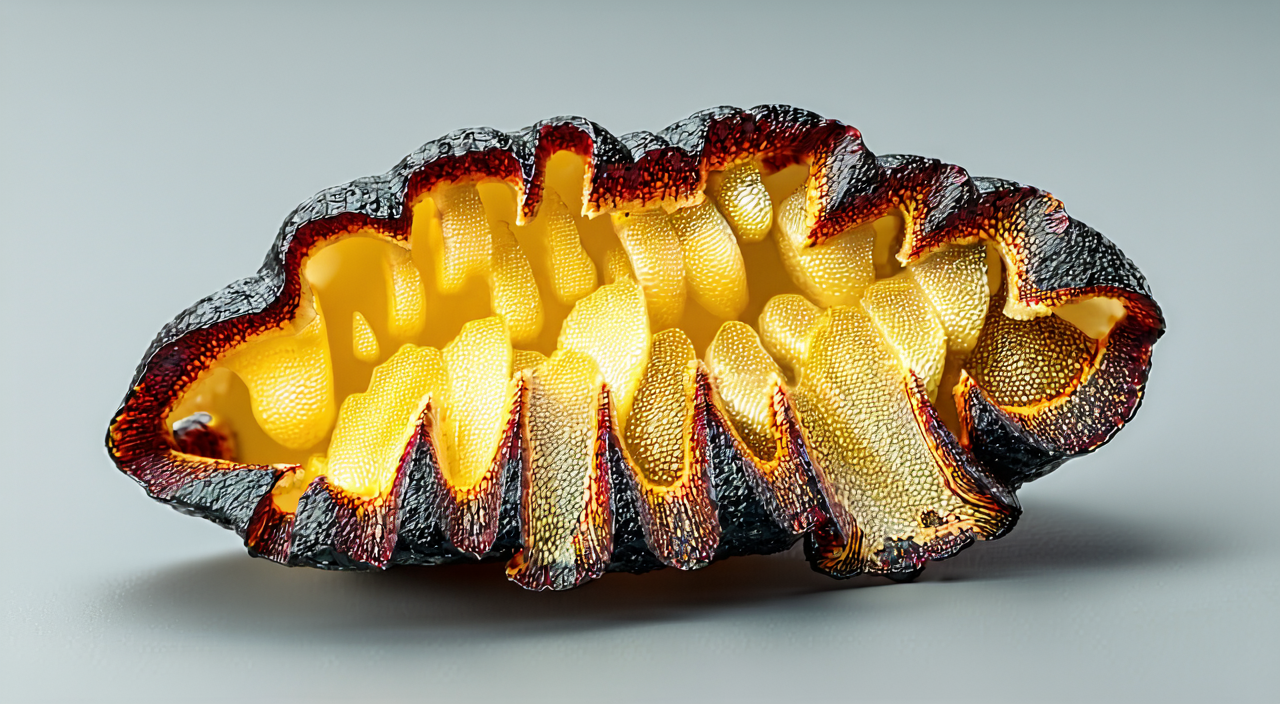
The dried pomegranate peel is usually in the form of irregular slices, curled ladle-shaped pieces, or chunks of varying sizes. It is hard and brittle, breaking easily. The outer surface is mostly reddish-brown, brownish-yellow, or dark purplish brown with a slight luster; some pieces still show remnants of the persistent calyx at the top. The inner surface is bright yellow, brownish-yellow, or bears dark brown vein-like markings, appearing relatively rough.
In terms of odor, good-quality pomegranate peel has almost no distinct smell, but when chewed, it clearly produces a strong astringent taste – a characteristic brought by its tannins and other constituents. When selecting, pieces with uniform color, large size, dry and free of mold, and a distinctly yellow inner surface are preferred. Because pomegranate peel easily absorbs moisture and discolors, it should be stored away from damp environments. Familiarity with these visual traits helps distinguish pomegranate peel from other peel-type herbs that look similar.
What Is the Medicinal Part of Pomegranate Peel?
The medicinal part of pomegranate peel is the ripe fruit rind of Punica granatum L. It is usually collected in autumn when the fruit is fully ripe. The peel is removed, and any remaining internal membranes, seeds, and impurities are cleaned away before it is dried in the sun or at low temperatures. It is important to note that the commonly eaten pomegranate pulp and seeds are not used medicinally. The properties of fresh peel are very different from those of the dried product, so they cannot be substituted for one another.
If the peel is not dried promptly after collection, it may ferment and discolor, affecting its quality. Traditionally, it is emphasized to use peels from fully ripe fruits, because unripe peels may have insufficient active constituents and are smaller and thinner. In the modern herbal market, pomegranate peel is mostly sold as dried decoction pieces. It can be decocted or ground into powder for use, and cleanliness should be verified during any further processing.
How Does Traditional Chinese Medicine View Pomegranate Peel?
From the perspective of traditional Chinese medicine, pomegranate peel is sour and astringent in taste, warm in nature, and enters the Large Intestine meridian. These properties make it one of the representative herbs for astringing, securing, and checking diarrhea. In traditional thinking, pomegranate peel is commonly used for chronic diarrhea, chronic dysentery, bloody stools, and rectal prolapse – conditions requiring “astringent” action. It is also applied for flooding and spotting (metrorrhagia), leukorrhea, and seminal emission, which belong to patterns of unconstrained discharge. It may additionally be used as an auxiliary approach for intestinal parasite-related abdominal pain caused by roundworms, hookworms, or tapeworms.
The essence of this astringent action is often described as “sour-astringent constraining.” It helps stabilize the intestinal environment by tightening the intestinal qi and reducing fluid loss. For individuals with loose stools over a long period or a tendency to prolapse due to spleen-stomach deficiency-cold and insecure middle qi, pomegranate peel may be a direction worth understanding. However, it is generally not suitable for use in the early stages of acute damp-heat diarrhea or dysentery, or when there is unresolved internal food stagnation.
In traditional formulas, other herbs are often combined according to the specific situation. For example, when damp-heat is prominent, it is combined with coptis (huanglian) and phellodendron (huangbai); when deficiency-cold is more prominent, it is combined with dried ginger (ganjiang) and codonopsis (dangshen). This allows the astringent strength of pomegranate peel to be utilized while avoiding the risk of simply astringing and trapping pathogenic factors.
A Brief Look at Modern Research
Modern studies have found that pomegranate peel is rich in tannins, such as punicalagin, gallic acid, and ellagic acid. These substances form the important material basis for its astringent and bowel mucosa-constricting effects. In addition, pomegranate peel contains flavonoids, alkaloids, and other constituents. In experimental studies, it has shown certain antioxidant, antimicrobial, and antiparasitic activities. These findings provide a partial modern perspective for the traditional uses of pomegranate peel.
However, these studies have mainly been conducted in vitro or on animal models. When used for daily health maintenance, they should still be considered in the context of individual constitution and actual conditions, and cannot be simply equated with clinical efficacy. At present, pomegranate peel is still used more as a traditional astringent herb rather than a modern pharmaceutical substitute.
Pomegranate Peel, Chebula, and Mume: Differences Among Three Astringent Herbs
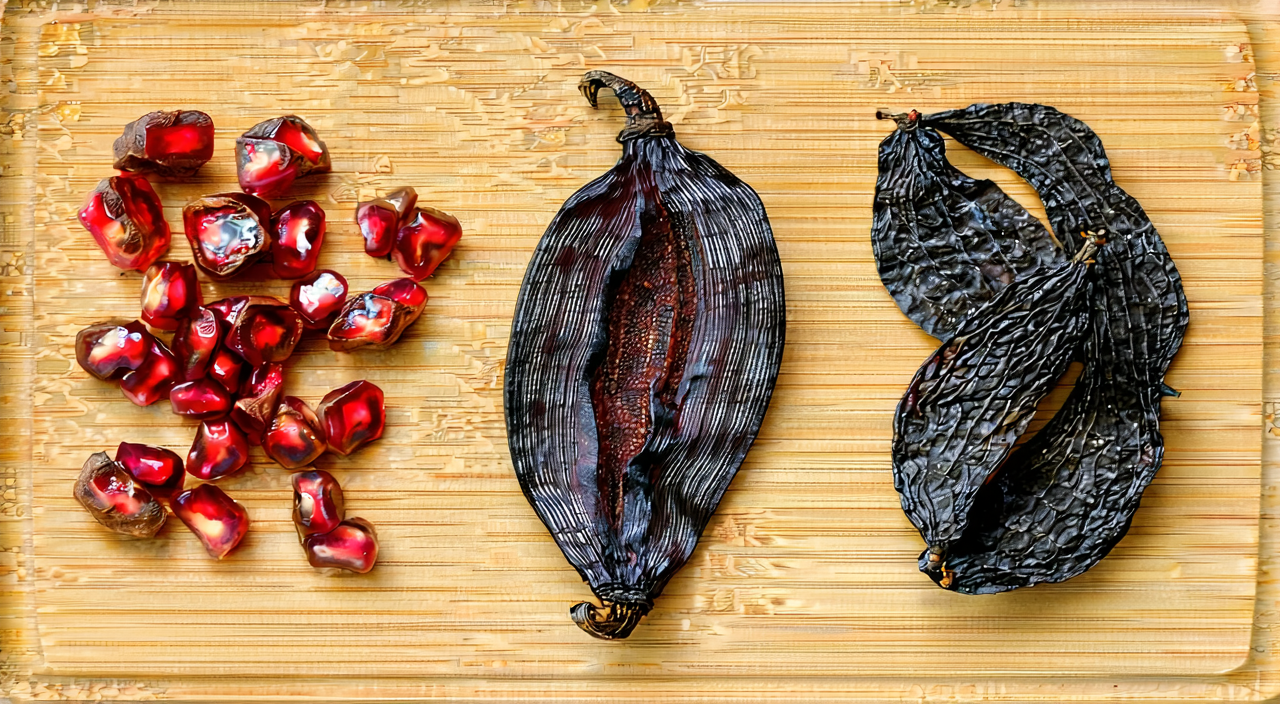
Pomegranate peel, chebula (hezi), and mume (wumei) are sometimes mentioned together in astringent formulas, but their origins and characteristics differ significantly. Pomegranate peel is the ripe fruit rind of pomegranate; only the outer and middle pericarp are used medicinally, excluding pulp and seeds. Chebula is the dried ripe fruit of Terminalia chebula, a plant of the Combretaceae family; the whole fruit is used, with a yellowish-brown or dark brown surface bearing fine longitudinal wrinkles and thicker flesh. Mume is the nearly ripe fruit of the plum (Prunus mume) from the Rosaceae family, processed by low-temperature drying and stewing; its surface is jet-black, the flesh is wrinkled and pliable, and it has a distinct smoky smell and sour plum taste.
In terms of taste and nature, pomegranate peel is sour, astringent, and warm, focusing on astringing the intestines, checking diarrhea, stopping bleeding, and expelling parasites. Chebula is bitter, sour, astringent, and neutral, more often used to astringe the lungs and direct qi downward, check diarrhea, and in some usages can also benefit the throat and restore the voice. Mume is sour, astringent, and neutral, excelling at astringing the lungs, checking diarrhea, generating fluids, and calming roundworms. Pomegranate peel acts more specifically on the intestines; chebula covers both the lungs and the intestines; while mume can generate fluids in addition to checking diarrhea, making it suitable for fluid-damage thirst and roundworm colic. Distinguishing these three herbs helps in understanding the intended design of various formulas more clearly.
Introduction to Common Formulas Containing Pomegranate Peel
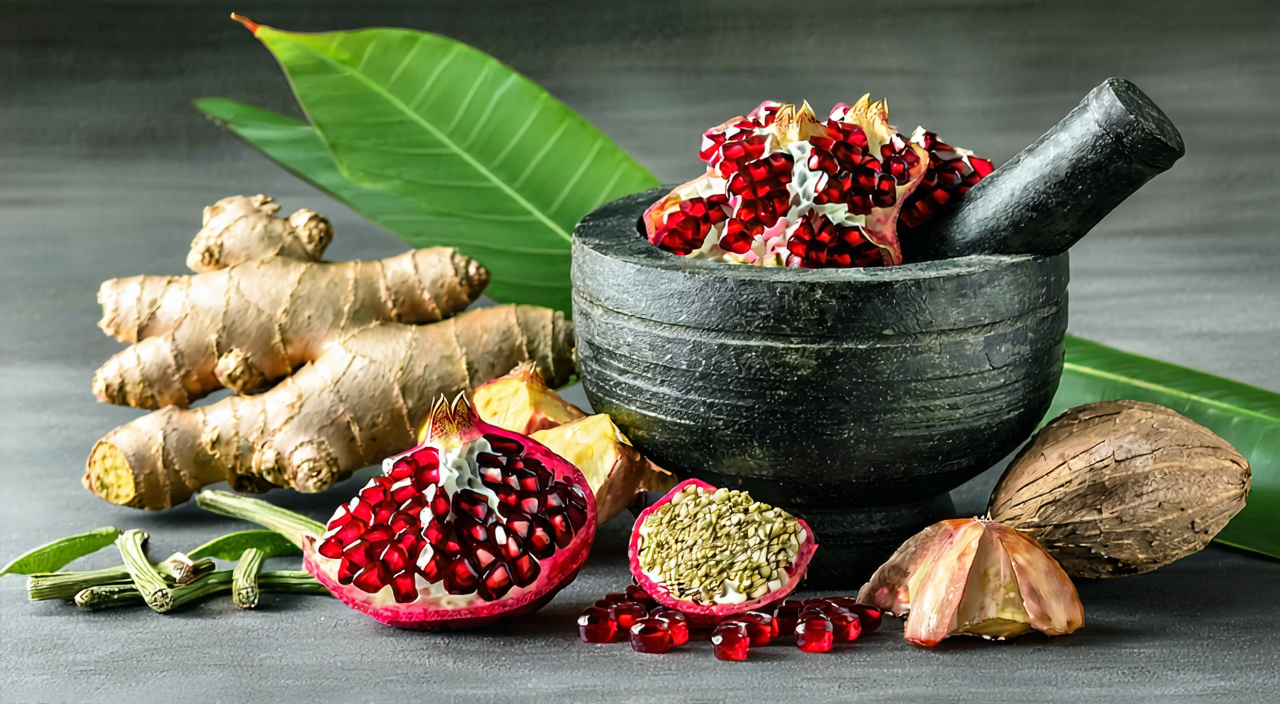
Pomegranate peel plays the core role of astringing the intestines in many classic formulas. Several representative directions are listed below for reference.
Shiliupi San (Pomegranate Peel Powder): This formula uses pomegranate peel as the chief herb, often combined with coptis (huanglian), phellodendron (huangbai), and donkey-hide gelatin (ejiao). Traditionally, it is used for chronic heat dysentery that has not resolved or for cases with significant rectal bleeding. In the formula, pomegranate peel astringes the intestines and checks diarrhea, while coptis and phellodendron clear damp-heat, reflecting the principle of concurrently clearing while astringing. For chronic diarrhea with lingering damp-heat, this may be a direction worth understanding, but it is not appropriate when damp-heat is severe and stools are sticky and foul-smelling.
Guchang Wan (Secure the Intestines Pill): This type of formula often combines pomegranate peel with chebula (hezi), dragon bone (longgu), calcined alum (kufan), dried ginger (ganjiang), and others, aiming to strengthen astringent and securing action. Traditionally, it is used for chronic diarrhea, unconstrained discharge, or even rectal prolapse in patterns leaning toward large intestine deficiency-cold and slippage. Pomegranate peel and chebula both astringe, dried ginger warms the middle, and dragon bone and calcined alum reinforce the securing effect. It may correspond well to cases of spleen-stomach deficiency-cold with sinking of middle qi, but it is not suitable during patterns of excess heat with food accumulation, or during colds and fevers.
Antiparasitic Formulas: Pomegranate peel also appears in some formulas for expelling parasites, often combined with betel nut (binglang), Quisqualis indica (shijunzi), pumpkin seeds (nanguazi), and others, as an auxiliary approach for intestinal parasites such as roundworms, hookworms, and tapeworms. Its antiparasitic action is largely attributed to the alkaloids it contains. In traditional usage, pomegranate peel may be decocted alone or together with betel nut and taken on an empty stomach. However, modern antiparasitic medications are well developed, and pomegranate peel in such directions is more of a traditional empirical reference. It is not recommended to replace standard treatment with it on your own.
It should be emphasized that the specific combinations, dosages, and applicable conditions of these formulas vary greatly. Whether a formula suits a particular individual must be determined based on symptoms, constitution, and professional judgment; it should not be applied blindly.
What Precautions Should Be Taken When Using Pomegranate Peel?
Although pomegranate peel comes from a common fruit, when used as a medicinal substance, its nature and concentration are entirely different from eating fruit peel. The following points require special attention.
First, those with constipation or dry stools should not use it casually. Pomegranate peel’s astringent nature is quite strong and may worsen bowel movement difficulties. Second, in the early stage of acute damp-heat diarrhea or dysentery, characterized by urgent and frequent bowel movements, anal burning, marked tenesmus, and a slimy yellow tongue coating, premature astringing may trap damp-heat and hinder recovery. Additionally, people with internal excess heat and food accumulation presenting with significant abdominal bloating should avoid solely astringing methods to prevent “keeping the enemy trapped inside.”
The use of long-term astringent herbs is best done under professional guidance; self-administering them over a prolonged period is not recommended. If diarrhea does not improve persistently, or if it is accompanied by fever, severe abdominal pain, bloody stools, or significant weight loss, prompt medical attention should be sought rather than relying on a single herb.
Another easily overlooked issue: when using fresh or dried pomegranate peel at home, be cautious about pesticide residues and mold risks. Commercially available pomegranates for fresh consumption may have been treated with preservatives or have pesticide residues on the peel. Simply peeling the fruit and sun-drying the rind does not equate to the processing of Chinese herbal decoction pieces. Medicinal pomegranate peel must undergo proper processing and cleaning. Peel that is moldy, discolored, or insect-infested should not be used.
Summary
Pomegranate peel is a traditional herb whose core characteristic is astringency and securing. Its identification points include irregular flaky or ladle-like shape, reddish-brown outer surface and yellow inner surface, and a strong astringent taste. It is clearly distinguishable from the whole fruit of chebula and the jet-black fruit of mume. In formulas, it is commonly used in combinations for chronic diarrhea, chronic dysentery, and some antiparasitic strategies. When used in the right context, it may offer an auxiliary approach for intestinal slippage and discomfort. However, it should not be used in cases of constipation, damp-heat retention with food stagnation, or early-stage acute diarrhea and dysentery. Everyday fruit peel is not equivalent to medicinal decoction pieces. This article is for informational reference only and cannot replace professional diagnosis or treatment advice. If you have persistent discomfort, consult a doctor or qualified professional promptly.