
What Is Pine Knot? Medicinal Parts, Identification, and Common Formulas
Pine knot is neither the resin that flows from pine trees nor an ordinary plank cut from pine wood. Instead, it is the knotty, woody part formed on the branches and trunks of pine-family plants. In traditional herbal medicine and materia medica, pine knot is commonly sourced from the branch and trunk knots of pine species such as Chinese red pine and masson pine. Because it can be confused with pine rosin, ordinary wood, and certain reddish-brown medicinal materials, many people first ask, “What is pine knot?” and “What does pine knot look like?” before learning more about its medicinal parts and traditional uses. The following sections provide an overview of its appearance, sources, traditional understanding, formulas, and safety considerations.
What Does Pine Knot Look Like? How Is It Identified?
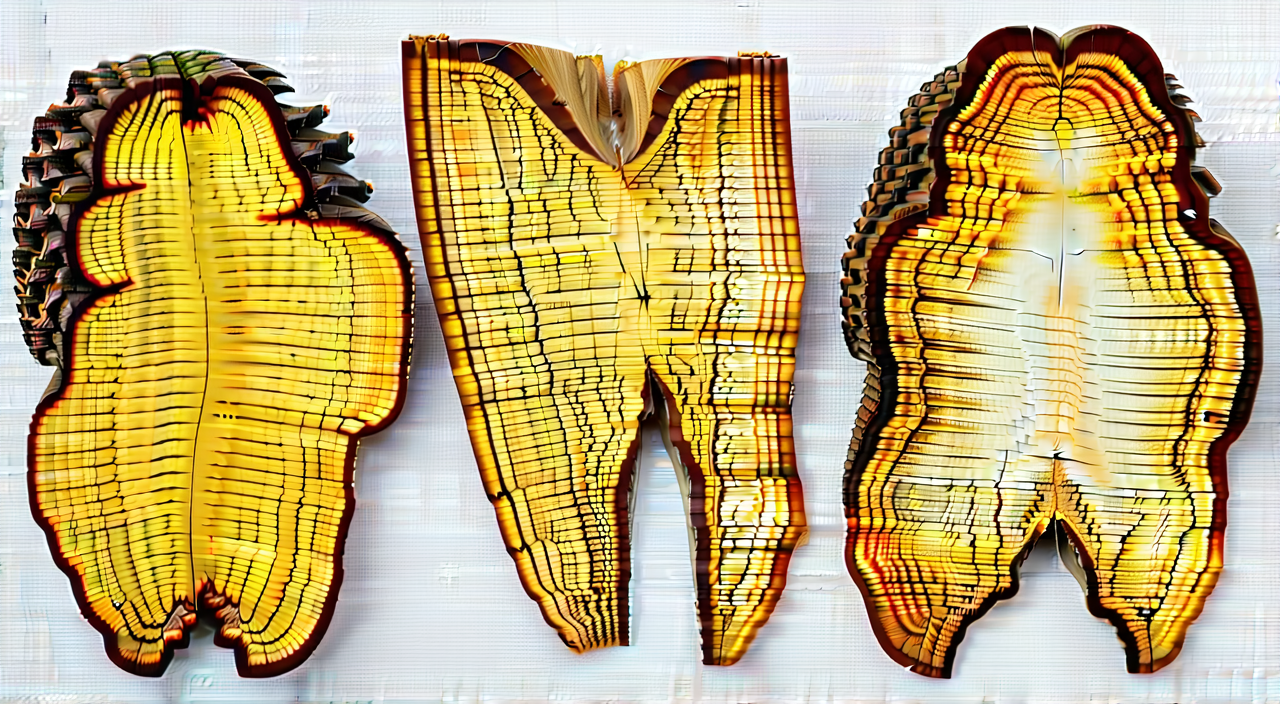
Pine knot usually appears as irregular blocks, short sections, or ring-like pieces of wood, and its size can vary considerably. The surface is generally yellowish-brown, brown, reddish-brown, or a similar shade. After cutting and drying, its color may vary depending on the age of the tree, the part collected, processing methods, and storage conditions. The cut surface generally shows wood grain, annual-ring-like structures, or prominent fiber patterns. Some materials may also contain small resin canals.
It often has the characteristic aromatic scent of pine, which is usually more distinctive than the smell of ordinary dried wood. However, the strength of the aroma is affected by the degree of drying and storage time. The material is generally hard, and the cut surface may not be even. Some pieces may retain traces of bark or resin. Identification should not be based on color or smell alone; the source, shape, cross-sectional features, and reliable herbal-material information should all be considered.
It is important to note that pine knot is not the same as landscaping wood, construction timber, or other pine materials treated with preservatives, fumigants, paint, or chemicals. Even if untreated pine knots obtained through non-medicinal channels look similar, they should not be used directly as Chinese herbal medicine.
What Is the Medicinal Part of Pine Knot?
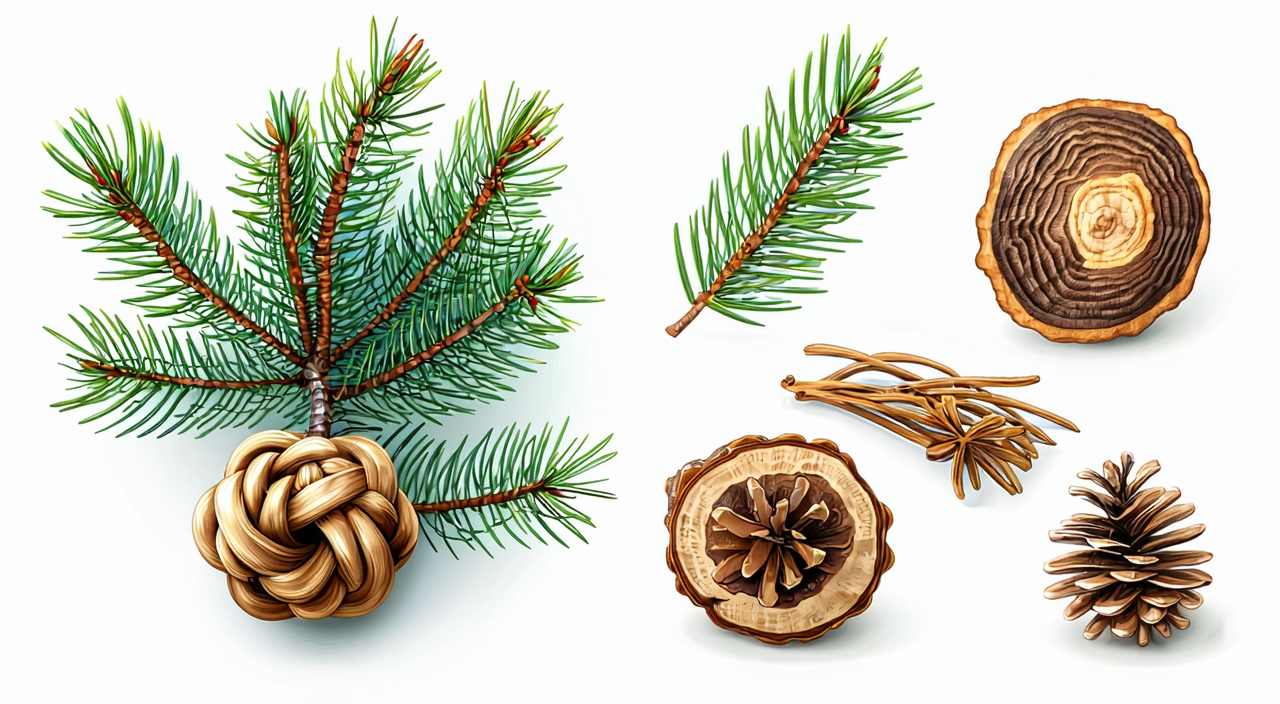
According to the traditional definition of the material, the medicinal part of pine knot is primarily the knotty or ring-like woody section formed on the branches and trunks of pine trees such as Chinese red pine and masson pine. It does not refer to pine needles, pinecones, pine resin, or pine bark. These knots are woody structures formed during the growth of the branches and trunks. They are often denser than the surrounding wood, and their grain and resin canals may be more concentrated.
Traditional collection generally involves selecting suitable branch or trunk knots, removing soil, external impurities, and some rough bark, then cutting the material into slices, sections, or small pieces before drying it for later use. Differences in origin, harvesting season, and processing specifications may affect the shape, thickness, color, and aroma of the pieces. In practice, the material should come from a reliable source, have clear labeling, and meet the applicable quality requirements.
Although the name pine knot includes the word “pine,” this does not mean that every part of a pine tree can be substituted for it. Pine needles, pine resin, and pine pollen each have different sources and traditional uses. Similar names do not mean that medicinal materials can be used interchangeably.
How Does Traditional Chinese Medicine Understand Pine Knot?
Traditional Chinese medicine commonly understands pine knot from the perspectives of dispelling wind and drying dampness, relaxing the sinews, unblocking the channels, and relieving pain. These traditional approaches are often associated with patterns involving wind-damp obstruction, impaired movement of the muscles, bones, and joints, limb contraction, or localized soreness. However, TCM emphasizes pattern differentiation. A person’s heat or cold pattern, deficiency or excess, qi and blood status, and specific symptoms may vary, so pine knot should not be applied automatically based on a single discomfort.
In traditional combinations, pine knot may sometimes be used with herbs associated with dispelling wind, eliminating dampness, unblocking the channels, or promoting blood circulation. The specific combination, dosage, processing method, and duration of use should be determined according to the source of the formula and the individual’s circumstances. The traditional uses described here are an introduction to TCM theory and historical applications, not modern medical diagnosis or treatment advice.
If joint or muscle discomfort persists, recurs frequently, or is accompanied by significant swelling, fever, limited movement, chest tightness, palpitations, or other concerning symptoms, consult a doctor or qualified professional first to investigate possible underlying conditions.
What Can Modern Research Tell Us?
Modern research may examine pine knot from the perspectives of its volatile compounds, resin-related constituents, xylem components, and findings from in vitro or animal studies. Some studies may focus on its antioxidant or anti-inflammatory properties or its effects on local tissue responses. However, the source of the material, extraction method, and experimental conditions are not always consistent across studies. Experimental findings cannot be directly equated with effects in humans.
For overseas consumers, it is important to distinguish between traditional materia medica records, laboratory research, and clinical evidence when reviewing related information. A single constituent or isolated experiment cannot establish conclusions that apply to everyone, and it should not be used as a basis for adjusting dosage or replacing standard medical care. When considering herbal products, decoctions, or formulas containing pine knot, evaluate the product instructions, personal circumstances, and professional advice together.
How Does Pine Knot Differ from Pine Rosin and Sappanwood?
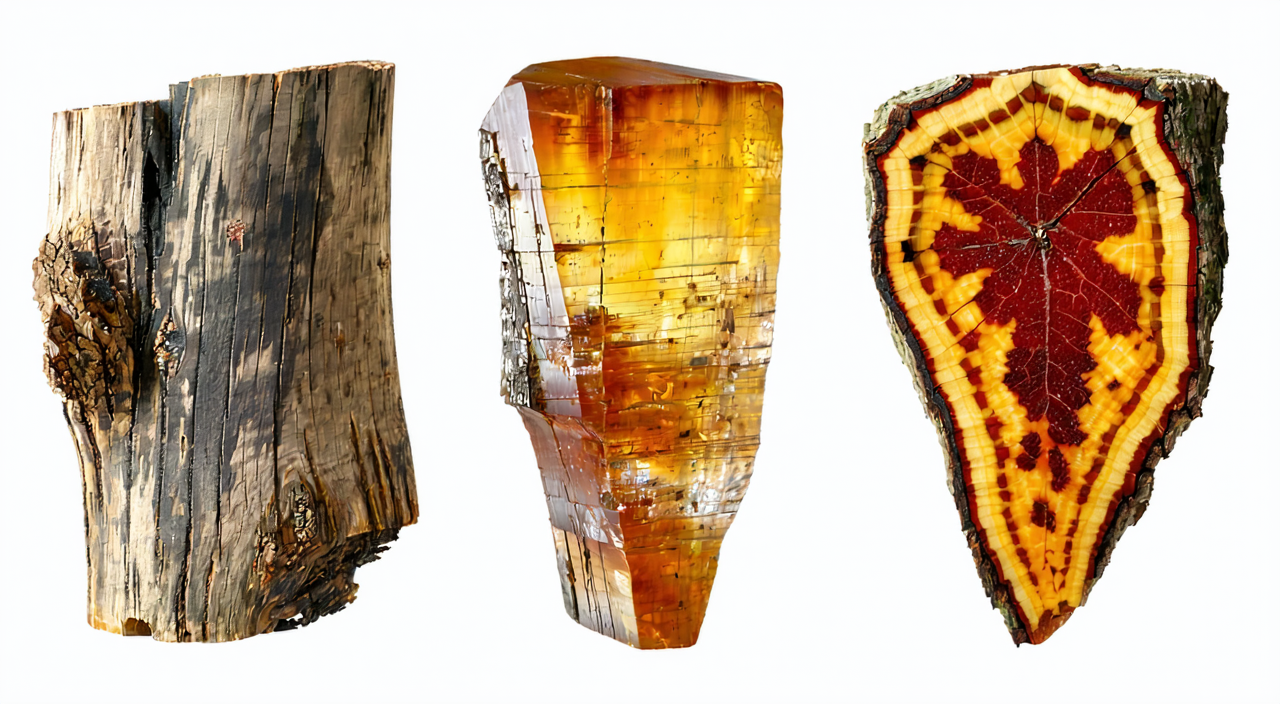
Pine knot, pine rosin, and sappanwood may all appear yellowish-brown, reddish-brown, or dark in color, but they come from different sources and have different properties. They should not be confused.
- Pine knot: This is primarily the knotty, woody part of a pine trunk or branch. It is a woody medicinal material, usually found as irregular blocks, sections, or ring-like slices. Its wood grain, annual-ring-like structures, and some resin canals may be visible.
- Pine rosin: This is a resinous substance produced by processing pine resin. It is usually brittle, and its fracture may have a resinous sheen. Its aroma and melting characteristics differ from those of woody pine knot. Pine rosin is not a slice of pine knot, and the two should not be substituted for each other simply because both come from pine trees.
- Sappanwood: This comes from the dried heartwood of Caesalpinia sappan. It is commonly found in strips, blocks, or slices, with a cross-section ranging from red to deep red. Its wood grain differs from that of pine knot, and it has traditionally been understood from the perspectives of promoting blood circulation and regulating menstruation.
When identifying a physical sample, consider its source, shape, cross-section, aroma, texture, and packaging information together. Loose wood pieces without a clearly documented source should not be identified as pine knot based solely on online images or personal experience.
Which Traditional Formulas Contain Pine Knot?
In traditional formula records, pine knot appears in formulas with names such as Pine Knot Decoction and Pine Knot Powder. It may also be included in formulas based on the traditional approach of dispelling wind and unblocking the channels. Because different editions of classical texts, regional traditions, and modern dosage forms may vary, formulas with the same name are not necessarily identical. Their ingredients, dosages, preparation methods, and intended applications should be confirmed through reliable sources or official product instructions.
Names such as Pine Knot Decoction and Pine Knot Powder only indicate a traditional formulation direction; they should not be regarded as fixed solutions for a particular symptom. In traditional Chinese medicine, formulas are generally selected through pattern differentiation based on symptom characteristics, tongue and pulse findings, constitution, and accompanying conditions. If purchasing decoction pieces, granules, or other herbal products containing pine knot, confirm the ingredient name, directions, dosage, storage conditions, and precautions. Avoid combining multiple wind-dispelling or channel-unblocking products from unclear sources.
People who are pregnant or breastfeeding, children, older adults, and those taking anticoagulants, sedatives, or other long-term prescription medicines should consult a doctor, pharmacist, or qualified TCM professional before using formulas containing pine knot.
What Precautions Should Be Taken When Using Pine Knot?
First, traditional use does not mean that pine knot is suitable for everyone. Pregnant individuals should exercise caution, particularly avoiding self-directed use of pine knot infused in alcohol or formulas from unknown sources. People with yin deficiency and blood dryness, a tendency toward dry mouth and throat, dry skin, or other chronic conditions should not use it long term based solely on online information. Their constitution should be assessed appropriately.
Second, pine knot and other pine-related materials may contain resin or volatile compounds. People sensitive to pine resin, pine rosin, or related wood odors should stop contact and seek professional help if redness, itching, a rash, nasal discomfort, or breathing abnormalities occur after exposure. If significant breathing difficulty or rapidly worsening allergic symptoms develop, seek medical attention promptly.
Third, pay particular attention to contamination of the raw material. Construction timber, furniture offcuts, and wood sections from landscaping work may have been treated with preservatives, pesticides, paint, or fumigants. Even if they look like pine knot, they should not be used as decoction pieces, for making infused alcohol, or for boiling in a decoction. Pine knot infused in alcohol should also not be consumed independently over a long period, as alcohol itself may interact with medicines and may affect liver health and individuals differently.
If persistent abdominal pain, vomiting, black stools, significant unexplained weight loss, chest tightness, palpitations, or other abnormal symptoms occur after use, stop experimenting on your own and consult a doctor. This article is provided for general educational information about Chinese medicinal materials and cannot replace professional diagnosis or treatment advice.
Summary
What is pine knot? In simple terms, it is the knotty, woody medicinal part formed on the branches and trunks of pine trees such as Chinese red pine and masson pine. It typically appears as yellowish-brown to reddish-brown pieces with visible wood grain, annual-ring-like structures, and a pine-like aroma. It is different from resinous pine rosin and the red heartwood of sappanwood. Pine Knot Decoction, Pine Knot Powder, and some formulas aimed at dispelling wind and unblocking the channels reflect traditional application approaches. Whether pine knot is appropriate still depends on constitution, symptoms, product instructions, and professional advice. This article is for educational reference only and cannot replace professional medical care.