
What Is Rosin? Its Medicinal Part, Identification, and Common Topical Preparations
What is rosin? In the context of traditional Chinese medicinal materials, rosin generally refers to the solid resin left after the oleoresin of plants in the pine family has been distilled to remove volatile components. It commonly appears as glass-like or translucent pieces and may be encountered as a traditional topical medicinal material or in products such as industrial rosin and soldering flux. Because their uses differ, medicinal raw materials, industrial materials, and soldering products must not be treated as interchangeable. This article explains rosin’s source, appearance, traditional topical applications, common preparations, and safety precautions to help overseas Chinese readers make a basic identification.
What Does Rosin Look Like? How Can It Be Identified?

Natural pine resin flows from the trunks or branches of pine-family plants and forms rosin after processing. Rosin commonly appears on the market as irregular pieces, flakes, or fragments. Its color may range from pale yellow and yellowish brown to reddish brown, while its transparency may vary from clear or translucent to relatively opaque. It is generally brittle and breaks easily under pressure. When the fractured surface is smooth, it often has a glass-like luster.
Identification should involve a combination of color, luster, odor, and texture. Rosin has a noticeable pine-resin scent, which may become more pronounced when the temperature rises or when it is rubbed. Its surface is not always completely smooth and may show processing marks or fine cracks. Differences in plant species, harvesting time, processing temperature, and storage conditions can all affect its color and odor, so color alone cannot determine whether a material is suitable as a medicinal raw material.
It is especially important to note that rosin blocks or rosin powder found in laboratory or industrial settings are not equivalent to medicinal materials that have been processed according to regulations or used in topical preparations. Soldering flux may contain other formulation ingredients, while industrial raw materials may differ in purity, residues, and contamination controls. They should not be applied directly to the skin or used to prepare topical products without professional guidance.
What Is the Medicinal Part of Rosin?
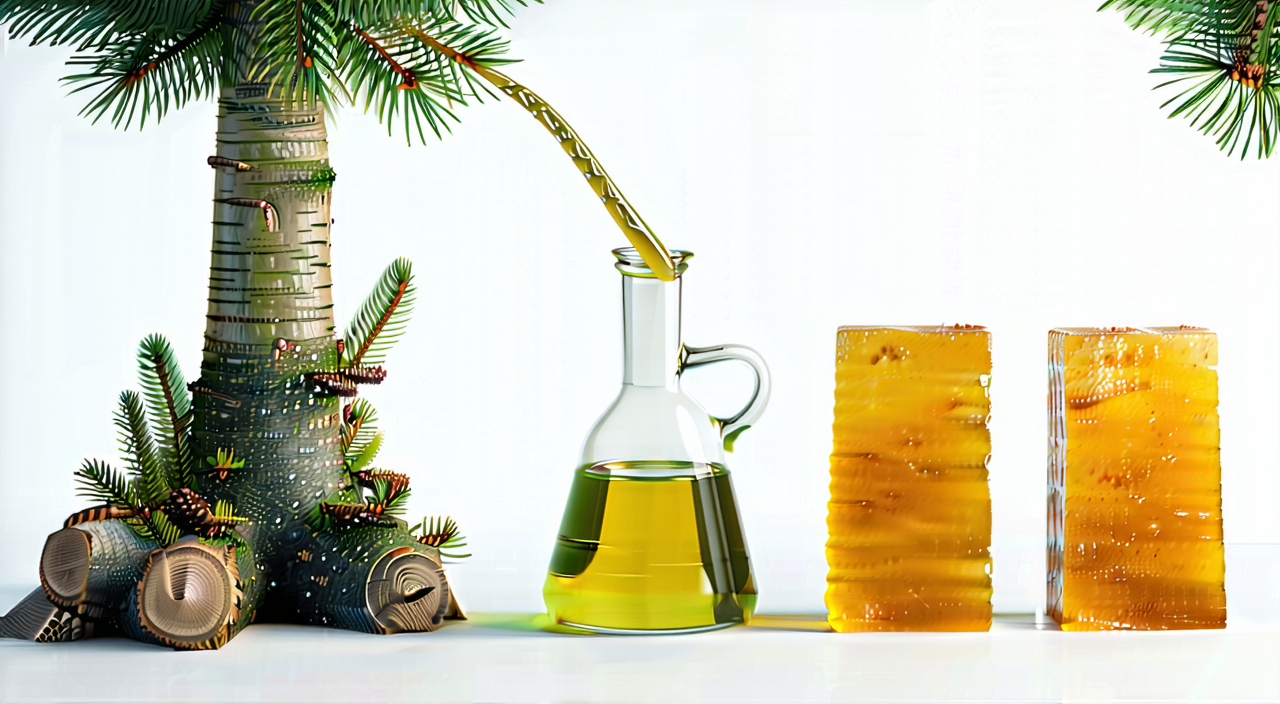
Strictly speaking, rosin is not the root, stem, leaf, flower, or fruit of a pine tree. It is the solid resin produced by processing the oleoresin of plants in the pine family. After the resin is collected, its volatile oil component is generally separated through distillation or a similar process, leaving behind the resinous solid known as rosin. Therefore, the medicinal source of rosin primarily refers to the oleoresin secreted by the plant and the processed product derived from it.
Traditional medicinal material references generally focus on the source plant, processing method, physical characteristics, and cleanliness. Qualified raw materials should be obtained from a clearly identified source through standardized procedures. Although appearance can serve as an initial observation, it cannot replace professional identification, quality testing, or evaluation of product labeling. Overseas users should also be aware that different countries and regions may classify medicinal materials, cosmetics, and topical products differently.
How Does Traditional Chinese Medicine Understand Rosin?
Traditional Chinese medicine commonly understands rosin through topical approaches associated with drying dampness, dispelling wind, promoting tissue repair, and relieving pain. Historically, it has mainly been used in topical formulations for localized skin-related concerns. These traditional functions belong to the theories and practical experience of traditional Chinese medicine. They do not constitute a diagnosis of any particular skin condition and should not be used to replace appropriate professional care.
Rosin is generally not selected simply on the basis of a single symptom. Its use should be considered together with the application site, skin condition, formulation, concentration, and individual tolerance. Ointments and other topical products containing rosin may also include oils, waxes, botanical medicinal ingredients, or other excipients. Different formulations can vary considerably in their intended uses, directions, and contraindications. Suitability should be assessed according to individual circumstances, product instructions, and professional advice.
What Risks Are Highlighted by Modern Research?
In modern safety discussions, one commonly noted concern regarding rosin and related resin components is the risk of contact dermatitis. Some people may develop redness, itching, stinging, papules, or localized discomfort after contact. People with a history of sensitivity to adhesives, resins, plasters, or certain fragrances should be particularly cautious before use. For first-time exposure, it is generally advisable to read the product label carefully and avoid applying it to large areas of skin without professional guidance.
Another risk involves fumes generated during heating, melting, or soldering. Industrial rosin or rosin-containing soldering flux may release irritating fumes at high temperatures. Inhalation can cause irritation of the eyes, nose, and throat, coughing, or breathing discomfort. Medicinal topical materials and industrial work settings are different contexts. Raw materials intended for formulations must not be equated with soldering materials, and rosin should not be heated without adequate ventilation and protective measures.
If a pronounced rash, persistent itching, swelling of the face or lips, wheezing, or other symptoms occur after use, stop contact immediately and consult a doctor. Severe or recurrent symptoms, or symptoms accompanied by significant systemic discomfort, should not be managed through observation alone.
How Does Rosin Differ from Frankincense and Sweetgum Resin?

Rosin, frankincense, and sweetgum resin are all resin-based medicinal materials, but their sources and processing methods differ. Rosin mainly comes from the oleoresin of pine-family plants. After distillation removes the volatile oil, it forms a solid resin. It commonly ranges in color from pale yellow to reddish brown, is brittle, and has a pine-resin-like odor.
Frankincense generally comes from the resins of plants in the genus Boswellia. After harvesting, it commonly appears as resin granules, tear-shaped pieces, or irregular lumps. Its color may range from milky white and pale yellow to yellowish brown, and its odor differs from that of rosin. In traditional use, frankincense is often discussed in relation to approaches involving blood circulation and pain relief, including topical or internal-and-external applications. Specific use still requires pattern identification and professional judgment.
Sweetgum resin comes from resinous secretions of plants such as sweetgum trees. Its appearance, hardness, and odor can be affected by its source and processing conditions. It differs from rosin in plant origin, resin composition, and traditional applications. In practice, identification should not rely solely on whether a material is transparent or yellow. It is best to consider the medicinal material name, source, packaging information, and professional identification to avoid confusing or mixing different resins.
What Common Topical Preparations Contain Rosin?
Rosin ointment is one of the traditional topical preparations most commonly mentioned. It generally uses rosin as a base or one of its ingredients, combined with oils, waxes, and other medicinal materials. Formulas and intended uses vary widely among products. A similar or identical name does not mean that the appropriate application site and duration of use are exactly the same.
Plasters traditionally described as toxin-removing and tissue-promoting preparations may also appear in discussions of traditional topical products. Their names reflect a traditional direction of use. These products often contain multiple ingredients, and their appearance, odor, adhesiveness, and application methods can vary. For legally approved topical preparations, users should follow compliant local labels, package inserts, and approval information. Before use, confirm the intended user group, contraindications, storage requirements, and whether application to damaged skin should be avoided.
Whether using rosin ointment, a toxin-removing and tissue-promoting plaster, or another legally approved topical preparation, users should not disassemble the formula, heat and reform the product, or mix it with other products on their own. If a skin problem covers a large area, does not improve, or is accompanied by marked pain, discharge, fever, or other concerning signs, consult a doctor or pharmacist rather than simply switching topical products.
What Precautions Should Be Taken When Using Rosin?
First, rosin should generally be used topically according to the product instructions. It must not be taken orally and should not be applied to the eyes, mouth, nasal passages, or other mucous membranes. People applying it around the eyes, children, pregnant or breastfeeding individuals, and those with a significant history of allergies should consult a professional before use. Raw rosin should not be applied directly over burns, scalds, open wounds, infected skin lesions, or rashes of unknown cause.
Second, medicinal raw materials must be distinguished from industrial rosin. Industrial-grade rosin, soldering flux, and rosin powder or pieces from an unknown source may contain impurities, additives, or contaminants and are not suitable for use as topical medicinal materials. Store rosin in a dry place away from heat and keep it out of the reach of children and pets. If the product develops an unusual odor, significant discoloration, or damaged packaging, stop using it temporarily and verify the product information.
Finally, when using a rosin-containing preparation for the first time, follow the instructions carefully and observe a small area of skin. Stop use promptly if redness, itching, burning, or other discomfort occurs. If symptoms are severe, persistent, or recurrent, or if they are accompanied by pronounced anxiety, palpitations, chest tightness, abnormal breathing, or other concerning symptoms, seek medical advice or consult another qualified professional as soon as possible.
Summary
Rosin is the solid resin formed after the volatile oil is distilled from oleoresin produced by pine-family plants. It commonly ranges from pale yellow to reddish brown, is brittle, and may have a glass-like fractured surface. It differs from frankincense and sweetgum resin in both source and processing method and must not be confused or mixed with industrial rosin or soldering flux. Topical preparations containing rosin should be used according to compliant labels and instructions. Avoid oral use, contact with mucous membranes, and application to burns or scalds, and remain alert to the risks of contact dermatitis and irritating fumes. This article is for general educational reference only and does not replace professional diagnosis or treatment advice.