
What Is Storax? Medicinal Parts, Identification, and Common Formulas Overview
Many overseas friends are curious about aromatic traditional medicinals, and storax is one of them. Unlike common herbs derived from leaves or roots, storax is a viscous resin with a strong fragrance and appears quite frequently in Chinese medicine formulas. So what exactly is storax? How can it be identified by appearance? What part of the plant is used medicinally? How does it differ from benzoin and other materials? And which classic formulas use it? This article will introduce these aspects one by one, helping you build a basic understanding of this medicinal.
What Does Storax Look Like? How to Identify It?
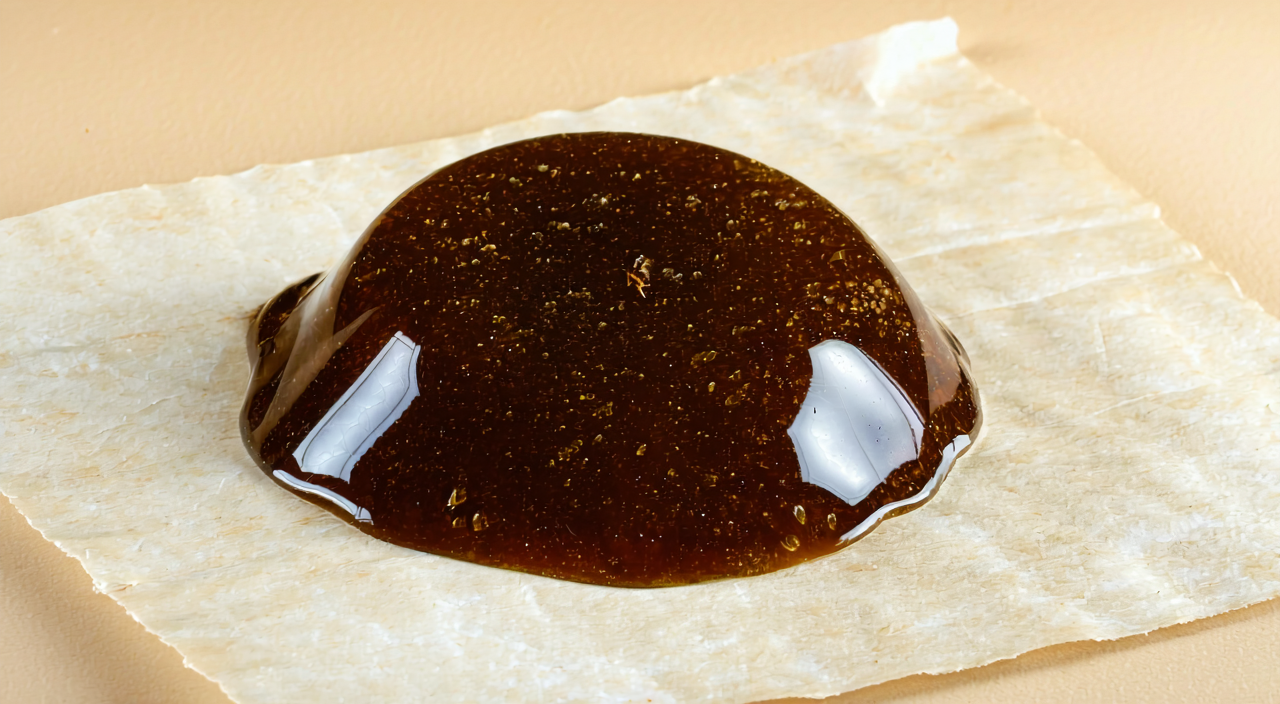
At room temperature, storax mostly appears as a semi-fluid or non-flowing viscous paste with a fine texture. After being stored for some time or in cooler temperatures, it becomes denser. Its color ranges from grayish-brown to dark brown, sometimes with a slight yellowish-brown tint. Under light, a semi-translucent quality can often be observed, somewhat like thick honey but much heavier and denser.
Its odor is highly distinctive: an intense, warm, sweet fragrance with a hint of pungent coolness that penetrates the nose upon closer sniffing; the overall aroma is rich and long-lasting. Because of its viscosity, storax is typically stored in oiled paper, small porcelain jars, or airtight containers. The surface may sometimes show tiny bubbles or natural patterns—this is not a quality issue but a common appearance feature of resinous medicinals. For identification, the viscous paste-like consistency, the grayish-brown to dark brown semi-translucent texture, and the strong, distinctive fragrance are key clues to distinguish storax from other resins or processed products.
What Is the Medicinal Part of Storax?

The medicinal part of storax is not the root, stem, or leaf, but the fragrant resin secreted from the trunk of the storax tree after it is wounded. The original plant is Liquidambar orientalis of the Hamamelidaceae family, mainly native to Asia Minor. Storax used in China is mostly imported or obtained through introduced cultivation and processing.
During collection, incisions are usually cut into the trunk bark, allowing the viscous resin to slowly ooze out. After gathering this initial product, refinement steps such as removing impurities, allowing it to settle, and filtering out excess moisture are required to obtain storax suitable for compounding use. According to traditional experience, storax with a rich aroma, fine texture, few impurities, and a glossy brown color is considered of good quality. In today’s market, there are also further processed products such as refined storax or storax extracts, but their core medicinal part remains the fragrant resin.
How Does Chinese Medicine Understand Storax?
In Chinese medicine theory, storax is pungent in flavor and warm in nature, entering the Heart and Spleen meridians. Its main functions are focused on opening the orifices to restore consciousness, dispelling filth and turbidity, and moving qi to relieve pain. Traditionally, it is not used as a single herb but is commonly employed together with other medicinals in situations that require aromatic orifice-opening.
From a pattern differentiation perspective, storax is more suited for conditions caused by cold-dampness or phlegm turbidity blocking the orifices, manifesting as sudden collapse, clenched jaw, pale complexion, and cold limbs, belonging to the cold type of block disorder. It is not suitable for heat block, collapse patterns, or yin deficiency with fire rising; improper use may aggravate heat and disturb the blood. Additionally, for cold pain in the chest and abdomen, and distension and discomfort due to cold congealing and qi stagnation, storax is often included as an ingredient to assist qi movement through its pungent dispersing and warming unblocking actions. Overall, it plays a strong aromatic path-opening role in traditional applications, but its beneficial effects can only be achieved with clear pattern differentiation and rational combination. Whether it can be used and how it should be used must be determined based on individual constitution and professional judgment.
What Does Modern Research Say About Storax?
Modern pharmacological research mainly focuses on the chemical constituents of storax, where free cinnamic acid, cinnamic acid esters, volatile oils, and resinous substances have been identified. Some basic experiments have observed anti-inflammatory, anti-platelet aggregation, and myocardial blood supply-improving activities related to these components, and its volatile constituents may also have certain effects on the central nervous system.
These studies offer some modern perspectives on the traditional uses of storax, but the current data mostly come from in vitro experiments or animal models and cannot be directly equated with efficacy in the human body, nor can they be used as a basis for treatment. The modern development of storax is still in an exploratory stage, and ordinary users should not self-medicate based on such fragmentary information.
How Does Storax Differ from Benzoin and Agarwood?
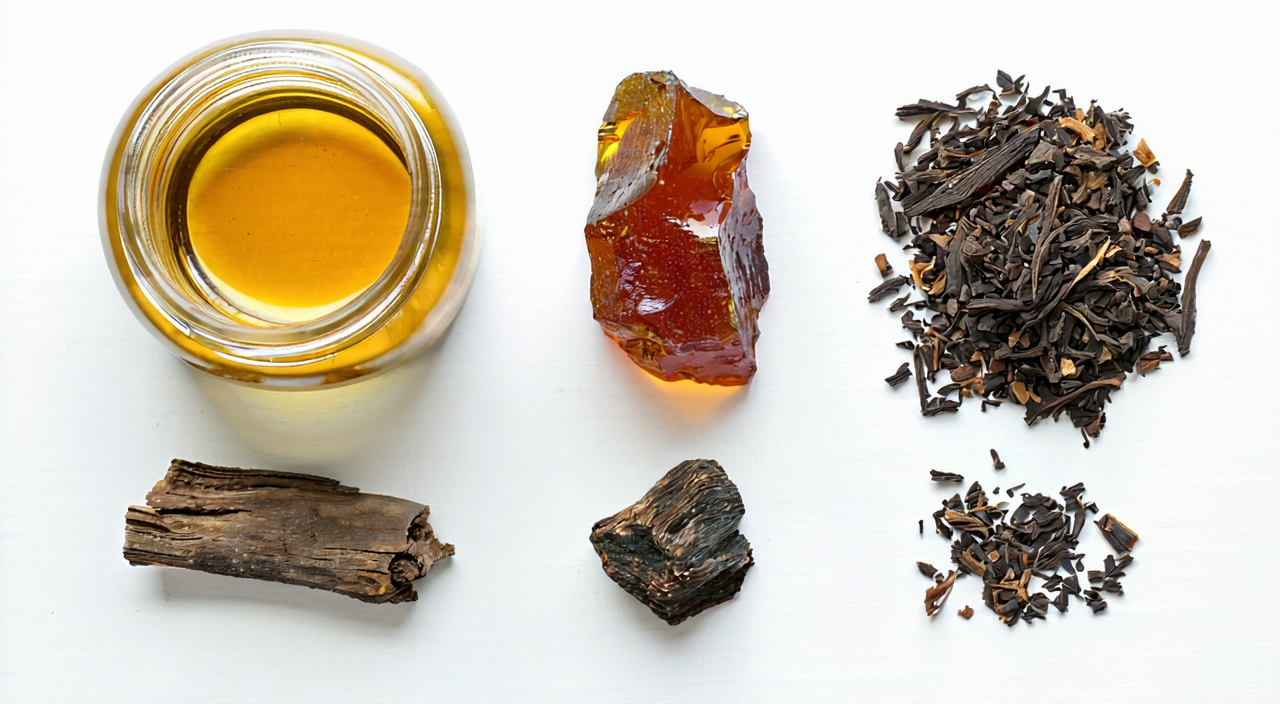
Storax, benzoin, and agarwood are often compared due to their aromatic properties, but they have clear differences in origin, appearance, and function.
Storax is the fragrant resin of the Hamamelidaceae tree Liquidambar orientalis, appearing as a viscous semi-fluid paste with an intense aroma and a pungent, penetrating quality. Benzoin comes from plants of the Styracaceae family, mostly occurring as irregular teardrops, lumps, or granules; it is brittle in texture, softens when heated, and has a sweet, warm, and relatively mild odor. Agarwood is the resin-impregnated wood of trees such as Aquilaria sinensis in the Thymelaeaceae family; it is not a pure resin but exists as woody chunks or strips, firm in texture, with a deep, lasting, and multi-layered fragrance.
In traditional usage, storax mainly opens the orifices to restore consciousness and dispels filth; benzoin, besides opening the orifices, is often used to move qi and invigorate blood; and agarwood excels at moving qi to relieve pain and directing rebellious qi downward while assisting qi reception. Clearly distinguishing these three is crucial for selecting an appropriate approach and avoiding misuse.
Which Formulas Use Storax?
There are not many formulas containing storax, but several classics are traditionally used for conditions related to cold blockage or qi stagnation and cold congealing.
Storax Pill (Suhexiang Wan) is a representative formula, combining storax with benzoin, musk, and other aromatic medicinals. Traditionally it is used for sudden collapse, clenched jaw, and loss of consciousness due to cold blockage. Because of the strong, mobile aromatic medicinals in the formula, it must be used under professional guidance with clear pattern differentiation.
Coronary Heart Storax Pill (Guanxin Suhe Wan) is a modern developed formula that selects storax and other herbs, often used for presentations such as chest oppression, precordial pain, and preference for warmth and aversion to cold belonging to qi stagnation and cold congealing patterns. It is not suitable for all types of chest oppression and pain, especially not for those with obvious heat signs or yin deficiency.
Storax and Borneol Drop Pill (Subing Diwan) has a relatively simple composition, mainly storax and borneol, primarily used in some chest impediment conditions as an aromatic warming and unblocking option. It also requires individualized judgment and cannot replace other necessary treatments. Whichever storax-containing preparation is involved, it should not be taken on one’s own just because symptoms seem similar; always refer to product instructions and professional assessment.
What Precautions Should Be Taken When Using Storax?
Storax has a strong pungent, warm, and mobile nature, so special attention should be paid to the following situations.
Pregnant women should generally avoid its use, as such aromatic and dispersing medicinals may disturb qi and blood, affecting the fetus. Individuals with allergic constitutions, especially those sensitive to fragrances, resins, or volatile substances, may experience skin rashes, itching, sneezing, or even respiratory irritation upon direct contact or inhalation. When encountering it for the first time, observe reactions in a small area.
It is particularly important to note that if acute severe chest pain accompanied by profuse sweating, nausea, a sense of impending death occurs, or sudden loss of consciousness, difficulty breathing, or cyanosis of the lips appears, emergency services should be called immediately, and modern medical first aid should be administered under professional guidance. Aromatic medicinals cannot serve as a reliable means of emergency rescue, and delay may lead to serious consequences. Storax and other aromatic orifice-opening substances can only be recognized as an auxiliary concept within Chinese medicine thinking and should never substitute for necessary emergency treatment at any time. In addition, attention to dosage is necessary in everyday use; excessive amounts may irritate the gastrointestinal tract. If used alongside other medications, consulting a professional in advance is advisable.
Summary
Storax, the fragrant resin from the Hamamelidaceae plant Liquidambar orientalis, is often used in traditional formulas for opening the orifices to restore consciousness, dispelling filth, and relieving pain, leveraging its intense aroma and pungent, warm, and mobile properties. It differs markedly in source and application from benzoin and agarwood, which may resemble it in appearance or odor; correct differentiation helps in reasonably understanding their respective applicable contexts. It should be noted that storax may cause irritation to the skin and respiratory tract; pregnant women and those with allergies should exercise particular caution. In critical situations such as acute chest pain or consciousness disorders, immediate modern medical emergency intervention is essential and must not be delayed due to familiarity with aromatic medicinals. This article is for general informational reference only and cannot replace professional diagnosis or individualized advice.