
What Is Tu Bie Chong? Medicinal Parts, Identification, and Common Formulas
What is Tu Bie Chong? In Chinese materia medica, it is not the common household cockroach, but an animal-based medicinal prepared from dried female bodies. Tu Bie Chong is traditionally also called Zhe Chong, and its source is the dried female body of Eupolyphaga sinensis or Steleophaga plancyi from the Corydiidae family. Many overseas Chinese readers easily confuse it with kitchen cockroaches and are also concerned about its medicinal parts, appearance, common formulas, and safety. This article provides a general introduction to these aspects.
What Does Tu Bie Chong Look Like? How to Identify It?
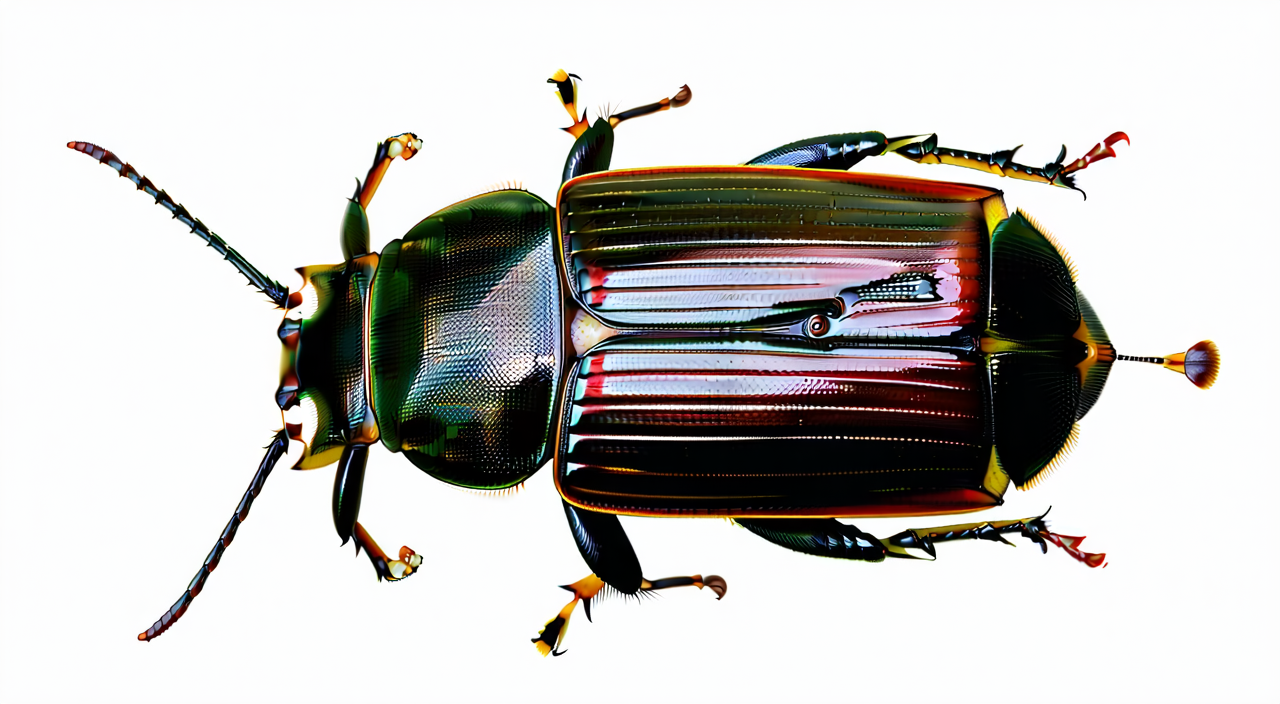
Tu Bie Chong medicinal material is usually flat and oval, narrower at the front and wider at the rear. The dorsal surface is blackish brown or dark brown with transverse segment-like striations, while the ventral surface is reddish brown or brownish yellow. The back often has fine short hairs, and legs may be visible at the edges. Eupolyphaga sinensis is generally smaller, while Steleophaga plancyi may be slightly larger, but both are mainly flat and oval. Traditional experience often regards intact bodies, blackish brown backs, reddish brown ventral surfaces, dryness, and absence of insect damage as better quality. Tu Bie Chong has no obvious wings, or its wings are very underdeveloped, which clearly distinguishes it from common cockroaches. Identification should focus on overall shape, color, transverse segments, and leg characteristics, rather than judging solely by whether it resembles a cockroach. If you see an insect with clearly developed wings and a more elliptical body, it should not normally be considered Tu Bie Chong.
What Is the Medicinal Part of Tu Bie Chong?
The medicinal part of Tu Bie Chong is the dried female body of Eupolyphaga sinensis or Steleophaga plancyi; males or nymphs are generally not used as equivalent medicinal sources. After capture, the material normally undergoes standardized processing, commonly including killing in boiling water followed by sun-drying or oven-drying. If temperature and humidity are not properly controlled during processing, the quality of the medicinal material may be affected, and microbial growth may easily occur. As an animal-based medicinal, the dryness, integrity, and cleanliness of Tu Bie Chong are relatively critical. It is not advisable to capture, process, or directly use wild-sourced insects on your own, because source, processing conditions, and microbial contamination are difficult to control. Proper decoction pieces or medicinal products usually have more systematic quality control at the source and processing stages.
How Does Traditional Chinese Medicine View Tu Bie Chong?
Traditional Chinese medicine often understands Tu Bie Chong from the perspectives of breaking blood stasis, expelling stasis, and promoting the healing of tendons and bones. Blood stasis in traditional Chinese medicine is often used to describe a state in which blood circulation is poor or stagnant, and it is not equivalent to modern medical concepts such as thrombosis or bleeding disorders. Tu Bie Chong is often used in traditional approaches for blood stasis-related patterns, especially in descriptions involving traumatic injuries, amenorrhea, and abdominal masses. It should be noted that these understandings come from traditional experience and classical records, and do not equal modern medical conclusions. Whether Tu Bie Chong is suitable for an individual depends on their constitution, specific presentation, and professional advice. One should not assume that it is stronger or safer simply because it is an animal-based medicinal.
Modern Research Focus: Allergies, Microorganisms, and Contamination Control
Modern research pays more attention to the safety of animal-based medicinals, especially allergy risk, microbial contamination, and heavy metals. Tu Bie Chong contains proteins and other components, so people allergic to insects or proteins may face an allergy risk. During processing, storage, and transportation, microbial growth or insect damage may easily occur if conditions are inappropriate. Some studies also focus on heavy metal and pesticide residues in wild-sourced Tu Bie Chong. Because Tu Bie Chong has a relatively high protein content, improper storage may also lead to mold and mycotoxin contamination. Therefore, choosing medicinal materials or decoction pieces with clear sources and standardized processing is more important than simply pursuing wild sources. Before use, observe the appearance, odor, and storage condition; if mold, unusual odor, or insect damage is found, do not continue using it.
How Does Tu Bie Chong Differ from Common Cockroaches and Mang Chong?
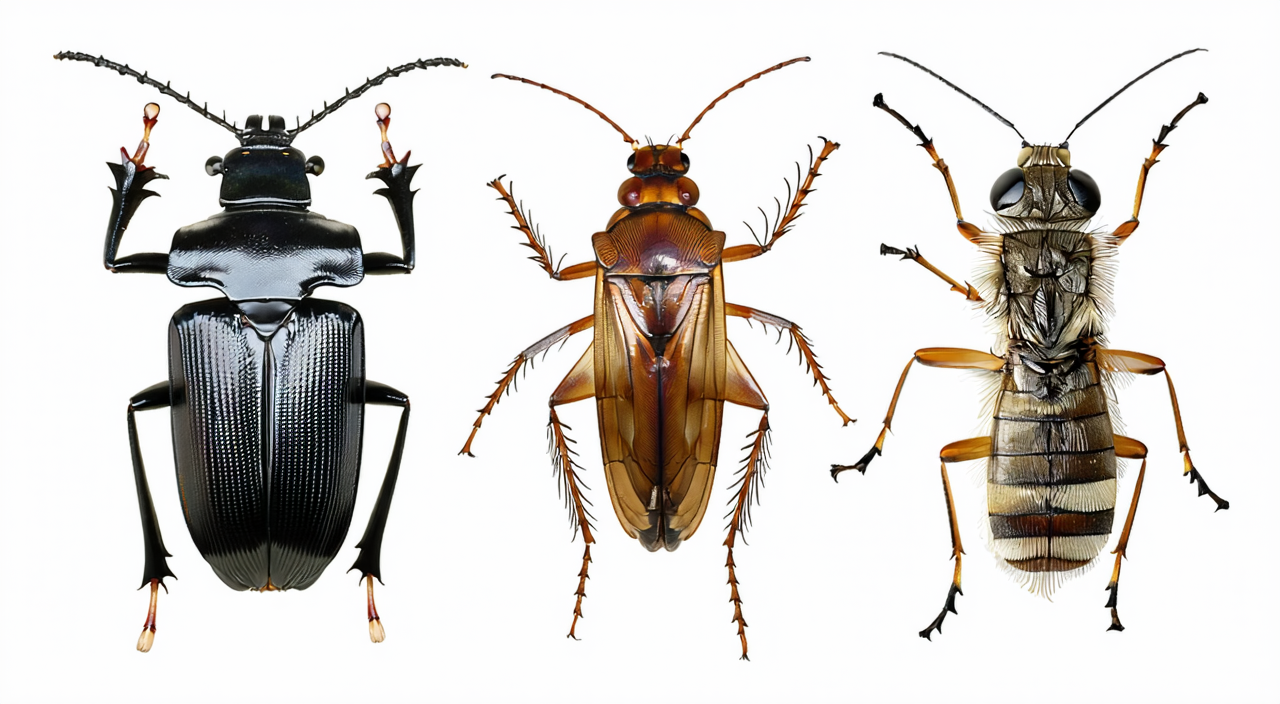
Although Tu Bie Chong and common cockroaches both belong to the class Insecta, they differ in source and morphology. Common cockroaches usually have relatively obvious wings, a more elliptical body, and strong activity; Tu Bie Chong used medicinally is the dried female body of Eupolyphaga sinensis or Steleophaga plancyi, with underdeveloped or no obvious wings, a flat oval body, and obvious transverse striations on the back. Mang Chong is the dried body of tabanid flies from the Tabanidae family; its source is different, its shape is closer to a fly, and its body color and wing characteristics also differ greatly from Tu Bie Chong. In traditional Chinese medical records, Mang Chong is also often associated with blood-activating and stasis-resolving formulas, but it cannot be used interchangeably with Tu Bie Chong. Identification should be based mainly on insect source, shape, presence or absence of wings, and body surface features, rather than judging by color alone. Cockroaches seen in the kitchen should not be regarded as medicinal material.
Which Formulas Use Tu Bie Chong?
Formulas containing Tu Bie Chong have some records in traditional literature, such as Da Huang Zhe Chong Wan, Bie Jia Jian Wan, Xia Yu Xue Tang, and Tu Bie Chong San. Da Huang Zhe Chong Wan often appears in approaches related to blood stasis; Bie Jia Jian Wan is traditionally used for some descriptions related to abdominal masses; Xia Yu Xue Tang is often associated with traditional patterns such as postpartum blood stasis; Tu Bie Chong San is commonly seen in directions such as traumatic injuries and pain in the sinews and bones. These formulas are mostly compound prescriptions, so one should not focus only on Tu Bie Chong alone, nor simply assume that a formula containing Tu Bie Chong is suitable for all related symptoms. The dosage and usage of Tu Bie Chong also differ among formulas and should not be applied on one’s own. Whether it is suitable to use depends on the individual’s constitution, symptoms, and product instructions, and should be evaluated by a professional when necessary.
What Precautions Should Be Taken When Using Tu Bie Chong?
Several situations require special attention when using Tu Bie Chong. Pregnancy is generally contraindicated or must be strictly avoided, because its traditional blood-activating effects may pose risks. People with bleeding tendencies, excessive menstrual bleeding, or those using anticoagulant medications should consult a doctor before use. People allergic to insects or animal proteins should also be cautious. Special populations such as breastfeeding women, children, and older adults lack sufficient safety data, so extra caution is needed before use. It is not advisable to capture or process Tu Bie Chong on your own in daily life, to avoid unclear sources and contamination risks. If rash, itching, gastrointestinal discomfort, or other abnormalities occur after taking Tu Bie Chong-related products, stop using them and seek professional help. For long-term, recurrent discomfort, or complex symptoms, a doctor should provide a clear diagnosis first rather than choosing animal-based medicinals on your own.
Summary
Tu Bie Chong is an animal-based medicinal prepared from the dried female body of Eupolyphaga sinensis or Steleophaga plancyi. It can be distinguished from common cockroaches by its flat oval shape, blackish brown transverse segments on the back, reddish brown ventral surface, and absence of obvious wings. In traditional Chinese medicine, it is often used around breaking blood stasis, expelling stasis, and promoting the healing of tendons and bones, and it commonly appears in formulas such as Da Huang Zhe Chong Wan and Bie Jia Jian Wan. However, whether it is suitable depends on individual circumstances. When using it, pay special attention to pregnancy contraindications, bleeding tendencies, allergy risk, and source and processing safety, and do not capture or process it on your own. This article is for educational reference only and cannot replace professional diagnosis or treatment advice.