
What Is Xianmao? Medicinal Part, Identification, and Common Formulas
Xianmao is the dried rhizome of Curculigo orchioides, a plant in the Amaryllidaceae family. It is generally classified in Chinese materia medica as a warming kidney-yang tonic. Many people notice Xianmao because it often appears together with Epimedium, Morinda officinalis, and other herbs in warming formulas and related discussions. However, Xianmao is a relatively strong warming medicinal with clear limits for use; it is not appropriate for casual long-term use as a water infusion or in alcohol. Below we explain it from several angles: appearance and identification, medicinal part, traditional understanding, modern research, differences from related herbs, common formulas, and precautions.
What Does Xianmao Look Like? How to Identify It
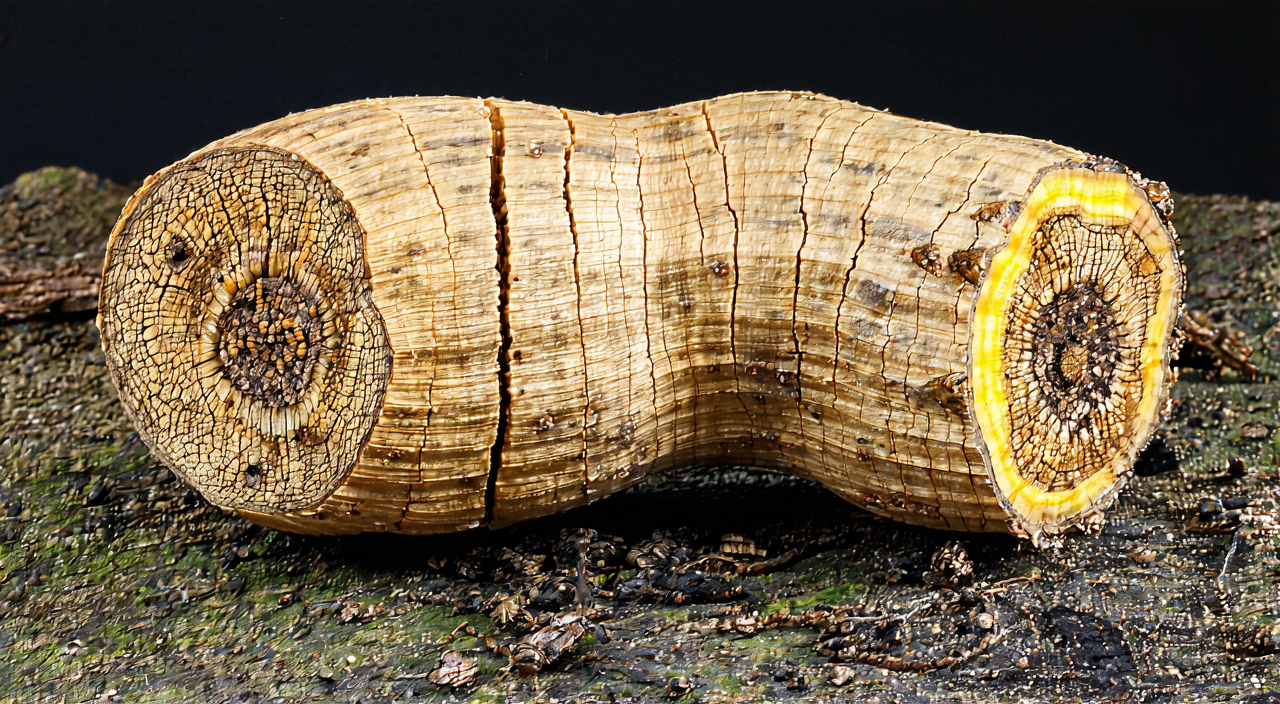
The medicinal material has a fairly distinctive appearance. The dried pieces are usually cylindrical and slightly curved, mostly about 3 to 10 cm long and about 0.4 to 1 cm in diameter. The surface is blackish brown or brown, often with transverse or oblique nodes, and sometimes small rootlet scars can be seen. The texture is relatively hard and it is not easy to break. The cut surface is yellowish brown or light brown, often showing irregular fiber bundles; this fibrous texture is an important reference for identification.
Fresh Xianmao rhizomes and dried medicinal pieces differ in color and texture. For ordinary consumers, what they encounter more often are dried slices or processed products. If you buy the raw medicinal material yourself, pay special attention to its origin, processing method, and whether it is mixed with other rhizome-type herbs. Do not judge quality only by the depth of color, and do not mistake similar-looking rhizomes from different sources for Xianmao.
What Is the Medicinal Part of Xianmao?
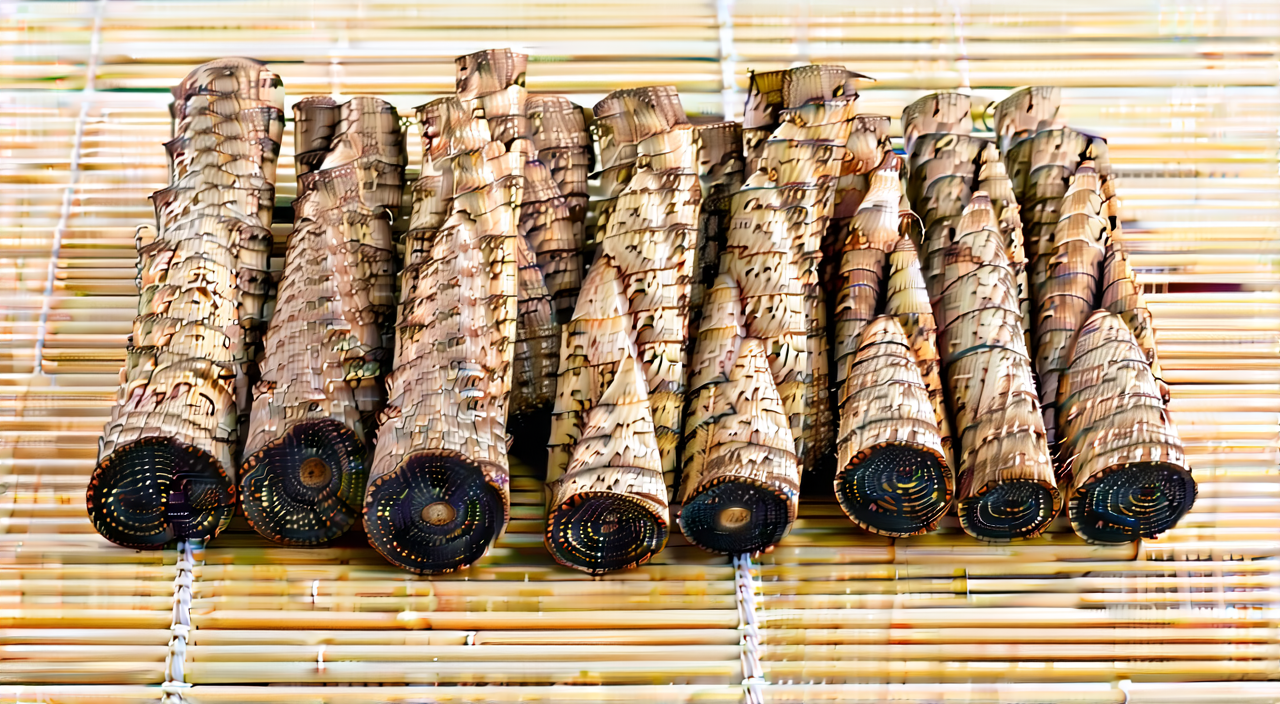
The medicinal part of Xianmao is the dried rhizome, not the aboveground leaves or the fibrous roots. Harvesting is usually carried out in late autumn or early spring. After the aboveground parts have withered, the rhizomes are dug up, washed, freed from fibrous roots and soil, and then dried in the sun or steamed and dried. Some processed forms are stir-fried with wine or otherwise processed to moderate their acrid, hot nature and alter certain properties.
Understanding the medicinal part helps distinguish Xianmao from some herbs with similar names but different sources. For example, Epimedium traditionally uses the aboveground parts, Morinda officinalis uses the root, while Xianmao uses the rhizome. Even though these herbs all belong to the warming-yang category, their sources and parts are different, so they cannot replace one another in use.
How Does Traditional Chinese Medicine Understand Xianmao?
Traditional Chinese medicine usually understands Xianmao from the perspectives of supplementing kidney yang, strengthening sinews and bones, and dispelling cold-dampness. It is often used for patterns related to kidney yang deficiency and decline of the fire of the life gate, such as cold pain in the lower back and knees, aversion to cold with cold limbs, increased nighttime urination, and a heavy sensation in the limbs. It is also seen in approaches for cold-dampness obstruction and is often combined with herbs such as Eucommia bark, Dipsacus root, and Psoralea fruit.
Ancient materia medica texts mostly record Xianmao as acrid and hot in nature, and consider its action of warming kidney yang and dispersing cold-dampness to be relatively strong, while also emphasizing its dry, intense character. Xianmao is not a gentle tonic. In traditional use it is usually processed and combined with other medicinals to moderate its intensity. Whether it is suitable for an individual needs to be judged comprehensively based on constitution, symptoms, tongue and pulse; one should not use it on one’s own simply because it is said to “supplement kidney yang.”
What Does Modern Research Say About Xianmao?
Modern research on Xianmao mainly focuses on constituents such as curculigoside, curculigine, polysaccharides, and flavonoids. Some in vitro experiments and animal studies suggest that these constituents may show certain activity in models of osteoporosis, antioxidation, immune regulation, and related areas. However, most of this evidence remains at the basic research stage; high-quality human studies are still limited and cannot be directly equated with clinical efficacy.
More importantly, some literature and pharmacological studies suggest that long-term or high-dose use of Xianmao may carry a potential risk of liver injury. The risk may be higher for people with a history of liver disease, abnormal liver function, or those using other medications that may affect the liver. Therefore, without professional evaluation, Xianmao should not be consumed long-term as an ordinary health food.
What Are the Differences Between Xianmao, Epimedium, and Morinda officinalis?
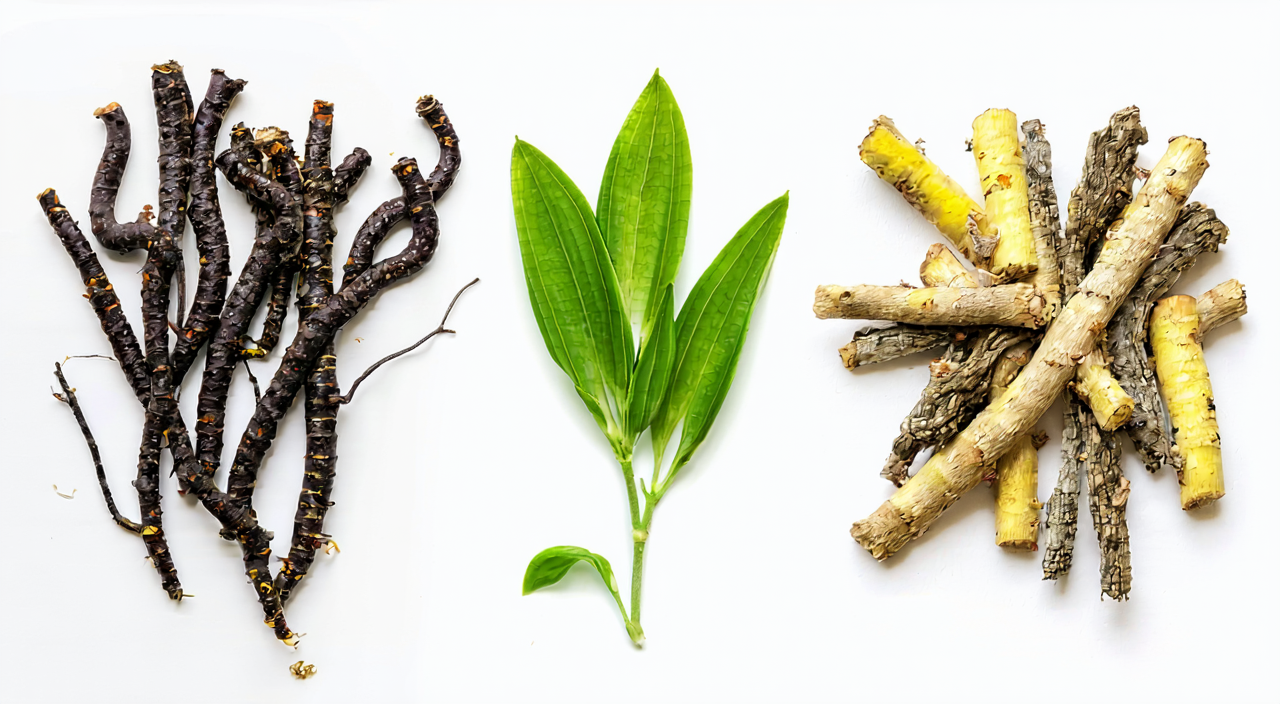
Xianmao, Epimedium, and Morinda officinalis are all commonly classified as warming kidney-yang medicinals, but their sources and medicinal parts are different. Xianmao is the rhizome of Curculigo orchioides; it is blackish brown, curved, and its cut surface has a fibrous texture. Epimedium traditionally uses the aboveground parts, so the medicinal material often consists of leaves or stems and leaves, and its texture is relatively thin and light. Morinda officinalis is the root of the Rubiaceae plant Morinda officinalis; it is mostly flattened cylindrical, with a grayish-yellow or yellowish-brown surface and a thicker, firmer cut surface.
The three also have different emphases in traditional use. Xianmao is acrid, hot, and intensely drying, and is used more in patterns with predominant cold-dampness. Epimedium is relatively warming and drying, but it is more often combined with other herbs. Morinda officinalis also warms and supplements kidney yang, but it has traditionally been considered somewhat more moistening. In actual use, these herbs should not be lumped together simply by name; decisions should be based on differences in constitution and symptoms.
Which Formulas Use Xianmao?
Among representative formulas, the one most often mentioned is Er Xian Tang (Two Immortals Decoction). Er Xian Tang is generally composed of Xianmao, Epimedium, Morinda officinalis, Angelica sinensis, Anemarrhena rhizome, Phellodendron bark, and other herbs. Traditionally it is often used for patterns of dual deficiency of kidney yin and kidney yang with a tendency toward floating deficiency heat, especially in pattern-based treatment of menopause-related complaints. In this formula, Xianmao and Epimedium are warming, while Anemarrhena and Phellodendron are cooling, so it represents a combination of cold and warm medicinals.
Another formula is Xianmao Wan (Xianmao Pill), which in traditional records is often related to warming the kidneys and strengthening the lower back and knees. Xianmao is also used in some formulas that warm and supplement kidney yang, combined with Eucommia bark, Dipsacus root, Psoralea fruit, and others to strengthen the direction of warming yang, dispersing cold, and benefiting the lower back and knees.
These are traditional formulas that need to be used according to pattern differentiation; they are not general-purpose health formulas. Even if a formula name contains Xianmao, that does not mean it is suitable for long-term use or for self-prescription. Suitability must be determined by a qualified TCM practitioner based on individual constitution, specific presentation, and professional judgment.
What Precautions Should Be Taken When Using Xianmao?
Xianmao has relatively strong warming properties, and some modern studies also suggest a potential risk of liver injury, so there are many precautions for use. First, people with yin deficiency with effulgent fire, tidal fever and night sweating, dry mouth and throat, and a red tongue with little coating are usually not suitable, because this kind of warming medicinal may aggravate internal heat.
Second, people with a history of liver disease or abnormal liver function, pregnant and breastfeeding women, children, and adolescents are not advised to use Xianmao on their own. Patients with cardiovascular conditions such as hypertension or arrhythmia should also be especially cautious, because warming medicinals may affect heart rate or blood pressure.
In addition, do not soak Xianmao in white liquor (baijiu) or other alcoholic drinks and take it long-term. Alcohol itself increases the burden on the liver, and Xianmao also carries a potential risk of liver injury; the combination may create unnecessary safety concerns. In TCM practice, Xianmao is usually processed and combined with other herbs, used for a short period and based on pattern differentiation, rather than being taken as a daily tonic soaked in water or alcohol over the long term.
If suspicious signs such as fatigue, decreased appetite, nausea, darker urine, or yellowing of the skin or eyes appear, stop using it immediately and consult a doctor. For long-term, recurrent, or markedly uncomfortable conditions, seek medical care first rather than trying to manage the problem with Xianmao on your own.
Summary
Xianmao is a relatively strongly warming Chinese medicinal. Its medicinal part is the dried rhizome, and it is commonly found in traditional warming formulas such as Er Xian Tang. Understanding what Xianmao looks like, how it differs from Epimedium and Morinda officinalis, and its limits for use can reduce the risk of misuse. Because Xianmao is not suitable for long-term self-administration and some evidence suggests a potential risk of liver injury, it is advisable to consider individual circumstances and consult a professional before use. This article is for educational reference only and cannot replace professional diagnosis or treatment advice.