
What Is Xiaoji? Medicinal Parts, Identification Methods, and Common Formulas
In Chinese herbal medicine, Xiaoji is a commonly used cooling blood and hemostatic herb, often applied in managing various bleeding tendencies caused by blood heat. For people living abroad and exploring traditional Chinese medicine, understanding what Xiaoji is, which part of the plant is used, how to quickly identify it by appearance, and how it relates to common formulas can help provide safer background knowledge. This article will introduce its overall morphological features, the medicinal harvest part, its traditional understanding in TCM, limited modern research findings, differences from Daji and Dandelion, examples of common formulas, and aspects worth noting during use, for reference by interested readers.
What does Xiaoji look like? How to identify it?
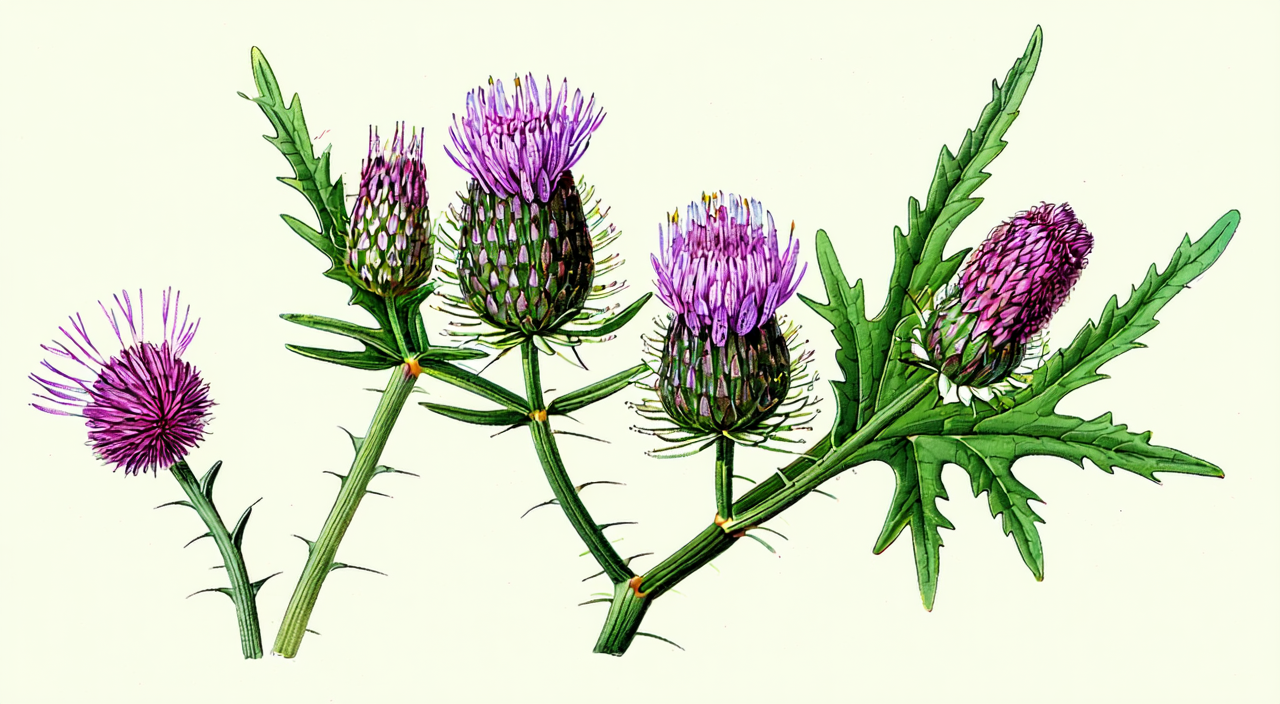
The original plant of Xiaoji is Cirsium setosum, a perennial herb in the Asteraceae family, typically 30–80 cm tall. The stem is erect, slightly ribbed, branched in the upper part, and often purplish-red or grayish-green on the surface, with sparse soft hairs. Leaves are alternate, sessile or slightly clasping at the base, oblong-lanceolate, 5–15 cm long and 1.5–4 cm wide, with a blunt or acute apex and a tapering base. The leaf margin has irregular shallow lobes or toothed indentations, sometimes wavy, and is densely lined with fine, needle-like spines about 1–3 mm long, giving a prickly feel to the touch. Both leaf surfaces are covered with greyish-white sparse hairs, and the main vein is more visible on the underside.
It blooms in summer, with solitary flower heads at the stem apex or branch tips, each about 2–3 cm in diameter. The involucre is bell-shaped, with multi-layered bracts: the outer ones are short and small, while the inner ones are longer, often slightly purple on the back and with a short spiny tip at the apex. All florets are tubular, with a purplish-red or pink-purple corolla (rarely white), about 1.5–2 cm long, and 5-lobed at the tip. The fruit is an achene with a white pappus. Dried herbal material usually consists of mixed stem, leaf, and flower fragments. The stems are cylindrical, 0.2–0.5 cm in diameter, with a greyish-green or purplish surface, brittle and easily broken. Leaves are mostly crumpled and broken, but when flattened they still show a lanceolate shape, with marginal fine spines still palpable even in dry form. Occasionally, remnants of purplish-red flower heads or involucres are visible. Grasping the key features—”lanceolate leaves, small spines on leaf margins, and purplish-red flower heads”—allows preliminary identification of Xiaoji in the field or in herbal material. Compared with other Cirsium species, Xiaoji has more slender stems, smaller inflorescences, and shallower leaf lobing, which can also serve as supplementary clues for identification. Commercially purchased herbal slices are mostly irregular stem and leaf fragments, with leaf-rich, green-colored material and flower-bearing pieces being the common specification.
What is the medicinal part of Xiaoji?
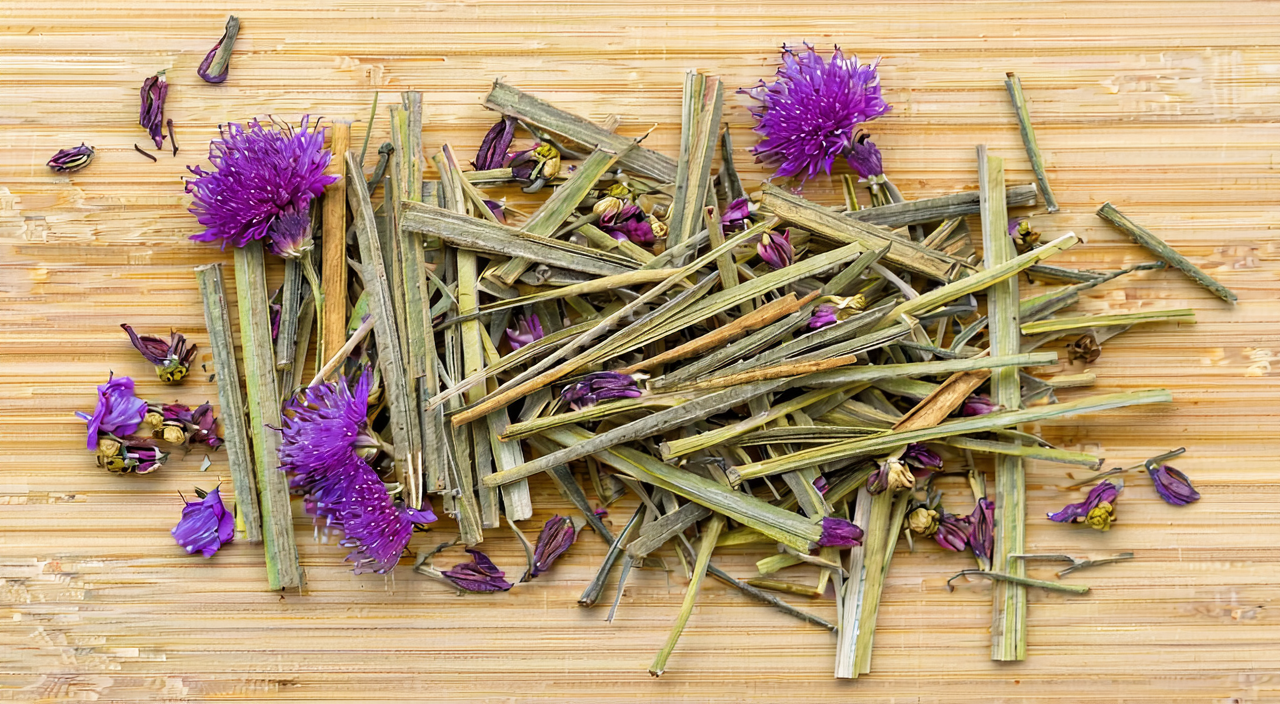
The medicinal part of Xiaoji is the dried aerial part of Cirsium setosum. The traditional harvest period is generally in summer and autumn when the plant is in flower, as the aerial parts are more luxuriant and the active constituents are relatively well-accumulated. Harvesting is usually done by cutting the above-ground stems and leaves bearing flowers with a knife, removing the roots, old stems, and impurities, and then drying them in the sun or shade. In some regions, the fresh material is cut into sections before drying for later use. For fresh use, folk practices sometimes directly collect fresh stems and leaves to pound into juice for external or internal application. Dried Xiaoji has a faint grassy odor and a slightly bitter taste, and it is usually stored in airtight containers to protect against moisture and flavor loss.
How does traditional Chinese medicine understand Xiaoji?
In traditional Chinese medicine theory, Xiaoji is sweet and bitter in flavor, cool in nature, and mainly enters the Heart and Liver meridians. Its core actions are cooling the blood and stopping bleeding, dispelling stasis, resolving toxins, and reducing abscesses. Works such as the “Chinese Materia Medica” summarize its ability to “cool the blood and stop bleeding, disperse stasis and reduce swelling.” From this perspective, TCM holds that reckless movement of blood heat easily leads to various bleedings, such as hematuria, hematemesis, epistaxis, and hemoptysis. Because of its blood-cooling nature, Xiaoji is often used in the management of such bleeding caused by blood heat, with a particular traditional emphasis on hematuria and painful strangury with blood related to the lower burner. At the same time, Xiaoji also has a stasis-dispersing effect, so it is also used for the early stages of heat-toxin sores and abscesses with redness, swelling, and pain, either taken internally or applied externally as a fresh poultice to resolve toxins and reduce abscesses. In practice, Xiaoji is seldom used alone; it is often combined with other cooling blood and hemostatic or heat-clearing herbs such as Zhizi (Gardenia fruit), Baimaogen (Imperata rhizome), Shengdihuang (Rehmannia root), Oujie (Lotus node), and Puhuang (Cattail pollen) according to the specific presentation, to enhance targeted directionality. Whether it suits an individual must be assessed based on constitution, symptoms, and overall syndrome differentiation, and it is recommended to seek guidance from a professional practitioner.
What does modern research say about Xiaoji?
Modern research has found that Xiaoji contains flavonoids such as rutin and linarin, as well as organic acids, sterols, and other constituents. Some animal experiments have observed that Xiaoji extracts show certain interventional activity on coagulation time and inflammatory models, providing some background material for the traditional application of cooling blood, stopping bleeding, dispersing stasis, and reducing swelling. At the same time, some studies have also focused on potential diuretic, hypotensive effects, but these mostly remain at the basic research stage and lack large-scale, high-quality clinical evidence. Therefore, these findings should only be regarded as background knowledge, not as efficacy claims, and cannot replace standard medical judgment.
What are the differences between Xiaoji, Daji, and Dandelion?
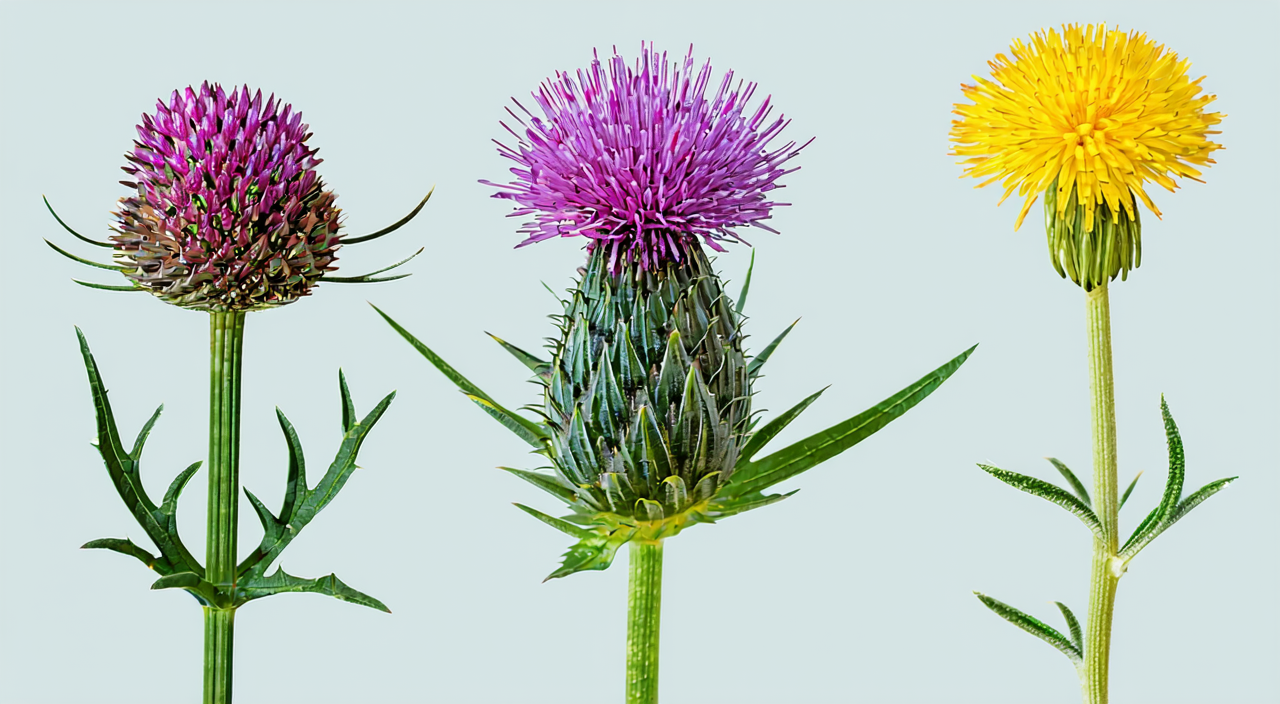
In daily life, Xiaoji can be easily confused with Daji and Dandelion because they are all Asteraceae plants, some have spines, and they may bloom in similar seasons. They can be distinguished by the following aspects:
Daji is Cirsium japonicum, a plant that is noticeably taller and larger, often exceeding 1 meter. The leaves are deeply pinnately lobed, with hard, long spines on the lobe edges, giving a strong prickly sensation to the touch. The flower heads are larger, about 3–5 cm in diameter, purplish-red; the involucral bracts are multi-layered, imbricately arranged, with hard spines at the apex. The aerial parts of Daji are robust, different from the slender appearance of Xiaoji.
Dandelion is a plant of the Taraxacum genus in the Asteraceae family. Its most notable feature is that the entire plant is spineless, with leaves growing in a basal rosette, oblanceolate and pinnately divided, and exudes a white latex when broken. The flower stalk is erect and hollow, with flower heads composed entirely of yellow ligulate florets; the achenes form a conspicuous white fluffy ball, making it very easy to recognize. Dandelion lacks any spines, which is completely different from Xiaoji.
Xiaoji is relatively short, with an erect, branched stem, fine short spines on the leaf margins, smaller inflorescences, purplish-red flowers, and no latex in the whole plant. In terms of herbal morphology, Xiaoji slices are often fragments with spiny leaf margins, while Daji slices are usually coarser and larger, with deeply lobed leaves and long, hard spines; Dandelion herbal material is mostly crumpled and spineless, often with roots and leaves attached. Grasping the three core points—”presence of spines, latex, and flower color”—can effectively help avoid confusion during wild collection or purchase.
Which formulas use Xiaoji?
In traditional formulas, Xiaoji is mainly used in the management of bleeding due to blood heat. The following are some common examples, provided only as background formula knowledge and not as specific usage recommendations.
Xiaoji Yinzi (Field Thistle Decoction), from “Jisheng Fang” (Formulas to Aid the Living), is a formula primarily designed to cool the blood, stop bleeding, promote urination, and free strangury, with common combinations including Shengdihuang, Xiaoji, Huashi (talcum), Mutong (Akebia stem), Puhuang, etc. Traditionally, it is used for presentations of lower burner blood heat such as blood strangury and hematuria. Shihui San (Ten Charred Herbs Powder) is a type of formula where the herbs are processed into charred form while preserving their nature, often employing Daji, Xiaoji, Cebaiye (Platycladus leaf), Baimaogen, and others. After charring, the hemostatic strength is enhanced, and it is mostly used for managing various internal bleeding tendencies. In addition, folk practices sometimes use Xiaoji fresh juice alone as Xiaoji Tang (Field Thistle Decoction), combined with heat-clearing and blood-stopping approaches. Xiaoji is also quite commonly seen in modifications of cooling blood and hemostatic formulas, where herbs such as Zhizi, Oujie, and Baimaogen may be added according to the pattern, to address different types of bleeding direction. However, whether it suits a specific constitution requires judging whether blood heat is excess or whether there is vacuity-cold complicated, and it is recommended to seek in-depth understanding under the guidance of a professional TCM practitioner.
What precautions should be taken when using Xiaoji?
Xiaoji is cool in nature, so people with spleen-stomach vacuity cold, frequent diarrhea, cold abdominal pain, or poor appetite should be cautious and should not use it alone in large doses or long-term. If the cause of bleeding is unclear, especially when accompanied by melena, hematemesis, acute massive bleeding, extensive skin ecchymosis, or warning signs such as significant pain or weight loss, one must seek emergency medical care immediately and should not rely on Xiaoji or other hemostatic herbs on their own. During wild collection, note that Xiaoji may be confused with Feilian (Carduus crispus) and other Cirsium species; Feilian has spiny wings on the leaf margin and a different inflorescence form, and mistaken collection may bring unknown risks. At the same time, the collection environment should be away from pollution sources. Additionally, this herb is not suitable for long-term use as a common health supplement, and pregnant women, nursing mothers, and children should use it under professional guidance.
Summary
Xiaoji is a traditional herb characterized by cooling blood to stop bleeding and dispersing stasis to reduce abscesses. It is relatively easy to identify by its lanceolate leaves, fine spines on the leaf margin, and purplish-red flower heads, and its medicinal part is the dried aerial portion. In common formulas such as Xiaoji Yinzi and Shihui San, it is often used in the management of bleeding due to blood heat, but attention must be paid to body constitution, cold/heat patterns, and the cause of bleeding—especially acute massive bleeding must seek medical attention. This article is only a popular science reference and cannot replace professional diagnosis or treatment advice.