
What Is Xiebai? Medicinal Parts, Identification Methods and Common Formulas
For many overseas Chinese, the name Xiebai (薤白) might sound unfamiliar. But if you think of the “Jiao Tou” (pickled bulbs) used in southern Chinese cooking or a small garlic-like ingredient, it might feel more familiar. In traditional Chinese medicine (TCM), Xiebai is not just a food; it is also a medicinal substance with a long history of use. While it shares some characteristics with everyday garlic and scallion, its specific applications and properties are distinct. This article will help build a clear understanding from several angles: how to identify it, its medicinal part, TCM interpretation, common formulas, and important precautions.
What Does Xiebai Look Like? How to Identify It
As a medicinal material, Xiebai is mainly prepared from the dried bulbs of Allium macrostemon (small root garlic) or Allium chinense (Chinese onion). In its processed form, it looks unremarkable but has several distinct identification features.
A typical Xiebai bulb is ovoid or nearly spherical, not large, usually 0.7–1.5 cm in diameter. The surface is generally yellowish-white or pale yellowish-brown, slightly wrinkled, with faintly visible translucent membranous scales wrapping the outside. The texture is firm and can be snapped with some pressure. The broken surface is yellowish-white, sometimes showing residual rootlet scars or stem scars.
The most memorable characteristic is its smell. Xiebai has a distinct garlicky odor with a hint of pungency, but it is not exactly the same as raw garlic. If it has no smell or only a very faint one, it may be of poor quality or stored too long. Traditionally, larger, plump, hard bulbs with a strong garlicky smell are preferred.
In the wild, many people may mistake the original plant, Allium macrostemon, for common wild garlic. However, its bulbs are smaller, the leaves are slender, and the flowers are pale purple to pinkish, differing from typical cultivated garlic. For practical household use, it is more useful to identify the dried medicinal form.
What Is the Medicinal Part of Xiebai?
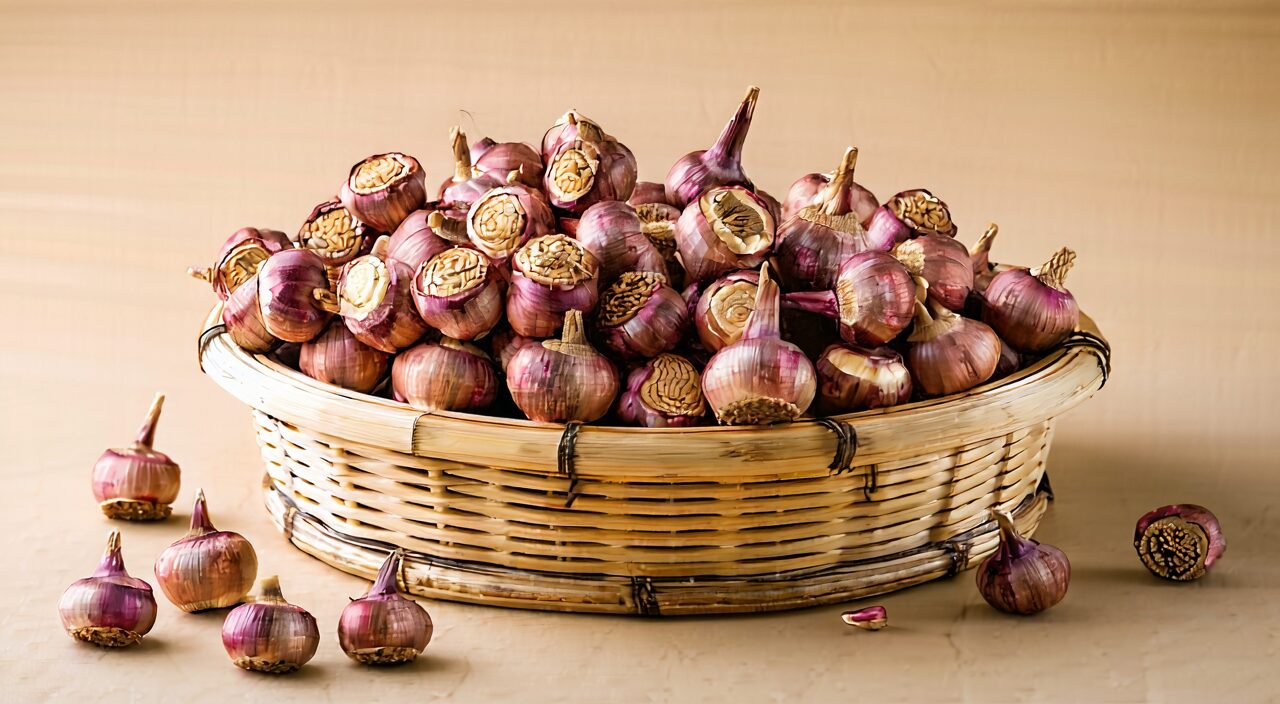
The part of Xiebai used is very clear: it is the dried bulb of Allium macrostemon or Allium chinense. The bulb is the underground storage organ formed by swollen leaf bases on a shortened stem—basically what we might call a “small garlic clove.”
Harvesting generally occurs in summer and autumn. The traditional processing method involves removing the rootlets and soil, then steaming or briefly boiling in water before sun-drying. In some areas, the bulbs are simply sun-dried directly. Steamed or boiled Xiebai tends to have a lighter surface color, while directly dried specimens may be slightly darker, but both are accepted as standard products.
From a safety perspective, if you dry fresh Xiebai bulbs at home, make sure they are thoroughly cleaned and avoid prolonged dampness that can cause mold. Commercial Xiebai in the medicinal market has usually been cleaned and dried; when using it, check for insect damage, discoloration, or off-odors.
How Does TCM Understand Xiebai?
In traditional Chinese medical theory, Xiebai is classified as a qi-regulating herb. Numerous classic herbal texts record its nature and flavor as pungent, bitter, and warm, and note its entering the Lung, Stomach, and Large Intestine meridians.
Its core actions are often associated with “unblocking yang and dissipating masses” and “moving qi and guiding out stagnation.” “Unblocking yang and dissipating masses” is traditionally referenced for symptoms such as chest oppression, a feeling of distension, or discomfort in the chest caused by impeded yang qi in the chest and blockage by cold phlegm-damp turbidity. “Moving qi and guiding out stagnation” is more often used for gastrointestinal qi stagnation leading to epigastric and abdominal distension and fullness, as well as difficult bowel movements. In other words, Xiebai can be used for the upper burner (chest) and the middle/lower burner (abdomen) provided that qi stagnation or cold-turbidity obstruction is present as the pathological tendency.
It is important to note that these understandings are based on traditional usage experience and are not modern medical diagnostic conclusions. Whether it suits an individual depends on their constitution, current presentation, and professional assessment; never self-select it based on a single symptom alone.
What Has Modern Research Found?
Modern research on Xiebai has mainly focused on its chemical constituents. It is currently known that Xiebai bulbs contain sulfur compounds, steroidal saponins, polysaccharides, flavonoids, and certain nitrogen-containing compounds. The sulfur-containing volatile oil is responsible for its garlic-like smell and is often highlighted in studies of its traditional actions.
Some preliminary studies suggest that Xiebai extracts may show certain activities in regulating blood lipids, inhibiting platelet aggregation, and exerting antioxidant effects. However, these findings are largely from laboratory research or small-scale observations and are still some distance from solid human clinical evidence. Therefore, at present, they cannot support conclusions of definitive intervention, only serve as reference directions for further understanding and research.
How Does Xiebai Differ from Garlic and Scallion?
Due to their similar odors, Xiebai, garlic, and scallion are often compared. However, they differ clearly in botanical origin, medicinal part, and usage orientation.
Garlic is the bulb of Allium sativum, a plant in the lily family. When used medicinally, it is usually the fresh or dried whole garlic head. Garlic cloves are large and plump, with a strong pungent smell and taste. Traditionally, it emphasizes warming the middle burner, moving stagnation, and killing parasites and resolving toxins, and it is consumed in large amounts as food. Xiebai bulbs are much smaller, denser, and its direction of unblocking yang and dissipating masses is more prominent.
Scallion (Congbai) is the bulb near the root of Allium fistulosum, essentially the white part left after removing the green leaves in daily cooking. Scallion has a pungent-dispersing nature and is traditionally used more often to disperse wind-cold and unblock yang qi, especially at the early stages of external contraction and lung-system superficial patterns. In comparison, Xiebai tends more towards interior conditions of impeded chest yang and qi stagnation.
So, although all three share pungent-warm unblocking characteristics, Xiebai leans toward chest bi (obstruction) and dysentery-related interior directions, garlic leans more toward the intestines/stomach and food sanitation, and scallion leans more toward superficial pathogens and the lung system. When making a choice, one cannot simply assume that a similar smell means they are interchangeable.
Which Formulas Use Xiebai?
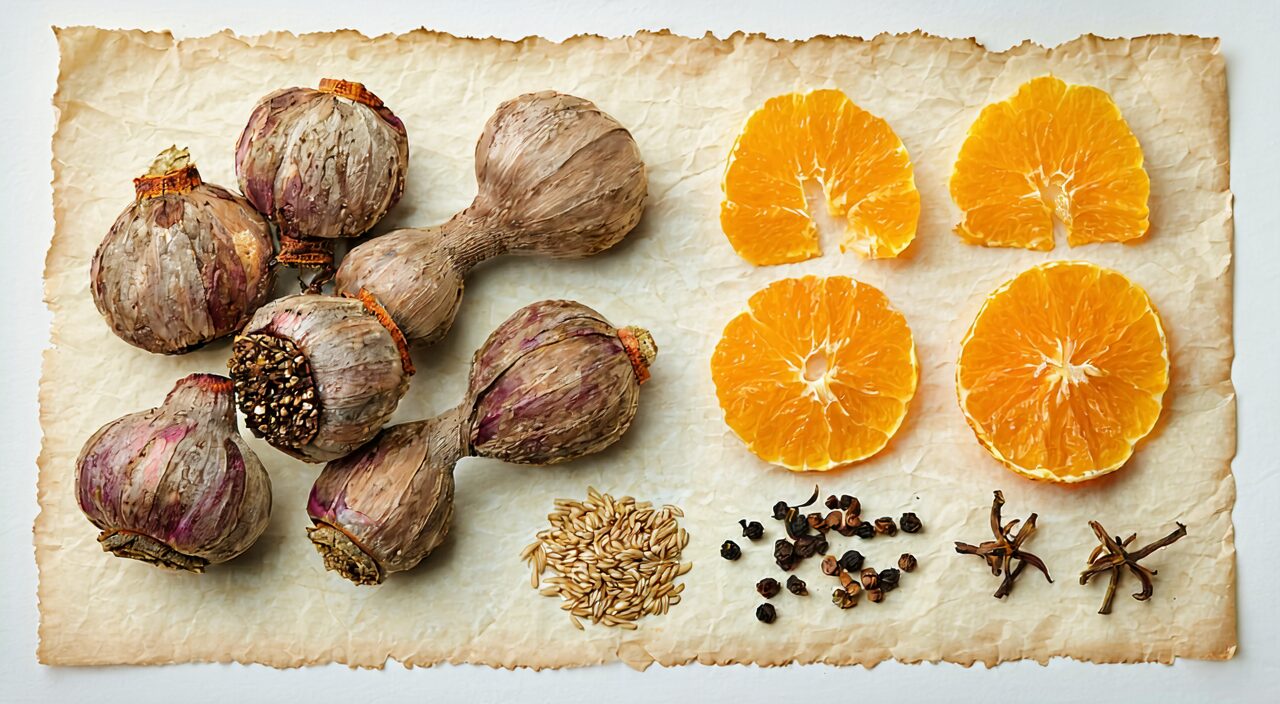
Xiebai appears in quite a few traditional formulas, especially classic formulations for chest bi and heart pain. A few representative formulas are listed below for the reader’s understanding.
Gualou Xiebai Baijiu Tang (Trichosanthes-Chinese Onion-White Wine Decoction) is a classical chest bi formula from the Jingui Yaolue (Synopsis of Prescriptions of the Golden Chamber). It combines fructus trichosanthis (Gualou), Xiebai, and white wine. Traditionally, when chest yang is not vigorous and cold phlegm-fluid collects, leading to chest oppression, pain, panting, cough with expectoration, and shortness of breath, this combination can be referenced. In this formula, Xiebai helps unblock yang and dissipate masses, Gualou transforms phlegm and descends qi, and wine helps move the medicinal force.
Gualou Xiebai Banxia Tang (Trichosanthes-Chinese Onion-Pinellia Decoction) is also from the Jingui Yaolue. It adds Pinellia (Banxia) to the base formula above. It is often used for chest bi accompanying more severe phlegm turbidity, with chest pain reaching the back, back pain reaching the heart, and inability to lie flat, emphasizing stronger phlegm-flushing and mass-dissipating force.
Zhishi Xiebai Guizhi Tang (Immature Bitter Orange-Chinese Onion-Cinnamon Twig Decoction) builds on the Gualou Xiebai base by adding Zhishi, Houpo, and Guizhi. It is suitable when chest bi presents together with middle/lower burner qi stagnation, epigastric stuffiness, and qi rushing from the hypochondrium to invade the heart. This formula embodies the TCM approach of harmonizing the upper and middle burners, warming, unblocking, and directing rebellious qi downward.
Xiebai San (Chinese Onion Powder) is a relatively smaller formula sometimes mentioned in gynecological or dysentery contexts, for instance, in later works such as the Taiping Shenghui Fang. While component differs slightly in different texts, Xiebai’s role is generally to move qi, guide out stagnation, dissipate masses, and stop pain.
It must be stressed that all the above formulas are prescription formulations based on TCM syndrome differentiation and are not DIY home recipes. Specific dosages, combinations, processing methods, and whether a formula suits a particular condition all require evaluation by a professional TCM practitioner according to the individual situation. Do not self-prescribe.
What Precautions Should Be Taken with Xiebai?
Although Xiebai is a bulb used both as food and medicine, it does not mean it can be taken casually in large amounts. The following situations require special attention.
First, individuals with pronounced qi deficiency need to be cautious. Xiebai is pungent and moves qi; if a person normally tends to shortness of breath, fatigue, a weak voice, and sweating on slight exertion, excessive use may consume qi and cause discomfort. Second, if the gastrointestinal tract is sensitive or obviously inflamed, the garlic-like stimulating nature of Xiebai could aggravate epigastric discomfort, especially when consumed in large amounts on an empty stomach. Third, traditionally Xiebai is thought to help dissipate masses, but those with a bleeding tendency or who are on anticoagulant medications must consult a doctor before use to avoid interfering with normal blood clotting. Fourth, occasional small amounts used as food generally pose little problem, but one should not equate adding a little Xiebai to food with medicinal regulation.
Most importantly, if chest oppression, pain, palpitations, abnormal breathing, or pain radiating to the left shoulder or arm occurs—regardless of severity—one must seek emergency medical evaluation at once. Do not delay proper diagnosis and treatment because you know about Xiebai or think it can “unblock yang and dissipate masses.” Such symptoms may involve the heart or other serious problems; Xiebai as a traditional medicinal substance can in no way substitute for emergency care.
Summary
Xiebai is a bulbous medicinal with a long history of use in traditional Chinese medicine. Its key identification points, medicinal part, and common formulas have been clearly transmitted through the generations. Although similar in smell to garlic and scallion, it is distinct in size and traditional usage orientation and should not be confused with them. Classic formulas containing Xiebai, such as Gualou Xiebai Baijiu Tang, are mostly formulated around the pattern background of chest yang not vigorous and phlegm turbidity qi stagnation. Professional judgment is essential when using them. All information provided in this article is for educational reference only and cannot replace a doctor’s diagnosis or medical advice. If you experience related symptoms, please seek professional help promptly.