
What Is Poppy Capsule? Medicinal Parts, Identification and Common Formulas
In discussions among many overseas Chinese medicine enthusiasts, poppy capsule is a substance that is easily misunderstood. On the one hand, it has indeed appeared in some traditional formulas; on the other hand, its relationship with opioids, strict legal controls, and potential risks leave many people confused. This article provides a standard educational introduction to poppy capsule from the perspectives of origin, appearance, medicinal parts, traditional usage, and important risks to help readers form a clearer understanding. It must be emphasized that poppy capsule is a strictly controlled medicinal material with dependence and toxicity risks. This article does not provide any purchase, processing, or dosage information and is intended solely for cultural and knowledge-based understanding.
What Does Poppy Capsule Look Like? How to Identify It
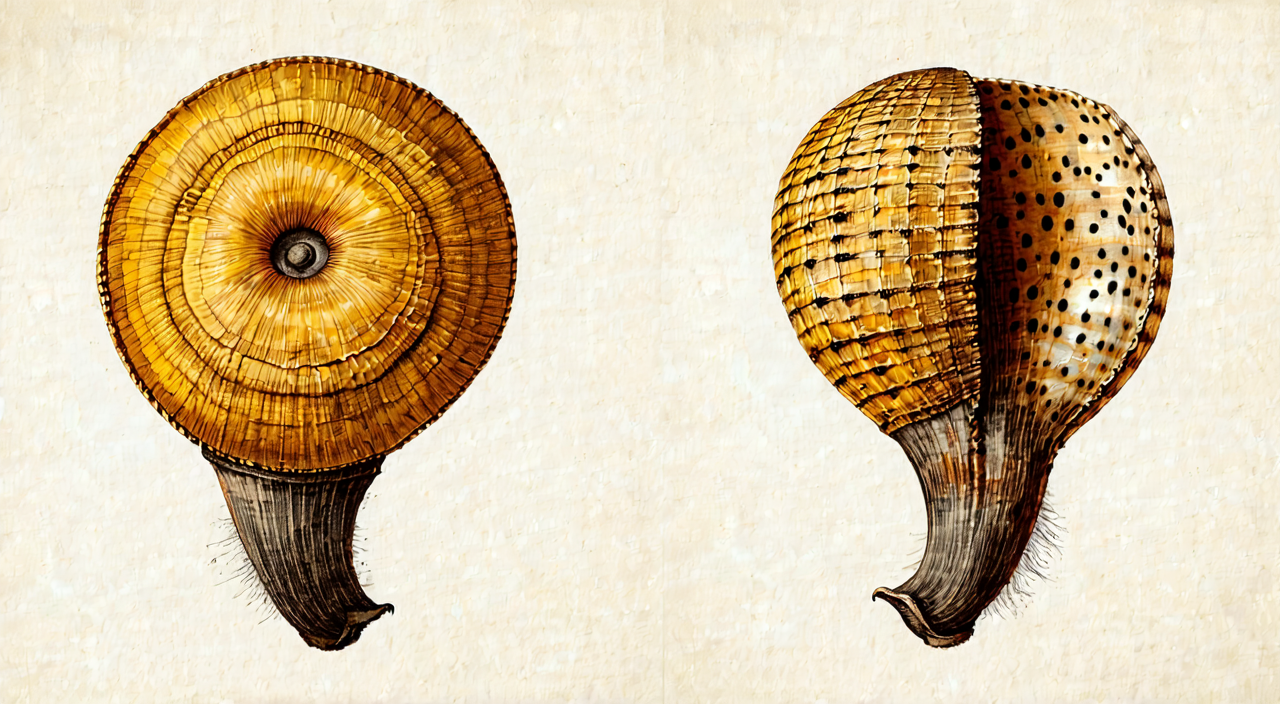
In formal medicinal literature, the morphological description of poppy capsule is relatively consistent and can serve as a starting point for understanding this type of medicinal material.
Poppy capsule is usually elliptical or obovate, sometimes approaching a bottle shape. These morphological differences are related to variety and growing conditions to some extent. The mature capsule shell is quite brittle and breaks easily when gently pressed. The outer surface is mostly yellowish-white, brownish-yellow, or light brown, sometimes with darker markings. At the top of the capsule there is a very distinctive feature—the slightly enlarged disc-shaped stigma. This structure remains clearly visible after drying, and the surrounding radial striations extend downward, forming a natural pattern.
In cross-section, the inner wall of the capsule is lighter in color and relatively smooth, with traces of dried septa sometimes remaining. Traditionally, when identifying the material, attention was also paid to capsule thickness and brittleness, but these can only be used as auxiliary features and cannot replace professional identification. It must be stressed that ordinary people do not need, and should not attempt, to identify or collect poppy capsule on their own. The above content is only a knowledge-based description of the material’s morphology.
What Is the Medicinal Part of Poppy Capsule?
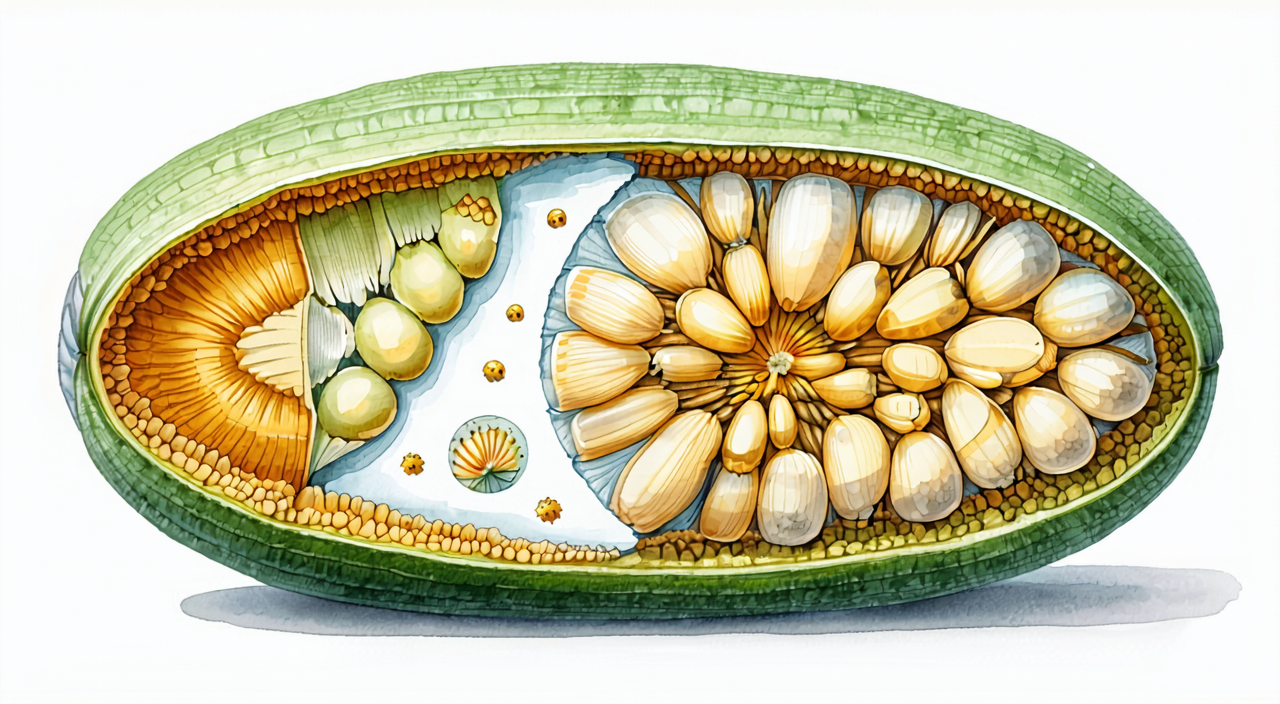
When many people hear “opium poppy,” they immediately think of latex or seeds, but as a medicinal material, poppy capsule has a very specific medicinal part: it is the dried mature capsule shell of the opium poppy.
Specifically, this capsule shell comes from the fruit of the plant Papaver somniferum. When the fruit is fully mature but not yet dehiscent, it is processed according to strict harvesting protocols. After the latex is collected, the remaining capsule shells are dried and may become controlled medicinal material under very specific conditions. In other words, any poppy capsule that could enter limited medical use must be handled throughout the entire process under an extremely tight regulatory framework. Under no circumstances may individuals obtain or possess it through markets, the internet, or any other channels.
For overseas users, understanding this background is particularly important. Many countries classify poppy capsule as a controlled substance, and even mentioning it as a medicinal material refers to a highly sensitive item. Therefore, the information here is intended only to help readers grasp the basic concept of “medicinal parts” and absolutely does not encourage or imply any form of personal contact.
How Is Poppy Capsule Understood in Traditional Chinese Medicine?
Within the framework of traditional Chinese medicine, poppy capsule was historically categorized among astringent or analgesic herbs and was recorded mainly in the following directions.
First, in terms of astringing the intestines to stop diarrhea, some ancient texts mention its use for chronic diarrhea and dysentery, especially when there is intestinal slippage and the vital qi has already been damaged. The traditional approach considered using astringent medicinal substances to restrain the intestines. Second, regarding astringing the lung to stop cough, it was occasionally used as one ingredient in compound formulas for prolonged cough with dissipation of lung qi and no significant external pathogen or phlegm-dampness exuberance, with the intention of helping constrain lung qi. In addition, in the direction of pain relief, it was also traditionally used in some strategies for chronic pain.
It needs to be particularly noted that these statements are based on historical formula practice. In modern clinical settings, its use is already subject to extremely strict restrictions. The understanding in Chinese medicine is more about helping us comprehend the nature, taste, and meridian tropism of this type of medicinal material from a professional perspective, rather than discussing it in the context of daily health maintenance. The chronic diarrhea, chronic cough, or chronic pain conditions mentioned above often involve complex underlying body issues and must be diagnosed and evaluated by professional physicians. One must never seek out poppy capsule on their own to address such problems.
What Does Modern Research Say About the Risks of Poppy Capsule?
From the perspective of modern pharmacological research, the core reason poppy capsule draws widespread attention is that it contains multiple opium alkaloids, such as morphine, codeine, and papaverine.
These components have a significant effect on the central nervous system and can produce analgesic, sedative, and cough-reflex-suppressing effects. However, they also come with non-negligible risks. Among these, drug dependence is one of the most discussed issues. Long-term or improper use may lead to psychological dependence and physical dependence. Once dosage control is lost, the withdrawal process can be very complicated. Even more dangerous is the risk of respiratory depression, especially when the dosage is not properly controlled or the user is in a physically vulnerable state, which can lead to severe consequences.
Based on these modern research conclusions, the supervision of poppy capsule is very strict worldwide. For overseas Chinese-language users, understanding these risks is far more important than remembering which formulas it once appeared in. The stance of this article is very clear: to present its components and risks from an educational perspective, without downplaying or avoiding its dangers.
What Are the Differences Between Poppy Capsule, Poppy Seeds, and Chebulic Myrobalan?
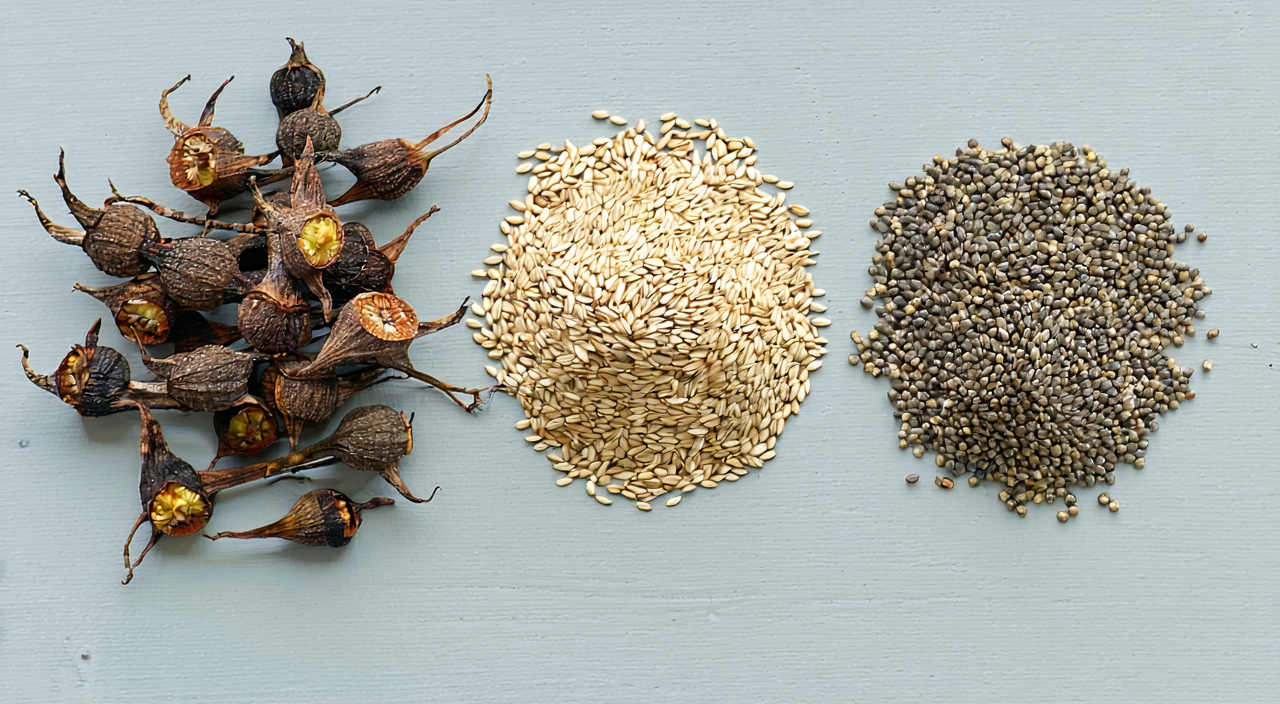
When browsing Chinese-language materials, it is easy to encounter confusion between poppy capsule and other medicinal or food substances, especially poppy seeds and chebulic myrobalan (he zi).
Poppy seeds are the seeds of the opium poppy. They grow inside the capsule, are tiny, and numerous. Unlike the capsule shell, poppy seeds themselves do not contain high concentrations of opium alkaloids. After inactivation treatment, they may be used as food ingredients or baking decorations in some countries, but this still requires strict compliance with each country’s regulations. The capsule shell and the seeds differ greatly in origin, composition, and legal attributes and must never be substituted for one another or conflated. If anyone regards poppy capsule and poppy seeds as the same thing, that is a dangerous misunderstanding.
Another substance easily confused with it is chebulic myrobalan (he zi). Chebulic myrobalan is also commonly seen in Chinese medicine formulas for astringing the intestines to stop diarrhea and astringing the lung to stop cough. However, its origin is completely different from poppy capsule. It is the mature fruit of Terminalia chebula, a plant in the Combretaceae family. It does not contain opium alkaloids and does not share the same regulatory status or dependence risk. Traditionally, although they may appear similar in certain functional directions, they are completely different concepts in terms of safety, legal risk, and conditions of use. Understanding these differences helps readers stay properly informed when they encounter related formula information.
Which Formulas Have Used Poppy Capsule?
In the historical records of traditional formulas, there are indeed some prescriptions that have used poppy capsule. This is introduced here only as formula knowledge and does not represent any form of recommendation.
Zhen Ren Yang Zang Tang (True Man’s Viscera-Nourishing Decoction) is one relatively typical example. This formula was traditionally used for chronic diarrhea and dysentery, spleen-kidney yang deficiency with cold, and fecal incontinence. In this formula, poppy capsule is combined with nutmeg, chebulic myrobalan, ginseng, white atractylodes, Chinese angelica, white peony, costus root, cinnamon bark, and licorice. The overall strategy leans toward warming, supplementing, and astringing.
Jiu Xian San (Nine Immortals Powder) represents another direction. It was traditionally used for chronic cough with no relief, lung qi dissipation, and severe coughing with panting. It similarly uses poppy capsule, combined with ginseng, coltsfoot flower, mulberry bark, platycodon root, schisandra fruit, donkey-hide gelatin, mume fruit, and fritillaria bulb. Its emphasis is on constraining lung qi, and it is considered unsuitable when there is profuse phlegm or unresolved external pathogens.
In addition, there is a type of simplified combination called Poppy Capsule Powder (Ying Su Ke San), in which poppy capsule is paired with tangerine peel, chebulic myrobalan, and licorice. It was also recorded for conditions such as qi deficiency with chronic dysentery or diarrhea with slippage.
It must be stated repeatedly that the above content is only to help readers understand formula knowledge from historical literature and is absolutely not medical advice. The conditions for using these formulas today are extremely strict. Whether they are needed, whether they are suitable, and how they should be used must be determined by qualified medical professionals within a compliant framework. Individuals must not attempt them based on online information. If problems such as chronic diarrhea, chronic cough, or chronic pain arise, it is advisable to seek proper medical help as soon as possible rather than looking for answers in unverified traditional formulas.
What Precautions Must Be Taken Regarding Poppy Capsule?
When it comes to poppy capsule, certain understandings must be made absolutely clear from the very beginning.
First, do not possess or use it on your own. In the vast majority of countries and regions, private possession of poppy capsule is illegal, and any circulation outside medical use is not permitted. This is not an area where one can experiment based on experience or inherited methods.
Second, be highly vigilant about the risks of drug dependence and respiratory depression. Precisely because poppy capsule contains opium alkaloids, its effect on an individual carries enormous uncertainty. Even when used in a professional setting, the pros and cons must be weighed with extreme caution. Personal contact almost inevitably brings dual legal and health dangers.
Third, children, adolescents, and women during pregnancy or breastfeeding must stay far away from all preparations related to it. Their nervous systems are still developing or they are in special physiological periods; any exposure to opium alkaloids may lead to irreversible consequences.
Finally, for issues such as chronic diarrhea, chronic cough, or intractable pain, what is truly needed is a systematic medical examination to clarify the underlying root causes, rather than focusing attention on a single high-risk medicinal material. Keeping these risks firmly in mind is far more important than simply remembering the names of a few formulas.
Summary
As a special medicinal material that has appeared in historical literature, the appearance, medicinal parts, and traditional usage of poppy capsule are clearly documented. However, the dissemination of knowledge about it today must be based on a full understanding of its opioid alkaloid risks and strict legal controls. It is fundamentally different in origin, composition, and safety from poppy seeds and chebulic myrobalan, and these must not be confused. Understanding these aspects is intended to help maintain vigilance and rational judgment when encountering related information. If you have relevant health concerns, be sure to seek help from a professional physician and never personally contact or try this type of controlled medicinal material.