
What Is Curcuma Root Tuber? Medicinal Parts, Identification, and Common Formulas
Among commonly used blood-activating and qi-moving herbs, Curcuma root tuber (Yujin) is often confused with turmeric. In reality, Yujin is the tuberous root of plants such as Curcuma wenyujin, Curcuma longa, Curcuma kwangsiensis, or Curcuma phaeocaulis, whereas turmeric uses the rhizome. Understanding Yujin requires not only recognizing its appearance but also clarifying its medicinal part and traditional applications.
What does Curcuma root tuber look like? How to identify it?
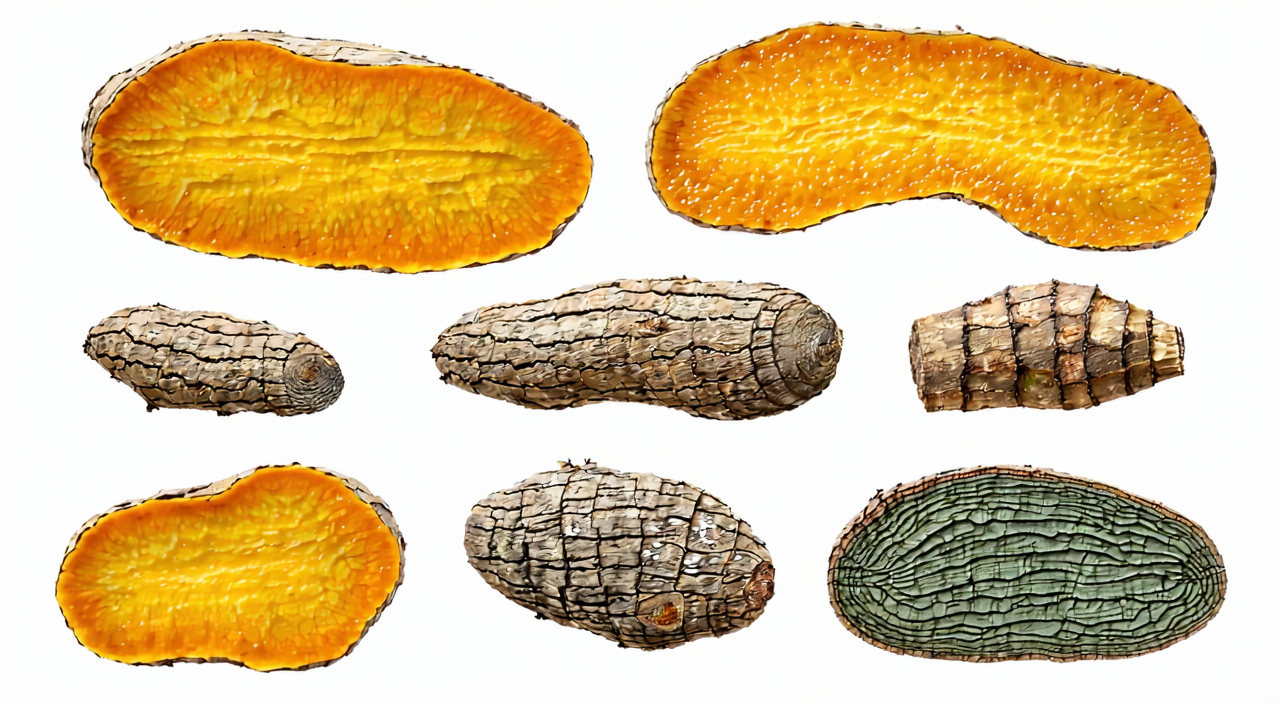
The dry medicinal material of Yujin is ovoid or oblong, 2–6 cm long and 1.5–2.5 cm in diameter. The surface is grayish-yellow or yellowish-brown, with irregular longitudinal wrinkles; sometimes rootlet scars are visible. The texture is firm and not easy to break; the fracture surface is flat, horny, and lustrous. Commercial products commonly include “Huangsi Yujin” (yellow-striated Curcuma root tuber) with an orange-yellow to yellow cross-section, “Lvsi Yujin” (green-striated Curcuma root tuber) with a grayish-green cross-section, and other types such as “Wen Yujin” and “Gui Yujin,” each with slight differences. When identifying, one can observe the overall shape, color, and cross-section characteristics of the tuberous root. However, appearance alone cannot precisely distinguish the botanical origin; source information is also needed for a comprehensive judgment.
What is the medicinal part of Curcuma root tuber?
The medicinal part is the dried tuberous root of several ginger family plants. The source plants include Curcuma wenyujin, Curcuma longa, Curcuma kwangsiensis, and Curcuma phaeocaulis. Harvesting typically occurs in winter after the stems and leaves wither; the roots are dug up, cleaned of soil and fine roots, steamed or boiled until thoroughly cooked, then sun-dried or dried at low temperature. After processing, the Yujin tuberous root is hard, with a horny cut surface. For medicinal use, it often needs to be sliced, crushed, or ground into powder. Clarifying that the medicinal part is the tuberous root is one key to distinguishing Yujin from turmeric and zedoary.
How does TCM view Curcuma root tuber?
In TCM theory, Yujin has long been regarded as a “qi-regulating herb in the blood aspect.” Traditionally, it is considered acrid and bitter in flavor, cool in nature, and enters the Liver, Heart, and Lung meridians. Its actions include activating blood and relieving pain, moving qi and resolving constraint, clearing the heart and cooling the blood, and promoting bile flow to abate jaundice. For symptoms such as chest and hypochondriac distension and pain due to liver qi depression, irregular menstruation and menstrual pain, or vomiting blood and nosebleed caused by upward-reverse qi-fire, as well as damp-heat jaundice, Yujin is often used as a compatible choice. These applications come from the accumulated experience of past practitioners; actual use requires matching individual constitution and symptom presentation, and should be prescribed by a TCM practitioner based on syndrome differentiation—self-administration is not advisable.
What do modern studies suggest?
Modern research shows that Yujin contains curcuminoids, volatile oils, polysaccharides, and other constituents. Some in vitro and animal studies suggest that these components may have potential in anti-inflammatory, antioxidant, choleretic, and immunomodulatory activities. However, these findings are mostly at the laboratory stage and do not equate to conclusions about clinical efficacy. The understanding of Yujin should still be based on traditional theory and professional syndrome differentiation; modern research only serves as a reference for further exploration.
How does Yujin differ from turmeric and zedoary?
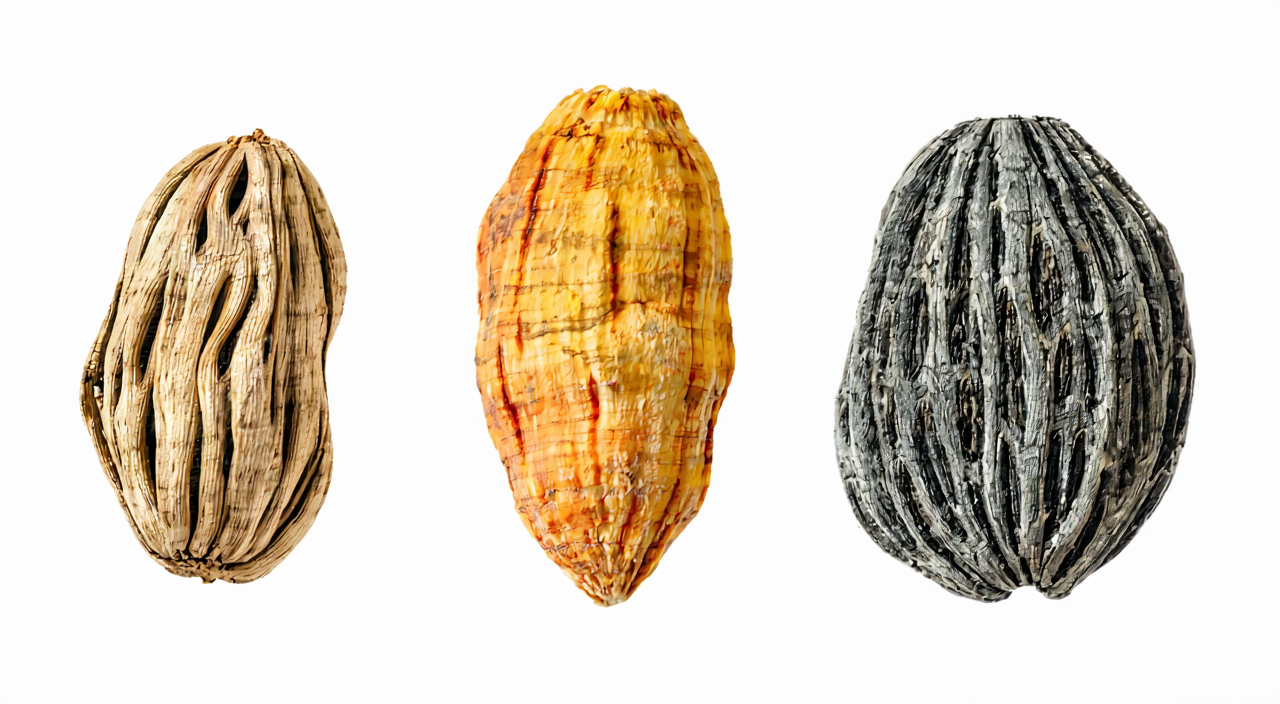
The source plants of Yujin, turmeric, and zedoary overlap, but their medicinal parts and traditional applications are clearly different. Yujin uses the tuberous root, while turmeric and zedoary usually use the rhizome. In appearance, Yujin is mostly ovoid or oblong with a grayish-yellow surface and a yellowish-brown or grayish-green, horny fracture surface. Turmeric rhizome is irregularly ovoid or cylindrical, with a golden-yellow or orange-yellow cross-section and a strong aroma. Zedoary rhizome is hard, with a grayish-brown to dark green fracture surface and less starchy texture. In traditional use, Yujin is more inclined to move qi and resolve constraint, cool blood, and clear the heart; turmeric tends to be acrid, dispersing, warm, and unblocking, unblocking collaterals and relieving pain; while zedoary has a stronger effect in breaking blood stasis and dispersing accumulations. Only by clearly distinguishing these three can we more accurately understand their respective traditional uses.
Which formulas contain Curcuma root tuber?
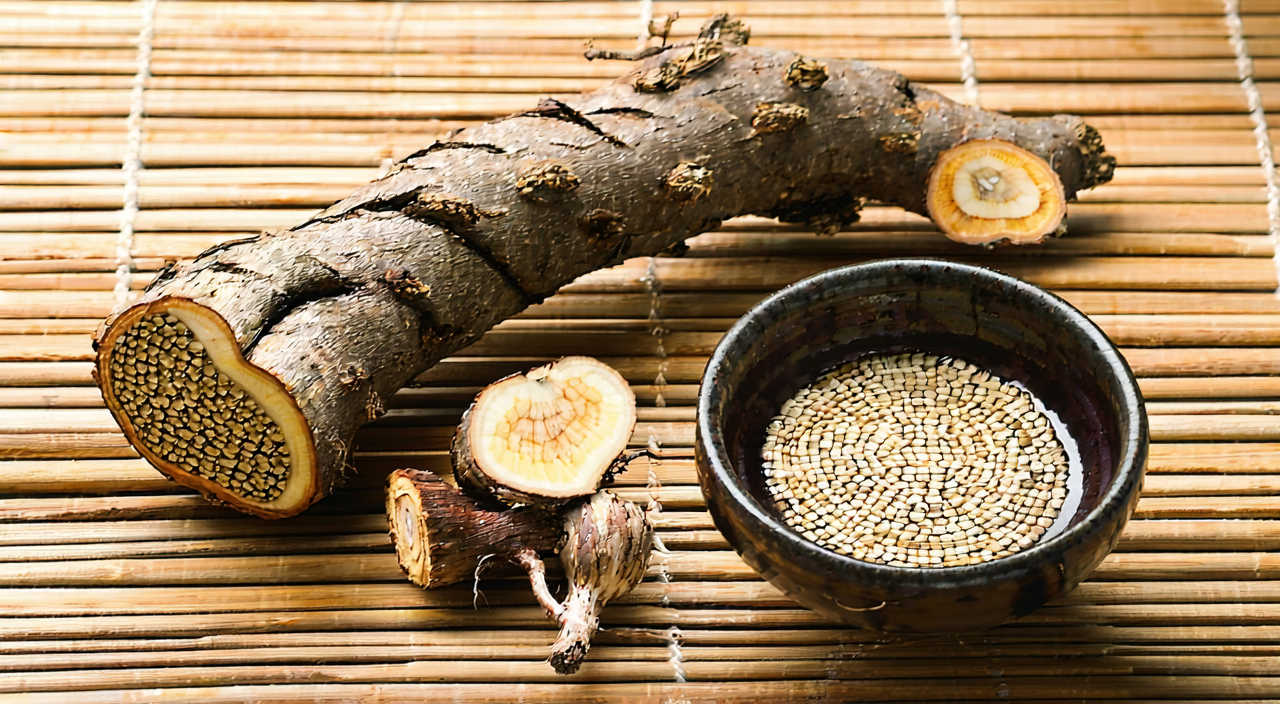
Changpu Yujin Decoction (Acorus and Curcuma Decoction) is a classic formula from the school of warm disease, traditionally used for consciousness disturbance caused by phlegm-heat clouding the pericardium; it pairs Acorus tatarinowii with Yujin to resolve turbidity and open the orifices. Baijin Pills (Curcuma Root Tuber and Alum Pills) consist only of Yujin and alum, and were used in ancient formulas for emotional disorders such as depression and dementia due to phlegm-qi binding. Xuan Yu Tong Jing Decoction (Diffuse Constraint and Unblock Menses Decoction), from Fu Qing-zhu’s Obstetrics and Gynecology, addresses liver depression and qi stagnation with inhibited menstrual flow, often combining Yujin with white peony root, Chinese angelica, and Bupleurum. In contemporary clinical practice, some empirical formulas for promoting bile flow and expelling stones also include Yujin, taking advantage of its qi-moving and choleretic properties. Each of these formulas has specific indications, and must be used only after a clear diagnosis and under the guidance of a physician; self-prescribing based on a single symptom is not advised.
What precautions should be taken when using Curcuma root tuber?
Although Yujin is a commonly used medicinal, it is not suitable for everyone. Pregnant women should avoid it because of its blood-activating effect. Those with a tendency to bleed, heavy menstrual flow, or taking anticoagulant medications need to be especially cautious; using Yujin together with anticoagulants may increase bleeding risk. The traditional “Nineteen Incompatibilities” states “Cloves should not meet Yujin,” so it is generally recommended to avoid combining with clove. Patients with complete biliary obstruction should also not casually use choleretic formulas. Whenever using Yujin or formulas containing Yujin in any form, one should first consult a TCM practitioner or pharmacist, taking individual circumstances into account.
Summary
Yujin uses the tuberous root medicinally and has deep traditional applications in activating blood, moving qi, resolving constraint, and cooling blood. It is clearly different from turmeric and zedoary, which use rhizomes, in terms of source and usage philosophy, and should not be confused. When using products or formulas containing Yujin, individual differences and professional advice must be fully considered. This article is for educational reference only and does not replace professional diagnosis or treatment.