
What Is Genkwa Flower? Medicinal Parts, Identification, and Common Formulas
In traditional Chinese medicine, Genkwa flower is not a gentle regulating herb, but a drastic water-expelling medicinal known for its powerful action. Many overseas enthusiasts interested in Chinese medicine may have encountered this name in ancient formulas or literature, yet remain unclear about its appearance and why it must be used with caution. This article will cover the basics of Genkwa flower from the perspectives of visual identification, medicinal parts, TCM understanding, formula examples, and safety precautions, helping you build a clearer understanding.
What Does Genkwa Flower Look Like? How to Identify It?
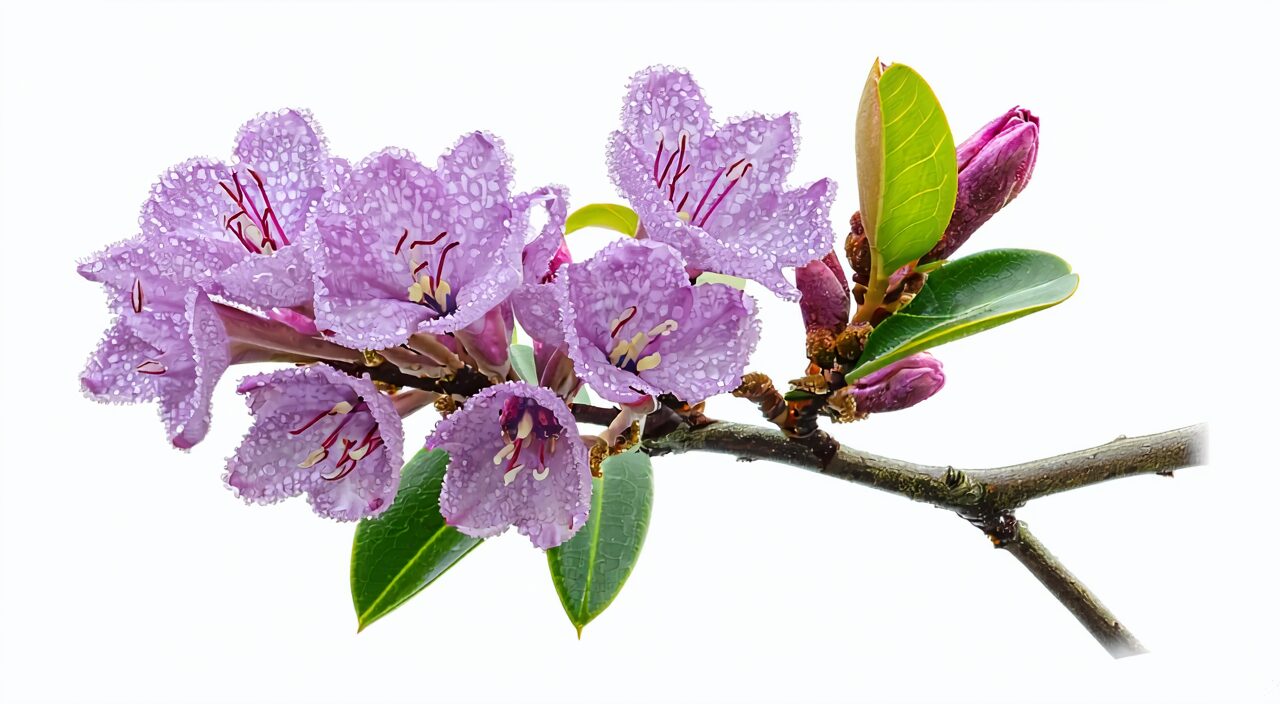
Genkwa flower is the dried flower bud of the Thymelaeaceae plant Daphne genkwa, usually harvested in spring before the flowers open. In appearance, a single bud is mostly stick-shaped or slender conical, slightly curved, somewhat resembling an unopened clove, but the color and texture are entirely different. The color of Genkwa buds is mostly grayish-purple, pale purple, or light brown, and the surface is densely covered with fine, short white hairs, which is a relatively distinct identifying feature. The tip of the bud is slightly enlarged, tapering into a slender floral tube, with the apex usually having four clefts. The texture is brittle, the fractured surface is somewhat granular, the odor is faint, and the taste is acrid and pungent. What you usually see in herbal shops is the dried product, which feels light and airy. When growing on the plant, Genkwa flowers bloom in clusters before the leaves emerge in early spring, appearing as a patch of pale purple from a distance, but only the flower buds are used medicinally.
What Part of Genkwa Is Used Medicinally?
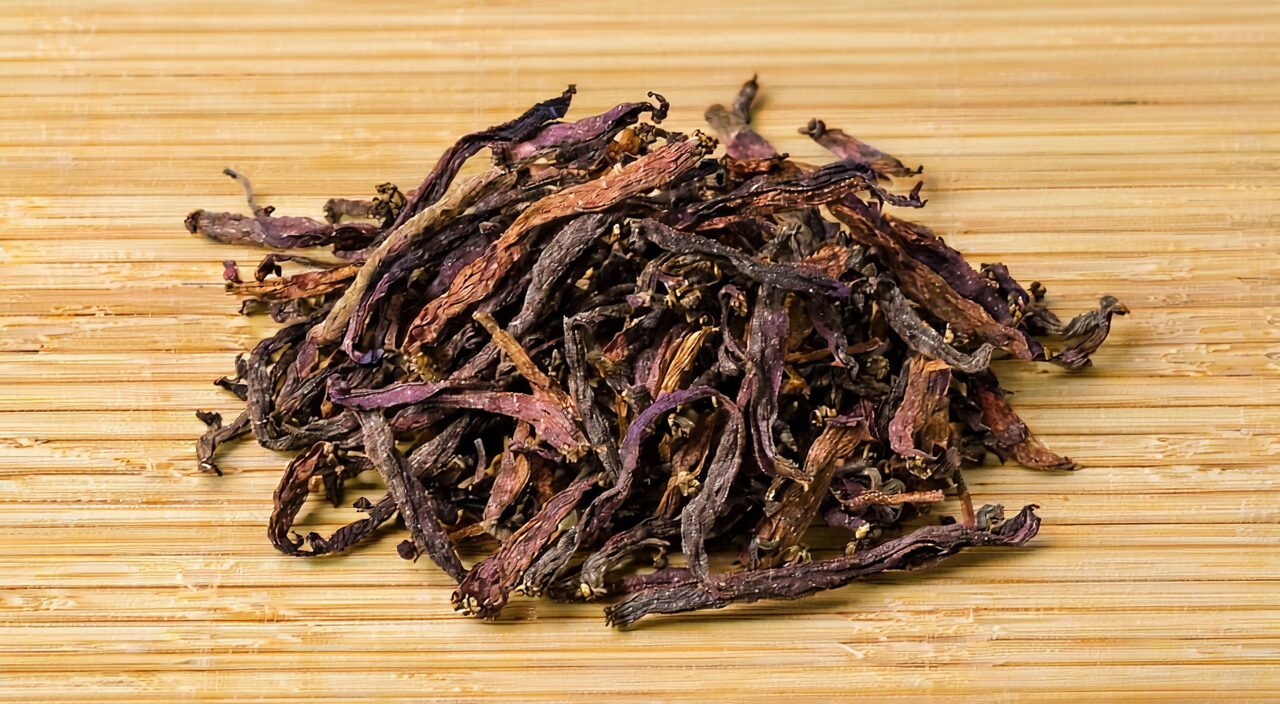
The medicinal part of Genkwa is exactly the dried flower bud described above, excluding pedicels and leaves. After harvesting, the buds are sun-dried or processed by stir-frying with vinegar and other methods. Vinegar-processed Genkwa flower is a common prepared form, made by mixing the buds with rice vinegar, moistening them, and then stir-frying until dry. This reduces its irritant properties and is traditionally believed to moderate its nature. The processed buds become darker in color, turning brownish, and some of the hairs may be partially lost, but they can still be identified. It is worth noting that the root bark of Genkwa has also been recorded for external use, but this is not mainstream; today, when referring to the medicinal use of Genkwa, it almost always means the flower buds. If fine branches or leaves appear in the herb market, they are generally considered impurities.
How Does TCM View Genkwa Flower?
In traditional Chinese medicine theory, Genkwa flower is bitter and acrid in taste, warm in nature, and toxic; it enters the lung, spleen, and kidney meridians. Throughout the history of materia medica, it has mostly been classified as a drastic water-expelling herb. TCM practitioners may understand its actions as draining water and removing retained fluids, dispelling phlegm and stopping cough, and, when used externally, destroying parasites. Under ancient medical conditions, for syndromes of severe water-dampness accumulation such as generalized edema and distension, chest and abdominal fluid accumulation, or phlegm-fluid congestion causing panting and cough, this herb was sometimes used under strict control. However, these applications are based on traditional theories, and they are not suitable for every type of edema or cough. Because its attacking and draining power is strong, it can easily damage the body’s healthy qi; those with weak constitutions have always been listed as contraindicated. Therefore, when a TCM practitioner considers its use, a comprehensive evaluation of the patient’s condition is necessary, and it cannot be casually applied.
What Does Modern Research Focus On?
Modern pharmacological research primarily focuses on the irritant and toxic sources of Genkwa flower. Genkwa contains diterpenoid orthoesters such as yuanhuacine, which have significant irritant effects on the skin and mucous membranes. Contact with fresh sap or reckless use may cause redness, swelling, and blistering. When taken internally, it can strongly stimulate intestinal peristalsis, leading to severe diarrhea, nausea, vomiting, and even dehydration, electrolyte imbalance, and kidney damage. This is why Genkwa flower is classified as a toxic medicinal and can only be considered for use under strict monitoring by a professional. Some studies have also observed diuretic and anti-inflammatory effects in animal experiments, but the safety window is very narrow, making it difficult to directly extrapolate to daily self-care. Any attempt at self-administration carries high risks.
How Does Genkwa Flower Differ from Clove and Inula Flower?
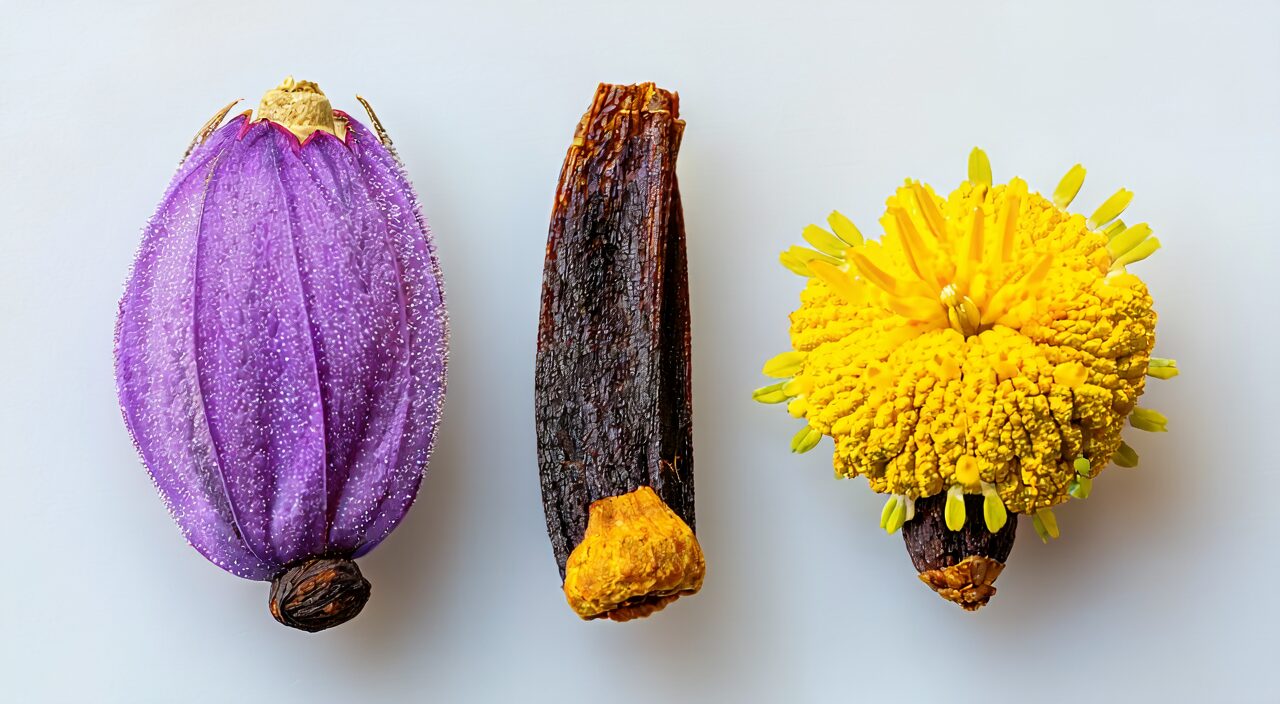
Among flower bud medicinals, Genkwa flower, clove, and Inula flower can be easily confused due to their similar shapes, but careful identification reveals clear differences. Clove is the dried flower bud of the Myrtaceae plant Syzygium aromaticum; its shape is short and stout, like a small mallet, dark brown in color, firm in texture, and highly aromatic. It is commonly used to warm the middle, direct rebellious qi downward, and tonify kidney yang; it is an acrid, warm, non-toxic qi-moving medicinal. Inula flower, on the other hand, is the flower head of the Asteraceae plant Inula japonica. It is flattened-globular, yellow or yellowish-brown, with a surface densely covered with white hairs, and is light in texture. Traditionally it is often used to direct qi downward and resolve phlegm, and its nature is relatively mild. In contrast, Genkwa flower buds are more slender, grayish-purple, not particularly aromatic, and possess strong toxicity, making their use very different. Recognizing the differences in medicinal parts, actions, and safety is a prerequisite for safe application.
Which Formulas Use Genkwa Flower?
Formulas containing Genkwa flower are not common in medical texts throughout history and mostly belong to the category of drastic purgation. Examples include Ten Jujube Decoction (Shi Zao Tang), Vessel and Vehicle Pill (Zhou Che Wan), and Genkwa Powder (Yuan Hua San). Ten Jujube Decoction combines Genkwa flower with Kansui (Euphorbia kansui), Peking spurge (Euphorbia pekinensis), and ten jujubes. It is traditionally a representative formula for draining water and expelling retained fluids, suitable for certain patterns of water-fluid accumulation in the chest or abdomen with excess conditions, but it must be decided by a physician under strict diagnosis and supervision. Vessel and Vehicle Pill adds more water-expelling and qi-moving herbs on top of the Ten Jujube Decoction base, making its purgative force even stronger; it was used in ancient times for severe water distension. Genkwa Powder has various origins; some are for internal use to manage edema, while others are for external use to destroy parasites, but all rely on controlling the toxicity risk. None of these formulas are designed for routine health maintenance. General readers should only take them as knowledge and must not attempt self-administration out of curiosity, as this can cause serious harm.
What Precautions Are Needed When Using Genkwa Flower?
First and foremost, it must be clear that Genkwa flower is a toxic Chinese medicinal. Under no circumstances should it be purchased or used without professional medical guidance. It is contraindicated during pregnancy, breastfeeding, in children, and in the elderly or debilitated. For people with weak gastrointestinal function or prone to diarrhea, the risk of irritation is even higher. In traditional herb incompatibility, Genkwa flower and licorice belong to the “eighteen incompatibilities” category and are generally not recommended for concurrent use. The severe vomiting, diarrhea, and dehydration resulting from improper use can lead to even more serious problems. Even in clinical settings, physicians must strictly control the dosage and usage; for example, it is often used in pill or powder form, or processed with vinegar to reduce toxicity. Therefore, if you encounter any information suggesting that you can take Genkwa flower on your own for health maintenance, you should remain highly vigilant and consult a professional TCM practitioner at the earliest opportunity.
Summary
As a toxic, drastic water-expelling herb, Genkwa flower — its visual identification, its use of the flower bud as a medicinal part, and its application in classic formulas such as Ten Jujube Decoction — is a typical example of the TCM concept of “using bias to correct bias.” What is most important is to recognize its safety boundaries: its toxicity is well-defined, and it must never be tried on one’s own. Regardless of any health need, decisions should be made under professional guidance. This article only provides objective knowledge as a reference for overseas TCM enthusiasts and does not constitute any medicinal advice. For any health concerns, please be sure to seek an in-person diagnosis from a qualified practitioner.