
What Is Alisma? Medicinal Parts, Identification, and Common Formulas
In many introductions of diuretic and damp-draining herbs, Alisma often appears alongside Polyporus and Poria. What is Alisma? What are its medicinal parts and appearance characteristics? How is it used in TCM? How does it differ from Polyporus? These questions are very practical for readers who want to systematically understand Chinese medicinal materials. This article will sort through these aspects from the perspectives of identification, traditional understanding, and common formulas.
What Does Alisma Look Like? How to Identify It?
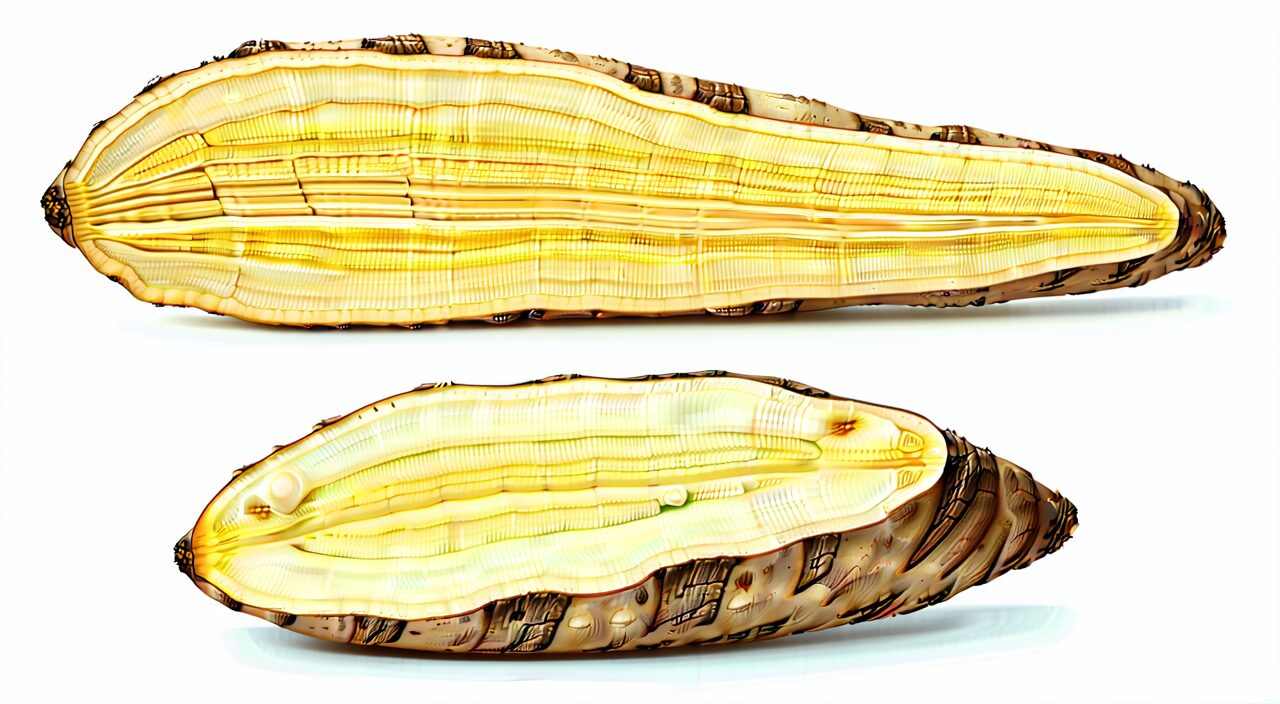
The dried rhizome of Alisma, before being cut for processing, is mostly sub-spherical, elliptical, or ovoid, medium-sized, generally 2–7 cm long and 2–6 cm in diameter. The surface, after scraping off the outer skin, appears yellowish-white or pale yellowish-brown. Upon careful observation, one can see irregular horizontal ring-shaped shallow grooves and scattered dotted rootlet scars; bud scars may occasionally remain at the bottom end. The texture is firm and heavy, not easily broken. When broken, the cross-section is yellowish-white with strong starchy nature, and many fine pores visible to the naked eye, resembling a sponge-like structure but denser. It tastes slightly bitter and has a faint smell. Mastering the key features—”numerous ring grooves, starchy yellowish-white cross-section, and basal bud scars”—can often help quickly identify it.
What Is the Medicinal Part of Alisma?
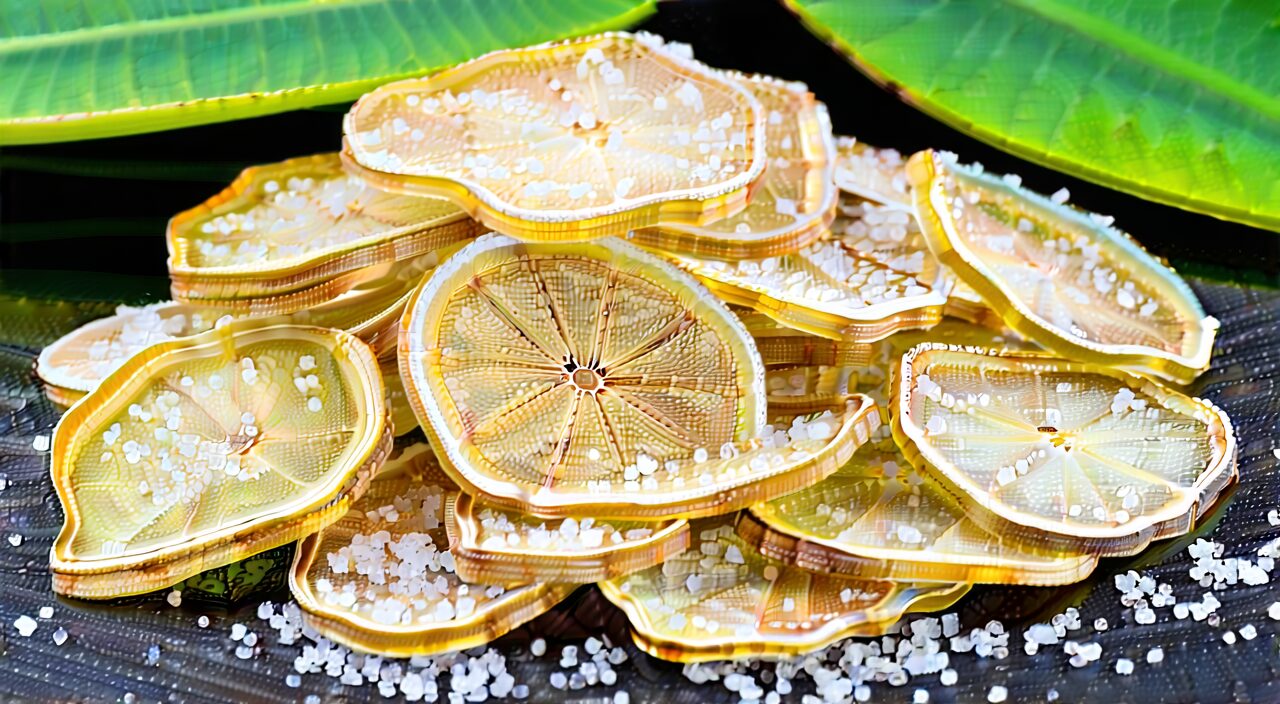
The medicinal part of Alisma is its dried rhizome, botanically the storage organ of the Alisma plant in the Alismataceae family. Traditionally, it is harvested in winter, when the aerial parts have withered and the underground rhizome has the highest concentration of nutrients. After digging up, it is washed to remove sediment, cleared of fibrous roots and coarse bark, sorted by size, and then sun-dried or heat-dried. Slices are often cut into thick pieces. Salt-processed Alisma (Yan Zexie) is a common prepared form: clean Alisma slices are mixed with an appropriate amount of salt water, left to moisten until the salt water is absorbed, then stir-fried over low heat until the surface turns slightly yellow, and finally removed to cool. After salt processing, the medicinal property tends to descend, with the traditional consideration of promoting water passage without injuring yin. Whether raw or salt-processed, it should be recognized that they are only different levels of processing, and the origin is always the Alisma rhizome.
How Does TCM Understand Alisma?
In the TCM system, Alisma is cold in nature, with sweet and bland flavors, and mainly enters the Kidney and Bladder meridians. Summarizing its functions, it is most often mentioned for promoting urination and percolating dampness, draining heat, and transforming turbidity and lowering lipids. When water metabolism in the body is abnormal, manifesting as scanty dark urine, edema, diarrhea, or phlegm-fluid retention, Alisma is often used to open the water passages, expelling excessive water-dampness through urination while also clearing heat. Therefore, it is especially suitable for water-dampness complicated by heat. In tonifying yin formulas such as Liuwei Dihuang Wan (Six-Ingredient Rehmannia Pill), combining Alisma follows the idea of “treating the secondary by addressing the primary,” using a small amount of Alisma to drain deficient fire and damp-turbidity from the kidney, so that the tonic herbs can exert their effects better without causing sluggishness and stagnation of pathogens. As for transforming turbidity and lowering lipids, it can be understood as a deeper level of regulating water-dampness metabolism, but it is not equivalent to lipid-lowering therapy in modern medicine, and should not be directly equated.
Some Directions Mentioned in Modern Research
Modern research mainly focuses on triterpenoids and sesquiterpenoids in Alisma. Some experiments suggest its potential in diuretic effects and lipid metabolism regulation, but these are mostly preliminary findings and cannot serve as a basis for guiding clinical use.
What Are the Differences Between Alisma, Polyporus, and Poria?
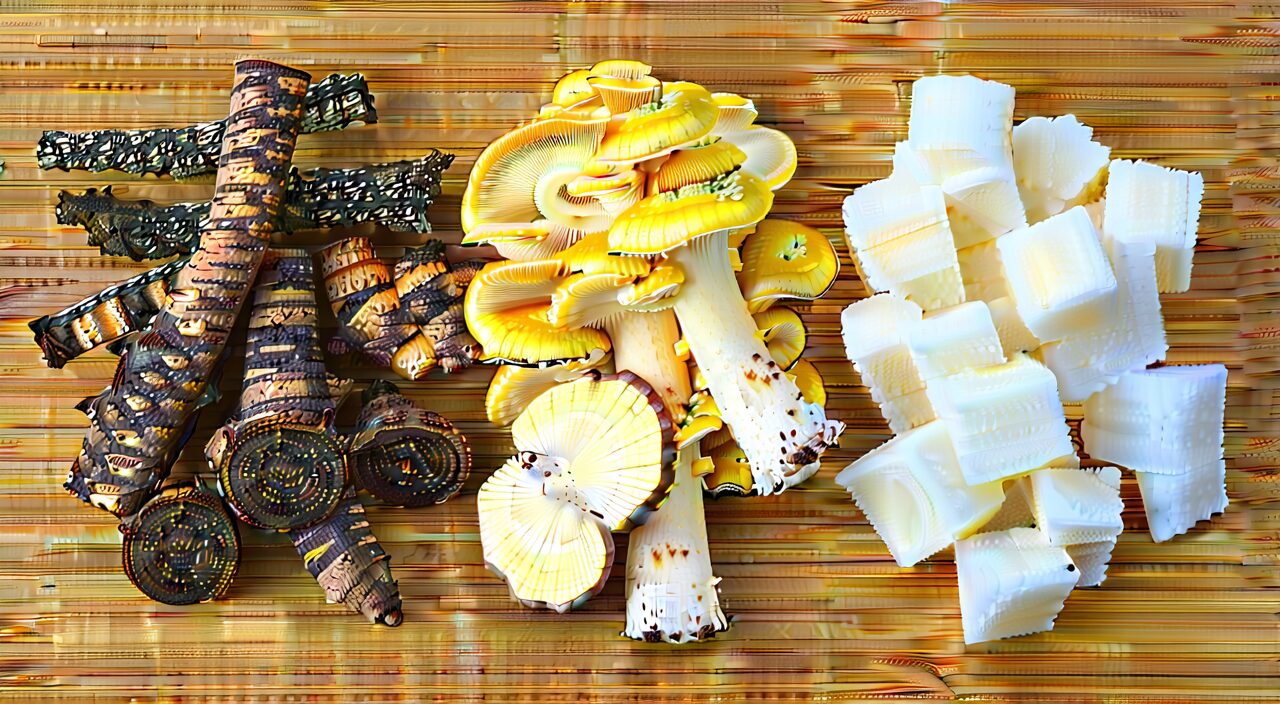
Although Alisma, Polyporus, and Poria are frequently discussed together, they are actually three different medicinal materials from different sources. Alisma comes from the rhizome of a plant in the Alismataceae family, while Polyporus and Poria are from the dried sclerotia of different fungi in the Polyporaceae family. In appearance, Alisma has a sub-spherical shape, ring grooves, and starchy characteristics; Polyporus is mostly irregularly shaped, with an uneven, rough surface and a blackish color; Poria is often processed into regular cubes, thin slices, or rolled slices, with a white or light brown exterior. In terms of efficacy, Alisma excels at promoting water, percolating dampness, and draining heat; Polyporus has stronger dampness-draining power but no tonifying effect; Poria also has the effects of strengthening the spleen and calming the mind. The three are often used in combinations of two or all three to achieve more comprehensive regulation of water-dampness.
Which Formulas Contain Alisma?
Wu Ling San (Five-Ingredient Powder with Poria) takes Alisma as the sovereign herb, combined with Polyporus, Poria, Atractylodes macrocephala, and Cinnamon twig. It is adept at warming yang to transform qi, promoting urination and percolating dampness, and is traditionally used for edema, scanty urine, or vomiting and diarrhea caused by internal water-dampness. Zexie Tang (Alisma Decoction) consists of just two ingredients, Alisma and Atractylodes macrocephala, and is a classic small formula from the “Synopsis of the Golden Chamber” for treating vertigo and dizziness caused by water-fluid surging upward. In Liuwei Dihuang Wan (Six-Ingredient Rehmannia Pill), Alisma, together with Moutan cortex and Poria, constitutes the “three draining herbs,” which, while tonifying, guide out damp-turbidity, achieving supplementation without stagnation. Longdan Xiegan Tang (Gentiana Liver-Draining Decoction), while clearing excess fire from the liver and gallbladder, uses Alisma and Akebia stem to direct damp-heat downward. The selection of these formulas has strict pattern requirements, and it is not recommended to self-apply them based on only a few symptoms.
What Precautions Should Be Taken When Using Alisma?
Alisma is cold and draining; if used incorrectly, it can easily deplete qi and injure yin. People who often have dry mouth, dry skin, dry stools, scanty and clear urine, or increased nocturia often indicate insufficient fluids or weak yang qi and are not suitable for using Alisma alone. More importantly, individuals with known renal insufficiency, chronic nephritis, or electrolyte imbalances may increase risk by casually using herbs with diuretic effects. Moreover, even with a suitable constitution, long-term uninterrupted use should be avoided; in traditional prescriptions, Alisma is mostly used short-term within compound formulas. If persistent edema or urinary discomfort occurs, it is imperative to seek medical examination to determine the cause first.
Summary
Alisma is used medicinally as the dried rhizome; the surface ring grooves and starchy cross-section are its typical identifying features. In TCM, it is traditionally used to promote urination and percolate dampness, drain heat, and transform turbidity, and is flexibly combined in classic formulas such as Wu Ling San, Zexie Tang, and Liuwei Dihuang Wan. Due to its cold and draining nature, individuals with insufficient fluids, abnormal kidney function, or excessive urination should avoid self-use. This article is for informational reference only; specific applications should be based on personal conditions and professional advice.