
A TCM Perspective on Dandruff Accompanied by Hair Loss: Wind-Heat, Damp-Heat, and Blood Deficiency

Dandruff is not just an embarrassing cosmetic concern; when it appears together with hair loss, it often heightens anxiety. Many people notice that during periods of pronounced dandruff, hair shedding seems to increase as well, leading to the natural question: Does dandruff clog hair follicles and cause hair loss? From a TCM perspective, although the two are connected, they rarely share a simple cause-and-effect relationship. Instead, they are common outward signs on the scalp reflecting the body’s internal state. Below, we explore the possible links between dandruff and hair loss and approaches to address them through the lenses of wind-heat, damp-heat, and blood deficiency generating wind.
Why Dandruff and Hair Loss Often Appear Together
In dermatology, dandruff is often linked to excessive Malassezia yeast growth and a compromised scalp barrier, whereas the causes of hair loss are more complex and may involve genetics, hormones, nutrition, stress, and other factors.
Chinese medicine tends to view the scalp as a “barometer” of the body’s interior. The condition of the hair and scalp reflects the state of qi and blood, organ functions, and whether pathogenic factors are present. When dandruff significantly increases alongside hair loss, it often indicates an imbalance involving wind, heat, dampness, or blood deficiency. These factors can both disturb the scalp environment and affect nutrient supply to hair follicles, so dandruff and hair loss may appear simultaneously without necessarily being cause and effect.
From Wind-Heat and Damp-Heat to Blood Deficiency: How Different Patterns Affect the Scalp and Hair
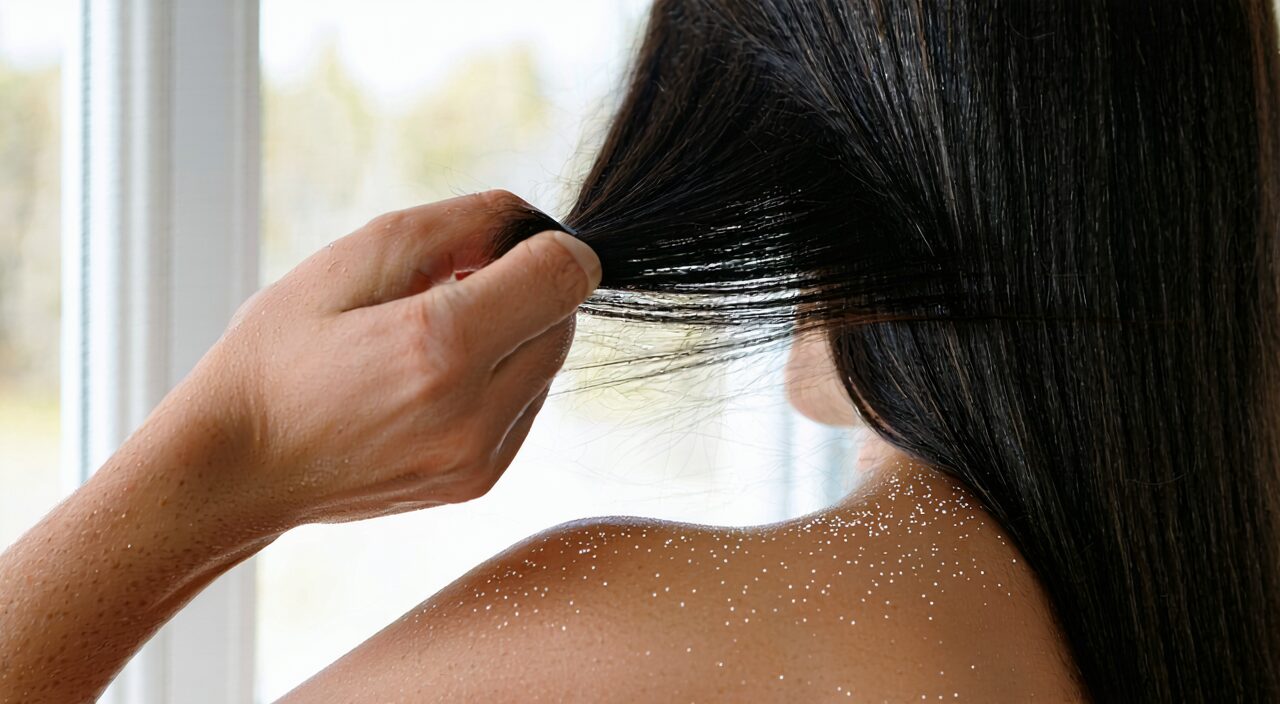
The texture of dandruff and scalp sensations often provide directional clues. Below we discuss dry-type dandruff, oily-type dandruff, and an easily overlooked blood deficiency type.
Fine, Dry Dandruff: Wind-Heat and Blood Dryness Are Often the Focus
If dandruff is white, fine, and easily flakes off like snow, accompanied by varying degrees of scalp itching, and sometimes a tight or slightly hot sensation on the scalp, these signs in traditional Chinese medicine may be associated with “wind-heat and blood dryness.”
When wind-heat pathogens disturb the head, or internal heat consumes body fluids, the scalp loses adequate nourishment, resulting in dry flakes. Wind-heat agitates the qi and blood of the scalp, making the nourishment to hair follicles unstable, so hair becomes fragile and dry and begins to shed more.
This pattern is commonly seen in individuals who:
- Often experience dry mouth and prefer cool drinks
- Are sensitive to heat and tend to have a quick temper
- Notice that symptoms worsen during the dry autumn season
When facing this wind-heat blood dryness tendency, daily care typically aims at dispelling wind, clearing heat, cooling the blood, and moistening dryness:
- Diet: Include more mild and moistening foods such as pears, water chestnuts, lily bulbs, and mung beans, while avoiding spicy, fried, barbecued, and overly sweet foods.
- Sleep: Try not to stay up late, as lack of sleep can worsen deficiency fire, making the scalp itchier and dandruff more severe.
Greasy, Sticky Dandruff: Don’t Overlook Upward Steaming of Damp-Heat
Others may find their dandruff is yellowish, greasy, and clings in patches to the scalp or hair roots, the scalp is frequently oily and itchy, and there may be mild redness, with oiliness returning soon after washing. This presentation is often classified as the “upward steaming of damp-heat” type.
When dampness and heat combine and steam upward toward the head, excessive scalp oil secretion occurs. The damp-heat environment further creates favorable conditions for microorganisms, making dandruff thick and greasy. Dampness itself tends to obstruct qi flow, and when hair follicles are chronically soaked in turbid dampness, nutrient supply is hindered, leading hair to become thin, limp, and prone to falling out.
These individuals often also experience:
- Heaviness in the body and easy fatigue
- Sticky bowel movements
- Oily facial skin
For a damp-heat tendency, the focus of regulation is more on strengthening the spleen, dispelling dampness, clearing heat, and transforming turbidity:
- Diet: Reduce intake of sweets, greasy foods, dairy products, and alcohol, as these tend to generate dampness and heat. Suitable dietary choices include coix seed (Job’s tears), adzuki beans, winter melon, and lotus leaf, which help clear and drain damp-heat.
- Lifestyle: Keep skin dry, avoid prolonged stays in damp and stuffy environments, and engage in moderate exercise to sweat, which helps improve the damp-heat condition.
Dry Scalp with Noticeable Hair Loss: A Potential Signal of Blood Deficiency Generating Wind
There is also a pattern where dandruff may not be abundant, but the scalp is dry with slight flaking, the hair is dry and lacks luster, and hair loss is relatively obvious, sometimes accompanied by a numb or slightly cool sensation on the scalp. These signs are often seen in what TCM calls “blood deficiency generating wind.”
When blood deficiency fails to nourish the head, the skin and interstices lose moisture, resulting in dry flakes. At the same time, hair follicles lack sufficient qi and blood nourishment, so hair gradually thins and falls out. This type of change is often seen in people who are chronically overworked, sleep-deprived, postpartum, or following restrictive diets.
The approach for blood deficiency generating wind centers on nourishing blood, moistening dryness, and dispelling wind:
- Diet: Pay attention to iron- and protein-rich foods such as lean meats, animal liver, and dark green vegetables. In TCM dietary therapy, jujube dates, longan, black sesame seeds, and mulberries are also commonly used to nourish qi and blood.
- Sleep: Sleep is a crucial time for nourishing blood. Ensure adequate and regular sleep, as this is highly beneficial for improving a blood deficiency tendency.
Application Ideas of Traditional Patent Chinese Medicines in Related Care Approaches
When addressing the simultaneous presence of dandruff and hair loss, certain patent Chinese medicines are often considered as one of the care options. For example:
Often used with the approach of nourishing yin and clearing heat. For cases where yin deficiency and hyperactive fire with upward-disturbing deficiency heat lead to dry, itchy scalp, fine white dandruff, accompanied by dry mouth, irritability, heat sensation, and soreness and weakness of the lower back and knees, it may be a direction worth learning about.
Emphasizes fortifying the spleen, boosting qi, and percolating dampness to stop diarrhea. When dampness encumbers the spleen, manifesting as an oily scalp, greasy dandruff, easy fatigue, poor appetite, and loose stools, it traditionally serves as a reference formula to strengthen the spleen and dispel dampness, helping reduce the impact of dampness on the scalp and hair follicles.
It is essential to emphasize that each person’s constitution and symptom combination differ. The above formulas or patent medicines are only listed as traditional application directions and do not mean they are suitable for all cases of dandruff with hair loss. Whether they are appropriate must be judged comprehensively based on your own specific manifestations, product instructions, and professional advice. Do not self-medicate blindly.
Easily Overlooked Details in Daily Care

In addition to internal regulation, proper daily treatment of the scalp directly affects recovery. Some inadvertent small habits can cause scalp problems to recur or even worsen.
Hair Washing Frequency and Water Temperature
Both over-washing and under-washing can cause issues:
- For those with an oily scalp and obvious damp-heat tendency: Keeping the scalp fresh and clean is important. Wash daily or every other day with a mild shampoo.
- For those with a dry scalp and wind-heat blood dryness or blood deficiency generating wind pattern: Avoid over-washing so as not to strip away the already scant sebum protective layer.
The water temperature for washing should be close to body temperature:
- Water that is too hot can irritate the scalp and worsen itching and flaking.
- Water that is too cold may cause oils to solidify and become difficult to rinse clean.
Beyond Diet, Emotions and Daily Routines Are Equally Important
Anxiety, tension, and chronic stress tend to generate fire and damage yin, and they can also disrupt the flow of qi and blood. From a TCM perspective, these are common reasons for worsening wind-heat and blood deficiency. Many people with dandruff accompanied by hair loss find that once their emotions stabilize and sleep improves, their scalp condition naturally improves as well.
Therefore, consciously adjusting the pace of life and relaxing the mind through walking, meditation, deep breathing, and similar methods is very helpful for the long-term health of the scalp and hair.
Avoid Incorrect Topical Treatments
Scratching vigorously when the scalp itches, washing with hot water to relieve itching, or self-applying strong, irritating hair tonics or anti-dandruff agents may damage the scalp barrier and cause secondary dermatitis, which is counterproductive to improving dandruff and hair loss.
If scalp problems persist or recur, or if there are large areas of redness, oozing, or severe itching, consult a dermatologist promptly to avoid delaying necessary symptomatic treatment.
When to Seek Medical Attention Promptly
Dandruff and hair loss are themselves common skin and hair concerns, but if the following occur, it is advisable to seek professional diagnosis and treatment early:
- Sudden intense itching of the scalp, massive flaking, or accompanied by marked redness, swelling, pustules, or erosion
- Hair loss that sharply increases in a short period, presenting as patchy shedding
- Simultaneous skin issues on other body parts, joint pain, or general discomfort
- Long-term insomnia, severely low mood, anxiety, or the appearance of systemic signs like unexplained weight loss and fatigue
Although TCM regulation offers many conceptual references, for complex, stubborn, or rapidly progressing scalp and hair loss problems, it remains essential to integrate modern medical examinations to clarify the underlying cause and avoid delaying treatment.
Summary
The combination of excessive dandruff with hair loss is often a reflection of internal imbalances manifesting on the scalp. TCM typically understands the significance behind different dandruff textures through patterns like wind-heat blood dryness, upward steaming of damp-heat, and blood deficiency generating wind, and accordingly selects corresponding care approaches and lifestyle adjustments:
- For dry-type dandruff, focus on moistening dryness and clearing heat
- For oily-type dandruff, focus on strengthening the spleen and dispelling dampness
- When there is a blood deficiency tendency accompanied by significant dryness and hair loss, it is necessary to nourish blood and moisten dryness
It is important to be aware that improving dandruff may not directly stop hair loss. The two intersect but do not share a simple cause-and-effect relationship. In daily maintenance, a light diet, stable routines, emotional calmness, and proper washing and care are all fundamental and important aspects. If the condition is severe or does not improve over a long period, seeking a professional doctor’s help should remain the first choice. This article serves only as a knowledge reference from the traditional Chinese medicine perspective and cannot replace individualized diagnosis and treatment advice.