
What Is Dan Shen? Medicinal Parts, Identification, and Common Formulas
Dan Shen is the dried root and rhizome of the plant Salvia miltiorrhiza (a member of the Lamiaceae family). Its outer skin is brick-red, hence the traditional name “Dan” (cinnabar) Shen. In Chinese medicine, Dan Shen is often considered for conditions related to blood stasis. Many overseas Chinese wish to learn about the appearance, medicinal parts, differences from similar herbs, and classic formulas containing this commonly used medicinal material. This article will introduce these aspects to help build a foundational understanding of Dan Shen.
What Does Dan Shen Look Like? How to Identify It?
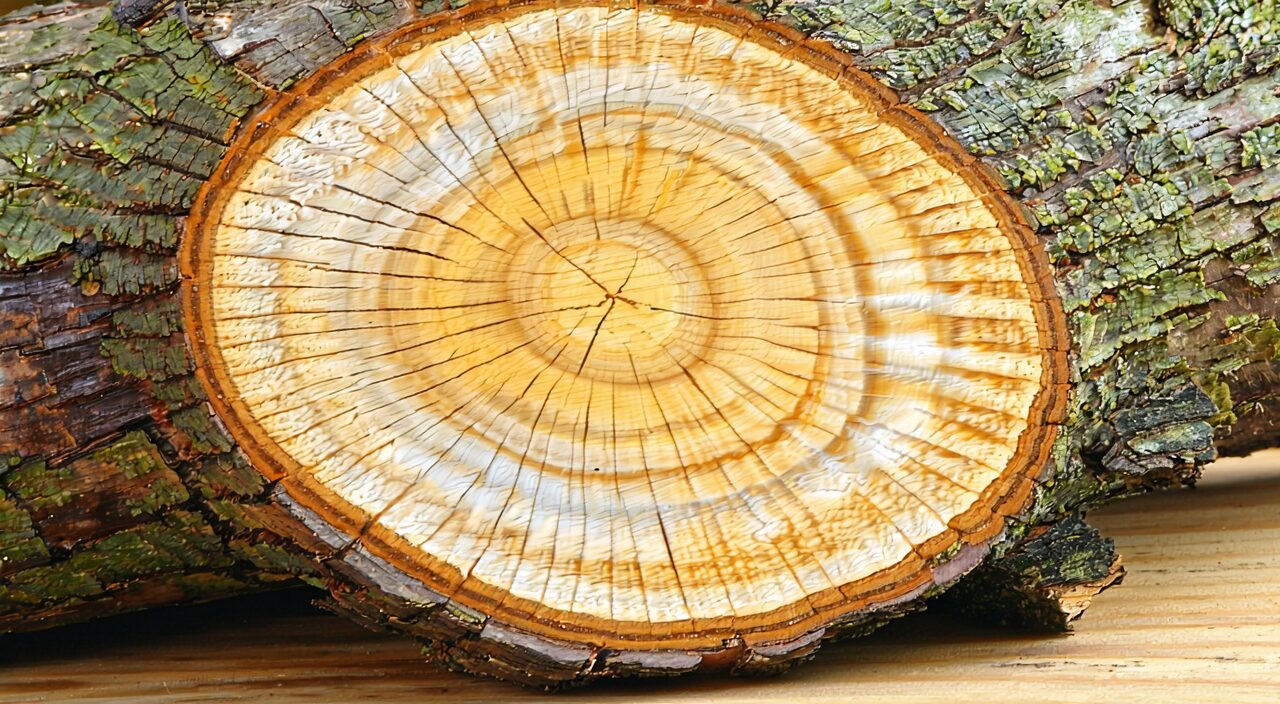
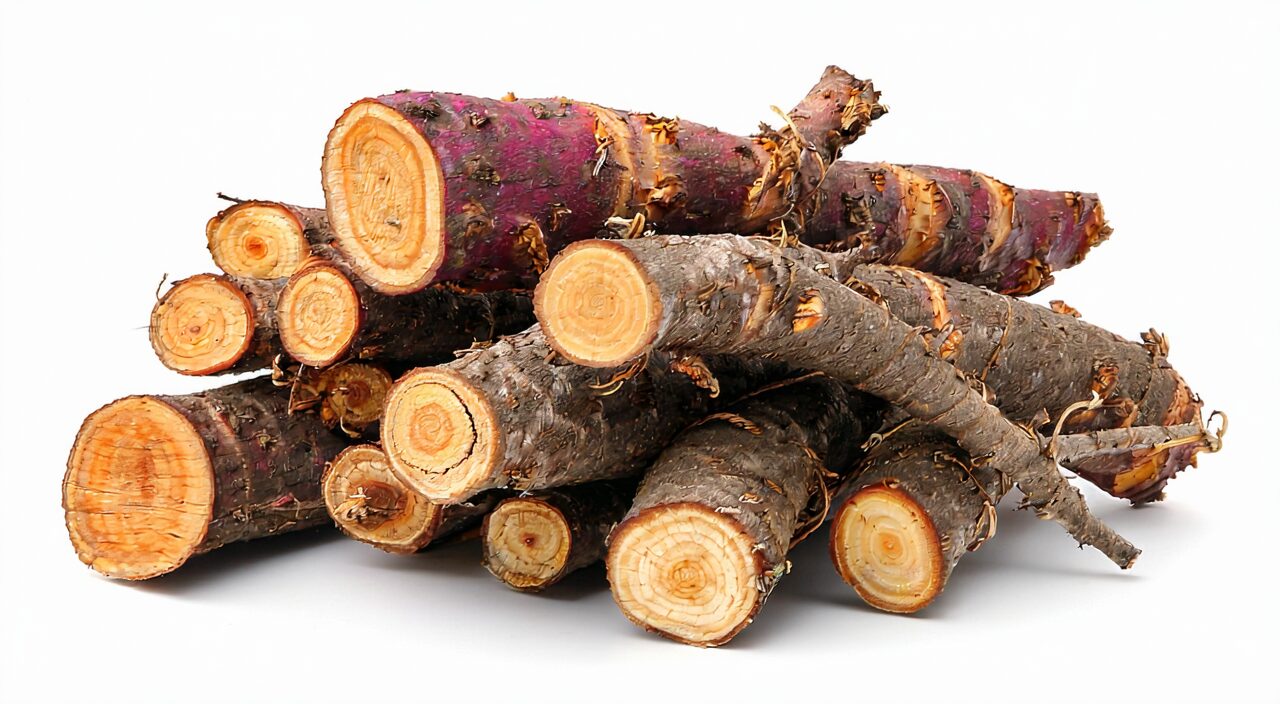
The medicinal part of Dan Shen is the root and rhizome. When dried, it is mostly long-cylindrical, slightly curved, sometimes branched, generally 10–20 cm long and 0.3–1 cm in diameter. The surface is brick-red, dark brownish-red, or brown, rather rough, with fine longitudinal wrinkles and rootlet scars. The outer bark of older roots often peels off in scaly patches. The texture is hard and brittle, easily broken, and sometimes dust-like powder flies when fractured. The broken surface is uneven; the bark is relatively thin and brownish-red, while the wood is yellowish-white or grayish-yellow, showing radially arranged vessel points—an important identification feature. The odor is slight and the taste slightly bitter and astringent. Traditionally, roots that are thick, red, hard, and free of rhizome remnants and fibrous roots are considered the best quality. Common sliced Dan Shen on the market is mostly roundish thick slices; the cut surface also displays the typical brownish-red bark and yellowish-white wood, whereas counterfeits often lack this sharp color contrast or cross-sectional texture.
What Is the Medicinal Part of Dan Shen?
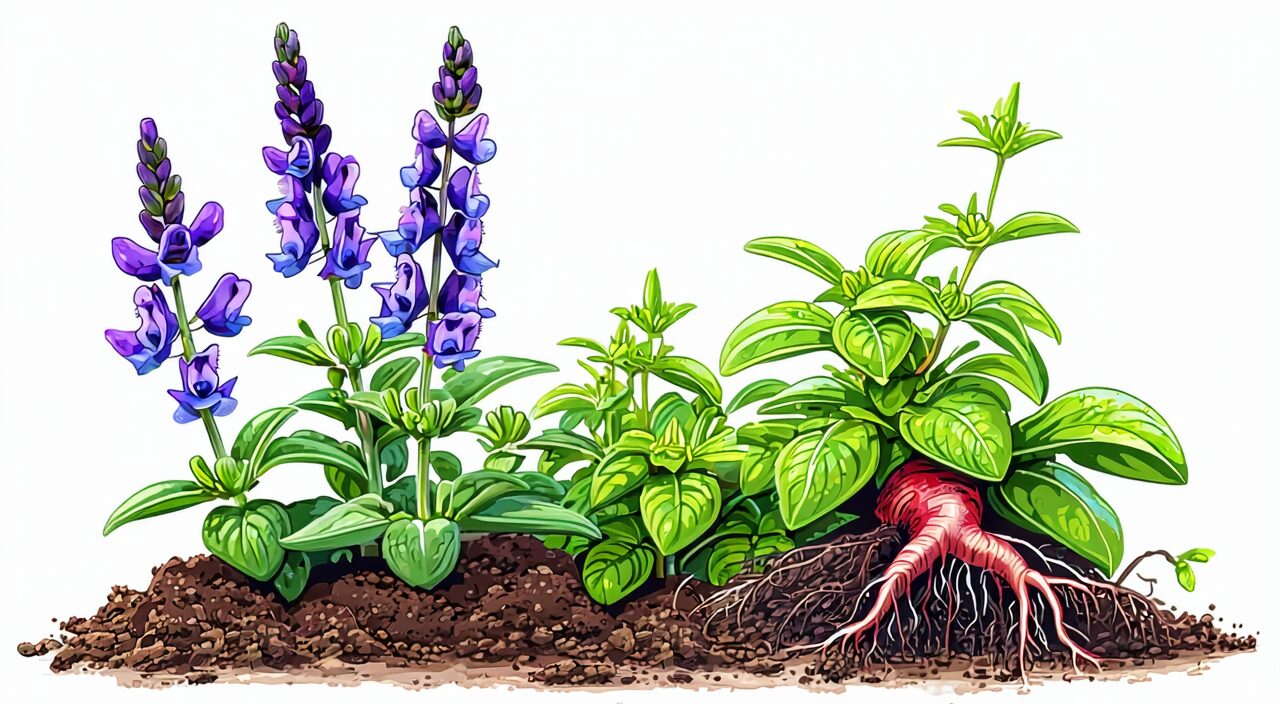
The medicinal part of Dan Shen comes from the root and rhizome of the plant. It is usually harvested in spring or autumn, then cleaned of sediment and fibrous roots and dried. In some production areas, a “sweating” step is practiced—piling the roots to deepen the internal color before drying—which is traditionally believed to improve its medicinal properties. Nowadays, directly oven-dried or fresh-sliced then dried decoction pieces are also available. Whether whole or sliced, the characteristic brownish-red bark and yellowish-white wood can be observed. In clinical Chinese medicine, Dan Shen is mostly used in decoctions, but it can also be made into pills, powders, or processed through modern extraction into dripping pills, tablets, and other forms.
How Does Traditional Chinese Medicine Understand Dan Shen?
In terms of nature and flavor, Dan Shen is bitter in taste and slightly cold in nature, entering the Heart and Liver meridians. Historical materia medica texts record it richly: The Shen Nong Ben Cao Jing (Divine Farmer’s Classic of Materia Medica) lists it as a top-grade herb, stating that it “governs pathogenic qi in the heart and abdomen, rumbling intestines like moving water, accumulation of cold and heat, breaks a mass and removes conglomerations, stops irritability and fullness, and boosts qi.” The Ben Cao Gang Mu (Compendium of Materia Medica) says it “can break up old blood and replenish new blood.” In traditional thinking, the core function of Dan Shen revolves around invigorating blood, removing stasis, unblocking menstruation, and relieving pain. For various manifestations caused by poor blood circulation and stasis—such as prickling chest pain, epigastric and abdominal pain, irregular menstruation, dysmenorrhea, and postpartum stasis abdominal pain—Dan Shen is often included in therapeutic strategies. In addition, it can clear the heart and relieve vexation, traditionally used for irritability and insomnia due to heat entering the nutrient-blood stage in warm diseases, often combined with heat-clearing and blood-cooling herbs. However, because of its blood-invigorating action, it should not be used casually in cases of bleeding tendency or when anticoagulant medications are being taken. Chinese medicine emphasizes syndrome differentiation, and not all “blood stasis” patterns are suitable for Dan Shen as the main herb.
What Components and Effects of Dan Shen Are Studied in Modern Research?
Modern phytochemical research has found that Dan Shen mainly contains two types of active constituents: tanshinones (such as tanshinone IIA, cryptotanshinone) and phenolic acids (such as salvianolic acid B, danshensu). Experimental studies indicate that these components show antioxidant, anti-inflammatory, platelet aggregation-inhibiting, and microcirculation-improving activities in cell or animal models; some in vitro studies also suggest inhibitory effects against certain bacteria. These findings offer a modern perspective on the traditional concept of “invigorating blood,” but it must be clarified that experimental effects cannot be directly equated with clinical efficacy in humans. Currently, products containing Dan Shen extracts should still be managed as medicines or health products and should not be self-administered as routine “blood-vessel-cleansing” substances. If cardiovascular discomfort is present, it is advisable to first seek a clear diagnosis and then evaluate, under a doctor’s guidance, whether a regimen containing Dan Shen is appropriate.
How Does Dan Shen Differ from Similar Herbs?
Among blood-invigorating and stasis-removing herbs, notoginseng (San Qi) and red peony root (Chi Shao) are sometimes confused with Dan Shen. Their sources, appearances, and traditional application emphases are distinctly different, and they can initially be distinguished by appearance.
Dan Shen comes from a Lamiaceae plant; its surface is brick-red or dark brownish-red, the broken surface shows brownish-red bark and yellowish-white wood, it is relatively light in weight and breaks easily. It traditionally leans toward invigorating blood, removing stasis, clearing the heart, and relieving vexation, often used for stasis in the chest and uterus.
Notoginseng (San Qi) comes from an Araliaceae plant; its surface is grayish-yellow or grayish-brown with interrupted longitudinal wrinkles and tumor-like protrusions; it is heavy and solid; the broken surface is grayish-green or yellowish-green with a chrysanthemum-like pattern. Notoginseng can both invigorate blood and stop bleeding, and is said to “resolve stasis without damaging the healthy qi.” It is often used for traumatic injuries and various bleeding with stasis.
Red peony root (Chi Shao) comes from a Ranunculaceae plant; its surface is brown, rough with longitudinal grooves, hard and brittle; the broken surface is flat, chalky-white or slightly reddish, with a narrow bark and distinct radially arranged wood texture. Chi Shao leans toward clearing heat, cooling blood, and dispersing stasis to relieve pain, often used for warm diseases where heat enters the blood aspect and for blood-heat stasis.
In practice, because of their different emphases, they cannot be arbitrarily substituted for one another. The choice must be based on the individual’s presentation and determined by a professional.
Which Formulas Use Dan Shen?
Many classic formulas include Dan Shen as an important ingredient. Below are a few common examples to illustrate its role in combinations.
- Dan Shen Yin (Salvia Drink): Composed of Dan Shen, Tan Xiang (Sandalwood), and Sha Ren (Amomum). The formula heavily uses Dan Shen to invigorate blood and remove stasis, while Tan Xiang and Sha Ren move qi and relieve pain. It is a commonly used formula for chest pain caused by qi stagnation and blood stasis, and for regulating disharmony of the blood vessels and chest obstruction.
- Tian Wang Bu Xin Dan (Heavenly King Heart-Supplementing Pill): Dan Shen is paired with Sheng Di Huang (Rehmannia), Xuan Shen (Scrophularia), Mai Dong (Ophiopogon), and others. The formula leans toward nourishing yin, enriching the blood, and supplementing the heart to calm the mind. Dan Shen assists in invigorating blood and unblocking vessels as well as clearing the heart and tranquilizing the spirit, traditionally used for yin-blood deficiency with deficiency vexation, palpitations, forgetfulness, and insomnia.
- Huo Luo Xiao Ling Dan (Effective Meridian-Activating Pill): Composed of Dan Shen, Dang Gui (Angelica sinensis), Ru Xiang (Frankincense), and Mo Yao (Myrrh). Dan Shen is combined with Dang Gui to invigorate and nourish blood, while Ru Xiang and Mo Yao move qi and disperse stasis. The whole formula excels at invigorating blood, removing stasis, and unblocking collaterals to relieve pain, often used for limb pain, masses, and accumulations caused by qi and blood stagnation.
- Compound Dan Shen Dripping Pill (Fu Fang Dan Shen Di Wan): A modern commonly used preparation with Dan Shen, San Qi (Notoginseng), and Bing Pian (Borneol) as the main ingredients. After extraction, it is convenient to carry and take. For relevant conditions, it is suitable for precordial discomfort of the qi-stagnation and blood-stasis type, but it must be used according to the instructions or under a pharmacist’s guidance. Overdosage or long-term reliance should be avoided.
These formulas highlight the flexibility of Dan Shen as a core blood-invigorating ingredient in combination therapies. Whether any formula is suitable for an individual requires syndrome differentiation and professional judgment; one should not self-prescribe based on these descriptions.
What Precautions Should Be Taken When Using Dan Shen?
Although adverse reactions to Dan Shen are relatively rare, improper use can still pose risks. People with bleeding disorders, thrombocytopenia, or those taking anticoagulant drugs (such as warfarin, aspirin) who concurrently use Dan Shen may have an increased bleeding tendency. Self-combination should be avoided, and a doctor should be consulted in advance. Pregnant women should use it cautiously, because blood-invigorating herbs may affect pregnancy stability. Some individuals may experience skin rashes, gastrointestinal discomfort, and other allergic reactions; use should be discontinued if these occur. Additionally, there have been case reports of allergic reactions to Dan Shen injections. Although this route differs from oral administration, it reminds us to maintain due caution with Dan Shen products. Those planning to undergo surgery are also advised to discontinue Dan Shen products beforehand. If there is any physical discomfort, the diagnosis should be clarified first, and only then should it be assessed whether a Dan Shen-containing regimen under professional guidance is appropriate.
Summary
Dan Shen is a commonly used blood-invigorating and stasis-removing medicinal material. Its most intuitive identification feature is the combination of its brick-red outer skin and yellowish-white wood core on the cross-section; the medicinal parts are the root and rhizome. Although it shares the category of stasis-resolving herbs with San Qi (notoginseng) and Chi Shao (red peony root), their sources, appearances, and applicable symptoms differ, so they should not be used interchangeably. Classic formulas such as Dan Shen Yin and Huo Luo Xiao Ling Dan demonstrate the traditional use of Dan Shen in invigorating blood and unblocking vessels from different angles, but the prerequisite for their use is matching the individual’s constitution and professional judgment. This article is for informational reference only and cannot replace professional diagnosis or treatment advice.