
What Is Huang Bai? Medicinal Parts, Identification, and Common Formula Applications
Many overseas friends interested in traditional Chinese medicine, when encountering heat-clearing and dampness-drying medicinal materials, often notice a plainly named but widely used herb — Huang Bai. It may not be as well-known as ginseng or goji berries, yet it plays an indispensable role in many classic formulas.
What exactly is Huang Bai? What does it look like? Which part of the plant is used? And how does it differ from the similarly named Huang Lian? This article will sort out the basic information about Huang Bai from these angles and introduce some common formulas that use Huang Bai, offering readers a glimpse into the thinking of traditional Chinese medicine.
What Does Huang Bai Look Like? How to Identify It
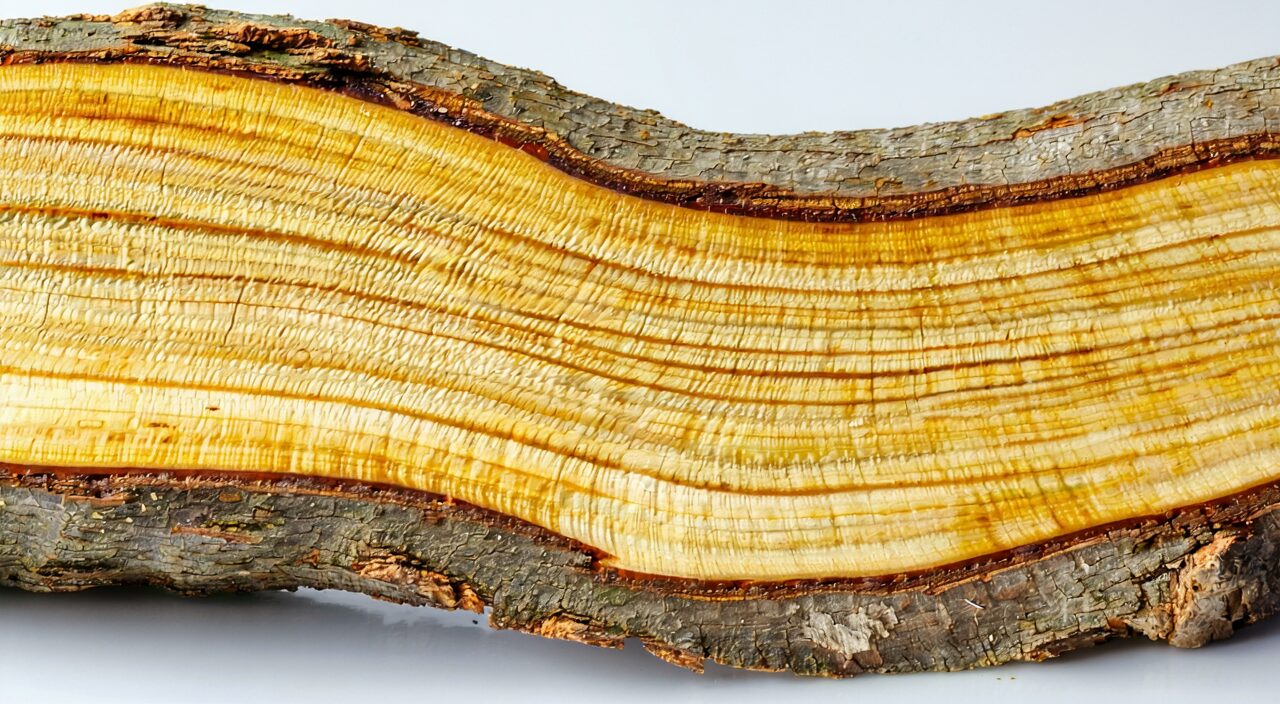
The medicinal appearance of Huang Bai is quite distinctive. Mastering a few key details makes it relatively easy to distinguish it from other bark-type medicinal materials.
Overall Shape
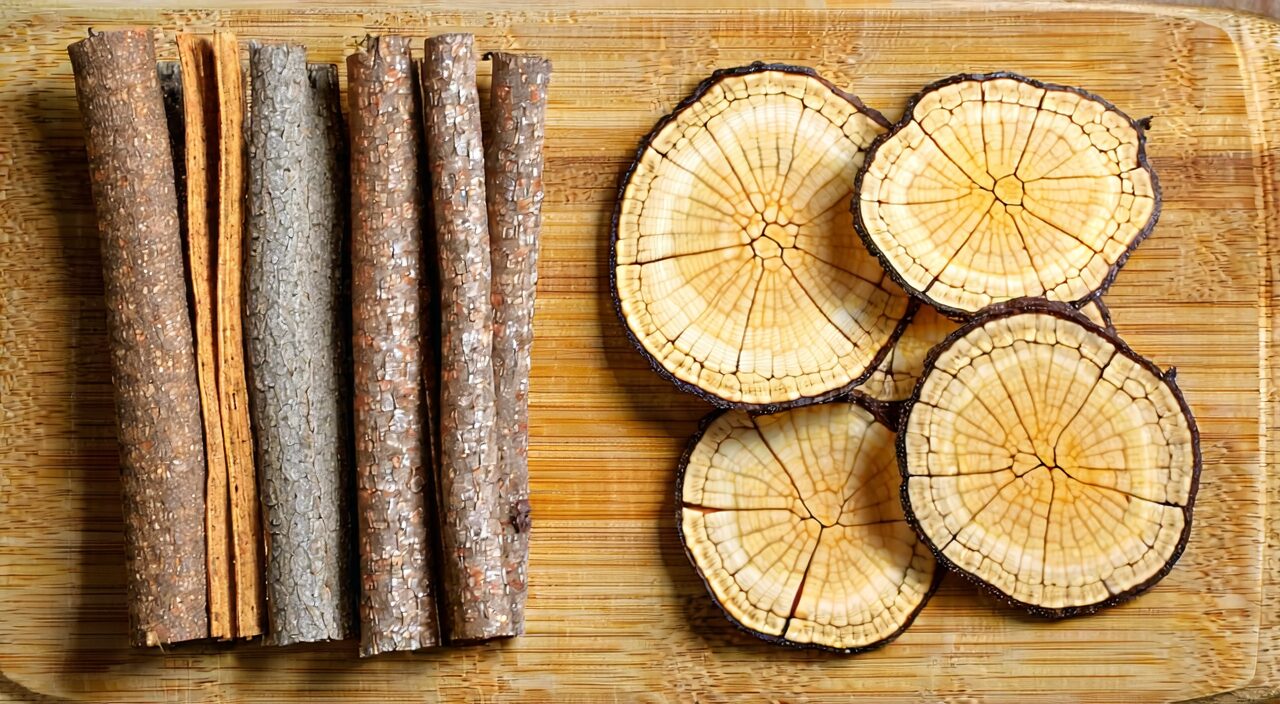
Huang Bai medicinal pieces generally appear in slab-like or shallow trough-like forms, a result of the bark naturally curling or being flattened after peeling. Sizes vary, and the thickness is usually within a few millimeters. The Huang Bai decoction pieces seen on the market are often already cut into strips of different lengths.
Outer Surface Features
The outer surface is yellowish-brown or yellow-brown, relatively flat, sometimes with visible small protrusions resembling lenticels, and may retain a small amount of greyish-brown or off-white rough cork layer. If the cork layer has been scraped off relatively cleanly, the outer surface will appear smoother.
Inner Surface and Cross-Section
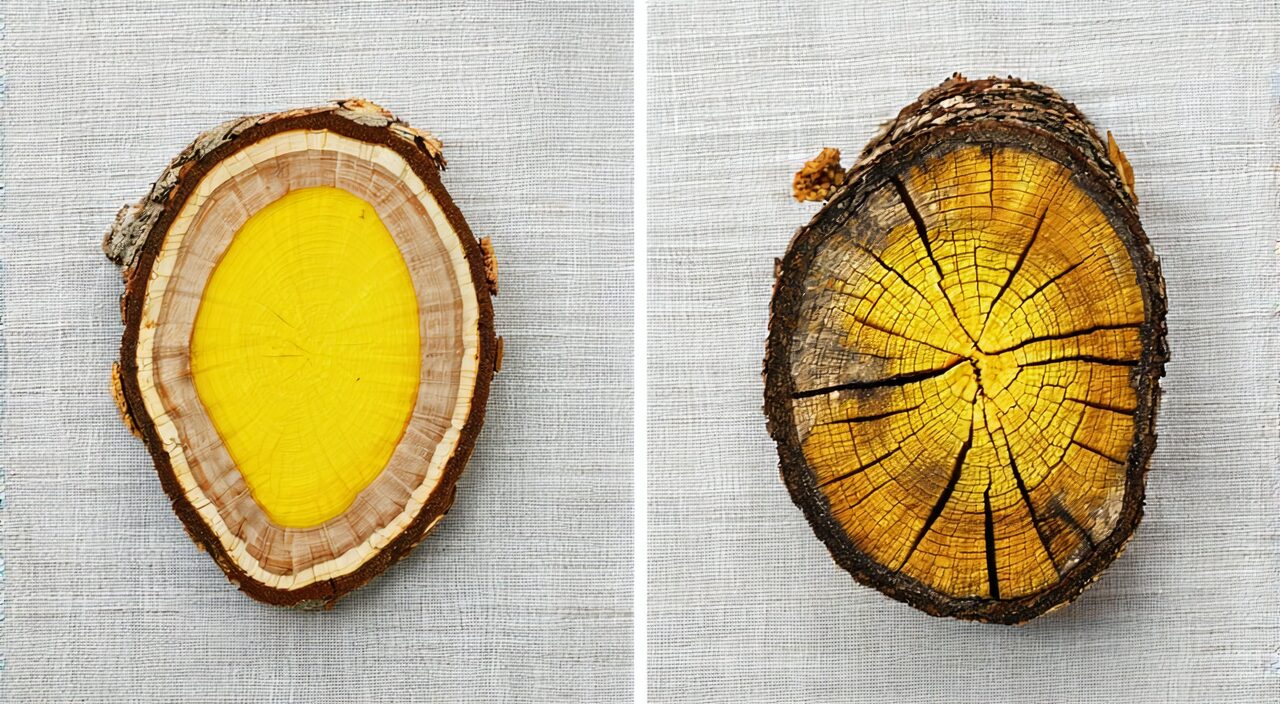
The most intuitive point for identifying Huang Bai is that its inner surface is bright yellow or yellow-brown, with vivid color that remains evident even when dry.
After breaking or cutting, the cross-section is equally yellow and markedly fibrous, revealing layers of fibrous structure. Although the overall texture is hard, the fractured surface is not entirely neat but carries a sense of fibers clinging together.
If you taste a small piece in your mouth, it will have a fairly persistent bitter flavor, a typical characteristic of this bitter and cold medicinal material.
What Is the Medicinal Part of Huang Bai?
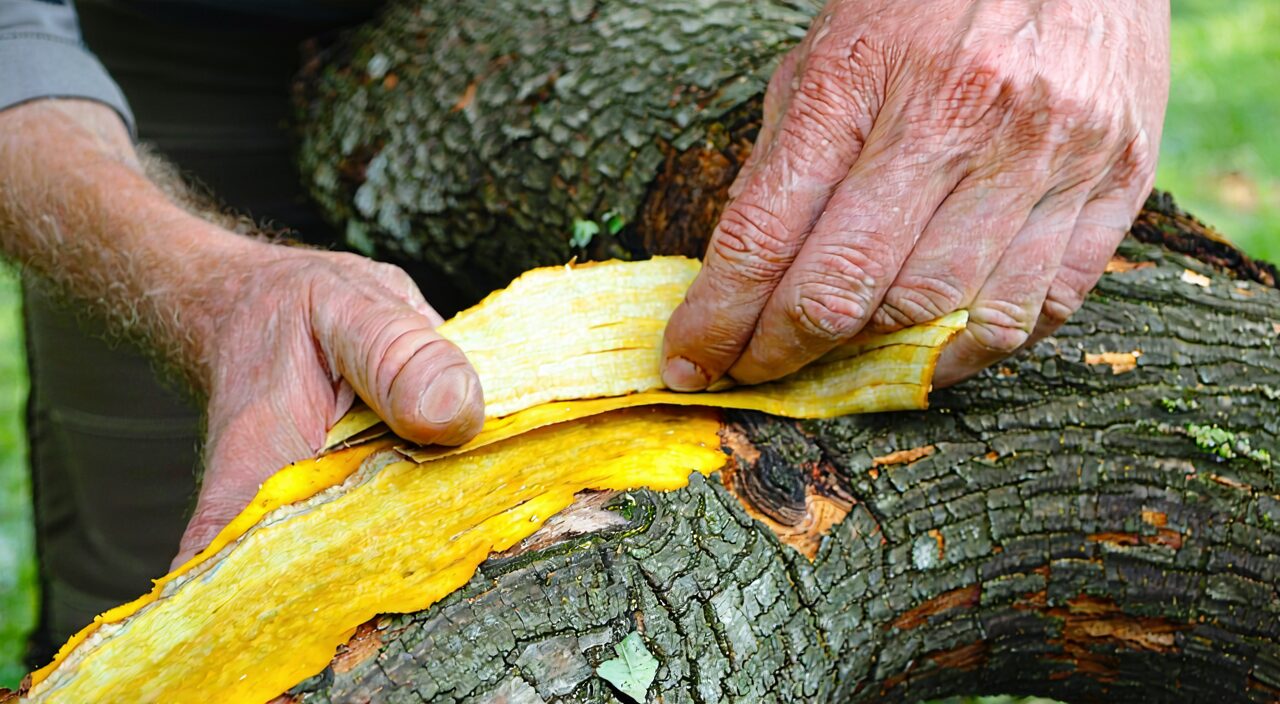
The medicinal part of Huang Bai is the dried bark.
There are two main plant sources:
- The bark of the Rutaceae plant Phellodendron chinense, often called “Chuan Huang Bai”
- The bark of the same family plant Phellodendron amurense, generally referred to as “Guan Huang Bai”
Both are used as Huang Bai in traditional practice, differing only slightly in production region and characteristics.
Harvesting and Processing
Traditionally, Huang Bai is collected mostly in spring and summer when the bark is easier to peel. The processing procedure is roughly as follows:
- Peeling the bark: Select portions of bark from the trunk or thick branches, without girdling the tree completely, leaving enough cambium to ensure the tree’s continued survival.
- Removing the rough cork layer: Strip away the outer coarse cork layer.
- Drying: Sun-dry or oven-dry; during drying, the bark gradually sets into the standard medicinal form we see.
- Cleaning and slicing: Sift out debris, remove impurities, and sometimes further cut into shreds or blocks to become dispensing pieces for formulas.
How Does Traditional Chinese Medicine Understand Huang Bai?
Within the cognitive framework of traditional Chinese medicine, Huang Bai is a typical medicinal material for clearing heat, drying dampness, purging fire, and resolving toxins.
Nature, Flavor, Channel Tropism, and Functional Orientation
- Nature and flavor: Bitter, cold
- Channel tropism: Mainly enters the Kidney and Bladder channels; some discussions also consider it to act on the Large Intestine channel
Due to its bitter and cold nature, Huang Bai is particularly adept at addressing damp-heat problems in the lower energizer. The lower energizer can be roughly understood as the lower-middle part of the body, including areas such as the kidneys, bladder, and intestines. When dampness and heat bind together, manifesting as heavy sensation in the lower limbs, dark scanty urine, thick yellow vaginal discharge, or red, swollen, damp, and itchy skin, traditional approaches often consider using Huang Bai to clear and disinhibit such damp-heat.
Additionally, Huang Bai is also used to “abate deficiency heat.” In conditions where kidney yin is insufficient and yin deficiency leads to fire blazing, presenting with heat in the palms and soles, night sweats, dry mouth and throat, it is often combined with yin-nourishing medicinal materials.
It should be noted that these understandings all stem from the theoretical system of Chinese medicine. Actual effects vary from person to person, and any individual use must be combined with specific conditions and professional judgment.
Which Constituents and Actions of Huang Bai Are of Interest in Modern Research?
Modern phytochemical studies have found that Huang Bai contains various alkaloid constituents, among which berberine, palmatine, and jatrorrhizine are compounds that have received concentrated research attention. Under laboratory conditions, these constituents exhibit certain antibacterial, anti-inflammatory, and antioxidant activities. In addition, the obacunone and limonin contained in Huang Bai also attract interest.
However, most of these studies are still at the experimental stage. The effects of raw extracts or single constituents cannot be directly equated with the holistic action of the whole Chinese medicinal material, and even less can they be simply extrapolated to clinical efficacy. Therefore, this part only serves as a direction for understanding and should not be regarded as a commitment to specific effects.
What Are the Differences Between Huang Bai and Huang Lian?
Huang Bai and Huang Lian differ by only one word in Chinese, and both are bitter-cold herbs that clear heat and dry dampness, yet they have distinct differences. Grasping these distinctions helps understand why one is chosen over the other in traditional formulas.
| Comparison Dimension | Huang Bai | Huang Lian |
|---|---|---|
| Medicinal Part | Bark (from Phellodendron chinense or Phellodendron amurense) | Rhizome (from Coptis chinensis, Coptis deltoidea, or Coptis teeta) |
| Appearance Features | Slab-like or shallow trough-like, highly fibrous, inner surface bright yellow | Irregular nodular shape, surface greyish-yellow or yellow-brown, cross-section relatively dense |
| Degree of Bitterness | Bitter taste distinct and persistent | Often more intensely bitter |
| Traditional Application Focus | Leans toward the lower energizer; clears damp-heat from the Kidney and Bladder, abates deficiency heat | Leans toward the middle energizer; clears Heart and Stomach fire, regulates irritability, stomach heat, and intestinal heat |
| Common Corresponding Indications | Damp-heat in the lower limbs, difficult urination, thick yellow vaginal discharge, yin deficiency with fire blazing | Irritability and insomnia, stomach heat vomiting, mouth and tongue sores, diarrhea |
In some formulas, both appear together, such as in the “Three Yellow” type combinations, aiming to synergistically cover a broader range of damp-heat, yet each still has its own emphasis.
Which Formulas Use Huang Bai?
Huang Bai plays an important role in several traditional formulas. Below are a few common directions simply listed to broaden the understanding of those interested in Chinese medicine. These formulas generally need to be selectively understood under professional guidance based on individual constitution and symptoms; self-administration without guidance is not advisable.
Er Miao San, San Miao Wan, and Si Miao Wan
Er Miao San is a classic foundational formula containing only two ingredients: Huang Bai and Cang Zhu. It is traditionally used for damp-heat pouring downward causing heavy sensation in the lower legs, red, swollen, hot, and painful joints, and thick yellow vaginal discharge.
- Adding Niu Xi to Er Miao San creates San Miao Wan, which strengthens the action of guiding the formula downward
- Further adding Yi Yi Ren makes Si Miao Wan, which leans more toward draining dampness
These formulas illustrate the step-by-step modification approach using Huang Bai as the main herb for lower energizer damp-heat, representing traditional solutions frequently mentioned for lower limb damp-heat patterns.
Zhi Bai Di Huang Wan
Zhi Bai Di Huang Wan is built on the foundation of Liu Wei Di Huang Wan by adding Zhi Mu and Huang Bai, creating a combination that nourishes yin and subdues fire. It is traditionally used for kidney yin insufficiency and yin deficiency fire blazing patterns, manifesting as soreness and weakness of the lower back and knees, dizziness, tinnitus, dry mouth and throat, heat in the palms and soles, and night sweats.
Here, Huang Bai acts to clear and abate deficiency fire. Coupled with tonic herbs, the combination simultaneously supplements and clears, embodying the Chinese medicine principle of “strengthening the master of water to control the blazing sun.”
It must be emphasized again that any formula has its scope of application and contraindications. Whether it suits an individual’s situation must be determined by a qualified Chinese medicine professional. This article only serves as a listing introduction.
What Precautions Should Be Taken When Using Huang Bai?
Huang Bai is bitter and cold in nature; improper use can easily damage the spleen and stomach. The following points are very important for those wanting to understand the application of Huang Bai.
- Those with spleen-stomach deficiency cold need to be cautious
If ordinarily the spleen and stomach functions are relatively weak, with frequent sensation of coldness in the abdomen, loose stools, poor appetite, or one tends to have diarrhea whenever eating cold items, in traditional understanding such constitutions are generally not suitable for large-dose or long-term use of Huang Bai, because bitter-cold medicinals can further damage the spleen and stomach yang qi.
- Not suitable for non-damp-heat or non-yin-deficiency-fire conditions
Huang Bai mainly targets damp-heat patterns and yin deficiency with fire blazing. It is inappropriate for cold-damp or yang deficiency conditions. One must not use Huang Bai merely upon seeing “heat” or “inflammation”; it is necessary to differentiate among cold, heat, deficiency, and excess.
- Reminders for special circumstances
For long-term, recurrent discomfort, or symptoms accompanied by marked anxiety, palpitations, chest tightness, pain, severe digestive symptoms such as persistent abdominal pain and vomiting, black stools, or weight loss, one should consult a doctor or professional promptly rather than trying to self-regulate with a single medicinal material.
Any medicinal material, including Huang Bai, should be examined within the framework of holistic pattern differentiation, with comprehensive consideration of product instructions, personal conditions, and professional advice.
Summary
Huang Bai, a heat-clearing and dampness-drying medicinal material used in the form of dried bark, possesses distinct external features — slab-like or shallow trough-like shape, inner surface and cross-section typically yellow, and strongly fibrous texture. Its medicinal history is long. Traditional Chinese medicine mainly utilizes its bitter-cold nature to address problems related to lower energizer damp-heat and yin deficiency with fire blazing.
Although its name sounds similar to Huang Lian, the medicinal parts and traditional application emphases are markedly different. Understanding these differences contributes to a more accurate recognition of Huang Bai. Classic formulas containing Huang Bai, such as Er Miao San, San Miao Wan, Si Miao Wan, and Zhi Bai Di Huang Wan, demonstrate its flexible application in different combinations, either leaning toward drying dampness or toward nourishing yin and subduing fire.
When using Huang Bai, particular attention must be paid to its bitter-cold characteristic, and situations such as spleen-stomach deficiency cold require caution. This article only serves as a popular science reference for Chinese medicinal materials and cannot replace professional diagnosis or treatment advice. All medication-related decisions should be made after fully understanding one’s own constitution and consulting a qualified Chinese medicine practitioner.