
What is Ginseng? Medicinal Parts, Identification Methods, and Common Formulas
When it comes to traditional Chinese herbal medicine, ginseng is often the first one that comes to mind. Whether in the kitchens of overseas Chinese families or among foreign friends interested in Eastern herbal culture, ginseng seems both familiar and slightly mysterious.
People often ask: What exactly is ginseng? What does it look like? Which part of it do we use? How is it different from American ginseng?
This article addresses these common questions, helping readers establish a foundational understanding of ginseng from perspectives such as appearance identification, medicinal parts, traditional understanding, and common formulas.
What Does Ginseng Look Like? How to Identify It?
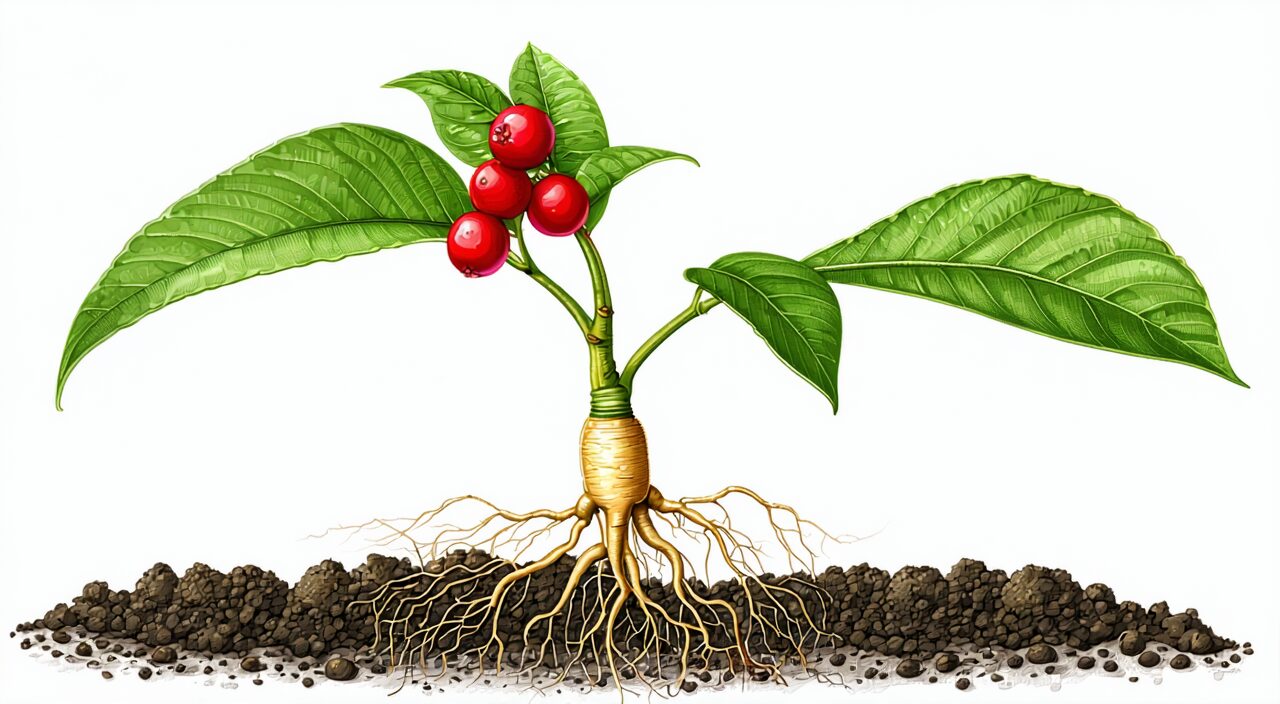
Ginseng is a perennial herb of the Araliaceae family, with distinct characteristics in both its aerial parts and underground rhizome. In daily encounters, what we call “ginseng” usually refers to its dried or fresh root.
Looking at the whole plant:
- The stem is erect, typically about 30 to 60 cm tall.
- The leaves are palmately compound; the number of leaflets varies with age. One-year-old plants often have a single three-leaflet compound leaf, and as the years increase, five- or six-leaflet compound leaves gradually appear.
- It blooms in summer, producing terminal umbel inflorescences and developing into oblate spherical red berries, brightly colored when ripe, often called “ginseng fruit.”
When identifying the medicinal part, attention is most often focused on the root.
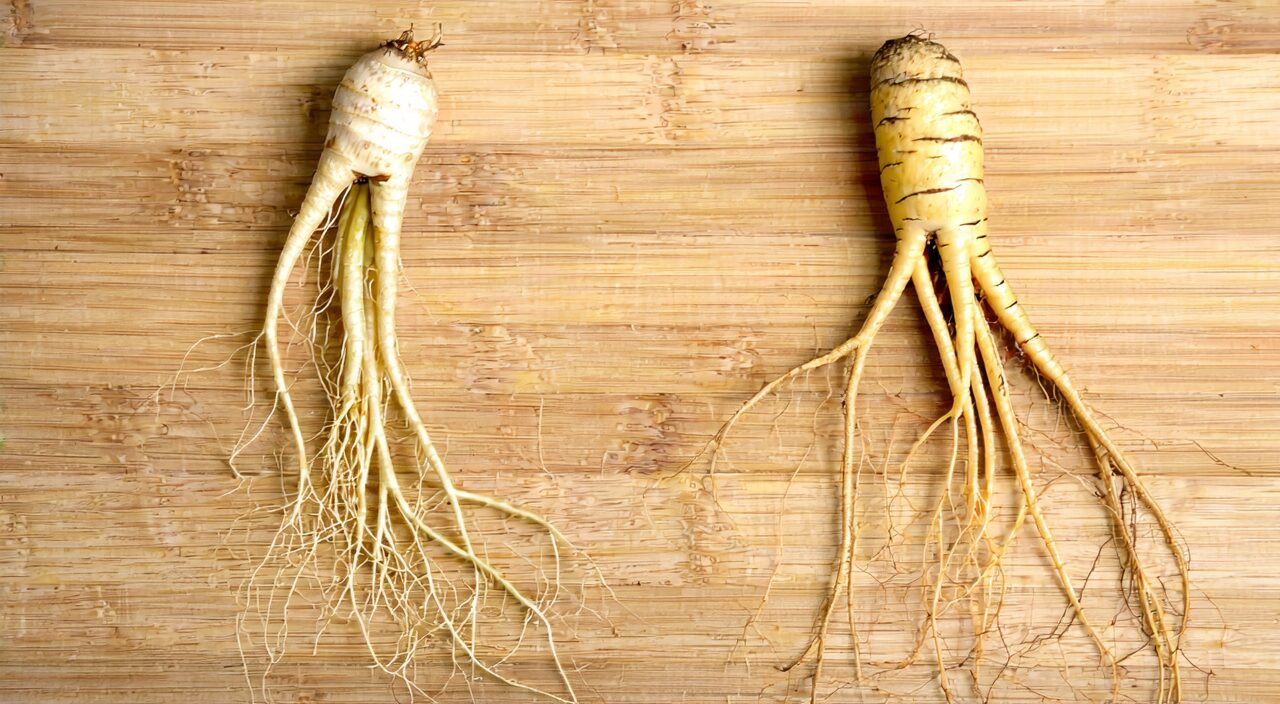
The ginseng root is cylindrical or spindle-shaped, with 2 to 5 relatively thick secondary roots branching from the middle part; the overall shape sometimes reminds people of a human body, which is associated with the origin of its name.
At the top of the root is a rhizome, commonly called “reed head” (lu tou), on which there are often depressed stem scars traditionally known as “reed bowls” (lu wan). The root surface is mostly grayish-yellow or pale yellowish-white, with obvious longitudinal wrinkles, transverse wrinkles, and traces of detached fine roots. The texture is firm, the cut surface is flat with strong starchy quality, and the color is pale yellowish-white.
It is worth noting that the morphological differences between wild and cultivated ginseng are considerable. Generally, wild ginseng has a longer reed head with densely packed reed bowls, a short and thick main root, fine, dense and deep transverse wrinkles, secondary roots branching at larger angles, and fibrous roots bearing distinct wart-like protrusions. These traditional identification characteristics are frequently mentioned when learning about ginseng.
What Is the Medicinal Part of Ginseng?
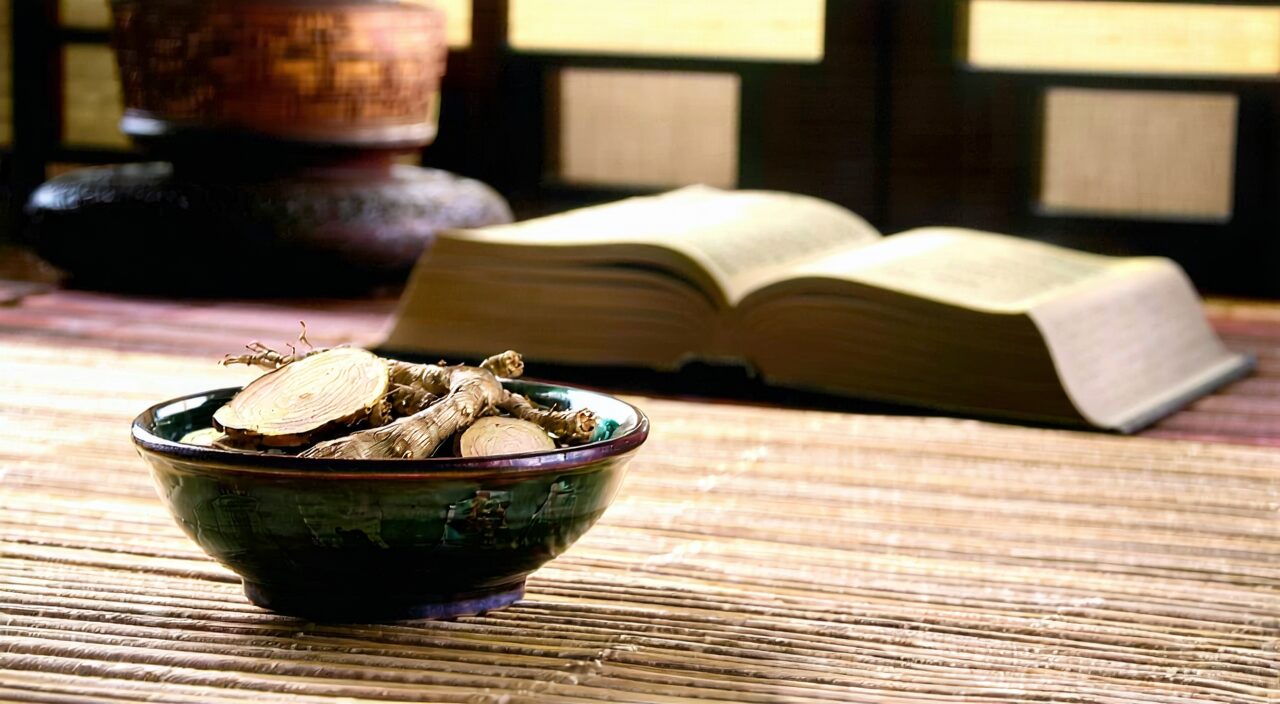
The medicinal part of ginseng is its dried root and rhizome. Sometimes, the fine rootlets are also used in traditional practices, but the main body remains the primary root and thicker secondary roots.
When used as medicine, ginseng is typically cleaned of soil and then sun-dried or heat-dried, producing “sun-dried ginseng” (sheng shai shen); after steaming and then drying, it becomes “red ginseng” (hong shen). Due to the different processing methods, their traditional applications and properties differ somewhat.
Many people treat ginseng fibrous roots separately, but in fact, these fine rootlets also come from ginseng, though they are often categorized as a different grade in practice. Regardless of form, the medicinal part of ginseng always centers on the underground root and rhizome, not the aerial stems, leaves, or berries.
How Does Traditional Chinese Medicine Understand Ginseng?
In traditional Chinese medicine theory, ginseng is commonly classified as a Qi-tonifying herb, a typical “supplementing Qi” substance.
Its nature is generally described as sweet, slightly bitter, warm or slightly warm, and it mainly enters the Spleen, Lung, Heart, and Kidney meridians. That is to say, through long-term observation, ancient practitioners recognized that ginseng’s actions are closely related to these organ systems.
The classic TCM text Shennong Bencao Jing (Divine Farmer’s Materia Medica) lists ginseng as a top-grade herb, stating that it can “tonify the five zang organs, calm the spirit, settle the ethereal and corporeal souls, stop palpitations due to fright, eliminate pathogenic influences, brighten the eyes, open the heart and benefit the intellect.” These records are more about the directions in which ginseng regulates the overall state of the body within the traditional cognitive framework.
When applying ginseng in prescriptions, later generations of physicians often combined it for several directions:
- Greatly tonify the original Qi
- Tonify the Spleen and benefit the Lung
- Generate fluids and relieve thirst
- Calm the spirit and benefit the intellect
For instance, certain states associated with fatigue, shortness of breath, reluctance to speak, and decreased appetite might traditionally be considered for regulation through Qi-tonifying methods, and ginseng is one of the commonly mentioned herbs in this context.
It should be clarified that these are understandings based on traditional experience and do not represent modern medical diagnostic conclusions. Individual constitution and conditions vary; whether ginseng is suitable must be assessed based on one’s actual condition and judged by professionals, and should not be self-applied.
What Components and Effects of Ginseng Are of Interest to Modern Research?
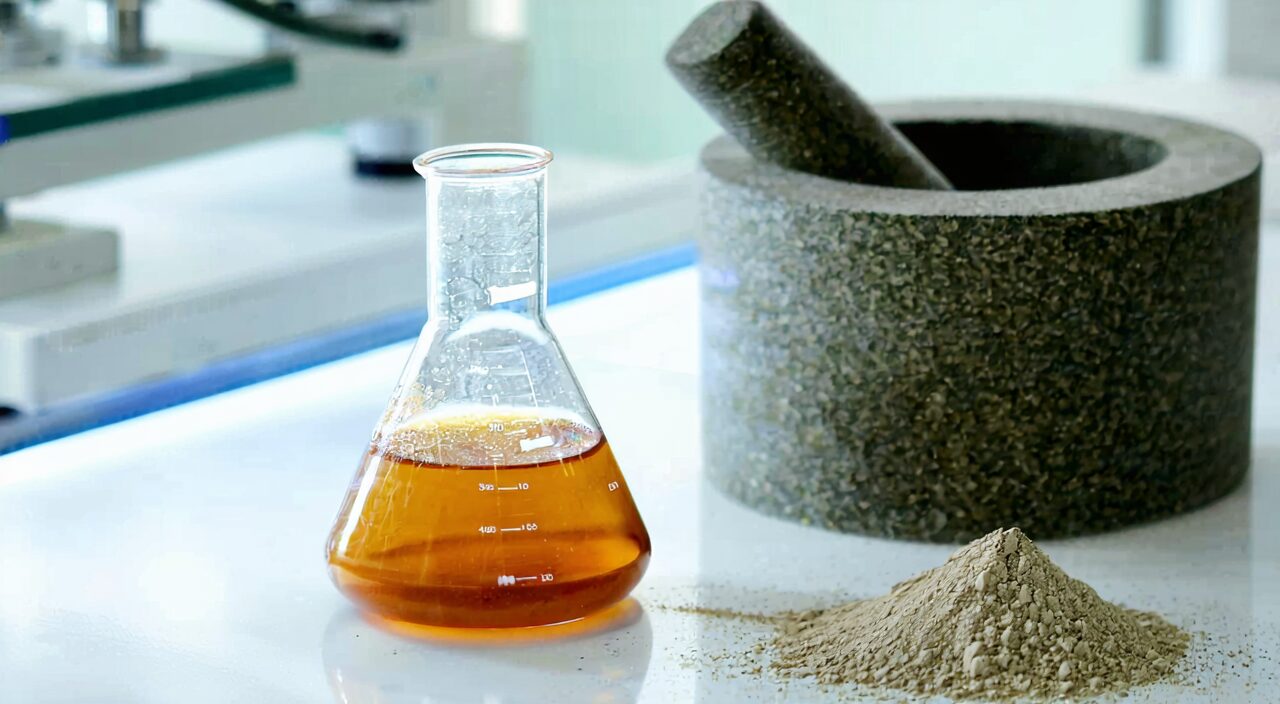
Modern research on ginseng mainly focuses on chemical components such as ginsenosides, polysaccharides, volatile oils, and amino acids.
Among them, ginsenosides are considered characteristic components of ginseng. Many laboratory and preclinical studies are exploring their effects on the immune system, central nervous system, cardiovascular system, and anti-fatigue properties.
Some studies have observed that ginseng extracts may exhibit adaptogenic-like effects under experimental conditions, potentially helping the body adapt to external stress. Meanwhile, research is also exploring ginseng’s potential influence on metabolic indicators such as blood glucose and blood lipids.
However, these studies are mostly preliminary explorations or small clinical observations, and conclusions have not yet formed a unified consensus, far from being directly equivalent to recommended evidence for daily application.
As science communication, we can view these modern research findings as background information to further understand ginseng, but should not simply equate them with “it works if you take it.” Any decisions regarding specific applications should be based on personal health status and made under professional guidance.
What Are the Differences Between Ginseng and Similar Medicinal Herbs?
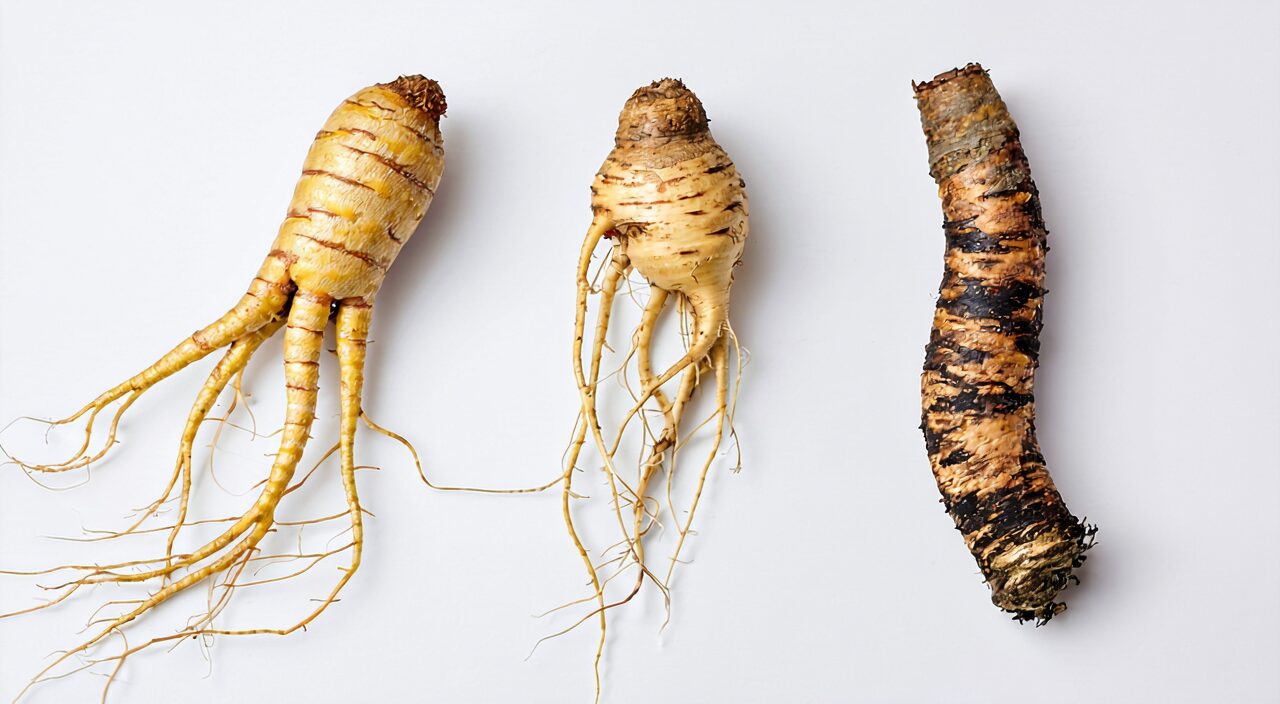
Ginseng and American ginseng are two herbs that readers often confuse. Although both belong to the Araliaceae family, there are certain differences in traditional understanding and application directions.
In simple terms, a comparison can be seen in the following table:
| Comparison Point | Ginseng (Ren Shen) | American Ginseng (Xi Yang Shen) |
|---|---|---|
| Traditional nature tendency | Warming supplementation | Cooling supplementation |
| Primary action direction | Tonifies Qi and secures collapse, with a focus on Qi deficiency of a cold nature | Tonifies Qi and nourishes Yin, clears heat and generates fluids, with a focus on Qi-Yin dual deficiency with heat |
| Common reference manifestations | Fatigue and weakness, feeble breathing, cold extremities | Dry mouth, warm palms, tendency toward heat symptoms |
| Appearance characteristics | Reed head relatively distinct, richer surface features, possibly darker color after processing | Main root cylindrical or spindle-shaped, reed head not obvious, surface lighter in color, fine and dense transverse wrinkles, firm texture |
The most accurate differentiation still requires consideration of origin, species, and professional identification; appearance is only a preliminary reference.
In addition, another plant that is easily misidentified is Phytolacca (poke root). Its root somewhat resembles ginseng in shape, but Phytolacca root is significantly toxic and should never be confused. This also reminds us that digging up or buying “ginseng” from unknown sources carries risks; one should obtain it through reliable channels and identify it under the guidance of experienced individuals.
Which Formulas Commonly Contain Ginseng?
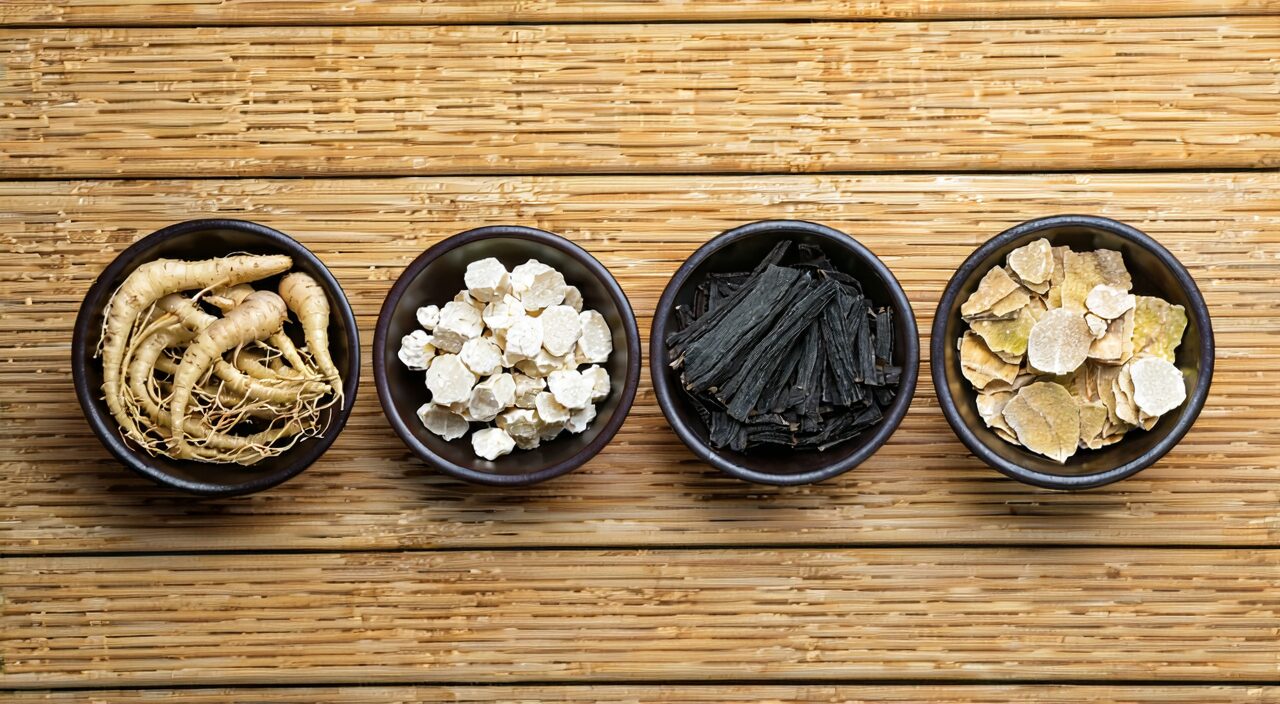
Ginseng is widely used in traditional formulas, often serving as the sovereign or minister herb, combined with other herbs to enhance regulation in specific directions. The following are examples of several common formulas containing ginseng, presented only as an understanding of traditional application directions and should not be considered direct recommendations.
Four Gentlemen Decoction (Si Jun Zi Tang)
Four Gentlemen Decoction is one of the foundational classic formulas for tonifying Qi, composed of Ginseng, Atractylodes Macrocephala (Bai Zhu), Poria (Fu Ling), and Licorice (Gan Cao).
Traditionally, this formula is considered to strengthen the Spleen and tonify Qi, and is often used in the regulation approach for Spleen-Stomach Qi deficiency manifested by reduced appetite, loose stools, pale complexion, shortness of breath, and fatigue. Its compatibility features balance and harmony, and it is often regarded as a base formula for regulating “Qi deficiency” states.
Pulse-Engendering Powder (Sheng Mai San)
Pulse-Engendering Powder consists of Ginseng, Ophiopogon (Mai Dong), and Schisandra (Wu Wei Zi). Traditionally, it is often used for regulating Qi-Yin dual deficiency with profuse sweating, physical fatigue, dry mouth, and tongue.
In this combination, Ginseng tonifies Qi, Ophiopogon nourishes Yin, and Schisandra astringes. Ancient physicians believed that the three together could “restore Qi and generate fluids.” This type of formula is traditionally used for scenarios like summer-heat damaging both Qi and Yin, or chronic illness with physical weakness, palpitations, and shortness of breath.
Ginseng Toxin-Resolving Powder (Ren Shen Bai Du San)
Ginseng Toxin-Resolving Powder contains Ginseng, Notopterygium (Qiang Huo), Angelica (Du Huo), Bupleurum (Chai Hu), Peucedanum (Qian Hu), and other herbs, and is traditionally regarded as a representative formula for boosting Qi and releasing the exterior.
The concept is that when there are external pathogenic factors on the body surface combined with internal Qi deficiency, Ginseng’s Qi-tonifying action cooperates with exterior-releasing herbs to simultaneously support the upright and eliminate the pathogenic influences. It was commonly used in ancient regulation approaches for fever and chills, headache, stiff neck, and body aches arising from insufficient upright Qi with external invasion, but it is not a universal choice for modern common colds.
Ginseng, Poria and Atractylodes Powder (Shen Ling Bai Zhu San)
Shen Ling Bai Zhu San is composed of Ginseng, Atractylodes, Poria, Chinese Yam (Shan Yao), Coix (Yi Yi Ren), and other herbs, focusing on strengthening the Spleen and percolating dampness.
Traditionally, it is often used in regulation directions related to Spleen-Stomach weakness and internal dampness, such as indigestion, unformed stools, and bodily heaviness. This formula is also frequently used as a reference combination for chronic regulation in traditional understanding.
It is important to emphasize that all these formulas are combinations based on traditional pattern differentiation thinking. Individual constitutions and symptom manifestations can vary greatly, and the same formula is not suitable for everyone. Whether to use them and how to modify them must be determined after a comprehensive evaluation by a professional; do not attempt to self-prescribe.
What Precautions Should Be Taken When Using Ginseng?
Although ginseng is a traditional tonic herb, it does not mean it can be used casually. The following points deserve attention:
- Constitution and Cold/Heat Tendency
Traditional experience holds that ginseng is warm and tonifying. For individuals with internal excess heat, Yin deficiency with effulgent fire, or damp-heat stagnation, blind use may cause symptoms such as dry mouth, irritability, and insomnia, which can be detrimental to bodily balance. Therefore, it is best to clarify the general bias of one’s constitution before use.
- Association with Certain Specific Conditions or Diseases
For example, when currently suffering from a cold with fever, cough with profuse phlegm, or chest oppression and abdominal distension, traditional practice generally does not advocate sudden tonification. Meanwhile, people with hypertension, heart conditions, or those taking anticoagulant drugs need to be even more cautious. Ginseng may affect blood pressure and coagulation function, and a doctor’s opinion must be sought.
- Dosage and Duration
The concept of long-term high-dose ginseng use exists in some health cultivation circles, but in actual practice, ginseng dosage in traditional formulas often follows strict proportions and is mostly used short-term or intermittently. Self-administered long-term use may cause unnecessary disturbances.
- Special Populations
Routine consumption by children, pregnant women, and breastfeeding women is not recommended without systematic evaluation, as relevant safety discussions remain insufficient.
If persistent issues such as severe fatigue, palpitations, chest tightness, pain, insomnia, or weight loss occur, one should not rely solely on ginseng for regulation but should prioritize consulting a doctor.
This article is for informational reference only and does not constitute any medical advice.
Summary
As a time-honored Chinese medicinal herb, ginseng’s core identity lies in the traditional category of Qi tonification, with its medicinal part concentrated in the root and rhizome.
Through sorting out the external features of ginseng, its traditional TCM understanding, and its differences from herbs like American ginseng, we can see that the direction of ginseng’s effects highly depends on the match with individual constitution and specific conditions.
Understanding ginseng should not stop at knowing “what it is”; rather, we should establish a cognitive framework of “what kind of states it may be suitable for” and “what safety prerequisites must be considered before use.” In the absence of professional judgment, do not decide on usage and dosage on your own; health issues always require consultation with qualified medical personnel.