
What Is Yu Zhu? Medicinal Part, Identification Methods, and Common Formulas
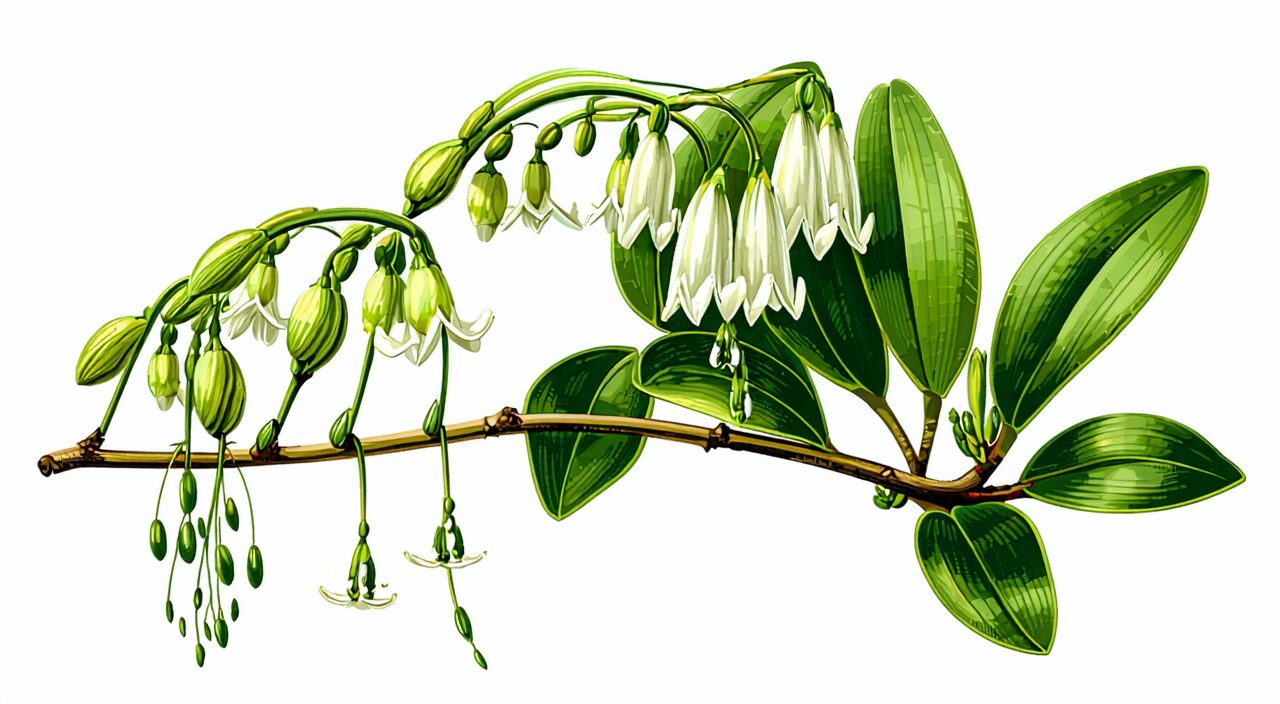
Yu Zhu is the dried rhizome of the lily family plant Polygonatum odoratum. It is a very common yin-nourishing and dryness-moistening herb in traditional Chinese medicine. Many people, upon first hearing the name “Yu Zhu” (literally “Jade Bamboo”), assume it is a type of bamboo, but in fact it has nothing to do with bamboo. The elegant name comes from its slender rhizome and smooth, glossy appearance, resembling jade. Abroad, when people begin to pay attention to nourishing yin, moistening the lungs, or daily maintenance, Yu Zhu is often brought up repeatedly. However, to truly understand it, one needs to approach it from multiple angles such as appearance, medicinal part, traditional recognition, differentiation from similar herbs, and common formulas.
What Does Yu Zhu Look Like? How to Identify It?
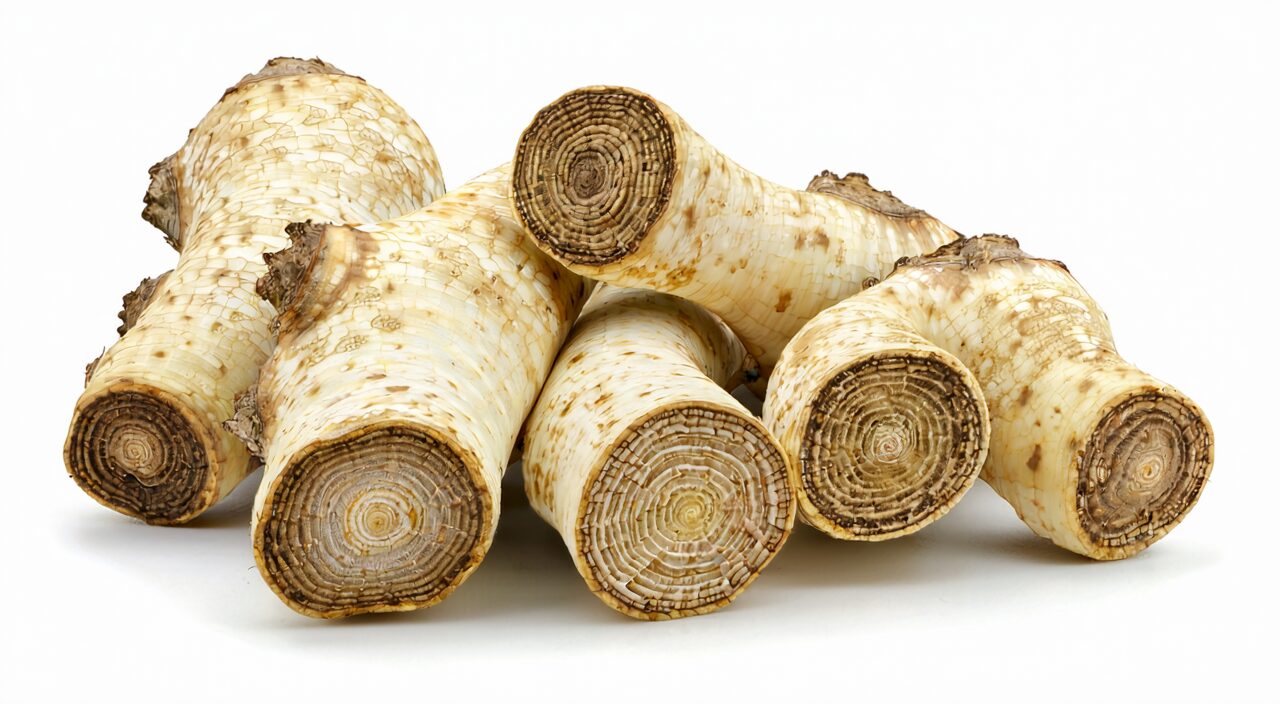
The medicinal part of Yu Zhu is primarily its dried rhizome, which is long cylindrical and slightly flattened. Some may have short branchlets, and the whole piece looks like a scaled-down “bamboo whip.” A complete Yu Zhu medicinal material is usually between ten and twenty-some centimeters in length, with a diameter typically ranging from a few millimeters to just over one centimeter, though this varies among batches.
In color, the surface of Yu Zhu is mostly yellowish-white or light yellowish-brown, with obvious translucency and a moist, lustrous appearance. Upon careful observation, one can see ring-like nodal marks all around the surface, just like the pronounced nodes of bamboo—this is one reason its name contains the character for “bamboo.” These nodes are slightly raised, and the internode distances are not completely uniform; in some places, the remnants of fibrous roots appear as dot-like protrusions.
If you examine the prepared slices, the cross-section is highly distinctive: it is yellowish-white, with a marked horny, glossy sheen and translucency. Sometimes, under a magnifying glass, you can even see tiny dot-like vascular bundles scattered throughout. This cross-section characteristic is very useful in identifying the herb and serves as an important basis for distinguishing Yu Zhu from other similar rhizomes. After drying, Yu Zhu is relatively hard and brittle, breaking easily. It has a faint smell, and a mildly sweet taste with a slight mucilaginous sensation when tasted.
What Is the Medicinal Part of Yu Zhu?
The medicinal part of Yu Zhu is its dried rhizome. It is generally harvested in autumn when the stems and leaves begin to turn yellow and wither. The fibrous roots and soil are removed, and after washing, it is dried either in the sun or after steaming and boiling according to required processing. In traditional processing, sometimes it is repeatedly kneaded or thoroughly steamed to gelatinize the internal starches, forming a translucent, horny-like state. This is also why many Yu Zhu slices look slightly glossy and have a moist, lustrous texture.
Common commercial specifications of Yu Zhu include loose whole pieces and cut decoction slices. Whole pieces are complete long cylindrical rhizomes, while slices are mostly thinly cut crosswise or diagonally, with a horny cut surface and slightly curled edges. In some regions, Yu Zhu is also processed with honey-frying, but raw Yu Zhu is still the main form used daily. The Yu Zhu seen in pharmacies or online has mostly been processed; the best quality is yellowish-white, translucent, and soft and moist in texture. It is important to note that Yu Zhu easily absorbs moisture, becomes moldy, or loses its oils, so it is best stored sealed and dry after purchase.
How Does TCM Understand Yu Zhu?
In traditional Chinese medicine theory, Yu Zhu’s nature and flavor are generally summarized as “sweet, slightly cold,” and it enters the lung and stomach meridians. The sweet flavor can tonify, harmonize, and moderate, while the slightly cold nature can clear and moisten without being excessively cooling. Therefore, Yu Zhu is often categorized as a herb that nourishes yin, moistens dryness, and generates fluids to quench thirst.
The lung is a delicate organ that prefers moisture and dislikes dryness; the stomach also likes to be moist and fears dry heat. When yin fluids inside the body are insufficient and symptoms related to dryness appear, such as dry mouth and tongue, dry cough with little phlegm, dry throat, or epigastric discomfort and noise, the traditional approach often considers using herbs like Yu Zhu that can both nourish lung yin and benefit stomach fluids. Its action is relatively gentle, unlike some strongly cold or intensely tonifying herbs that are drastic. Thus, it often appears in cases of a constitution leaning toward dryness or scenarios requiring slow, gentle regulation after illness.
In practical application, Yu Zhu is rarely used alone; it is more often combined with other yin-nourishing or qi-boosting herbs to jointly exert a fluid-generating and dryness-moistening effect. For example, in lung-dryness cough, it is commonly paired with Sha Shen and Mai Dong; for stomach yin deficiency with reduced appetite, it is combined with Shi Hu and Sheng Di Huang, working from both the lung and stomach levels to maintain ample body fluids. Traditional physicians emphasize that using Yu Zhu must be based on accurate pattern differentiation—not all cases of dry mouth or cough are suitable.
What Components and Effects of Yu Zhu Do Modern Studies Focus On?
Modern research on Yu Zhu mainly concentrates on its polysaccharides, flavonoids, steroidal saponins, as well as amino acids and trace elements. Among these, Yu Zhu polysaccharides are a well-studied group of macromolecular substances; laboratory studies have found them to have potential antioxidant and immunomodulatory activities. Flavonoids have shown certain anti-inflammatory and anti-aging tendencies in cell and animal experiments.
Some small-scale human observations or dietary intervention reports suggest that Yu Zhu may have value in helping maintain moisture in the mouth and respiratory tract, but more conclusive clinical evidence is still relatively limited. Most current research remains at the test-tube and animal experiment stage. Although this provides some component-level explanations for Yu Zhu’s traditional use, such findings cannot be directly equated with “Yu Zhu can treat a certain disease.” When reading related promotional materials, it is still necessary to distinguish between “ingredient research,” “experimental research,” and “human clinical evidence” to avoid over-interpretation.
How Does Yu Zhu Differ from Similar Herbs?
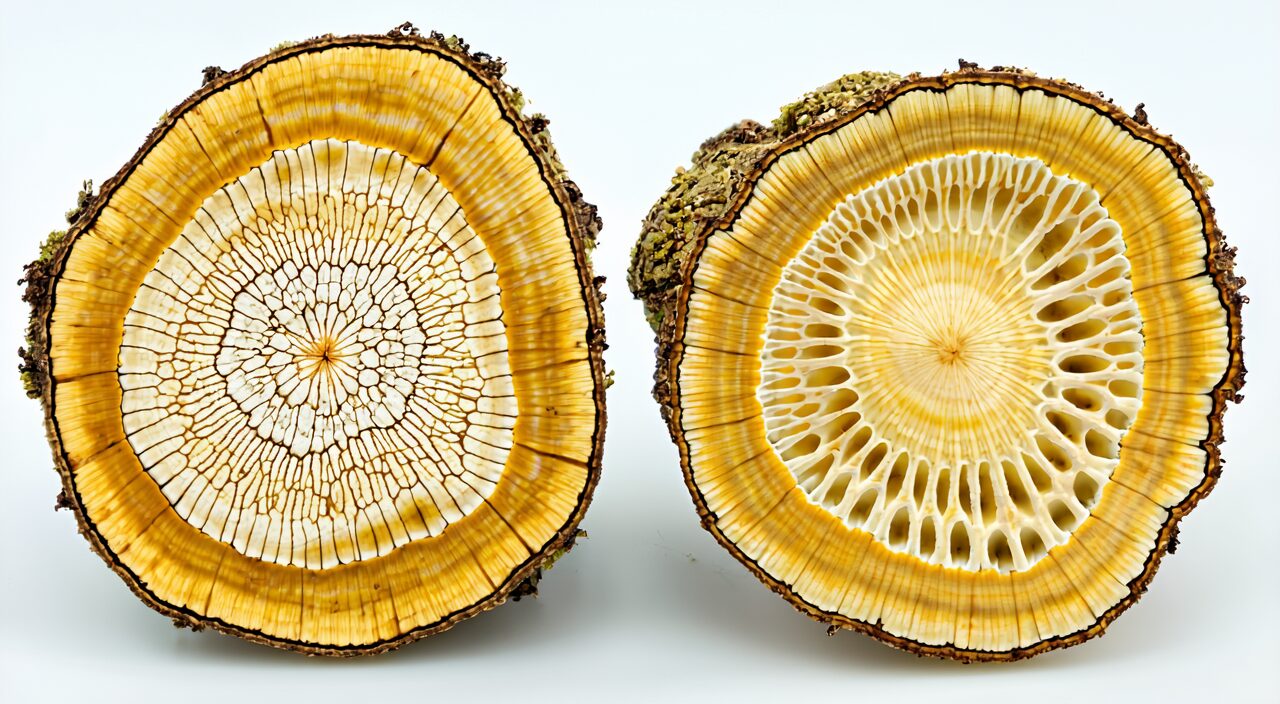
Herbs that are most easily confused with Yu Zhu in appearance are mainly Huang Jing (Polygonati Rhizoma) and Mai Dong (Ophiopogonis Radix). All three come from the lily family, and their medicinal parts are all rhizomes or root tubers, but they differ in origin, appearance, and traditional application.
Huang Jing is the rhizome of Polygonatum species. Common types include ginger-shaped Huang Jing and chicken-head Huang Jing. It is overall thicker and larger than Yu Zhu, with swollen internodes and a surface color tending towards yellowish-brown. Its texture is harder, and although the cross-section is also horny, it is darker in color and sweeter. Moreover, traditional Chinese medicine emphasizes that Huang Jing can tonify qi, nourish yin, strengthen the spleen, moisten the lung, and benefit the kidneys—its strength leans towards tonification, which differs from Yu Zhu’s tendency to clear, moisten, and act on the lung and stomach.
Mai Dong is the root tuber of Ophiopogon japonicus. Its shape is completely different: spindle-shaped, pointed at both ends, pale yellowish-white in color, flexible and tough, with a yellowish-white translucent cross-section that has a thin woody core in the center. Mai Dong is also often used to nourish yin and generate fluids, but its meridian tropism leans more toward the heart, lung, and stomach, and it excels particularly in moistening the lung and clearing the heart. There is overlap with Yu Zhu’s focus on moistening dryness and generating fluids for the lung and stomach, but also differences. In actual selection, when there is damage to lung and stomach fluids and a need for moderate, non-greasy moistening, Yu Zhu may be considered more; when there is a need to clear the heart and relieve irritability, Mai Dong is more common. Although these three have some superficial similarities in appearance, by grasping the overall morphology of the rhizome, the characteristics of the nodes, and the cross-section texture, one can usually distinguish them well.
Which Formulas Use Yu Zhu?
Yu Zhu often appears as an adjuvant or envoy herb in traditional formulas, playing the main role of nourishing yin and moistening dryness. The following are some representative formulas:
- Yi Wei Tang (Stomach-Benefiting Decoction): Yi Wei Tang is commonly used in strategies for nourishing stomach yin. In this formula, Yu Zhu is combined with Sha Shen, Mai Dong, and Sheng Di Huang to jointly reinforce the stomach and generate fluids. Yu Zhu’s role here is mainly to assist Sha Shen and Mai Dong in strengthening the yin-nourishing power, making the whole formula moistening but not cloying. This combination is a common reference approach in situations of stomach yin deficiency, reduced appetite, and dry mouth and throat.
- Jia Jian Wei Rui Tang (Modified Solomon’s Seal Decoction): This formula uses Yu Zhu (anciently called Wei Rui) as one of the chief herbs, combined with Cong Bai, Dan Dou Chi, and Bo He, reflecting a strategy that cares for both yin nourishment and exterior release. In traditional application, Jia Jian Wei Rui Tang is often used for individuals with a constitution tending toward yin deficiency who also contract an external pathogen. Yu Zhu here both nourishes yin without being so greasy as to hinder the release of the exterior—a classic example of balanced medicinal use.
- Yu Zhu Mai Men Dong Tang (Polygonatum and Ophiopogon Decoction): The formula name highlights the core status of Yu Zhu and Mai Dong. This formula generally focuses on nourishing lung and stomach yin, suitable for situations of lung and stomach yin damage with dry cough, scanty phlegm, dry throat, and hoarseness. Yu Zhu and Mai Dong work synergistically to concentrate the moistening and dryness-relieving force.
It should be noted that these formulas are summaries of traditional experience and are very valuable for understanding Yu Zhu’s combinatory approach, but whether they are suitable for an individual’s situation still requires a comprehensive judgment based on constitution and current manifestations. Self-prescribing and self-dispensing based on these formulas is not recommended.
What Precautions Should Be Taken When Using Yu Zhu?
Although Yu Zhu’s nature and flavor are relatively mild, it is not suitable for everyone in large amounts or long-term use. Several points need the most attention:
- Use with caution in phlegm-dampness and qi stagnation: If one usually has copious phlegm, a thick and greasy tongue coating, abdominal distension and fullness, and sticky, difficult bowel movements, these often indicate heavy internal phlegm-dampness or inhibited qi movement. Using only moistening yin herbs like Yu Zhu in such cases may assist dampness and hinder the stomach, worsening the discomfort.
- Not suitable for those with spleen deficiency and loose stools: Yu Zhu is moistening. For individuals with a weak spleen and stomach who frequently have loose stools, it may further increase the slipperiness of the intestines, which is detrimental to digestion and absorption.
- Caution with long-term, large-quantity consumption: As a daily regulation, many people use Yu Zhu in soups or boiled water, but excessive long-term use may affect the spleen and stomach’s transportation and transformation functions. Even as a culinary-oriented herb, it is recommended to use it periodically based on individual constitution, rather than consuming it continuously over a long period without interruption.
- Adjust promptly if discomfort occurs: If symptoms such as abdominal distension, decreased appetite, or unformed stools occur during the use of Yu Zhu, it should be paused, and a professional should be consulted to confirm whether continued use is appropriate.
Finally, if symptoms of dryness in the body, thirst, or cough persist without relief, especially if accompanied by significant weight loss, severe fatigue, chest tightness, or difficulty swallowing, seek professional diagnosis promptly instead of trying to resolve it on your own with a single herb.
Summary
Yu Zhu is a commonly used Chinese herb with its rhizome as the medicinal part, traditionally used to nourish yin, moisten dryness, and generate fluids to quench thirst. Its long cylindrical, yellowish-white translucent shape with obvious ring-like nodes is an important identification feature. It has respective differences in appearance and traditional use compared to herbs like Huang Jing and Mai Dong, requiring differentiation based on the actual situation. Formulas such as Yi Wei Tang and Jia Jian Wei Rui Tang that include Yu Zhu further demonstrate its combinatory value in the direction of lung and stomach fluid damage. Caution should be maintained for individuals with heavy phlegm-dampness, spleen deficiency with loose stools, and for long-term, large-quantity use. This article serves only as an educational introduction to the basic knowledge of Yu Zhu and cannot replace professional diagnosis or treatment advice.