
What Is Dried Ginger? Medicinal Part, Identification, and Common Formulas
Many people use fresh ginger daily but are unfamiliar with dried ginger. In traditional Chinese medicine, dried ginger is not simply made by drying fresh ginger under the sun; there are particular considerations in its selection, processing, and clinical thinking. For overseas Chinese readers who want to understand Chinese herbs, figuring out “what dried ginger is,” what it looks like, which part is used medicinally, and how it differs from fresh ginger, is an important step in understanding many interior-warming formulas.
What Does Dried Ginger Look Like? How to Identify It?
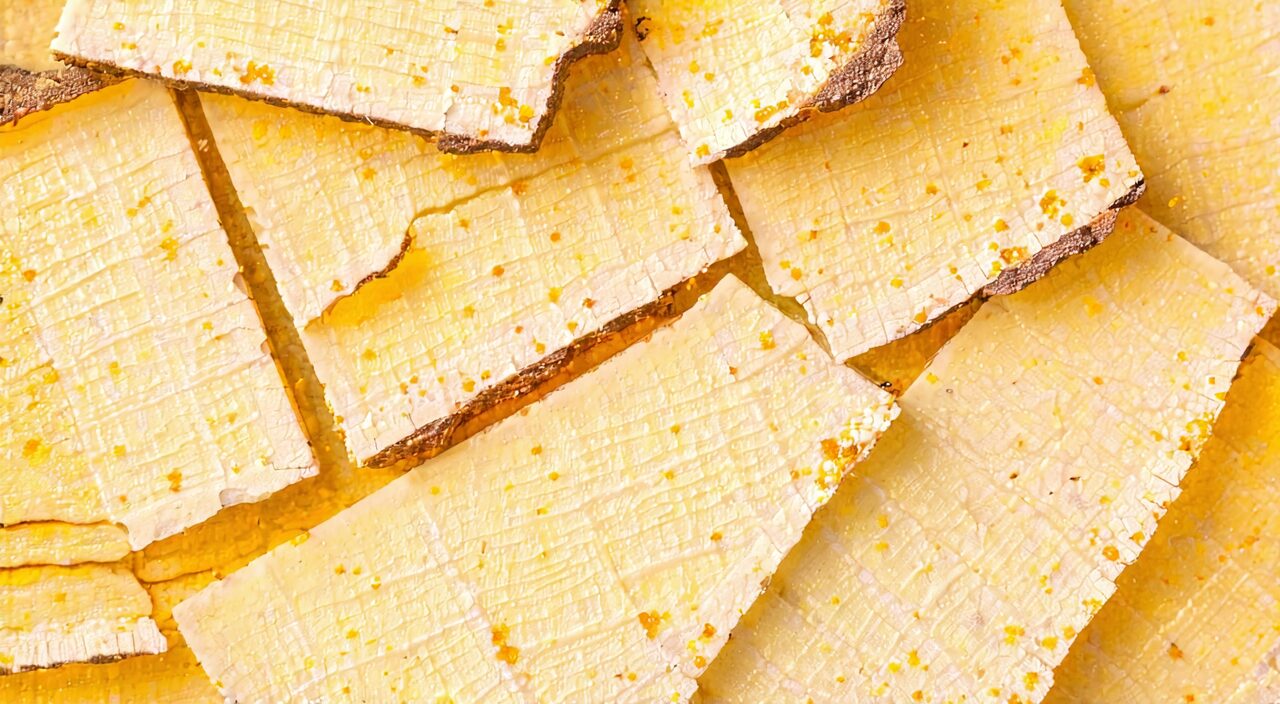
Typical dried ginger slices often appear as irregular flat pieces, or slightly branched finger-like segments. The surface is usually grayish-yellow or light brown, sometimes with traces of peeling layers; the texture is relatively firm. When broken open, the cross-section typically shows distinct fibrous texture, pale yellow or yellowish-white, sometimes with small light brown dots. When smelled closely, dried ginger has a strong, pungent and dispersing characteristic aroma, which is distinctly different from the pungent and fresh fragrance of fresh ginger. When tasted, the pungency is long-lasting, but not as fiery as chili pepper; it provides a warm, mellow pungent-heat sensation.
When selecting or identifying, pay attention to three aspects: first, examine the shape; second, inspect the fibrous sensation of the cross-section; third, smell the aroma. Forms that are too small, with a dark color or even mold spots, are often of poor quality or improperly stored. If the cross-section is overly starchy and almost no fibers are visible, it may be an adulterant from the rhizome of other Zingiberaceae plants. Furthermore, the pungent aroma of dried ginger should be pure, without sourness, mustiness or other off-odors.
What Is the Medicinal Part of Dried Ginger?
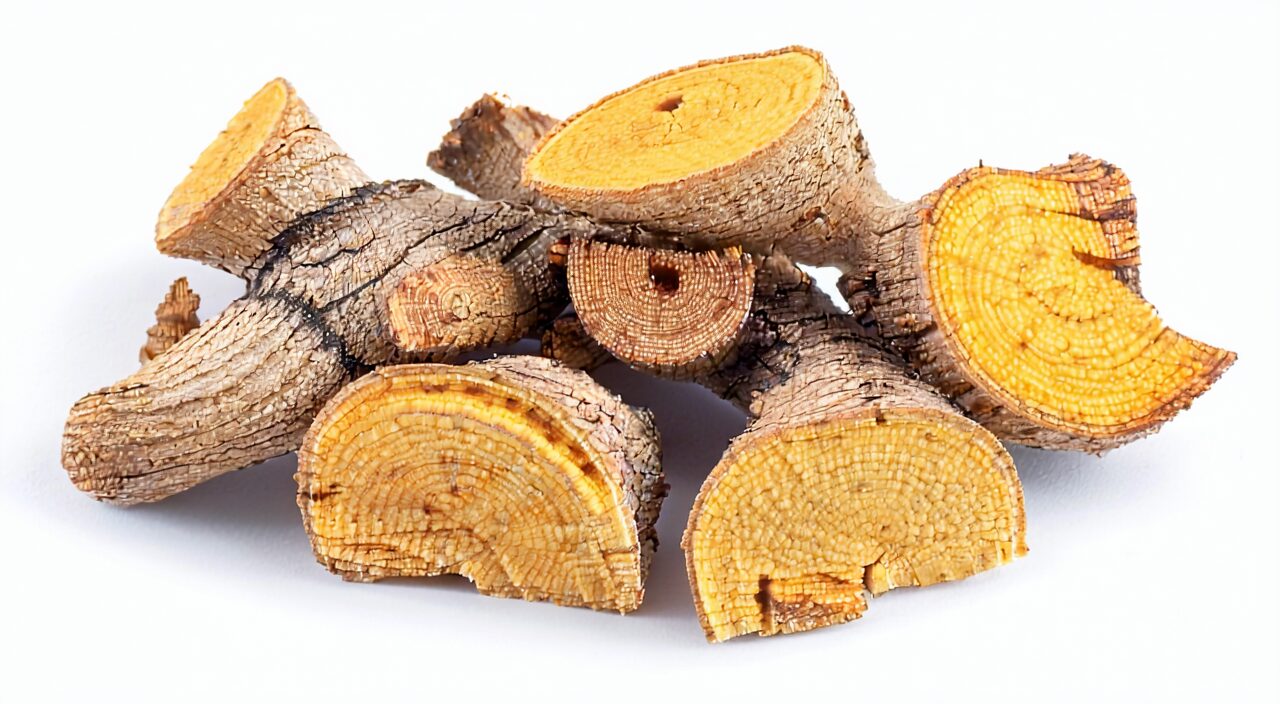
The medicinal part of dried ginger is the dried rhizome of Zingiber officinale. It is important to note that traditionally, the raw material for making dried ginger is selected from older ginger rhizomes with longer cultivation time and higher starch content, rather than the tender ginger commonly used in cooking. During processing, the fibrous roots and soil are removed, then it is sun-dried or dried at low temperatures, without undergoing complex processing methods such as sweating.
In medicinal slice form, common types include dried ginger slices, chunks, and sometimes strips. In some regions, to moderate its pungent and dispersing nature, dried ginger may be dry-fried until the surface bulges and the interior turns brownish, resulting in processed ginger (Pao Jiang), or carbonized by frying to produce ginger charcoal (Jiang Tan). However, the usage considerations for these two differ from dried ginger and cannot be simply equated. Therefore, when encountering the herb “dried ginger,” understanding that its source is the dried old rhizome helps avoid directly substituting the fresh ginger used in daily cooking.
How Does Traditional Chinese Medicine Understand Dried Ginger?
In traditional Chinese medicine theory, dried ginger is often summarized as a key herb for “warming the middle and dispelling cold, restoring yang and unblocking meridians, and warming the lungs to transform retained fluids.” It is pungent and hot in nature and flavor, and mainly enters the spleen, stomach, kidney, heart, and lung meridians. These descriptions sound very technical, but they point to common body directions and traditional regulating approaches.
“Warming the middle and dispelling cold” mainly targets spleen yang deficiency and internal cold lodged in the middle burner. When a person experiences cold abdominal pain, nausea, vomiting, or loose stools with an overall deficiency-cold pattern, TCM often considers warming the middle burner, and dried ginger is a common choice in such an approach. Combined with herbs like Fu Zi (aconite) and Bai Zhu (atractylodes), it can be used for conditions such as cold extremities and a faint, barely perceptible pulse caused by yang qi deficiency.
“Restoring yang and unblocking meridians” refers more to situations where yang qi is extremely depleted; dried ginger is used with Fu Zi and others to help boost the body’s yang qi and restore the force of blood flow. In ancient times, this usage was often described as “breaking through yin to restore yang,” and it is not intended for ordinary body coldness but for acute and critical stages.
“Warming the lungs to transform retained fluids” involves manifestations such as cough, copious thin and clear phlegm, aversion to cold in the back, and clear nasal discharge. When the TCM pattern differentiation points to cold fluids lodged in the lungs, dried ginger can be one of the strategies for warming and transforming cold-phlegm. For example, in some wind-cold exterior constraint with internal cold-fluid retention patterns of cough and wheezing, dried ginger is used together with Xi Xin (asarum) and Wu Wei Zi (schisandra).
Overall, TCM’s understanding of dried ginger revolves around “warming” and “unblocking.” It does not directly target a specific modern disease name but is used as part of a comprehensive approach after evaluating constitution, disease location, and cold-hot attributes.
What Components and Effects of Dried Ginger Are Studied in Modern Research?
Modern research on dried ginger mainly focuses on its volatile oil, gingerol-type compounds, and diarylheptanoids. Compounds such as zingiberene and β-bisabolene in the volatile oil, as well as shogaols converted from gingerols during drying, are considered important material bases for dried ginger’s pungent and warming sensations.
In laboratory studies, dried ginger extracts show some tendencies of effects on the digestive system. For example, some studies have observed its regulatory effects on gastrointestinal motility and potential protective tendencies on the gastric mucosa. Some in vitro experiments also suggest that components of dried ginger may have certain antioxidant and anti-inflammatory properties. However, most of these findings are from basic research stages and are still far from direct application to daily health issues. It should be emphasized that modern pharmacological exploration of dried ginger primarily provides scientific observation perspectives for its traditional use scenarios, rather than recommending self-use based on any specific study. Any attempts in any direction should be combined with individual constitution and be comprehensively evaluated by a professional.
What Are the Differences Between Dried Ginger and Fresh Ginger?
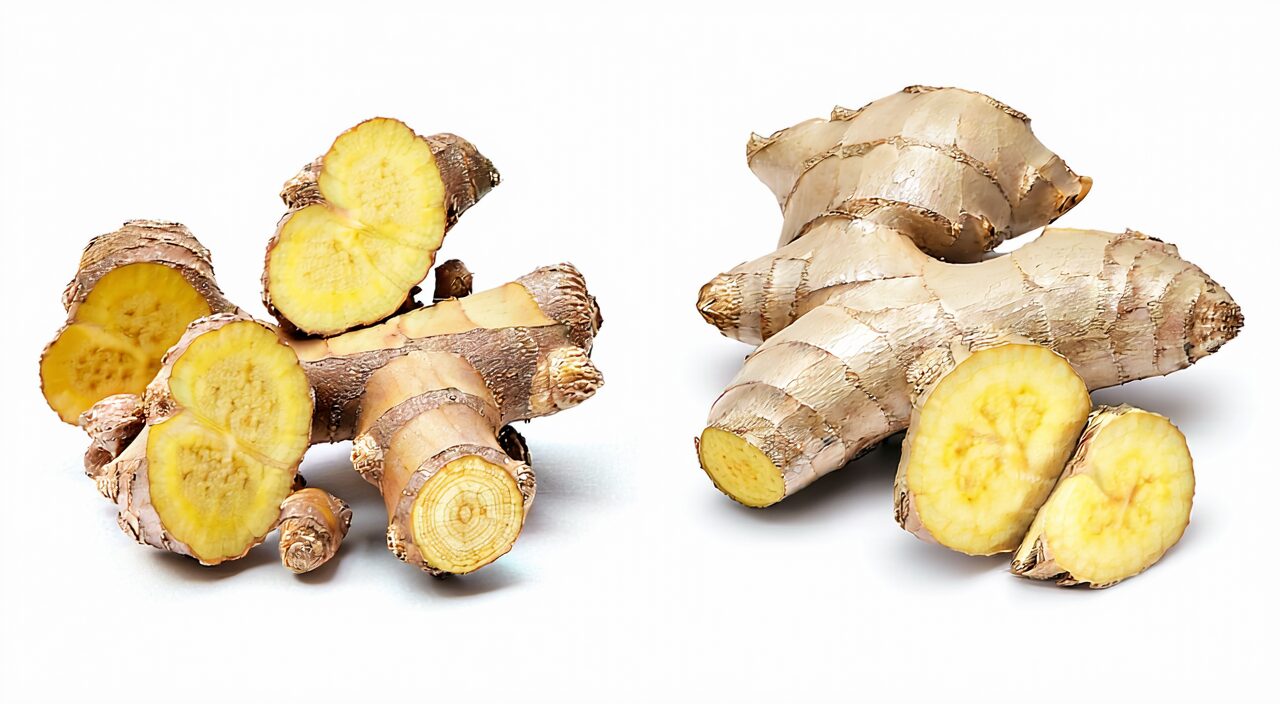
Many people easily confuse dried ginger with fresh ginger, but in fact, they differ markedly in traditional usage. First, their water content is different: fresh ginger has high water content and is pungent-warm in nature, but tends to be dispersing; it is often used to release the exterior and dispel cold, warm the middle and stop vomiting, suitable for mild external wind-cold or cold-type nausea and vomiting. Dried ginger, having been dried, has a more concentrated pungent-heat nature, emphasizing interior warming, with a stronger inward-moving force.
In terms of the degree of pungent-heat, dried ginger’s heat is more intense than that of fresh ginger. Therefore, when the TCM pattern leans toward severe interior cold and deficient yang qi, dried ginger is often considered a more central choice than fresh ginger. Fresh ginger, having stronger dispersing power, appears more in scenarios that require expelling cold pathogens from the body surface.
Their combination directions in formulas also differ. Fresh ginger is often combined with Gui Zhi (cinnamon twig) and Da Zao (jujube) to harmonize the nutritive and defensive, and harmonize the stomach to stop vomiting. Dried ginger is paired with Fu Zi (aconite) and Bai Zhu (atractylodes) to target deficiency-cold of the middle and lower burners or yang qi decline. Even in formulas targeting the spleen and stomach, when external cold invades the stomach causing vomiting of clear fluids, fresh ginger may be the main herb; while for chronic middle yang deficiency with cold abdomen and diarrhea, dried ginger tends to be the core.
From the perspective of daily use, kitchen fresh ginger cannot be directly used as dried ginger, and vice versa. Although the composition changes when fresh ginger is sun-dried, true medicinal dried ginger has its own experience in raw material selection and processing. Therefore, understanding the differences between the two helps avoid confusion when referring to traditional formulas.
Which Formulas Use Dried Ginger?
Dried ginger appears in various classic formulas. The following lists some common directions as a window into understanding traditional combinations.
Traditionally, Lizhong Tang (Ginseng and Ginger Center-Regulating Decoction, with dried ginger, ren shen, bai zhu, zhi gan cao) is often used for middle yang deficiency and cold congealing with qi stagnation patterns, manifesting as cold abdominal pain that prefers warmth and pressure, loose stools, and vomiting without thirst. Dried ginger in the formula plays the role of warming the middle burner and expelling cold pathogens.
Sini Tang (Frigid Extremities Decoction, with fu zi, dried ginger, zhi gan cao) is a classic combination targeting shaoyin disease with yang qi decline, typically manifesting as cold extremities, diarrhea with undigested food, and a faint, barely palpable pulse. Here, dried ginger assists fu zi in exerting the power to restore yang and rescue from collapse.
Xiaoqinglong Tang (Minor Bluegreen Dragon Decoction, with ma huang, gui zhi, dried ginger, xi xin, wu wei zi, etc.) is often used for the complex situation of external cold with internal fluid retention, presenting with cough, wheezing, and copious thin, clear phlegm. Dried ginger in this formula primarily assumes the role of warming the lungs to transform retained fluids, working with xi xin which disperses and wu wei zi which astringes, together regulating the lung’s ascending and descending functions.
Banxia Xiexin Tang (Pinellia Heart-Draining Decoction, with ban xia, dried ginger, huang qin, huang lian, ren shen, etc.) was originally designed for mixed cold and heat with epigastric stuffiness and fullness. Dried ginger is used to warm the middle and dispel cold, cooperating with heat-clearing herbs to regulate the qi dynamic of the middle burner.
The above formulas are all empirical combinations in traditional Chinese medicine, and are not specific treatment recommendations. Whether they suit a particular constitution or symptom pattern requires comprehensive evaluation based on the person’s total state, tongue, pulse, and other pattern differentiation information, and judgment under the guidance of an experienced professional. Even for the same formula, modifications can vary greatly from person to person, and direct copying for use is not advised.
What Precautions Should Be Taken When Using Dried Ginger?
Dried ginger’s medicinal properties tend toward pungent-heat, so caution is needed in certain situations. First, individuals with yin deficiency and fire exuberance constitution are generally not suitable for using dried ginger alone, in large amounts, or for a long time. This constitution may present with heat in the palms, soles, and chest, dry mouth and throat, night sweats, a red tongue with little coating, etc. Improper use of warm-heat herbs can easily stir up fire and damage yin.
Secondly, when there are signs of excess heat or heat exuberance in the body, such as high fever, irritability, sore and swollen throat, constipation with dry stools, a red tongue with yellow coating, etc., traditional thought also does not advocate self-use of dried ginger because its warm-heat nature may conflict with the regulating direction.
Additionally, people with bleeding tendencies need to be especially careful. Dried ginger is considered in some cases to have the potential to stir blood, so when there is gastric bleeding, hemorrhoidal bleeding, excessively heavy menstrual flow, etc., it should not be used casually.
Furthermore, dried ginger can be somewhat irritating to the gastric mucosa. If the stomach is relatively sensitive, or if there are conditions such as gastric ulcers or reflux esophagitis, it may be necessary to avoid taking it on an empty stomach or directly swallowing dried ginger powder. Even when taken as a decoction, it should be evaluated by a professional with appropriate combinations.
The discussion in this article is limited to general informational reference on Chinese herbs and traditional formulas. All content should not be regarded as medical advice, nor can it replace the diagnosis and treatment plans of a physician. If you have long-term, recurrent, or serious health concerns, please be sure to consult qualified professionals with practicing credentials.
Summary
As a classic interior-warming herb, dried ginger has accumulated rich experience in TCM around the three major directions of “warming the middle and dispelling cold, restoring yang and unblocking meridians, and warming the lungs to transform retained fluids.” It has significant differences from daily fresh ginger in terms of medicinal properties and application scenarios. When using it, attention must be paid to whether the constitution tends toward heat and whether there is a bleeding tendency. Basic knowledge of dried ginger can help readers gain a better understanding when encountering related formulas, but any specific regulating direction should be carefully chosen based on individual circumstances and in consultation with professionals.