
What Is Tu Fu Ling? Medicinal Part, Identification, and Common Formulas
In overseas Chinese herbal markets, the name “Tu Fu Ling” easily reminds people of Fu Ling, and some even mistake it for a type of Fu Ling. In fact, Tu Fu Ling comes from a completely different plant—Smilax glabra—and uses its dried rhizome, not a fungal medicinal. Traditionally, Tu Fu Ling is often used to address damp-turbidity retention and joint discomfort, and it appears in some Kampo formulas and Chinese patent medicines. If you cannot distinguish it from Fu Ling or do not understand its basic characteristics, confusion can easily arise during use. This article will help you gain a comprehensive understanding of Tu Fu Ling from its appearance identification, medicinal part, TCM understanding, differences from Fu Ling, common traditional formulas, and precautions.
What Does Tu Fu Ling Look Like? How to Identify It?
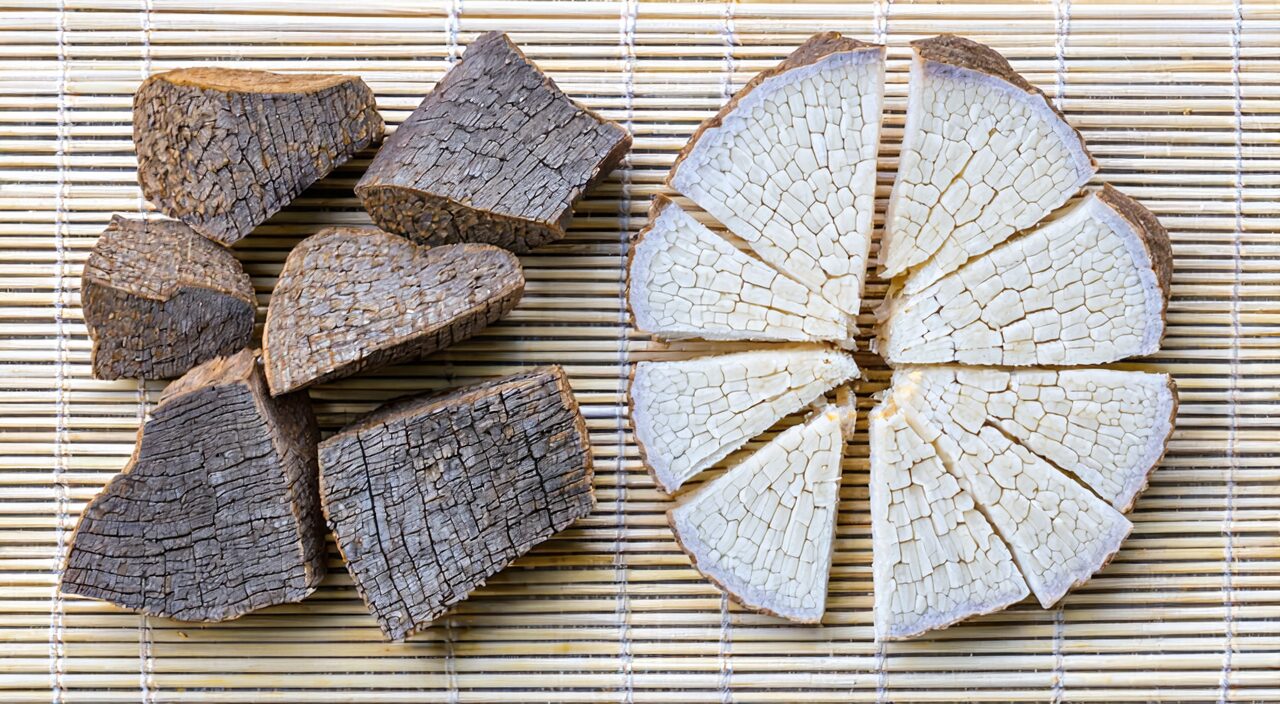
The dried rhizome of Tu Fu Ling is mostly irregular lumps or slices of varying sizes, with some edges curved and some with nodular protrusions. The surface color is mostly yellowish-brown or grayish-brown, rather rough, and residual rootlet marks or small root scar depressions can be seen. The texture is very hard and not easy to break directly.
After cutting or breaking it open, the cross-section is the key to identification. The cut surface is generally off-white or pale reddish-brown, and feels mealy, like it contains fine starch. Under a magnifying glass, many scattered punctate vascular bundles can be seen, like sprinkled small spots—this is a very characteristic structure of Tu Fu Ling. Some cut surfaces may also show fine fissures or pale ring patterns. Occasionally, other Smilax species’ rhizomes are confused in the market; observing the degree of starchiness and the presence of these punctate structures can provide a preliminary judgment. The odor is mild, and the taste is slightly sweet and astringent.
What Is the Medicinal Part of Tu Fu Ling?
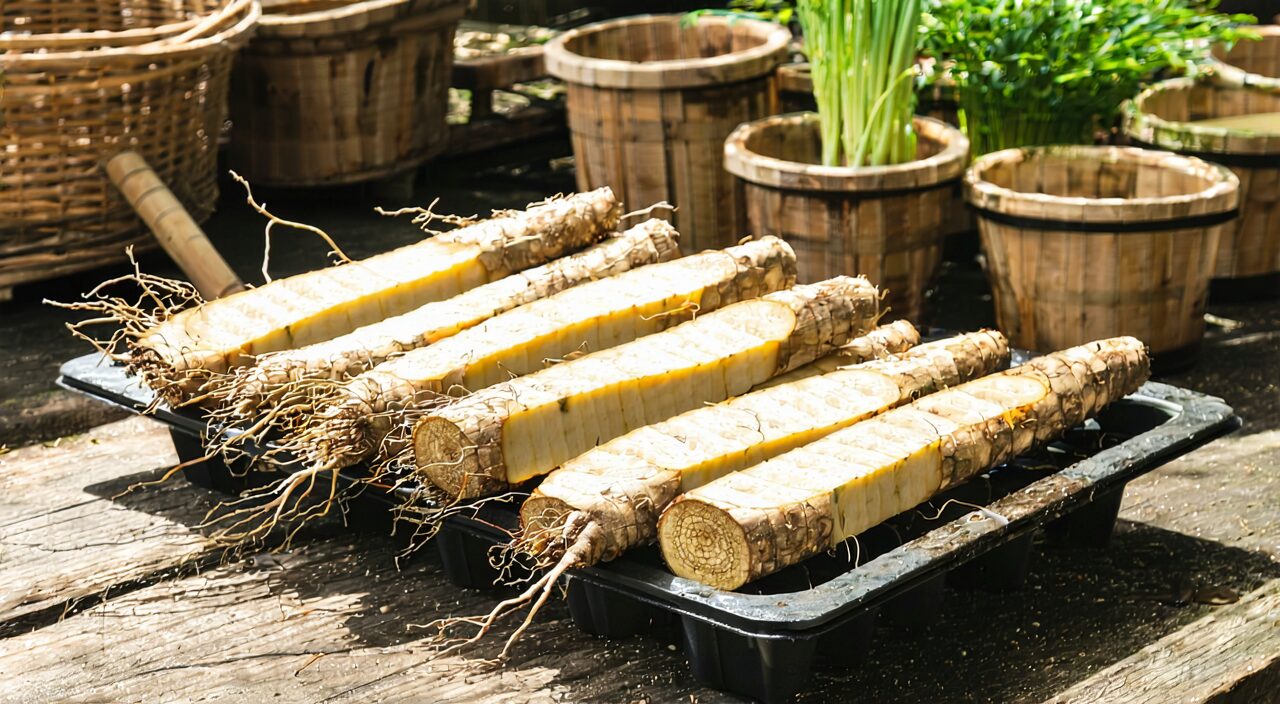
Tu Fu Ling comes from the dried rhizome of the Liliaceae plant Smilax glabra, not the whole herb, nor a tuber. It is usually harvested in autumn and winter when the rhizome has accumulated more nutrients. After harvesting, it needs to be rid of mud, sand, and fibrous roots, washed clean, and then cut into thin slices or small pieces while fresh before drying. Drying can be done by sun-drying or low-temperature drying to prevent mold and ensure stability.
Smilax glabra is a climbing shrub; its rhizome creeps horizontally, is thick and fleshy, and has distinct nodes. In traditional usage, emphasis is placed on the fullness of the rhizome and the starchiness of the cross-section, so harvesting and processing stress the right season and speed. Knowing that its medicinal part is the rhizome, not a sclerotium or tree root, fundamentally distinguishes it from herbs like Fu Ling and Huang Qi. This serves as basic background when purchasing or learning about products containing Tu Fu Ling.
How Does TCM Understand Tu Fu Ling?
Traditional Chinese medicine’s understanding of Tu Fu Ling often revolves around “detoxifying and eliminating dampness” and “unblocking and benefiting the joints.” It is regarded as a medicinal that can search out and clear damp-heat, guiding damp turbidity to be discharged through urine.
In some treatment approaches for heavy damp-turbidity and a heavy body sensation, especially when damp-turbidity affects the skin—for example, recurrent eczema, sores, or when it affects the joints, manifesting as swelling, soreness, heaviness, and restricted movement—Tu Fu Ling, as one of the directional herbs, is often combined with other heat-clearing and dampness-dispelling herbs or wind-dispelling and collateral-unblocking herbs. The ancients believed that it enters the Liver and Stomach meridians and is good at dealing with stubborn damp-turbidity hidden in the sinews, bones, and skin.
Of course, these understandings are empirical summaries based on the traditional theoretical framework. Whether it is suitable for a particular person must be comprehensively considered in conjunction with constitution, tongue coating, specific manifestations, and under the guidance of experienced professionals; one should not simply choose it based on a single symptom.
What Has Modern Research Found?
Modern pharmacological research has also explored Tu Fu Ling. It is currently known that Tu Fu Ling contains flavonoids, steroidal saponins, organic acids, and other components. Some cell and animal experiments suggest that certain components may have a regulatory effect on inflammatory factors or influence enzymes related to uric acid metabolism. There are also studies focusing on its effects on skin immunity.
However, most of these studies remain at the laboratory stage or small-scale observations, and there is still a long way to go before establishing definitive clinical evidence. It cannot be used to directly treat definitive diseases such as gout or dermatitis; rather, it provides some modern observational side references for traditional uses. Therefore, Tu Fu Ling should still be mainly regarded as a traditional herb and not used as a targeted therapeutic product.
What Are the Differences Between Tu Fu Ling, Fu Ling, and Ba Qia?
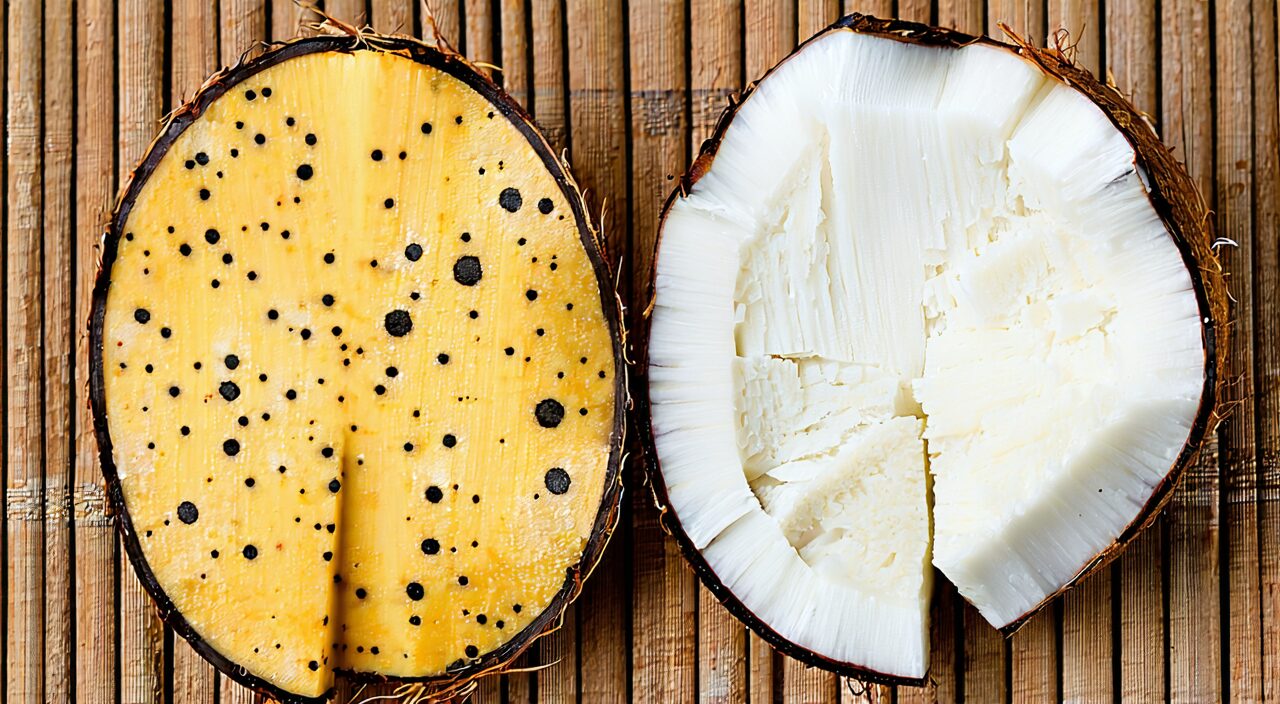
This is a group of herbs most easily confused. Simply put, Fu Ling is a fungal medicinal derived from the dried sclerotium of Poria cocos, mostly parasitizing on pine roots; its texture is relatively brittle with strong starchiness, the color is white or light pink, and the cross-section has no punctate vascular bundles. Tu Fu Ling is the rhizome of the plant Smilax glabra; its cut surface is yellowish-brown, mealy with punctate vascular bundles, and the texture is harder. The two differ greatly in traditional applications: Fu Ling is often used to strengthen the spleen, drain dampness, and calm the spirit, while Tu Fu Ling leans towards detoxifying, eliminating dampness, and unblocking the joints.
As for Ba Qia (Smilax china), it is a close relative of Smilax glabra, and their appearances are sometimes similar, leading to substitution or mixing. Some Smilax species’ rhizome cross-sections also have punctate vascular bundles, but the shape, distribution, and degree of starchiness may differ. The cross-section characteristics of genuine Tu Fu Ling are relatively stable, and together with tracing the plant source, the accuracy of its use can be better ensured. For ordinary users, the most critical point is not to take Tu Fu Ling for granted as a “variant” of Fu Ling, nor to use it as a substitute for Fu Ling to address issues such as palpitations or insomnia.
Which Formulas Use Tu Fu Ling?
In traditional formulas, Tu Fu Ling often plays a core role in detoxifying and draining dampness. Here are three relatively representative examples, intended only as a direction for understanding traditional usage.
Tu Fu Ling Decoction often takes Tu Fu Ling as the main ingredient, combined with Jin Yin Hua (Lonicera flower), Lian Qiao (Forsythia fruit), Gan Cao (Licorice), etc., traditionally targeting a series of skin manifestations caused by damp-heat and fire-toxin, such as redness, swelling, burning sensation, and sores. The overall approach leans toward clearing heat, detoxifying, cooling blood, and draining dampness.
Sou Feng Jie Du Decoction (Search Wind Detox Decoction), on the basis of Tu Fu Ling, adds Fang Feng (Saposhnikovia), Bai Zhi (Angelica dahurica), Zao Jiao Ci (Gleditsia spine), and other medicinals. Its aim is to vent pathogens outward, unblock the meridians and joints congested by wind-toxin and damp-turbidity, and it is suitable for complex situations with both skin lesions and joint discomfort.
Wu Bao San (Five Treasure Powder) is a mineral-based formula for external or internal use, containing Zhu Sha (Cinnabar), Bing Pian (Borneol), etc. Tu Fu Ling plays a role in draining dampness and detoxifying, reducing the possible gastrointestinal burden of the mineral medicinals. Traditionally, it was used for severe late-stage syphilitic bone and sinew pain and ulceration management. These formulas have very strong historical backgrounds and specific usage conditions; if modern people are interested in such formulas, they can only serve as a reference for traditional thinking and should never be casually imitated or taken.
What Precautions Should Be Taken When Using Tu Fu Ling?
First, it should be clear that Tu Fu Ling tends to promote drainage and can easily impair yin fluids. For people with pre-existing liver or kidney problems, such as chronic hepatitis or decreased kidney function, great caution is needed. Such individuals should fully communicate with a professional before use.
People who are taking other medications long-term should also consult a doctor or pharmacist first, because Tu Fu Ling may affect the metabolism of other drugs or increase the burden on the liver and kidneys. At the same time, Tu Fu Ling must not be used as if it were ordinary Fu Ling, for instance, using it to address insomnia, strengthen the spleen, or calm the spirit—this is a directional error.
Additionally, source confusion is a real problem. Some “Tu Fu Ling” on the market may not be Smilax glabra but the rhizomes of other Smilax species. Although the appearance is similar, the internal composition may differ considerably. Try to obtain herbs from reliable channels with traceable sources. If the body already shows severe, long-term recurrent problems, or is accompanied by obvious pain, palpitations, chest tightness, vomiting, black stools, weight loss, etc., prompt medical attention is necessary and one should not rely solely on herbal remedies.
Summary
Tu Fu Ling is the dried rhizome of Smilax glabra, differing clearly from the fungal Fu Ling in both source and use. Traditional Chinese medicine mainly understands and uses it from the perspective of detoxifying, eliminating dampness, and unblocking joints, and it appears as an important herb in formulas such as Tu Fu Ling Decoction and Sou Feng Jie Du Decoction. When identifying, paying attention to the punctate vascular bundles and starchy characteristics on the cross-section can help reduce misuse. Any traditional formula involving Tu Fu Ling needs to be viewed prudently under professional guidance combined with individual circumstances. This article is for popular science reference only and cannot replace professional diagnosis or treatment advice.