
What Is Huo Xiang (Patchouli)? Medicinal Parts, Identification, and Common Formulas
For many overseas Chinese, Huo Xiang is not an unfamiliar name. Especially during hot and humid seasons, people often recall traditional formulas containing Huo Xiang, Zi Su, and other ingredients. However, when holding a handful of dried medicinal herbs, quite a few become puzzled: what exactly is Huo Xiang? What does it look like? Is it the leaves or the stems that are used? How does it differ from Pei Lan or Xiang Ru, which we also hear about frequently? This article will start from basic plant identification and systematically outline the medicinal parts of Huo Xiang, its traditional principles, and common formulas, helping readers gain a more dimensional understanding of this “aromatic dampness-transforming” old friend.
What Does Huo Xiang Look Like? How to Identify It
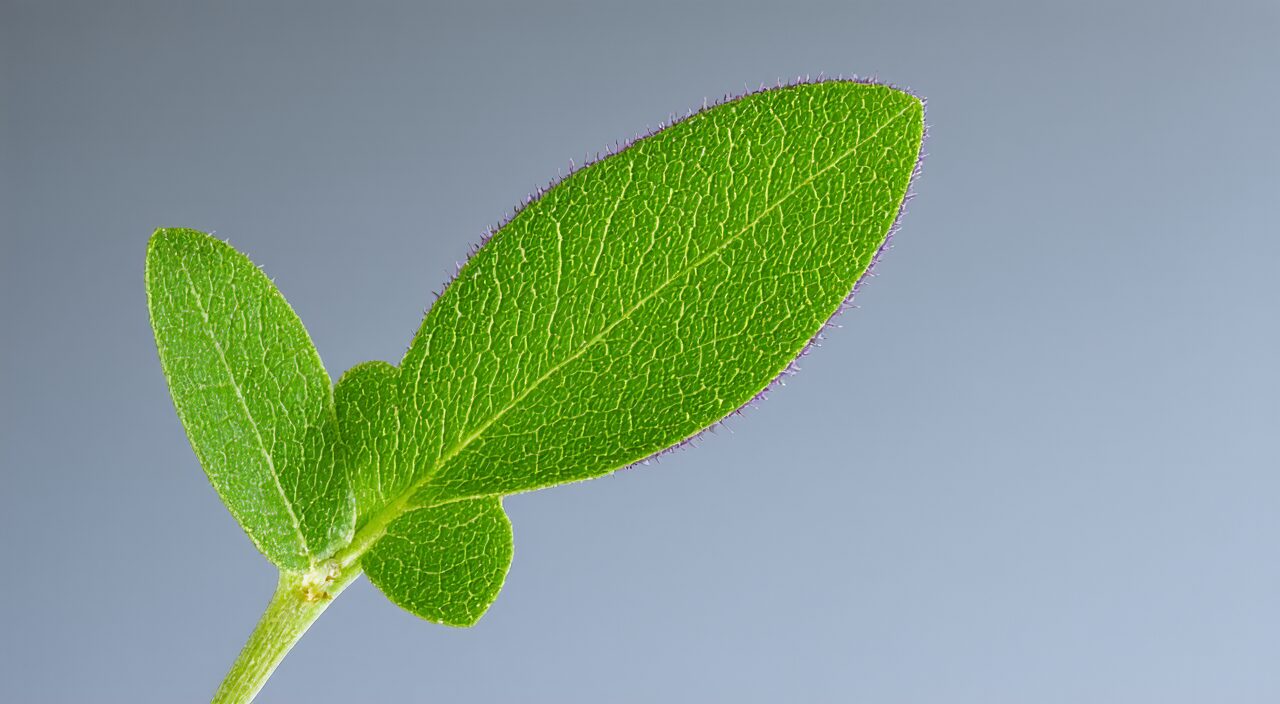
In the medicinal herb market, Huo Xiang is commonly seen as dried aerial parts, mostly chopped into broken segments, so it is difficult to make a complete judgment from a single leaf. However, when viewed as a whole, the medicinal herb Huo Xiang has several relatively stable characteristics.
The stems are mostly square in cross-section, one of the typical features of Lamiaceae (mint family) plants, with slight longitudinal ridges on the four sides and a grayish-yellow or grayish-green surface. The leaves are often curled and wrinkled; when fully flattened, they are ovate or broadly ovate, with an acute or blunt tip and irregular blunt teeth along the margin. The leaves are opposite, meaning that the leaves at the same node grow in pairs, which is also a reference point for identification.
Among the dried decoction pieces, there are often some small branches bearing inflorescences, with the corollas mostly having fallen off. All parts carry a rich aroma; when rubbed, the fragrance becomes even more pronounced, a distinctive herbal scent that blends a cooling sensation with sweet notes. In terms of color, Huo Xiang decoction pieces are generally yellowish-green or grayish-yellow, with the leaf color slightly darker than the stems. These characteristics combined can usually be used to initially distinguish it from similar medicinal herbs.
What Are the Medicinal Parts of Huo Xiang?
The medicinal part of Huo Xiang is mainly the aerial portion, which is a mix of stems, leaves, and inflorescences. Harvesting usually occurs in summer and autumn when the branches and leaves are lush, as the plant contains relatively abundant volatile constituents at that time. After harvesting, impurities are removed, and the material is typically first dried in the sun until half-dry, tied into small bundles, and then further dried in the shade or at low temperature to preserve its aromatic substances as much as possible.
The strong emphasis on the drying method is closely related to the volatile oils contained in Huo Xiang. If the drying temperature is too high or it is overexposed to the sun, the volatile oils are easily lost and the aroma will be noticeably weakened. Traditional experience holds that high-quality Huo Xiang decoction pieces have a yellowish-green cross-section, supple and pliable texture, and a strong, long-lasting fragrance. The pharmacopoeia has clear requirements for the volatile oil content of Guang Huo Xiang, and this index is often regarded as an important reference for assessing quality.
It should be noted that the authentic Huo Xiang specified in the Chinese Pharmacopoeia is Guang Huo Xiang, the dried aerial parts of Pogostemon cablin (Blanco) Benth., a plant in the Lamiaceae family. In some folk practices, Agastache rugosa, a plant of the same family, is also used as Huo Xiang. Although the two are similar in appearance, their botanical origins are different. Overseas users who purchase on their own should first clarify whether the product is Guang Huo Xiang or Agastache rugosa, ideally by combining product descriptions and label information to distinguish them.
How Does Traditional Chinese Medicine View Huo Xiang?
Within the framework of traditional Chinese medicine theory, Huo Xiang is often categorized as an aromatic herb that transforms dampness. It is considered to be aromatic and capable of dispersing and unblocking, and is therefore used to address discomfort caused by internal obstruction of damp turbidity and constrained qi movement.
More specifically, several directions are relatively common. First is aromatic transformation of turbidity. When a person experiences a sticky sensation in the mouth, poor appetite, oppression and distension in the chest and abdomen, together with a thick, greasy tongue coating, traditional thinking often considers using Huo Xiang. Second is harmonizing the middle and stopping vomiting, especially for nausea and the urge to vomit caused by damp turbidity obstructing the middle burner or dietary indiscretions. Many historical formulas include Huo Xiang to help restore stomach qi. Third is releasing the exterior and relieving summerheat. During the summer-heat and dampness season, if there is an external contraction of summer-dampness leading to fever, headache, heavy and tired sensations in the body, chest oppression, and an urge to vomit, traditional applications also often include Huo Xiang as an important component.
These understandings are largely experiential conclusions formed over long-term practice and do not point to a single specific target. Therefore, Huo Xiang’s role in such scenarios is often a part of a synergistic effect of multiple medicinal substances, rather than being used as an isolated force. Whether it is suitable or not still requires a comprehensive assessment based on a specific individual’s constitution and specific symptoms.
What Are the Research Directions in Modern Studies?
Modern research on Huo Xiang mainly focuses on its volatile oil fraction. Some studies indicate that Huo Xiang volatile oil exhibits a certain degree of antibacterial activity under laboratory conditions, especially against some common bacteria and fungi of the digestive tract. In addition, some experiments have explored the influence of Huo Xiang extracts on gastrointestinal motility, finding that at appropriate doses there may be a certain regulatory tendency on rhythmic contractions of the intestines.
However, most of these findings come from animal experiments or in vitro studies, and there is still a considerable gap before they can be applied in daily life. At present, it is not recommended to directly equate these preliminary research results with clinical efficacy or use them as a basis for self-selection. Understanding these directions serves more to help us appreciate the traditional logic of Huo Xiang from another angle and cannot replace prudent judgment regarding specific situations.
What Are the Differences Between Huo Xiang, Pei Lan, and Xiang Ru?
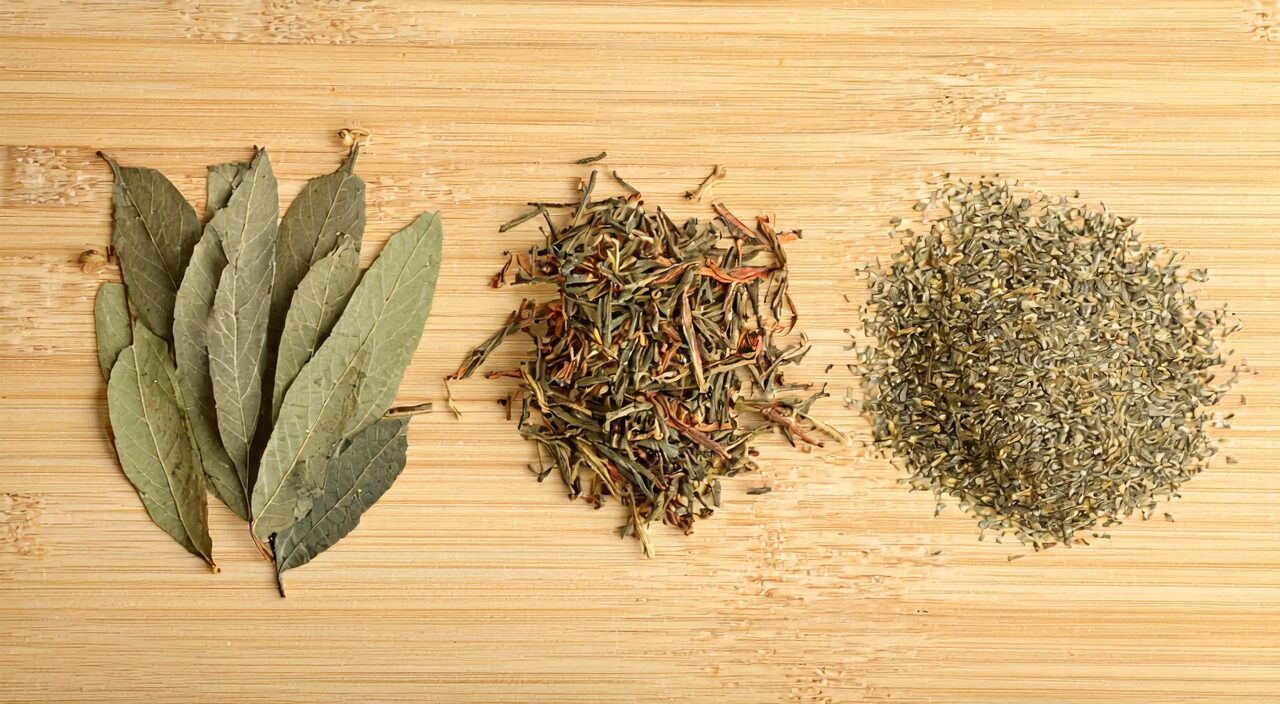
Huo Xiang, Pei Lan (Eupatorium fortunei), and Xiang Ru (Mosla chinensis) share some overlaps in appearance and traditional uses and are often compared. In terms of scent, Huo Xiang has a deep, rich, and lasting aroma with a mellow sweetness; Pei Lan has a relatively fresh scent with a gentle sweet undertone and is not as intense as Huo Xiang; Xiang Ru has a more pronounced cooling, acrid dispersing sensation, with a penetrating aromatic note reminiscent of mint.
Regarding leaf morphology, Huo Xiang leaves are ovate or broadly ovate with blunt teeth; Pei Lan leaves are often oblong-lanceolate or lanceolate-oblong with relatively fine, dense teeth; Xiang Ru leaves tend to be ovate-lanceolate to linear-lanceolate, more slender overall.
In terms of traditional application emphasis, Huo Xiang leans toward harmonizing the middle and transforming turbidity, and relieving summerheat and releasing the exterior; Pei Lan is more often used to transform dampness, awaken the spleen, and disperse superficial pathogens, and is frequently used together with Huo Xiang as a classic paired herb combination; Xiang Ru is more inclined to disperse and is traditionally used for situations of summer colds with internal dampness stagnation. It can be said that these three herbs each have their own strengths and should not be interchanged or substituted arbitrarily.
Which Formulas Use Huo Xiang?
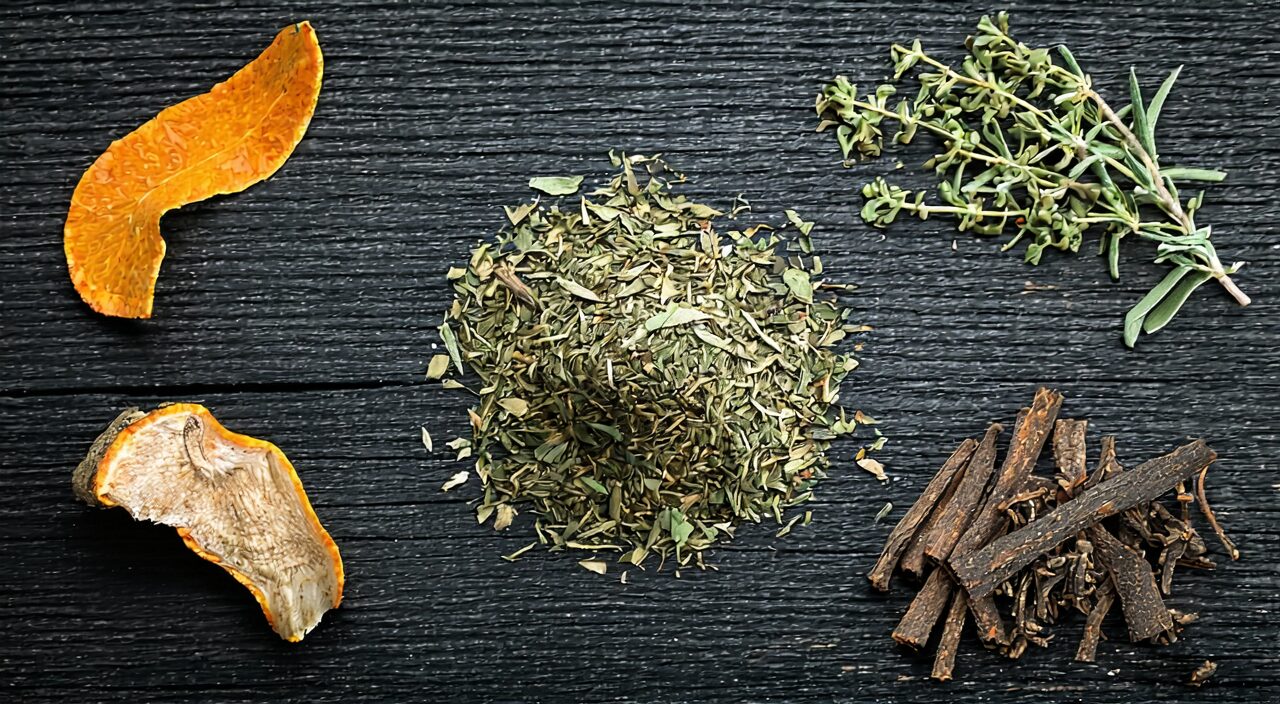
Huo Xiang appears in quite a number of classic formulas. Here are a few common directions for reference.
Huo Xiang Zheng Qi San (Patchouli Qi-Correcting Powder) is arguably the most well-known formula containing Huo Xiang. Traditionally, it is commonly used for a series of reactions caused by external contraction of wind-cold and internal damage from dampness stagnation, such as aversion to cold, fever, headache, stifling sensation in the chest and diaphragm, abdominal pain, vomiting, and diarrhea. In this formula, Huo Xiang serves as the sovereign herb, combined with Zi Su, Bai Zhi, Hou Po, Chen Pi, and others to jointly exert effects of aromatic dampness transformation, qi regulation, and harmonizing the middle.
Huo Pu Xia Ling Tang (Patchouli, Magnolia Bark, Pinellia, and Poria Decoction) leans more toward transforming dampness and harmonizing the middle, as well as promoting qi and moving water. It is commonly used at the early stage of damp-warmth diseases or when damp turbidity is exuberant internally, with symptoms like mild fever that does not subside, epigastric stuffiness, and lack of hunger. Huo Xiang is used together with Hou Po, Ban Xia, Fu Ling, and others, with an overall emphasis on diffusing and transforming damp turbidity.
Gan Lu Xiao Du Dan (Sweet Dew Detoxification Pill), though it does not have Huo Xiang in its name, contains Huo Xiang in many variations. This formula is traditionally used for damp-warmth and early-stage seasonal epidemics, with symptoms such as feverish fatigue, chest oppression and abdominal distension, and sore, swollen throat. Huo Xiang is combined with Huang Qin, Lian Qiao, Bo He, and others, aiming at aromatic transformation of turbidity and venting pathogens outward.
Bu Huan Jin Zheng Qi San (Lucid Qi-Correcting Powder Unchanged by Gold) is another representative formula, particularly known for drying dampness, fortifying the spleen, moving qi, and harmonizing the stomach. Huo Xiang is paired with Hou Po, Chen Pi, Cang Zhu, and others, and is often used for indigestion, abdominal bloating, and loose stools caused by dampness trapping the spleen and stomach.
It must be specially reminded that each of these formulas has its own scope of application and combination logic. Whether they are appropriate for an individual requires assessment based on personal constitution, current symptoms, and analysis by a professional. This article only presents traditional knowledge and does not constitute a recommendation for use.
What Should Be Noted When Using Huo Xiang?
First, individuals with a constitution tending toward yin deficiency with exuberant fire need to be especially cautious. Such people often present with dry mouth and throat, hot sensations in the palms and soles, and a red tongue with scanty coating. If aromatic, dampness-drying herbs are used carelessly, it may aggravate the depletion of body fluids.
Second, some people may experience stomach discomfort after taking products containing Huo Xiang, which is partly related to the stimulation of volatile oil components on the gastric mucosa, especially when taken on an empty stomach. Those with chronic gastritis or gastric ulcers should evaluate its use under the guidance of a professional.
Furthermore, Huo Xiang may cause allergic reactions. Although not common, if symptoms such as rash, itching, or difficulty breathing appear after use, stop using it immediately and consult a doctor.
Another easily overlooked point is that volatile oil preparations containing Huo Xiang cannot simply be equated with Huo Xiang decoction pieces. The concentration of volatile oil is much higher, and the dosage and method of use are entirely different from those of pieces prepared by decoction. One should never replace decoction pieces with volatile oil for blending or consumption on their own.
For those with long-term, recurrent, or severe symptoms accompanied by marked chills and fever, persistent abdominal pain, severe vomiting, or emaciation, one should not rely solely on a single herb or formula for self-treatment. Prompt medical consultation for a clear diagnosis should be sought before making a decision.
Summary
Huo Xiang is a Chinese medicinal herb characterized outstandingly by its aromatic dampness-transforming properties. Its medicinal part is the aerial portion, and it can be preliminarily identified through the square stems, opposite leaves, and rich aroma. Whether it is the traditional understanding of aromatic turbidity transformation and harmonizing the middle to stop vomiting, or representative formulas such as Huo Xiang Zheng Qi San, all indicate that it is typically used as part of a combination rather than acting in isolation. The content of this article is only for popular science reference and cannot replace professional diagnosis or treatment advice. Specific use must consider individual circumstances and the judgment of a professional.