
What Is Bai Dou Kou? Medicinal Part, Identification, and Common Formulas
Bai Dou Kou is a relatively common aromatic dampness-transforming medicinal in traditional formulas. Many people interested in Chinese medicine first encounter this name when learning about approaches for damp-warmth disorders or spleen and stomach discomfort. This article mainly focuses on the source, appearance identification, medicinal part, traditional Chinese medicine understanding of Bai Dou Kou, as well as its differences from Sha Ren and Cao Dou Kou and its role in common formulas, providing readers with a clear direction for understanding.
What Does Bai Dou Kou Look Like? How to Identify It?
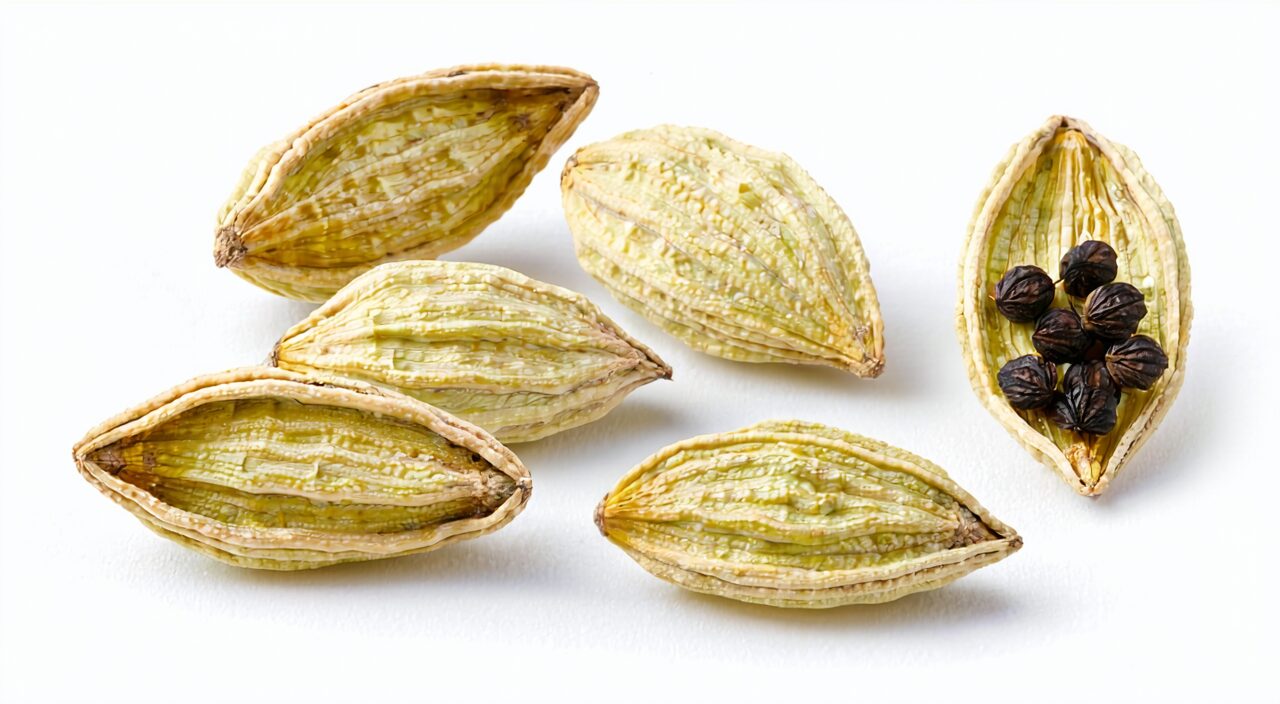
The medicinal form of Bai Dou Kou has distinct characteristics. It comes from the dried nearly mature fruit of the ginger family plants Amomum kravanh or Amomum compactum. The fruit is nearly spherical and relatively small, generally 1.2–1.8 cm in diameter. The surface is yellowish-white to pale yellowish-brown, sometimes with a faint fruity green tone, but the commercially available product is mostly yellowish-white. There are yellowish hairs at the apex and base of the fruit, which is a relatively obvious feature. The most typical identification point is that the fruit surface usually has three distinct longitudinal grooves, roughly dividing the fruit into three segments, which become even clearer after drying. When you peel off the shell, you can see three locules inside, each containing several seeds. These seeds aggregate into a mass called the “seed mass.” The seeds are irregularly polyhedral, slightly raised on the back, dark brown in color, and hard in texture. Overall, it has a specific and strong aromatic odor, with a pungent, cool taste slightly reminiscent of camphor. This is also an important sensory feature for judging the quality and authenticity of Bai Dou Kou.
What Is the Medicinal Part of Bai Dou Kou?
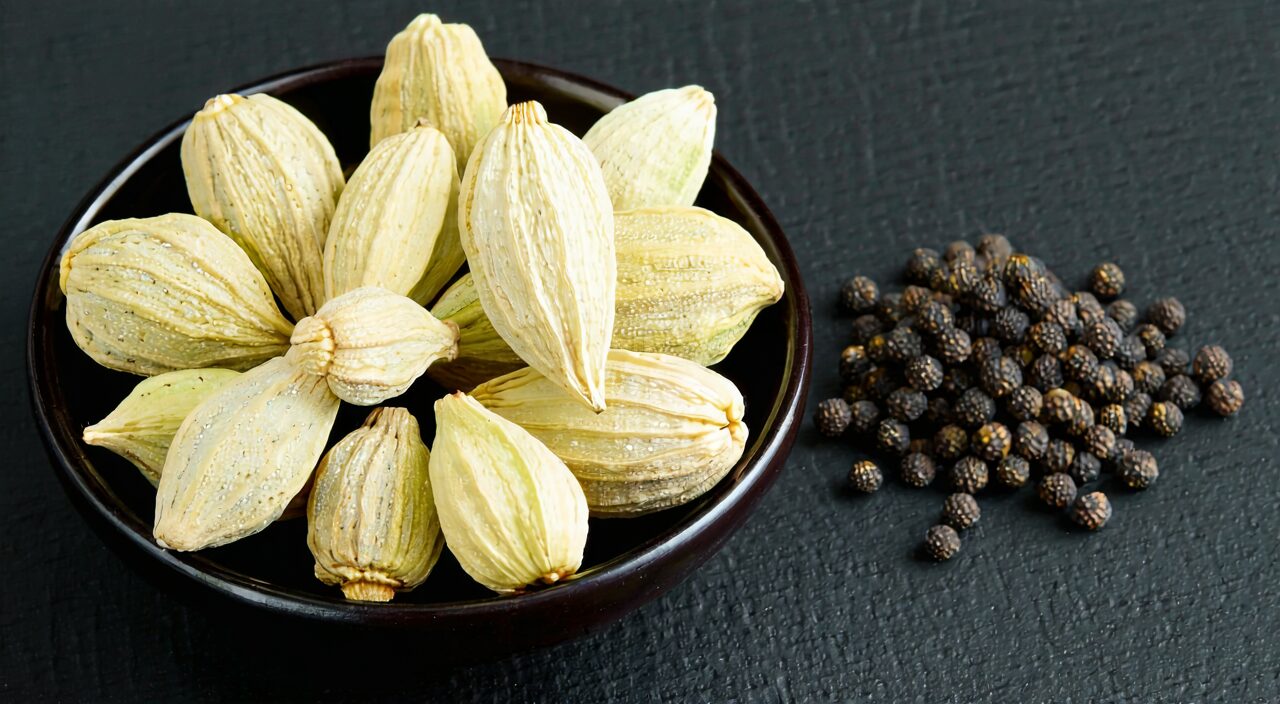
The medicinal part of Bai Dou Kou is its dried nearly mature fruit, that is, the whole fruit including the shell, not just the seeds. However, in actual use, it is traditionally common to crush the fruit together with the shell for decoction, and sometimes the seed mass is used alone. Harvesting generally occurs in summer and autumn when the fruit changes from green to yellowish-green. After harvest, the residual perianth and fruit stalk are removed, and it is dried in the sun or at a low temperature. The maturity of the fruit directly affects the intensity of its aroma. High-quality dried Bai Dou Kou is characterized by large, plump fruit, thin and intact pericarp, and a strong aroma. It is particularly important to note that because the aromatic odor of Bai Dou Kou mainly comes from volatile components, it is traditionally emphasized to “add it later” when decocting formulas. That is, it is added only 5–10 minutes before the other ingredients are fully cooked, to avoid excessive loss of active components due to prolonged boiling, which would affect its usefulness.
How Does Chinese Medicine Understand Bai Dou Kou?
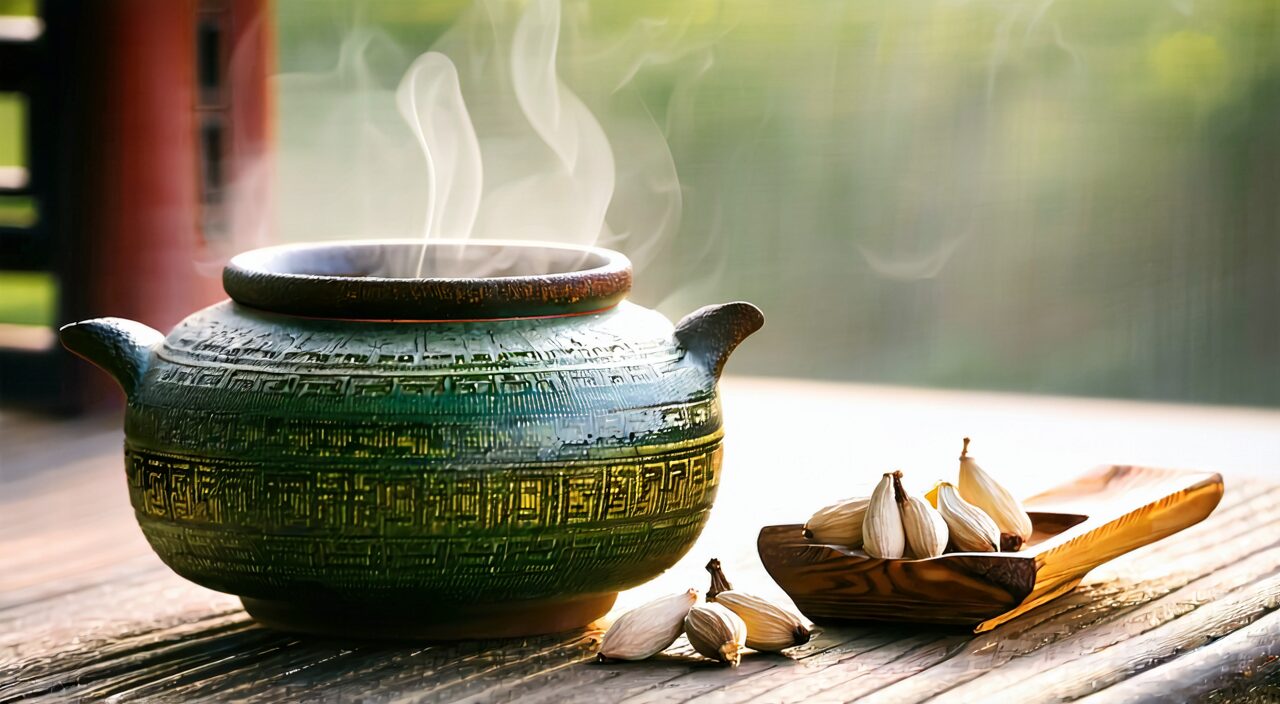
Chinese medicine traditionally categorizes Bai Dou Kou as an aromatic dampness-transforming herb. Its nature and flavor are pungent and warm, and it enters the Lung, Spleen, and Stomach meridians. From the perspective of transforming dampness and moving qi, Bai Dou Kou is often used in approaches addressing epigastric distension and fullness, poor appetite, chest oppression, and lack of hunger caused by dampness obstructing the middle burner and spleen-stomach qi stagnation. Its warming middle-jiao action is more suitable for nausea, vomiting, and belching caused by cold-dampness encumbering the spleen, and it is particularly helpful for vomiting due to stomach cold. Additionally, Bai Dou Kou is commonly used to whet the appetite and promote digestion. Traditionally, it is believed to aromatically revive the spleen and promote transportation and transformation. For conditions of internal retained turbid dampness with poor appetite, it can be taken as a tea or referenced in formulas. In the early stages of damp-warmth disorders with obvious signs like chest oppression and no hunger, it is often used together with other dampness-transforming and heat-clearing medicinals to assist in restoring the smooth flow of qi. However, these application directions need to be tailored to individual constitution and symptoms and conducted under the guidance of a professional; self-application should not be attempted.
Aspects of Modern Research Interest
Modern research on Bai Dou Kou mainly focuses on its volatile oil components, such as 1,8-cineole, α-pinene, and β-pinene. Some experimental studies suggest that Bai Dou Kou volatile oil may have a regulatory effect on digestive function, promoting gastrointestinal motility and relieving gastrointestinal spasms, as well as exhibiting certain antibacterial activity. There are also studies observing its antioxidant potential, but these mostly remain at the laboratory stage. These findings provide some scientific perspectives for traditional usage, but at present, the traditional use experience still predominates. This does not mean there are exact health benefits for humans, nor should it be directly interpreted as having therapeutic effects.
What Are the Differences Between Bai Dou Kou, Sha Ren, and Cao Dou Kou?
Many people easily confuse Bai Dou Kou, Sha Ren, and Cao Dou Kou, as all three belong to the Zingiberaceae family and are common aromatic dampness-transforming Chinese herbs. However, there are differences in morphology, odor, and primary applications.
- Fruit morphology: Bai Dou Kou fruit has a yellowish-white surface with three longitudinal grooves and is divided into three locules inside; the dried fruit of Sha Ren is elliptical or ovoid, with a brownish surface densely covered with spiny protrusions and a residual perianth at the apex; the fruit of Cao Dou Kou is oblong, with a grayish-brown surface, obvious longitudinal ridges, and a larger seed mass.
- Odor: Bai Dou Kou has an aromatic, pungent, and cool odor with a slight camphor-like cooling sensation; Sha Ren has a rich, specific sweet-pungent aroma; Cao Dou Kou has a more dry and intense aroma with a stronger pungent taste compared to Sha Ren.
- Application emphasis: Bai Dou Kou leans toward transforming dampness and moving qi, warming the middle and stopping vomiting, and is often used in early damp-warmth disorders and stomach-cold vomiting; Sha Ren focuses more on reviving the spleen and harmonizing the stomach, moving qi and calming the fetus, and is used more for spleen-stomach deficiency cold and pregnancy-related nausea; Cao Dou Kou has a stronger drying dampness and moving qi action, and is mostly used for epigastric distension and pain, vomiting, and diarrhea caused by cold-dampness encumbering the spleen. Its warming middle and drying dampness effect is stronger than that of Bai Dou Kou and Sha Ren. Although the three are related, the choice of direction differs depending on the degree of cold-dampness, damp-heat, and spleen-stomach deficiency cold.
Which Formulas Use Bai Dou Kou?
In traditional formulas, Bai Dou Kou is often combined with other dampness-transforming, heat-clearing, or qi-regulating herbs. Here are several representative formulas that all contain Bai Dou Kou:
- San Ren Tang (Three Seed Decoction): With Xing Ren (Armeniacae Semen), Bai Kou Ren (Amomi Fructus Rotundus), and Yi Yi Ren (Coicis Semen) as the main ingredients, it is traditionally used for early-stage damp-warmth disorders when the pathogen is in the qi aspect, with manifestations such as headache, chills, heavy body sensations, pain, chest oppression, and lack of hunger as reference directions.
- Huo Po Xia Ling Tang: Contains Huo Xiang (Agastache rugosa), Hou Po (Magnoliae Officinalis Cortex), Ban Xia (Pinelliae Rhizoma), Fu Ling (Poria), etc., combined with Bai Dou Kou to transform dampness and harmonize the middle. It is commonly seen in traditional approaches for dampness stagnating in the middle burner, epigastric stuffiness and distension, and nausea with the urge to vomit.
- Gan Lu Xiao Du Dan (Sweet Dew Detoxification Elixir): In this formula, Bai Dou Kou is used together with Huo Xiang, Lian Qiao (Forsythiae Fructus), Huang Qin (Scutellariae Radix), and others. It is traditionally referenced for damp-warmth or seasonal epidemics where the pathogen lingers in the qi aspect, presenting with fever, fatigue, chest oppression, abdominal distension, throat swelling, and thirst.
- Huang Qin Hua Shi Tang: Huang Qin (Scutellariae Radix) and Hua Shi (Talcum) are combined with Bai Dou Kou, Fu Ling Pi (Poriae Cutis), etc. It is often used in approaches for damp-warmth where the pathogen is in the middle burner, manifesting as low-grade fever that is not easily felt on palpation, chest oppression, epigastric stuffiness, and inhibited urination.
The use of these formulas must be based on pattern differentiation. Individual constitution and symptom presentation vary greatly, so one should never self-apply them. Professional pattern differentiation and product instructions should be followed.
What Precautions Should Be Taken When Using Bai Dou Kou?
Although Bai Dou Kou is widely used as a traditional spice and medicinal, some precautions still need special attention when using it:
- Use with caution in yin deficiency with blood dryness: Bai Dou Kou is pungent, warm, aromatic, and drying, making it easy to consume yin and blood. If there are already signs of yin deficiency with internal heat such as dry mouth and tongue, hot palms, night sweats, and a red tongue with little coating, it is traditionally recommended to avoid use.
- Not suitable for those with exuberant stomach fire: For conditions like bad breath, swollen and painful gums, rapid digestion with frequent hunger, and dry stools caused by exuberant stomach fire, using the pungent and warm Bai Dou Kou may aggravate the discomfort and should be avoided in such directions.
- Pay attention to volatile oil storage: The aromatic odor of Bai Dou Kou dissipates easily, so it should be stored sealed in a cool, dry place away from direct sunlight. Once the odor fades, its usefulness will decrease.
- Avoid prolonged decoction: When added to decoctions, it must be added later. Prolonged boiling will cause the active components to dissipate. It is generally recommended to add it 5–10 minutes before the end of decoction, and it works better when crushed before use.
Summary
Bai Dou Kou is a traditional medicinal known for its aromatic dampness-transforming and middle-warming antiemetic effects. Its typical yellowish-white fruit, three longitudinal grooves, and pungent-cool, specific aroma are key identification features. Understanding its differences from Sha Ren and Cao Dou Kou helps us establish a clearer understanding for different intervention directions. Although Bai Dou Kou is often used as part of dampness-transforming and qi-moving combinations in traditional formulas, whether it is suitable for an individual still needs to be judged by a professional based on constitution and symptoms. The content of this article is only for popular science reference and cannot replace professional diagnosis or treatment advice.