
What Is Sha Ren? Medicinal Parts, Identification, and Common Formulas
Among the vast array of Chinese medicinal herbs, Sha Ren is a fruit-based substance with a strong aroma, often found in stew spice packs or traditional formulas. Many people think of it simply as “a spice for soup,” but its value in Chinese medicine goes far beyond that. If you are trying to understand what Sha Ren really is, how to identify it, which classic formulas use it, and what precautions to take, this article can help you sort through these points.
What Does Sha Ren Look Like? How to Identify It
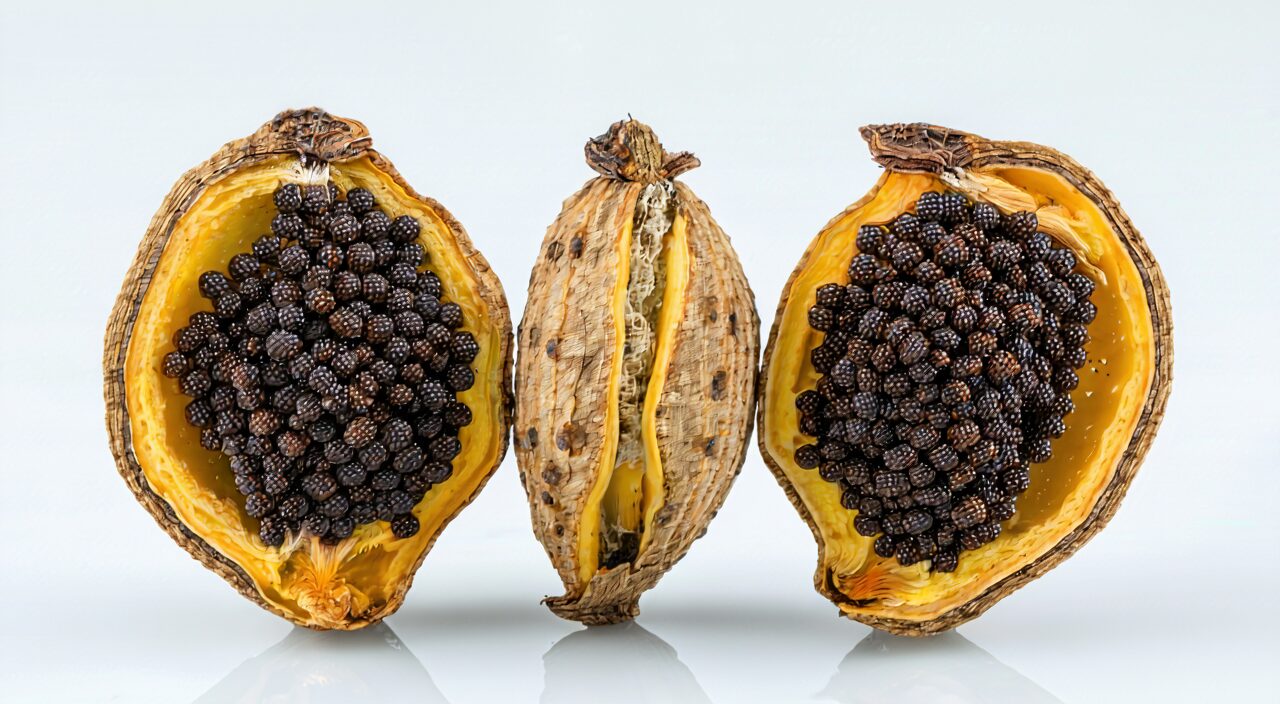
The original plants of Sha Ren are mainly Amomum villosum (Yangchun Sha), Amomum villosum var. xanthioides (Lv Ke Sha), and Amomum longiligulare (Hainan Sha), which are listed in the Chinese Pharmacopoeia as different sources of the same medicinal substance. The Sha Ren commonly seen on the market is mostly the dried mature fruit of Yangchun Sha.
The fruit of Yangchun Sha is mostly elliptical or ovoid, about 1.5 to 2 cm long and 1 to 1.5 cm in diameter. The surface is not smooth; it is covered with soft, thorn-like protrusions, like a layer of fine prickles, but they are not sharp to the touch and become even more pliable after drying. The pericarp is brown or dark brown, and some still have a reticulated texture on the surface. Gently peeling off the pericarp reveals three chambers inside, each tightly packed with seeds. These seeds clump together to form the medicinal part of Sha Ren—the seed mass. The seed mass is nearly spherical overall, with a dark brown surface. A single seed is hard when broken open and emits a very strong, distinctive aroma when smelled. Tasting it gives a pungent, cooling sensation with a slight bitterness. This potent and unique aroma is an important clue for identifying Sha Ren, especially helpful when distinguishing it from other similar fruits.
There is also Hainan Sha, whose fruit tends to be more elongated or ovoid, with slightly longer and harder thorn-like protrusions than Yangchun Sha. The overall size is a bit larger, and the smell is equally aromatic, but traditionally the quality of Yangchun Sha is regarded more highly.
What Is the Medicinal Part of Sha Ren?
The medicinal part of Sha Ren is its dried mature fruit, with the seed mass serving as the primary medicinal portion. Harvesting usually takes place in summer and autumn when the fruit is ripe. The fresh fruit must be promptly sun-dried or dried at low temperature to preserve the volatile oil. During processing, some are also lightly cracked open, and the seed mass is taken out and dried again, commonly called “Sha Ren Mi.”
When decocting formulas, Sha Ren has a very distinctive traditional usage—added near the end. This is because the active components of Sha Ren are primarily volatile oils, and prolonged boiling causes aroma loss and reduced effectiveness. Therefore, it is generally smashed and added only a few minutes before the other ingredients are fully cooked, then steeped briefly. If used in stews, it is also advisable to avoid long, high-temperature cooking to protect its aromatic character. This “added near the end” practice has been recorded in herbal works from the Song dynasty and continues to this day; it is a very practical point to note when using Sha Ren.
How Does Chinese Medicine Understand Sha Ren?
In traditional Chinese medicine, Sha Ren is classified as an aromatic dampness-transforming herb. Its nature and flavor are acrid and warm, and it enters the Spleen, Stomach, and Kidney channels. Regarding its core functions, ancient practitioners understood it mainly from three directions:
Transforming dampness and improving appetite: With its acrid, dispersing, warm, and unblocking nature and fragrant aroma, Sha Ren can help move and transform dampness turbidity in the middle burner. It is especially suitable when dampness obstructs the spleen and stomach, causing poor appetite, abdominal bloating, and greasy mouthfeel. It is often combined with Hou Po (Magnolia Bark), Chen Pi (Tangerine Peel), and Cang Zhu (Atractylodes) as one of the aromatic dampness-transforming, qi-moving, and spleen-awakening options.
Warming the spleen and stopping diarrhea: For chronic diarrhea and loose stools caused by spleen-stomach deficiency-cold, Sha Ren can warm spleen yang and dry dampness to stop diarrhea. It is sometimes paired with Mu Xiang (Aucklandia), Bai Zhu (White Atractylodes), and Gan Jiang (Dried Ginger). This kind of thinking appears in many traditional spleen-strengthening and diarrhea-stopping formulas.
Regulating qi and calming the fetus: Sha Ren has also been traditionally used to address nausea, vomiting, and restless fetus during pregnancy due to spleen-stomach qi stagnation and middle burner disharmony. Ancient physicians believed Sha Ren could move qi, harmonize the middle, calm the fetus, and stop vomiting. However, this usage requires very precise pattern differentiation. Not all pregnancy discomfort qualifies, and it should only be considered under the clear judgment of an experienced Chinese medicine practitioner.
In addition, Sha Ren can warm the kidneys and direct qi downward, playing a role in some ancient prescriptions to guide qi back to its root. Overall, the traditional application of Sha Ren is tightly focused on the key points of “moving qi,” “transforming dampness,” and “warming the middle.”
What Has Modern Research Found About Sha Ren?
Modern research mainly focuses on the volatile oil components of Sha Ren, including bornyl acetate, camphor, borneol, and limonene. Experiments have found that Sha Ren volatile oil can promote gastrointestinal motility and gastric juice secretion, which may relate to its traditional understanding of transforming dampness and improving appetite. Additionally, some animal studies have observed anti-inflammatory, analgesic, and gastric mucosal protective effects of Sha Ren extracts, as well as a bidirectional regulatory tendency on intestinal smooth muscle. However, these studies are mostly in vitro or animal experiments and cannot be directly equated to effects in the human body, but they provide a certain frame of reference for the traditional use of Sha Ren. It is important to note that these findings do not mean Sha Ren can be used as a drug to treat any disease; it is still mainly regarded as a substance used in traditional regulation.
What Are the Differences Between Sha Ren, Bai Dou Kou, and Cao Guo?
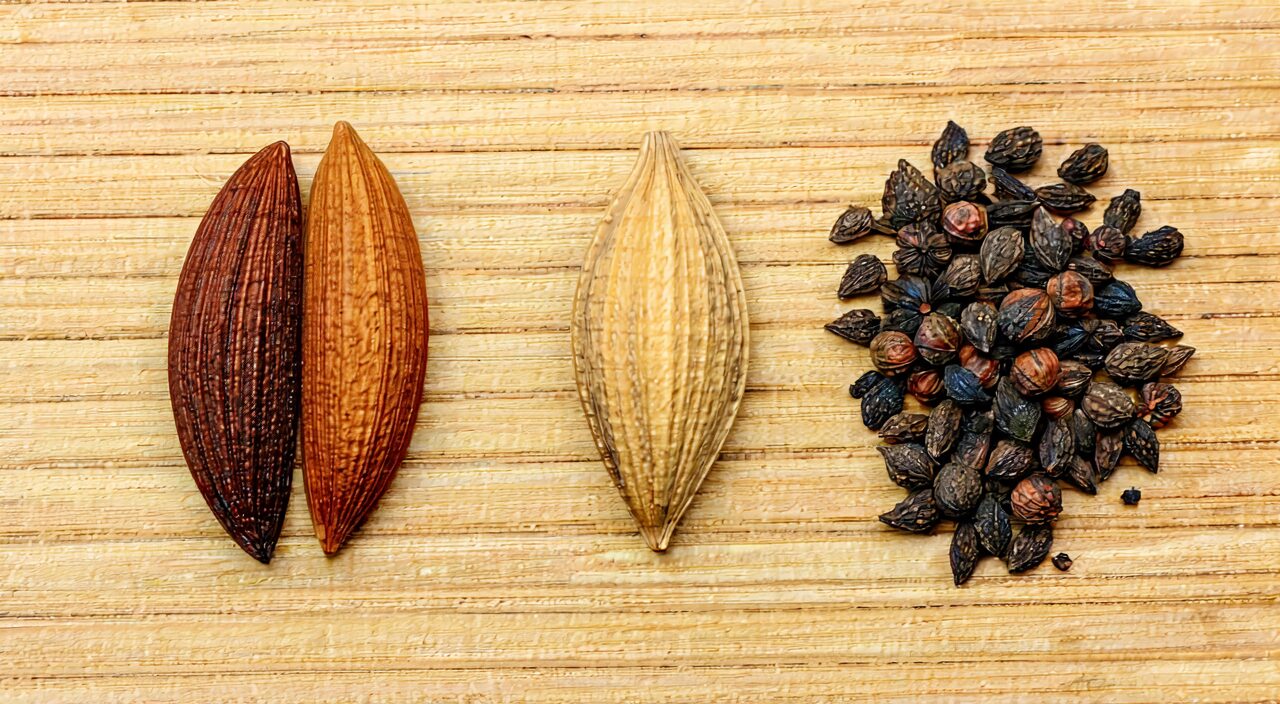
The spices or medicinal substances easily confused with Sha Ren are mainly Bai Dou Kou (Fructus Amomi Rotundus) and Cao Guo (Fructus Tsaoko). All three are fruits of Zingiberaceae plants, with strong aromatic odors, but their appearances and applications each have their own emphasis.
In terms of fruit size, Sha Ren is medium, Bai Dou Kou is smaller and nearly round, while Cao Guo is distinctly much larger, elongated-elliptical, the largest of the three. Regarding surface features, Sha Ren has numerous soft, thorn-like protrusions; Bai Dou Kou has a smooth surface or light longitudinal ribs; the surface of Cao Guo is covered with harder longitudinal ribs and furrows, rough and hard to the touch. When the fruit is opened, the seed mass of Sha Ren has a three-chamber structure with tightly packed seeds; Bai Dou Kou is also three-chambered, but the seeds are relatively whitish, with a cool, slightly sweet aroma; Cao Guo’s seed mass is larger and smells pungent and intense, with a smoky undertone.
In traditional use, Bai Dou Kou is more inclined to transform dampness, move qi, warm the middle, and stop vomiting, especially suitable for dampness and qi stagnation in the upper and middle burners. Cao Guo has stronger dampness-drying power, often used for cold-dampness encumbering the spleen or miasmic malaria. Sha Ren is better at warming the middle, moving qi, calming the fetus, and stopping diarrhea, with applications involving the middle and lower burners. In daily cooking, Sha Ren is often used in braising master stocks and stews; Cao Guo frequently appears in hot pot base mixes; and Bai Dou Kou is a regular guest in Southeast Asian curries and milk tea. These distinctions can help give you a clearer outline when selecting ingredients.
Which Formulas Use Sha Ren?
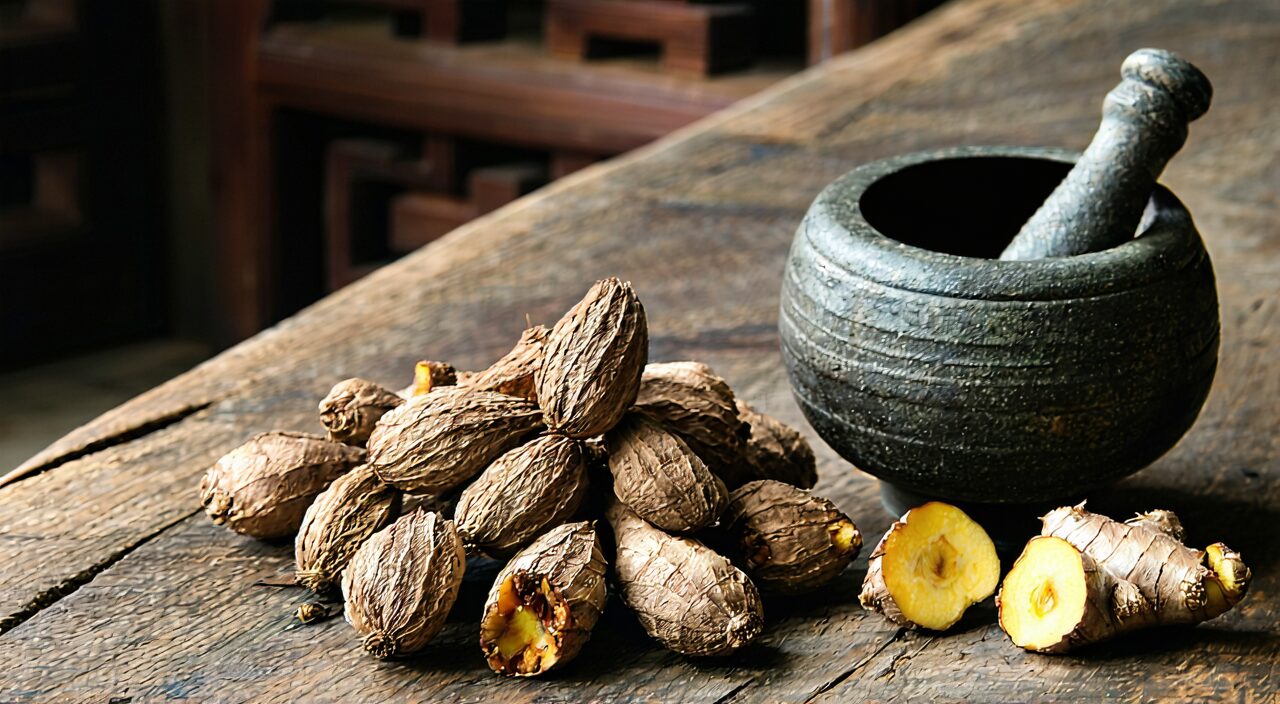
Sha Ren plays the role of transforming dampness, moving qi, and awakening the spleen and harmonizing the stomach in many classic formulas. Below are some common ones provided only as examples of traditional usage directions and do not constitute any medical advice.
Xiang Sha Liu Jun Zi Tang (Aucklandia and Amomum Six Gentlemen Decoction): Derived from Liu Jun Zi Tang with the addition of Mu Xiang and Sha Ren, it is traditionally used for spleen-stomach qi deficiency with dampness stagnation and qi obstruction manifesting as poor appetite, post-meal bloating, loose stools, and fatigue. In this formula, Ren Shen (Ginseng) and Bai Zhu strengthen qi and tonify the spleen, Fu Ling (Poria) leaches dampness, Chen Pi regulates qi, and the added Sha Ren and Mu Xiang strengthen the power to move qi, transform dampness, and improve appetite.
Shen Ling Bai Zhu San (Ginseng, Poria, and Atractylodes Powder): This is a classic spleen-strengthening and dampness-percolating formula, often used for poor appetite, loose stools, and general lethargy caused by spleen deficiency with dampness. The formula already contains dampness-percolating ingredients like Fu Ling and Yi Yi Ren (Coix Seed); adding Sha Ren not only enhances the dampness-transforming effect but also aromatically awakens the spleen, preventing the tonifying herbs from becoming overly cloying.
Suo Sha Wan (Amomum Pill): From the Taiping Huimin Heji Ju Fang, it has Sha Ren as the main ingredient, combined with Gan Cao (Licorice) and others, specifically for spleen-stomach deficiency-cold, poor digestion of milk or food, vomiting, and diarrhea in children or adults. The “Suo Sha” in the name is an alternate name for Sha Ren, showing the core position of Sha Ren in this formula.
Tai Shan Pan Shi San (Mount Tai Rock-Stabilizing Powder): Often used in the regulatory direction of qi-blood deficiency type of restless fetus. The formula contains the base of Ba Zhen Tang (Eight Treasure Decoction) plus Huang Qi (Astragalus), Xu Duan (Teasel Root), Huang Qin (Scutellaria), and Sha Ren. Here, Sha Ren serves to regulate qi, calm the fetus, and prevent the many tonifying herbs from impeding the stomach. It must be emphasized that pregnancy is a special condition; this formula may only be considered under strict pattern differentiation by a Chinese medicine practitioner and should never be self-selected.
The applicable situations of the above formulas each have different emphases. Individual constitutions and symptoms vary greatly; whether a particular formula is suitable still requires consideration of personal constitution, specific manifestations, and professional judgment.
What Precautions Should Be Taken When Using Sha Ren?
Although Sha Ren is a relatively gentle medicinal substance, inappropriate use can also lead to discomfort. The following precautions are worth noting:
Use with caution in cases of yin deficiency with fire hyperactivity or significant internal heat. Sha Ren is acrid, warm, fragrant, and drying, and tends to consume yin fluids. If you already have symptoms of yin deficiency such as dry mouth and throat, dry stools, night sweats, and heat sensations in the palms and soles, or if you are in a state of excess heat, long-term or high-dose use of Sha Ren may worsen these tendencies.
Caution for those with dry mouth and constipation. The dampness-drying nature of Sha Ren is not suitable for constipation caused by fluid insufficiency and intestinal dryness. If you notice increased dry mouth or greater difficulty defecating after use, you should stop promptly and consult a professional.
Do not self-medicate during pregnancy. Although there is a traditional use of Sha Ren to calm the fetus, this requires precise pattern differentiation—for example, confirming that it belongs to spleen-stomach qi stagnation and middle burner disharmony. If the restless fetus is due to other causes such as blood heat, yin deficiency, or qi sinking, using Sha Ren not only offers no benefit but may also bring risks. Therefore, pregnant women should never use Sha Ren on their own just because they hear it is good for pregnancy; it must be considered only under the guidance of an experienced practitioner.
Effectiveness may decrease once the aroma has dissipated. The main efficacy of Sha Ren is closely related to its volatile oil. Prolonged storage or improper preservation causes the aroma to volatilize and fade; at that point, the dampness-transforming and qi-moving effects of Sha Ren may be significantly weakened. When purchasing, pay attention to plump fruits with a strong aroma and store them sealed in a cool, dry place. Absolutely remember to add it near the end when decocting to preserve the aroma.
If symptoms such as spleen-stomach discomfort, diarrhea, or emotional tension persist without improvement, or are accompanied by significant weight loss, black stools, severe abdominal pain, vomiting, palpitations, chest tightness, or other symptoms, you should consult a doctor and undergo necessary examinations as soon as possible, regardless of whether you are using Sha Ren or not.
Summary
As the mature fruit of a Zingiberaceae plant, Sha Ren is easily recognized by its unique three-chamber structure, soft prickly outer surface, and intense fragrance. When used medicinally, it is usually added near the end of decoction to retain its volatile oil. Traditional Chinese medicine mainly understands it from the perspectives of transforming dampness and improving appetite, warming the spleen to stop diarrhea, and regulating qi to calm the fetus. Its differences from Bai Dou Kou and Cao Guo are reflected in size, surface characteristics, and aromatic profile. When using Sha Ren, contraindications such as yin deficiency, internal heat, dry mouth, and constipation must be noted, and it must never be self-administered during pregnancy. This article is for informational reference only and cannot replace professional diagnosis or treatment advice.