
What Is Ban Xia? An Introduction to Its Medicinal Parts, Identification, and Common Formulas
Ban Xia (Pinellia ternata) appears frequently in Chinese herbal formulas, yet its name often raises questions: what does it have to do with summer? In fact, the name “Ban Xia” comes from the saying “Ban Xia grows in the fifth month,” referring to its rapid growth during midsummer. However, the part used in Chinese medicine is the dried underground tuber. For those overseas who are interested in Chinese medicine, understanding Ban Xia requires going beyond the name; it involves recognizing its actual appearance, knowing which part is used, and learning why clinically processed products are used almost exclusively rather than the raw herb. This introduction will explore these aspects and provide a relatively complete framework for users wanting to get to know Ban Xia.
What Does Ban Xia Look Like? How to Identify It?
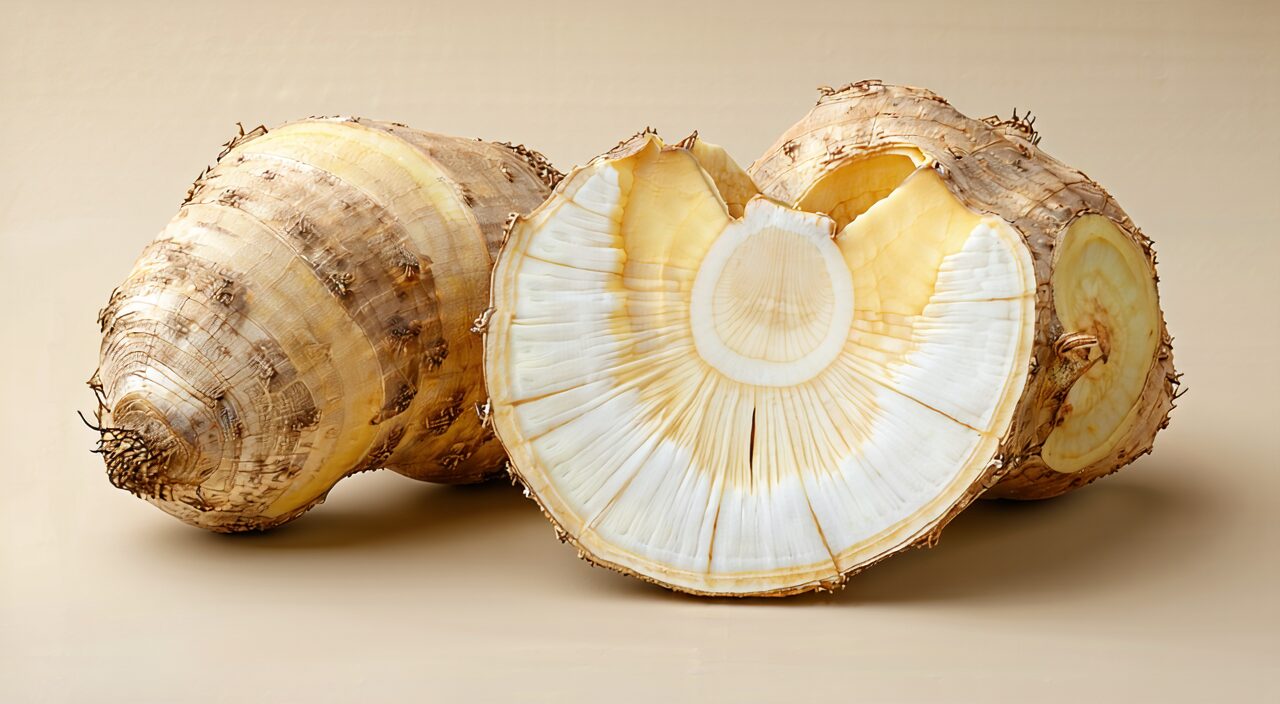
If you only look at the above-ground parts, Ban Xia’s aerial plant is not particularly eye-catching. Its leaves are commonly trifoliate, and bulbils may sometimes grow on the petiole. However, users who handle the crude drug mostly encounter the harvested and processed tuber. From the perspective of crude drug identification, the Ban Xia tuber has several practical identification points.
A typical raw Ban Xia tuber is subspherical, sometimes slightly oblique, with a diameter generally around 1–1.5 cm. The surface is milky white or light yellow, occasionally with remnants of a brownish-yellow outer skin. At the top of the tuber, you can see a depressed stem scar, surrounded by dense dotted root scars. This depression is relatively deep and regular, serving as an important identification feature. When you break a Ban Xia tuber open, the cross-section is white and starchy, the texture is firm, and the odor is weak. However, tasting it produces a pronounced numbing and throat-pricking sensation. Because of this strong irritant property, traditional practice emphasizes that Ban Xia must not be taken directly by mouth and must undergo standardized processing.
In terms of appearance, Ban Xia can also be distinguished from similar crude drugs, such as Shui Ban Xia (Typhonium flagelliforme). Shui Ban Xia is often conical or elliptical, has a shallow apical stem scar that is less distinct than that of Ban Xia, and has a more mucilaginous cross-section. In traditional use, the two should not be used interchangeably. Therefore, paying attention to the three features—subspherical shape, depressed apical stem scar, and white starchy cross-section—can help you initially understand what Ban Xia looks like.
What Is the Medicinal Part of Ban Xia?
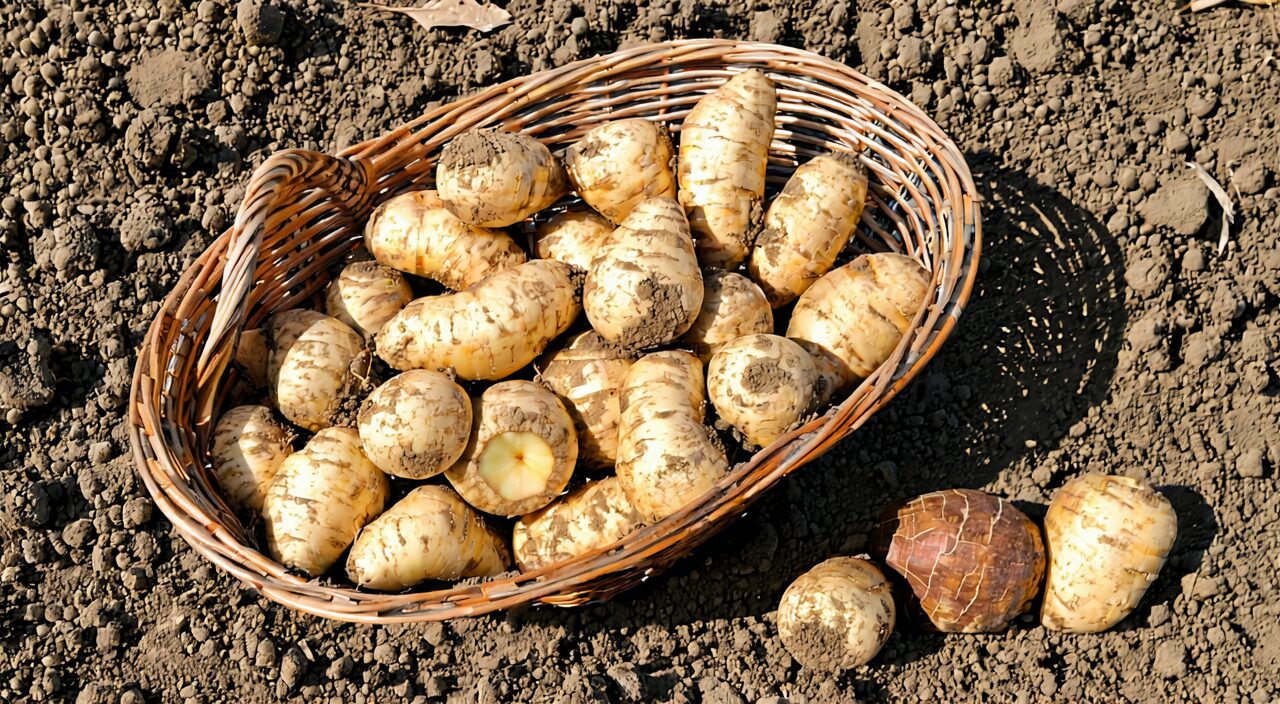
The medicinal part of Ban Xia is its dried tuber, which is the enlarged underground storage organ, not the root or the whole plant. Harvesting generally takes place in summer or autumn. After digging out the tubers, the outer skin and fibrous roots are removed, followed by washing and drying. However, there is an especially important point to note: raw Ban Xia is only an intermediate state during processing. In clinical formulations, the Ban Xia used is almost always further processed, such as Fa Ban Xia (Pinellia processed with licorice and lime), Jiang Ban Xia (Pinellia processed with ginger), and Qing Ban Xia (Pinellia processed with alum).
The reason for emphasizing the medicinal part and processing method is that the tuber contains specific irritant components. Removing the outer skin is the first step, and the subsequent processing with different excipients adjusts the medicinal properties and reduces toxicity. In traditional Chinese medicine, Ban Xia is not simply dried in the sun; it undergoes a series of operations to make it more suitable for internal use. Therefore, when you see “Ban Xia” in a formula, it actually refers to a specific processed product, not simply sliced raw tubers dug from the ground. Understanding this is crucial for the safe use of Ban Xia.
How Does Chinese Medicine View Ban Xia?
Traditional Chinese medicine does not look at a single herb in isolation but understands it within the framework of nature, taste, meridian tropism, and actions. Ban Xia is acrid in taste and warm in nature, and it enters the spleen, stomach, and lung meridians. It is a commonly used herb for resolving phlegm and stopping vomiting. Its core functions can be roughly divided into three aspects: drying dampness and resolving phlegm, directing rebellious qi downward and stopping vomiting, and dissipating stuffiness and dispersing masses.
Drying dampness and resolving phlegm targets coughs with profuse phlegm caused by damp-phlegm or cold-phlegm patterns, where the sputum is thin and clear or white and sticky. Chinese medicine holds that the spleen is the source of phlegm and the lungs are the receptacle that stores it. Ban Xia can warm and dry the middle burner, reducing the generation of dampness and turbidity, while also helping lung qi to descend. Therefore, it is often used in strategies for coughs with prominent damp-phlegm. Directing rebellious qi downward and stopping vomiting uses Ban Xia’s ability to downbear qi to calm rebellious stomach qi. Traditionally, it is applied to nausea and vomiting caused by various factors, especially when phlegm-rheum or cold-dampness obstructs the middle burner. Dissipating stuffiness and dispersing masses refers to Ban Xia’s ability to unblock the qi mechanism of the middle burner and disperse the sensation of stuffiness and oppression formed by the binding of phlegm and qi, such as chest and epigastric fullness and globus hystericus (plum-pit qi).
These traditional understandings do not mean that Ban Xia acts on a single target. Rather, from the perspective of holistic qi transformation and fluid metabolism, Ban Xia is viewed as a tool for regulating the middle burner and smoothing the qi mechanism. Based on this, different processed products have different emphases, further enriching the clinical applications of Ban Xia.
Modern Research: Irritant Components and Toxicity
Modern research on Ban Xia has focused considerably on its irritant components. The tuber contains bundles of calcium oxalate raphides, which are one of the main substances responsible for strong mucosal irritation in the mouth and throat. The mechanical penetration and accompanying chemical irritation can cause stinging, swelling, hoarseness, and in severe cases even laryngeal edema. Therefore, there is a very clear boundary for the use of raw Ban Xia: it must never be self-administered internally.
In addition to the irritant properties, Ban Xia also contains certain toxic components. Traditional processing methods, such as prolonged decoction or processing with alum and ginger, are used to reduce toxicity. The processing procedure can destroy some of the irritant raphide structures and alter the activity of certain chemical constituents, thereby moderating the herb’s nature. Consequently, whether in decoction formulas or in patent medicines, Ban Xia always appears in its processed form, with strict requirements on dosage and combination. Understanding this background helps users view Ban Xia more rationally, rather than simply equating it with an ordinary culinary or dietary herb.
What Are the Differences Between Raw Ban Xia, Fa Ban Xia, and Jiang Ban Xia?
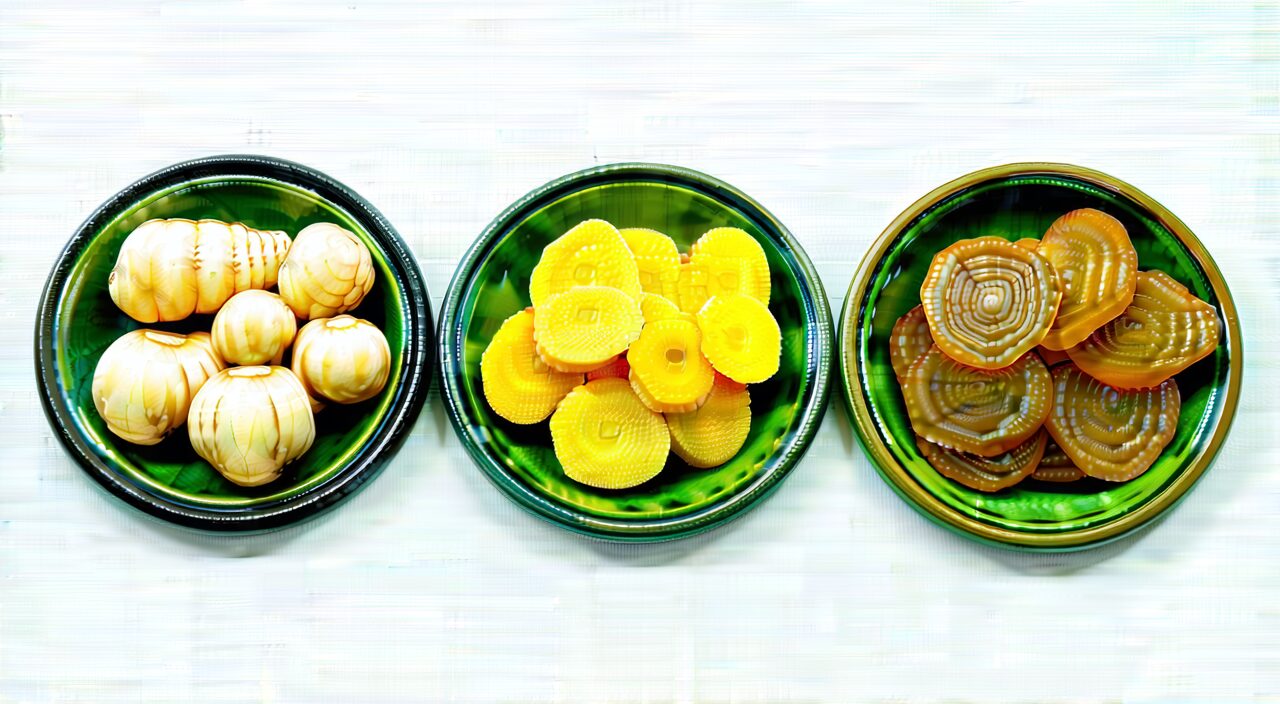
This is a question many people encounter when first learning about Ban Xia. Simply put, the relationship among the three is: Ban Xia is the general term for the processed crude drug, while Fa Ban Xia and Jiang Ban Xia are two different processed specifications, each with distinct excipients, appearance, and traditional application tendencies.
Fa Ban Xia is processed from raw Ban Xia with licorice and lime. It appears mostly yellow or light yellow, with a relatively loose texture and weaker starchy character. Traditionally, Fa Ban Xia is considered better at drying dampness and resolving phlegm, making it more commonly used for coughs due to damp-phlegm or cold-phlegm. At the same time, its acrid, dry nature is somewhat moderated, making it more suitable for cases with significant damp-phlegm in the middle burner and a relatively weak spleen and stomach. Jiang Ban Xia is processed with ginger and alum, and its surface often appears brownish-yellow or yellowish-brown, with a more noticeable horny cross-section. Because ginger is used as an excipient, it is particularly effective at directing rebellious qi downward and stopping vomiting, and it is used more frequently for nausea and vomiting caused by rebellious stomach qi.
Qing Ban Xia is mostly processed with alum and has a milder phlegm-resolving action. Although these three processed products all originate from Ban Xia, they are not interchangeable at will. When users encounter a formula or product containing Ban Xia, it is helpful to note whether it specifically lists Fa Ban Xia, Jiang Ban Xia, or Qing Ban Xia, as this often reflects different therapeutic emphases.
Which Formulas Use Ban Xia?
Ban Xia plays an important role in many classic formulas. Here a few representative ones are introduced to help users form an intuitive impression.
Er Chen Tang (Two-Cured Decoction) is one of the basic formulas for drying dampness and resolving phlegm. In this formula, Ban Xia is combined with Chen Pi (tangerine peel)—one dries dampness and the other regulates qi, and together they address manifestations such as cough with profuse, easily expectorated phlegm, chest oppression, and nausea. Many phlegm-resolving formulas are modifications of Er Chen Tang. Xiao Chai Hu Tang (Minor Bupleurum Decoction), although representative of formulas that harmonize the lesser yang, also includes Ban Xia, mainly to direct rebellious qi downward, stop vomiting, and dissipate stuffiness, complementing Chai Hu and Huang Qin in regulating the qi mechanism. Ban Xia Xie Xin Tang (Pinellia Heart-Draining Decoction) is a classic example of acrid-opening and bitter-descending combination, where Ban Xia is used together with Ren Shen, Gan Jiang, Huang Lian, and Huang Qin. It is often applied to conditions involving mixed cold and heat in the middle burner, epigastric stuffiness and fullness, and vomiting accompanied by borborygmus. In Wen Dan Tang (Warm the Gallbladder Decoction), Ban Xia is paired with Zhu Ru, Zhi Shi, and others, leaning toward regulating qi, resolving phlegm, clearing the gallbladder, and harmonizing the stomach. It is traditionally used for timidity, restlessness, and insomnia due to gallbladder disturbance with phlegm, as well as chest oppression and a bitter taste in the mouth.
These formulas illustrate Ban Xia’s diverse roles in addressing phlegm, qi, and counterflow. However, whether a specific formula is suitable for an individual requires consideration of constitution, symptoms, and professional judgment, and one should not choose a formula based on a single manifestation alone.
What Precautions Should Be Taken When Using Ban Xia?
This section requires particular emphasis because Ban Xia has a relatively narrow safety margin. First, raw Ban Xia is toxic, and any form of self-decocting or powdering for internal use is strictly prohibited; even external use requires great caution. Any Ban Xia-containing product encountered in daily life should be a properly processed variety and present in a tightly controlled proportion within a compound formula or patent medicine.
Second, even processed products such as Fa Ban Xia and Jiang Ban Xia can cause oral and throat irritation, numbness, or even gastrointestinal discomfort if used improperly. Traditionally, Ban Xia is considered incompatible with herbs of the Aconitum (Wu Tou) category. Although modern understanding allows some discussion, it should still be avoided in the absence of clear professional guidance. During pregnancy, Ban Xia is generally used with caution because its dry nature and strong downward-moving action may affect the pregnancy. In addition, individuals with peptic ulcers, throat inflammation, or a constitution prone to dryness and heat need to be particularly careful when using formulas containing Ban Xia and should not simply copy someone else’s experience.
Finally, it is important to note that if you have long-term or recurrent cough, vomiting, chest oppression, or symptoms accompanied by significant anxiety, palpitations, difficulty swallowing, or labored breathing, these may not be conditions that Ban Xia alone can resolve. You should consult a healthcare provider promptly and not delay a more comprehensive evaluation simply because tradition holds that Ban Xia can resolve phlegm and stop vomiting.
Summary
Ban Xia is a Chinese medicinal herb with clearly defined actions but high safety requirements. Its medicinal part is the tuber; the raw product has pronounced irritant properties, and in clinical practice almost exclusively strictly processed varieties such as Fa Ban Xia and Jiang Ban Xia are used. Traditional Chinese medicine primarily employs it for drying dampness and resolving phlegm, directing rebellious qi downward and stopping vomiting, and dissipating stuffiness and dispersing masses. In formulas like Er Chen Tang, Xiao Chai Hu Tang, and Ban Xia Xie Xin Tang, Ban Xia works with other herbs to form different treatment strategies. Because raw Ban Xia is toxic and improper use carries risks, understanding its basic characteristics and safety precautions is more important than memorizing a few formulas. This article is for informational reference only and is not a substitute for professional diagnosis or treatment advice. Specific use should be based on individual circumstances and consultation with a qualified professional.